Shell Beans Serving Tips

Shell beans are any members of the legume family that are shucked or shelled. All beans grow in pods. Shell beans are cooked and served after they have been shelled. The pod is not eaten.
Shell beans include black-eyed peas, cranberry beans, fava beans, and lima beans.
Shell beans are also called shellies, shellouts, shelly beans, and shuckies.
Common shell beans
Black-eyed peas
Black-eyed peas (Vigna unguiculata) are cream-colored and kidney-shaped with a black eye on the curved inner side of the long, skinny pod. The black-eyed pea is a bean; it is also called Southern pea. See How to Grow Southern Peas
Cranberry beans
Cranberry beans (Phaseolus vulgaris) are round, plump beans dapped with pink and wine-colored splotches. The flavor of cranberry beans is similar to chestnuts. When cooked, shelled cranberry beans lose their red color. See more about cranberry beans below.
Fava beans
Fava beans (Faba vulgaris) have large, flattened, light green pods to 8 inches long and 1 inch wide. The beans inside the pod are protected by a white spongy membrane. See How to Grow Fava Beans and Five Ways to Cook and Serve Fava Beans
Lima beans
Lima beans (Phaseolus lunatus) are large, plump, place green beans with a kidneylike curve. Young lima beans are pale green; they ripen to a creamy yellow color. See How to Grow Lima Beans
How to choose shell beans
- Select fresh shell beans in full, brightly colored pods.
How to shell shell beans
- Split open the curved inside seam of the pod with your thumb and remove the beans.
How to store shell beans
- Fresh shelled beans can be kept in the refrigerator for up to a week. To freeze shell beans, blanch briefly in boiling water, drain, and freeze in a zip-top plastic bag.
Quick shell bean recipe
Use your thumb to pop open the fresh-picked pods, place a few handfuls of beans in a skillet, and cover with just an inch of water; add a couple of cloves of garlic, peppercorns, and fresh sage, and simmer until they are just tender about 10 to 15 minutes. Drain away the water; let the beans dry a minute or two in a colander or on paper towels; lightly salt to taste and drizzle with extra virgin olive oil. You can serve them alone warm or cooled or add them to the antipasto tray with mixed cheeses and sausages.
Cranberry shell beans
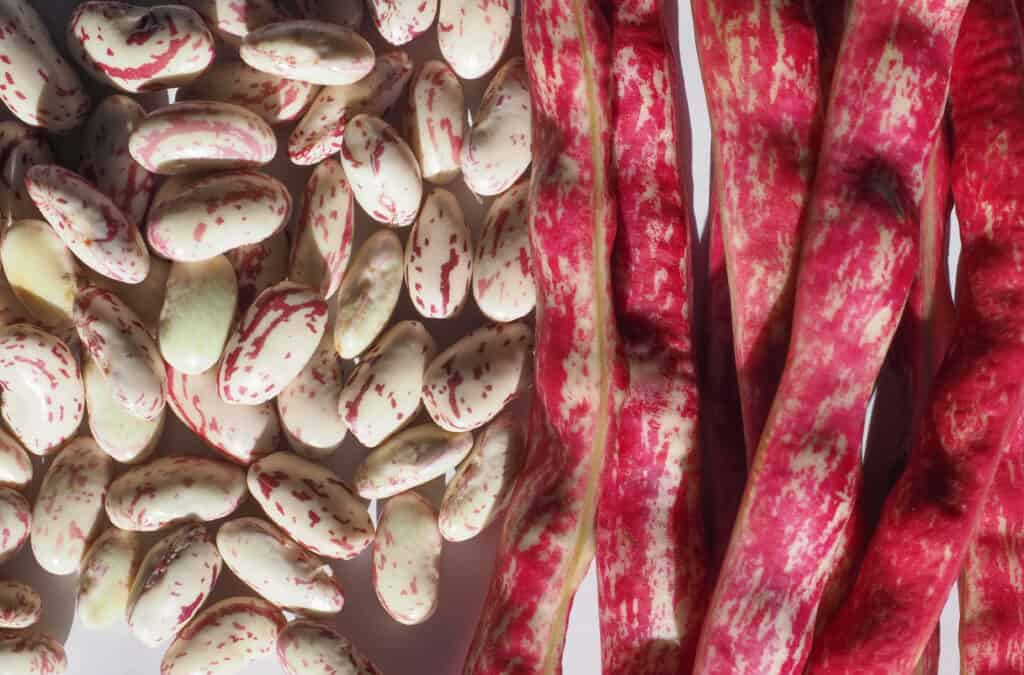
The cranberry bean is an oval to round, ivory and dark red to brown speckled and blotched bean. It comes in a pod very similar, streaked ivory and dark red. The beans and pods are just about the same size as a large string bean. Inside, the cranberry is cream-colored. Its flavor compares to the chestnut. Cranberry beans are shell beans; you don’t eat the pods.
Cooked cranberry are tender and moist. They are native to South America but came to Tuscany and northern Italy long ago and have long been a favorite in Italy and Spain. In Europe, the cranberry bean is called the borlotti bean. In Italian cookery, the cranberry bean or borlotti is used often in bean and pasta soup, known as pasta e fagioli. The borlotti can be added to stews or combined with other vegetables as a side dish.
Enjoy the cranberry fresh in summer and dried year-round. Its timing is perfect; the cranberry is ready for picking in summer just as the string bean harvest slows.
The cranberry bean is also called crab eye bean, Fagiolo Romano, Roman Rosecoco Saluggia, and Salugia bean. The cranberry bean is related to the tongues of fire bean which is similar in appearance, perhaps more vibrant yet.
Cranberry bean snack suggestion
If the beans are fresh-picked just barely visible in the pod and still young, you can leave out the cooking part, and snack on the creamy textured, nutty-flavored beans simply adding olive oil and sea salt. If you’ve brought home dried beans, soak those for 3 to 8 hours at room temperature or place them in a saucepan covered with water and bring them to a boil, remove from the heat, and soak for 1½ hours before cooking.
Cranberry bean substitutes
Tongues of fire, cannellini, and pinto beans can stand in for cranberry beans.
Related articles:
How to Plant and Grow Snap Beans
How to Harvest and Store Snap Beans
Bean Growing Problems: Troubleshooting
Five Ways to Quick Cook and Serve Snap Beans
How to Can Green Snap Beans for Beginners
Cooking and Serving Yard-Long Beans
How to Grow Plant, Grow, and Harvest Chickpeas and Garbanzo Beans
How to Cook and Serve Chickpeas
How to Plant and Grow Lima Beans
How to Plant, Grow, and Harvest Broad Beans and Fava Beans
Five Ways to Cook and Serve Fava Beans
All About Dried Beans – Growing and Cooking
Container Growing Beans – Plant, Grow, and Harvest Tips
Articles of interest:
Best Herbs for Container Growing
Garden Planning Books at Amazon:
- Vegetable Garden Almanac & Planner
- Kitchen Garden Grower’s Guide Vegetable Encyclopedia
- Vegetable Garden Grower’s Guide
- Tomato Grower’s Answer Book
More kitchen tips:
Bring your harvest to the table. Kitchen prep tips and easy recipes for the vegetables you grow. Click below for vegetable prep and recipes you can use now.
- Almonds
- Apples
- Apricot
- Aprium
- Artichoke
- Arugula
- Asparagus
- Avocado
- Bamboo Shoots
- Banana
- Basil
- Beans, Dried
- Beans. Long
- Beans, Shell
- Beans, Snap
- Beets
- Bitter Melon
- Blackberry
- Bok Choy
- Broccoli
- Broccoli Raab
- Brussels Sprouts
- Cabbage
- Cardoon
- Carrots
- Cauliflower
- Celeriac
- Celery
- Chard
- Chayote Squash
- Cherimoya
- Cherries
- Chestnut
- Chickpea
- Chinese Cabbage
- Chives
- Cilantro
- Citron
- Clementine
- Collards
- Coriander
- Corn, Sweet
- Corn, Baby
- Corn Salad, Mache
- Cranberry
- Cress
- Cucumber
- Daikon
- Dandelion
- Dill
- Eggplant
- Endive, Belgian
- Endive and Escarole
- Fava Beans
- Fig
- Florence Fennel
- Garlic
- Ginger
- Grapefruit
- Grapes
- Guava
- Horseradish
- Jerusalem Artichoke
- Jicama
- Jujube
- Kale
- Kiwifruit
- Kohlrabi
- Kumquat
- Leeks
- Lemongrass
- Lemons
- Lettuce
- Lime
- Mache (Corn Salad)
- Mandarin Orange
- Mango
- Maple Syrup
- Marjoram
- Melons
- Michihili
- Mint
- Mizuna
- Mushrooms
- Mushrooms, Cremini
- Mustard Greens
- Napa Cabbage
- Nectarine
- Okra
- Olives
- Olive oil
- Onions
- Oranges
- Oregano
- Parsley
- Parsley Root
- Parsnips
- Passion Fruit
- Pawpaw
- Peaches
- Pears
- Peas, Garden Snap
- Peas, Snow
- Pei Tsai
- Peppers, Chili
- Peppers, Sweet
- Persimmon
- Pineapple
- Pineapple Guava
- Plantain
- Plums
- Pluots
- Pomegranate
- Potatoes
- Prickly Pear
- Pumpkin
- Quince
- Radicchio
- Radishes
- Raspberries
- Rosemary
- Rhubarb
- Rutabaga
- Sage
- Salsify
- Sauerkraut
- Savory
- Shallots
- Sorrel
- Spinach
- Squash, Summer
- Squash, Winter
- Strawberries
- Sunchokes
- Sunflower
- Sweet Potato
- Swiss Chard
- Tangerine
- Taro
- Tarragon
- Thyme
- Tomatillo
- Tomato
- Turnip
- Turnip Greens
- Yams