All About Dried Beans — Growing and Cooking

Dried beans are cooked and served in many ways–in salads, soups, casseroles, stews, and chilis. Dried beans can be served alone or as a side dish with meat or pasta or rice. Dried beans are commonly boiled and then sometimes baked or refried.
Dried beans are beans whose seeds are dried and shelled after reaching maturity. Before shelling they are often left to mature and then dry on the vine. After shelling, dried beans are usually dried again.
The seeds of dried beans are sometimes called soup beans because these beans are often soaked in water before cooking.
Many bean varieties that are used fresh-shelled are also used dried.
Dried beans are usually harvested in late summer or early autumn.
How to choose dried beans
- Select dried beans that have been recently harvested and dried.
- Choose dried beans that have a deep color and are glossy.
- Avoid dried beans that are faded or dry or shriveled-looking or that have begun to wrinkle.
- Avoid cracked and broken beans.
How to store dried beans
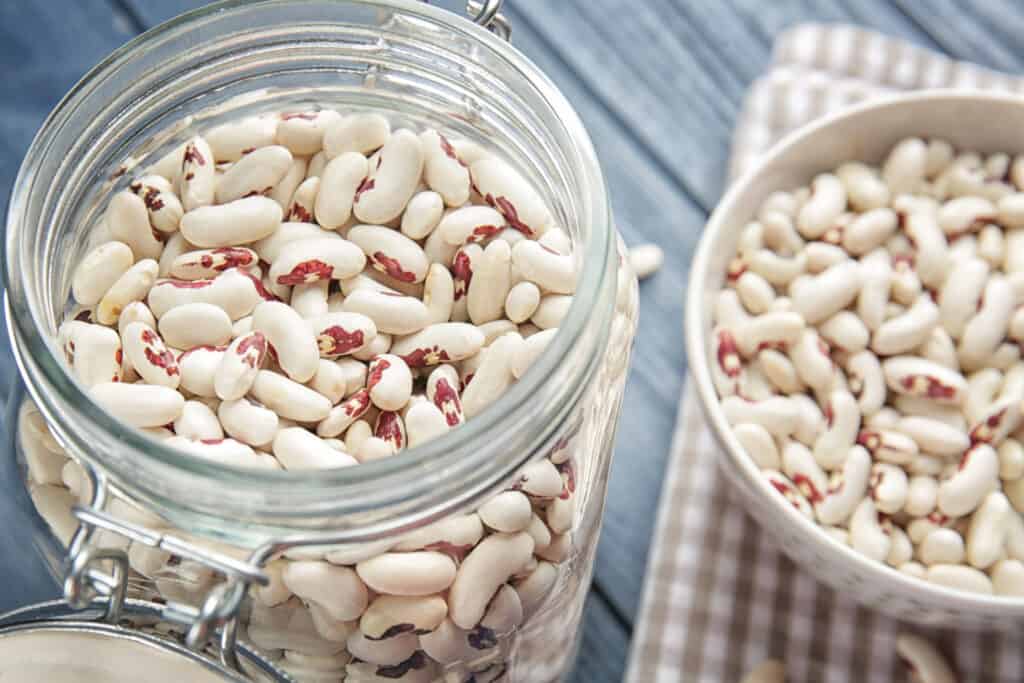
- Keep dried beans in a glass jar, covered container, or sealed plastic bag in a dry place.
- Dried beans can be stored for long periods, more than a year or two.
- Beans harvested and dried more recently will cook more quickly, be richer in nutrients, and be the most flavorful. Try to use the dried beans you have before stocking up with more.
- Cooked dried beans will keep in the refrigerator for 3 days or in the freezer for 3 months. Store beans in their cooking liquid.
How to prep dried beans for cooking
- Remove mature unshelled beans from pods; pods are commonly allowed to dry on the vine. Rinse shelled beans.
- Place dried beans in a pot of water and swish them around.
- Remove discolored, shriveled, or broken beans as well as pebbles or other debris.
- Soak the beans for an hour to overnight depending on the bean variety.
- Drain and then place beans in a colander and rinse again.
- The beans are now ready for cooking.
Amount. One cup of dried beans will yield about two cups of cooked beans. Allow ½ to 1 cup of cooked beans per person. Allow 1½ to 2 cups of dried beans for four people.
How to cook dried beans
Cover dried beans with water before cooking, just enough water to cover the beans. Add additional water during cooking as needed. Dried beans also can be cooked in meat or vegetable stock. Recently harvested beans will cook more quickly than beans that have been stored for a long time. Add salt after the beans have been cooked, not before otherwise, they will become tough.
Soak beans before cooking
Dried beans can be pre-soaked for 8 to 12 hours before cooking. Pre-soaking will save 15 to 30 minutes of cooking time. Place the beans in a large pan or bowl and cover with water. As the beans soak, you may need to add more water. Discard the water after soaking. Use fresh water for cooking.
Boil and simmer beans
Place dried beans in a large pot with water to cover. (Cover 1 cup of dried beans with 4 cups of water in a 3-quart saucepan.) Bring to a boil over medium heat; skim the foam if necessary. Reduce the heat and then allow the beans to simmer, cover loosely. Stir occasionally until the beans become tender, not mushy. Add salt to taste or season as beans are added to the recipe. Cook and stir gently until the beans are tender. Add additional water if necessary. Drain and serve. (1 cup of dried beans will make 2 to 2½ cups of cooked beans.
Dried beans absorb the flavors of the seasoned cooking liquid. Finish cooking with other ingredients if desired.
Dried beans cooking suggestions
- Cover dried beans with water before cooking, just enough water to cover the beans. Add additional water during cooking as needed.
- Dried beans also can be cooked in meat or vegetable stock.
- Recently harvested beans will cook more quickly than beans that have been stored for a long time.
- Add salt after the beans have been cooked, not before otherwise, they will become tough.
How to serve dried beans
Dried beans can be served as a vegetable side dish or added to salads, soups, stews, and stir-fries, or used as a main dish. Marinate beans or bake au gratin topped with sauce or vinaigrette.
Dried beans flavor partners
Dried beans have a flavor affinity for almonds, bacon, butter, dill, lemon, marjoram, olive oil, orange, pine nuts, tarragon, tomatoes, and walnuts.
Dried bean beverage pairing
Pair dried beans with still or effervescent water, beer (with black beans), Zinfandel (with red beans), Chablis, or red wine (with white beans).
Dried beans nutrition
- Beans are rich in vitamins A, B, and C, and also calcium, phosphorus, iron, fiber, and protein.
Best-known dried beans
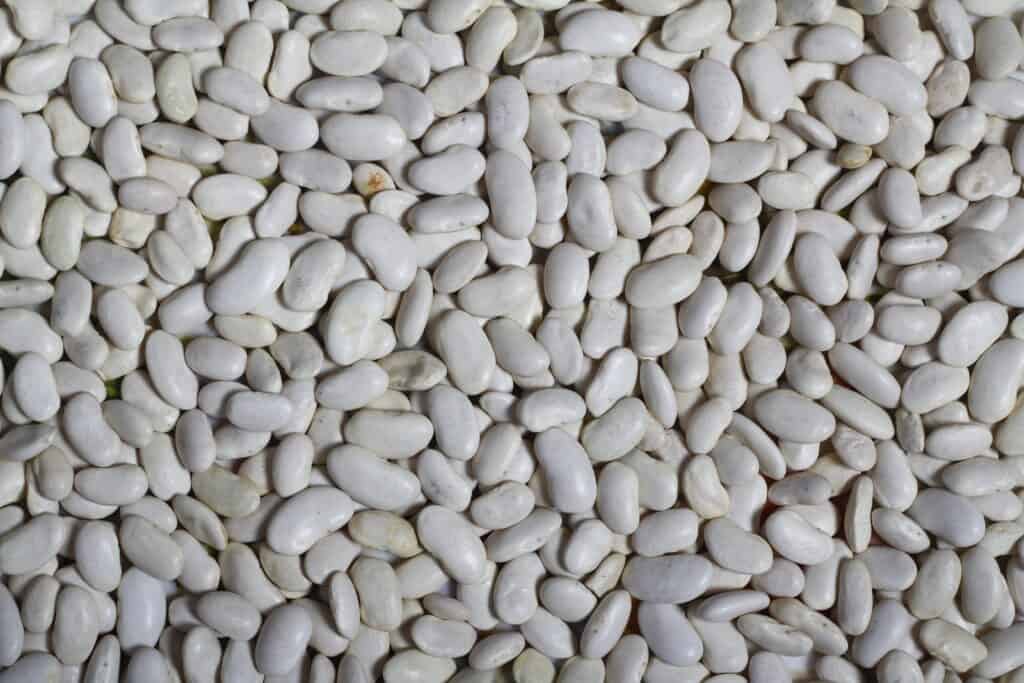
Navy beans
Navy beans, also called haricot, pearl haricot bean, Boston bean, white pea bean, and pea bean; mild, creamy texture; absorbs flavors of other ingredients; savory baked bean often cooked in tomato sauce. Prep tip: use three cups of water for each cup of uncooked beans; season beans with bay leaves, herb sprigs, or garlic cloves in the cooking water. Small beans cook for 30 to 40 minutes; large beans cook for 45 to 60 minutes.
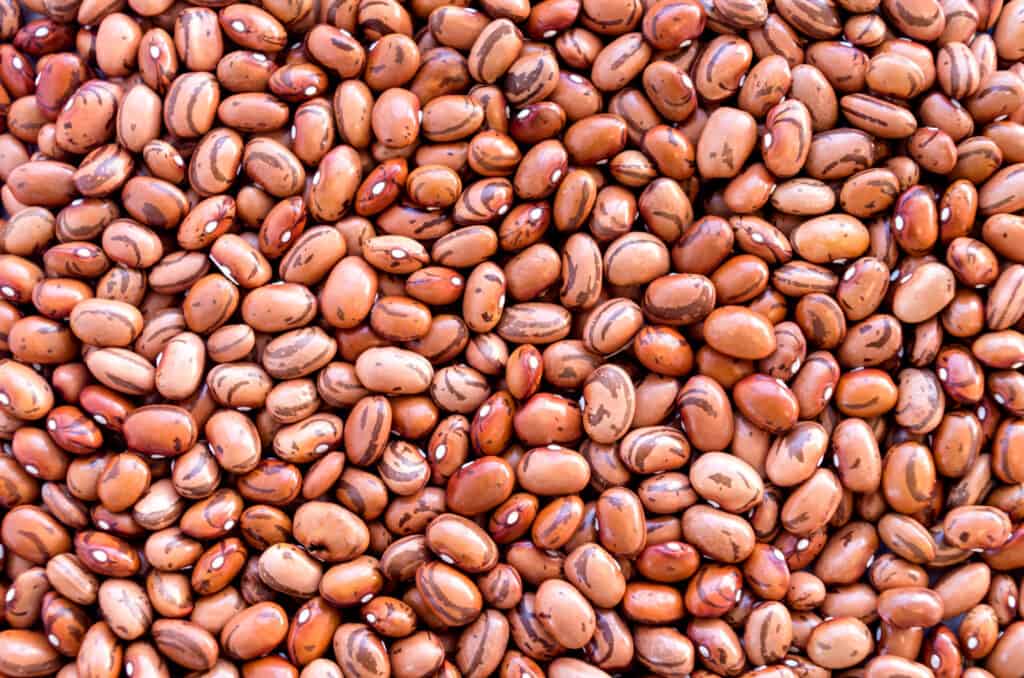
Pinto beans
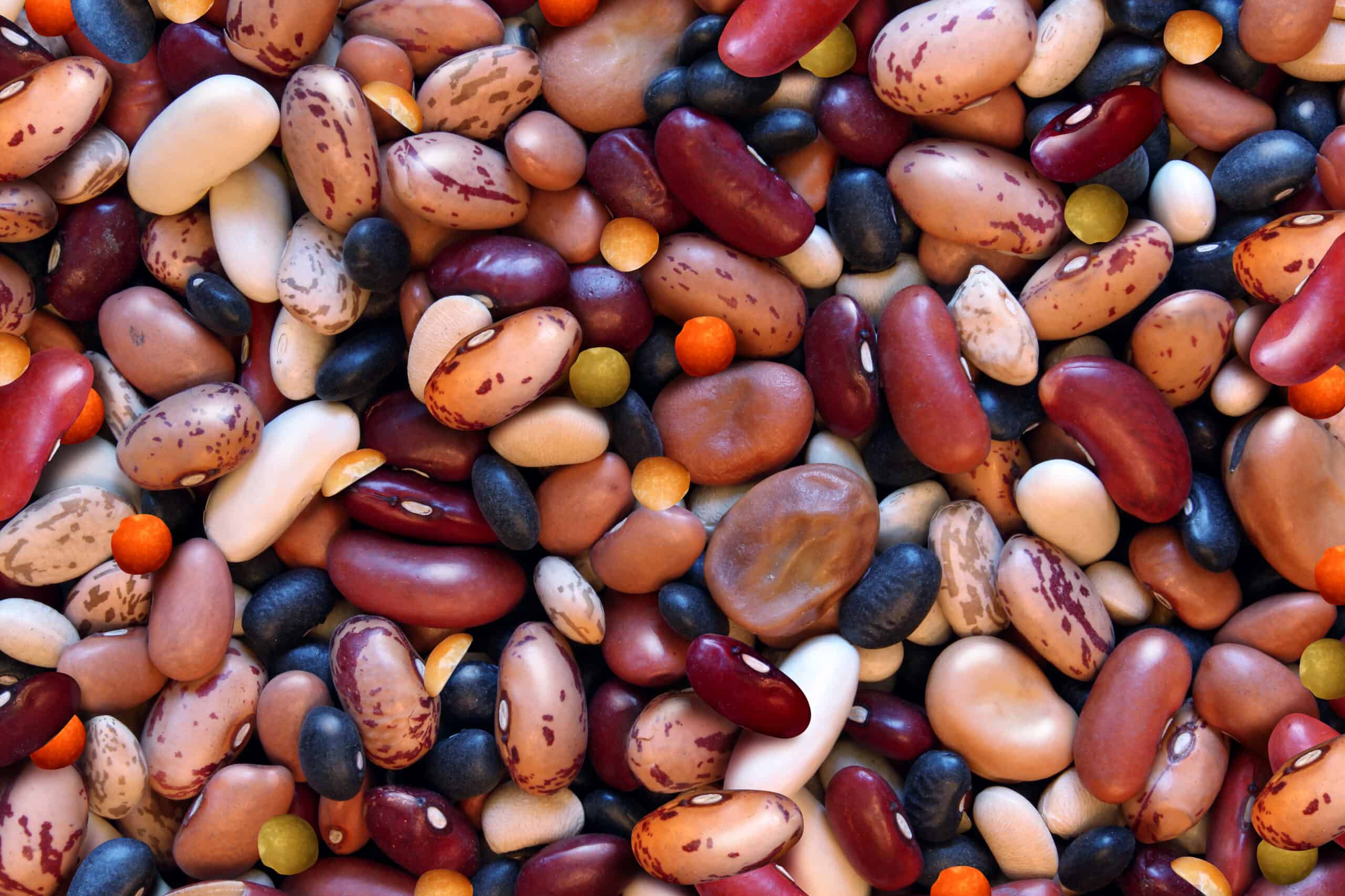
Pinto beans commonly have a maroon-speckled exterior. Prep tip: soak for several hours or overnight before cooking or bring them to a boil in a pan then turn the heat off and soak them for an hour with the lid on before cooking. Cooks in about one hour.
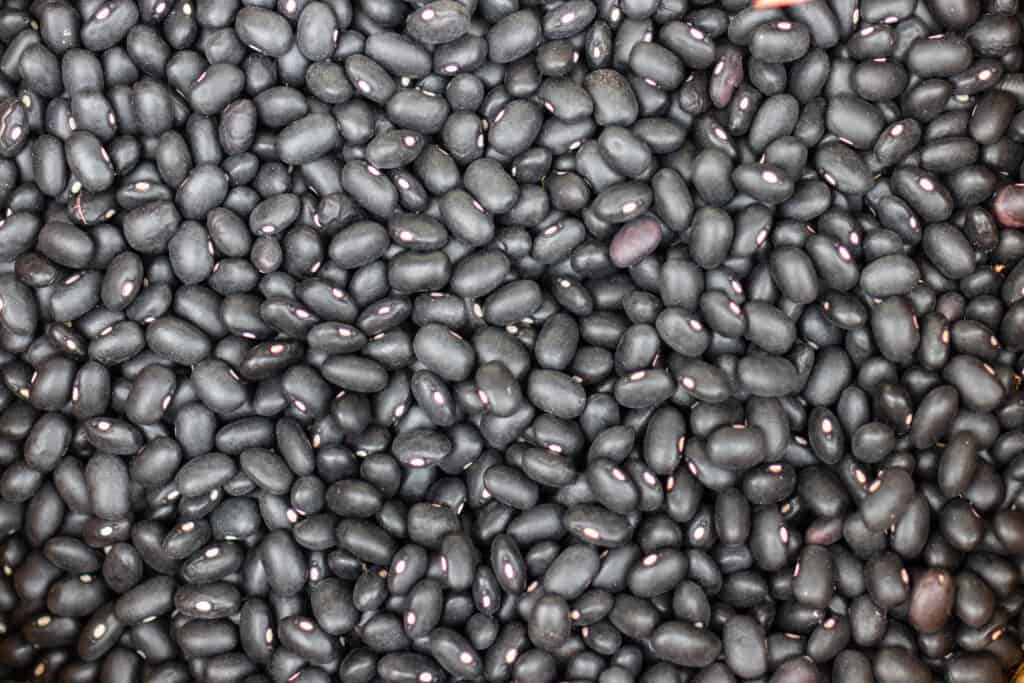
Black beans
Black beans, also called Turtle beans, are mild, slightly sweet, and creamy beans; use in soups, chilis, enchiladas, rice, and salads. Prep tip: soak before cooking to cooking. Cook for up to two hours.
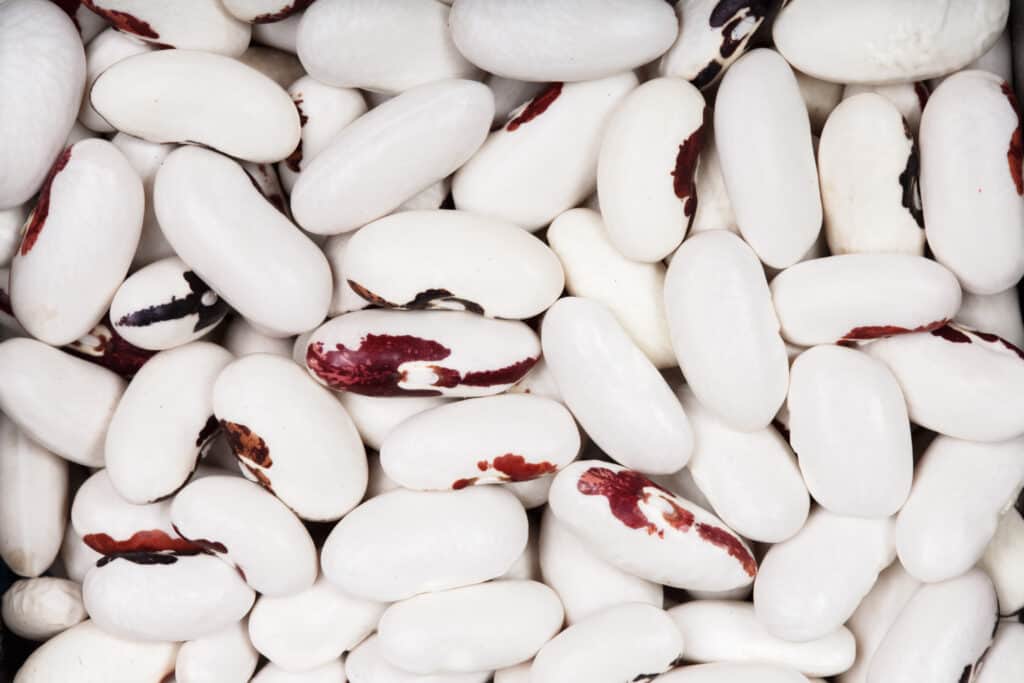
Great Northern beans
Great Northern beans have a light nutty flavor; use in soups and purées; smaller than a navy bean. Prep tip: rinse, put in a saucepan, cover with an inch of water, season with salt, and bring to a boil; once the water boils, put the lid on the pan and let them soak for an hour off the heat. Cooks in about one hour.
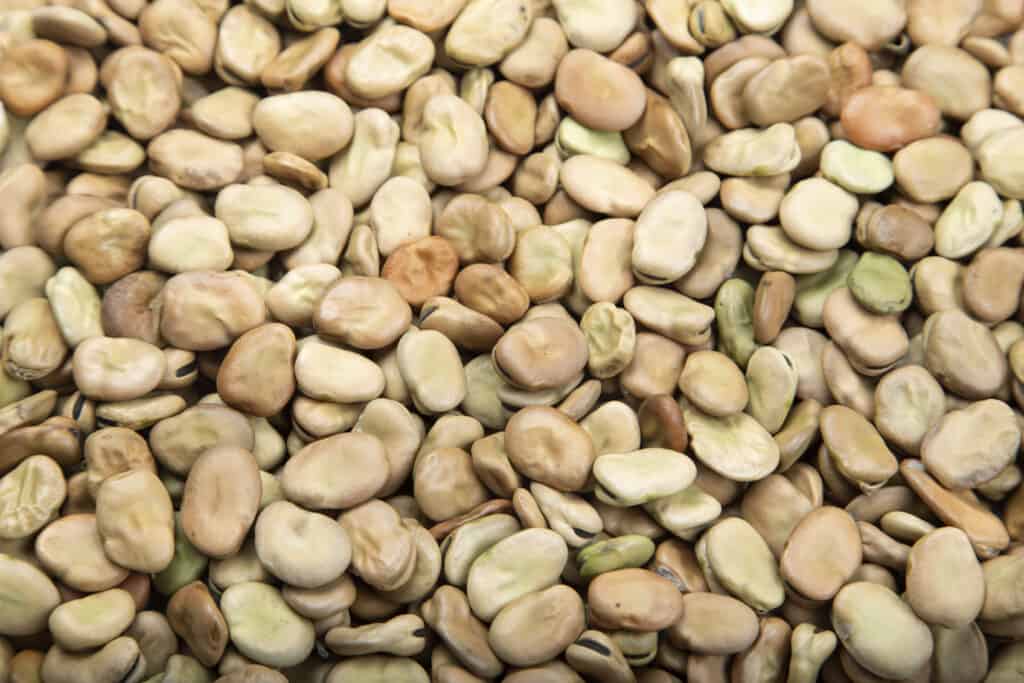
Fava beans (Broad beans)
Fava beans (Broad beans) have a buttery, sweet, and nutty flavor; commonly used fresh; dried beans are often mashed or pureed. Prep tip: cooks faster if split before cooking; splitting also eliminates the need for skinning. Cook skinned beans for 30 minutes, unskinned for one hour.
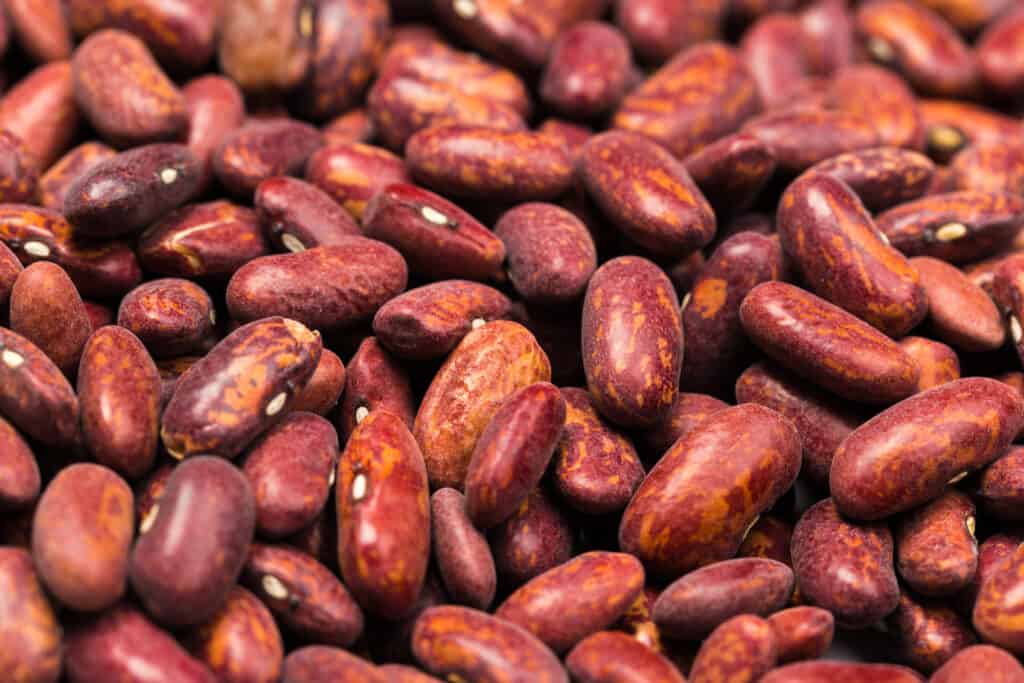
Kidney beans
Kidney beans are dark red or white, kidney-shaped beans; the white kidney bean is called cannellini bean; protein-rich; use in pasta, minestrone soup, and chili con carne. Prep tip: soak overnight then boil to render toxins on the outer skin harmless. Cooks in about an hour or slightly longer.
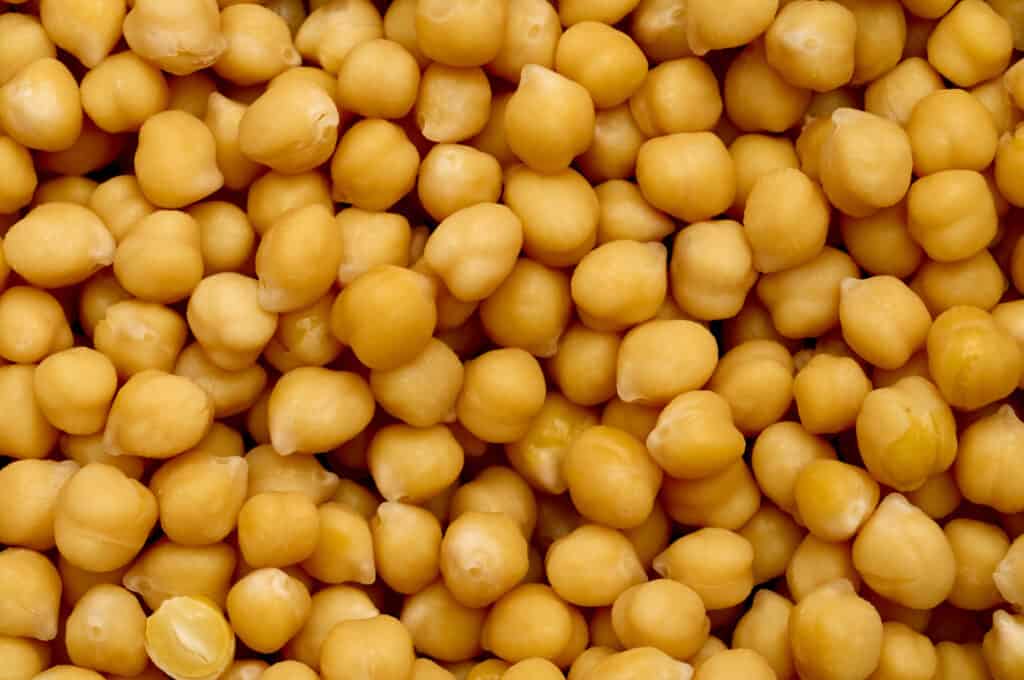
Chickpeas
Chickpeas, also called garbanzo beans or Egyptian peas, are buttery, starchy in texture and nutty flavor; two types: the larger Kabuli, which is common throughout the Mediterranean, and the desi, which is common in India; use in salads, pasta, and curries. Cooks for about two hours.
Dried beans cooking suggestions
- Cover dried beans with water before cooking, just enough water to cover the beans. Add additional water during cooking as needed.
- Dried beans also can be cooked in meat or vegetable stock.
- Recently harvested beans will cook more quickly than beans that have been stored for a long time.
- Add salt after the beans have been cooked, not before otherwise, they will become tough.
Dried beans nutrition
- Beans are rich in vitamins A, B, and C, and also calcium, phosphorus, iron, fiber, and protein.
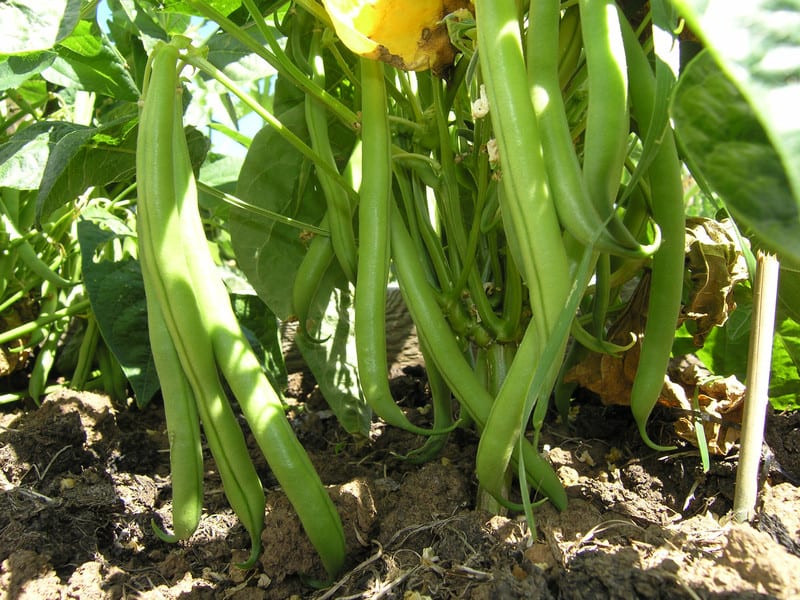
Growing dried beans
Dry or dried beans–also called shell beans–are beans grown to full maturity and left in their pods to dry before being shelled and stored for later use. Dried beans can be stored in a cool, dry place for up to a year or more. (These beans also can be harvested at the green, shelling stage–when seeds are still tender–and eaten before they dry. Often these beans are called “shuckies.”) Many beans that can be eaten fresh and immature also can be grown to maturity and dried.
Beans are a tender annual best planted early in the season as soon as the frost has passed. Sow beans in the garden just after the average date of the last frost in spring. To get an early start on the season, sow beans indoors as early as 3 or 4 weeks before the average last frost date in spring for transplanting into the garden a week or two after the last frost. Beans will grow in the garden until the first frost in fall. But they will not set pods in temperatures above 80°F. Beans for shelling are sometimes harvested after the first frost, well after plants have dropped their leaves.
Dried beans description
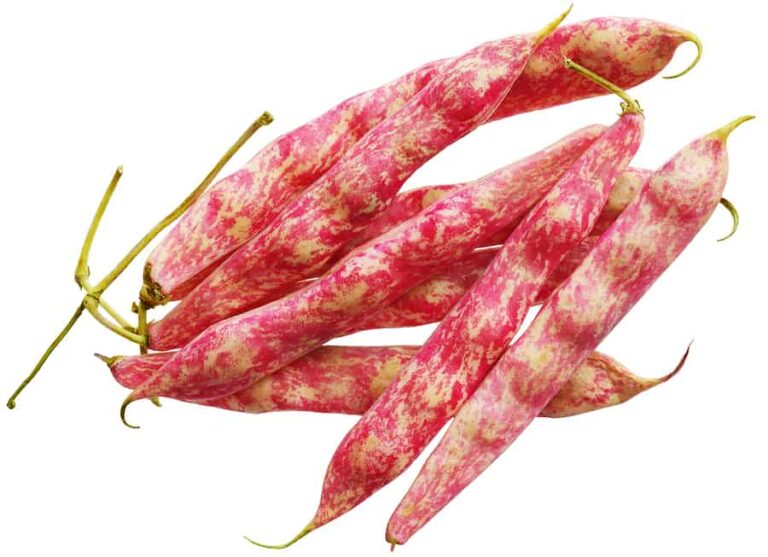
Dry beans or shell beans are beans grown to full maturity, usually harvested in the fall after the pods have matured and the leaves of the plant have dried and fallen. Beans grow either as bushes or vines. The size and color of pods and seeds can vary. Pods can be 3 or 4 inches to 12 to 14 inches long at maturity and vary in color during the growing season: green, yellow, purple, and speckled. Leaves are commonly composed of three leaflets and flowers are pale yellow or white. Beans for shelling commonly grow on bushes that are 2 or 3 feet tall; some are pole beans that can grow to 8 feet tall or more. Dry beans require from 70 to 120 days to reach harvest.
Yield. Grow 4 to 8 bean plants per household member.
Where to grow dried beans
Grow beans in full sun. Beans will grow in partial shade but the harvest will not be full. Beans prefer loose, well-drained soil rich in organic matter. Beans prefer a soil pH of 6.0 to 6.8. Prepare planting beds in advance by working with plenty of aged compost. Avoid planting beans where soil nitrogen is high or where green manure crops have just grown; these beans will produce green foliage but few beans.
Dried beans planting time
Beans are tender annual that grows best in temperatures between 50° and 85°F. Beans will not set pods in temperatures above 80°F. Sow beans in the garden just after the average date of the last frost in spring when the soil temperature has warmed. The optimal growing soil temperature for beans is 60° to 85°F. Start beans indoors as early as 3 or 4 weeks before the average last frost date in spring for transplanting into the garden a week or two after the last frost. Start beans indoors in a biodegradable peat or paper pot that can be set whole into the garden so as not to disturb plant roots. Beans can continue in the garden until the first frost in fall. Dry beans are allowed to stay on the plant until leaves have fallen and pods have dried and withered.
Planting and spacing dried beans
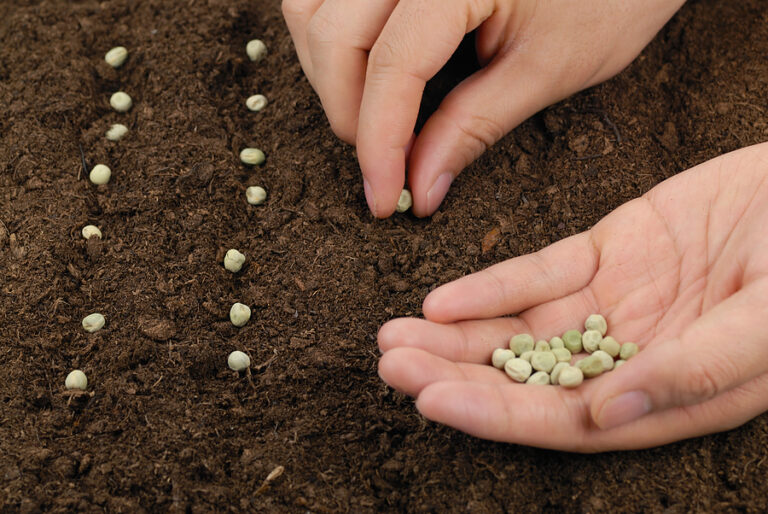
Sow beans 1 to 1½ inches deep. Plant bush beans 3 to 4 inches apart; set rows 18 to 24 inches apart. Plant pole beans 4 to 6 inches apart; set rows 30 to 36 inches apart. Set poles, stakes, or supports in place at planting time. Pole beans also can be planted in inverted hills–5 or 6 seeds to a hill; space hills 40 inches apart. Thin strong seedlings from 4 to 6 inches apart. Remove weaker seedlings by cutting them off at soil level with scissors being careful not to disturb the roots of other seedlings. Beans can be crowded; they will use each other for support.
Water and feeding dried beans
Grow beans in soil that is evenly moist. Bean seeds may crack and germinate poorly if the soil moisture is too high at sowing. Do not soak seeds in advance of planting and do not over-water after sowing. Keep the soil evenly moist during flowering and pod formation. Rain or overhead irrigation during flowering can cause flowers and small pods to fall off. Once the soil temperature averages greater than 60°F, mulch to conserve moisture.
Beans are best fertilized with aged garden compost; they do not require extra nitrogen. Beans set up a mutual exchange with soil microorganisms called nitrogen-fixing bacteria which produce the soil nitrogen beans require. Avoid using green manures or nitrogen-rich fertilizers.
Companion plants for dried beans
Bush beans: celery, corn, cucumbers, potatoes, rosemary, strawberries, summer savory. Pole beans: corn, rosemary, summer savory, scarlet runner beans, sunflowers. Do not plant beans with onions, beets, or kohlrabi.
Caring for dried beans
Cultivate around beans carefully to avoid disturbing the shallow root system. Do not handle beans when they are wet; this may spread fungus spores. Set poles, stakes, or trellises in place before planting pole beans. Select supports that are tall enough for the variety being grown. Rotate beans to plots where lettuce, squash, broccoli, Brussels sprouts, cabbage, cauliflower, or collards have grown in the past year or two.
Container-growing dried beans
Dry beans are not a practical choice for container growing. They require a long season and many plants for a full harvest. Bush beans can be grown in containers, but you may need several containers for a practical harvest. Beans will grow in 8-inch containers.
Dried bean pests
Beans can be attacked by aphids, bean beetles, flea beetles, leafhoppers, and mites. Aphids, leafhoppers, and mites can be sprayed away with a blast of water from the hose or controlled with insecticidal soap. Look for eggs and infestations and crush them between your fingers and thumb. Pinch out and remove large infestations. Aphids can spread bean mosaic virus. Keep the garden clean and free of debris so that pests can not harbor or overwinter in the garden.
Dried bean diseases
Beans are susceptible to blight, mosaic, and anthracnose. Plant disease-resistant varieties. Keep the garden clean and free of debris. Avoid handling plants when they are wet so as not to spread fungal spores. Removed diseased plants; put them in a paper bag and throw them away. Beans are susceptible to many soil-borne diseases; rotating beans so that they do not grow in the same location more than every three years will reduce soil-borne diseases.
Dried beans harvest
Beans will be ready for harvest 70 to 120 after sowing when plants have matured and leaves have turned brown or fallen. To test for harvest, bite a couple of seeds; if they will hardly dent they are dry and ready for harvest. Harvest pods when they are completely dry. If pods have withered but are still moist, pick them and then spread them on a flat screen or surface in a warm, protected place where they can thoroughly dry. Plants also can be taken up whole and hung upside down to dry. Pods that are fully dry will split open to reveal the dried beans. Dry beans can be shelled by threshing in a burlap sack or by hand.
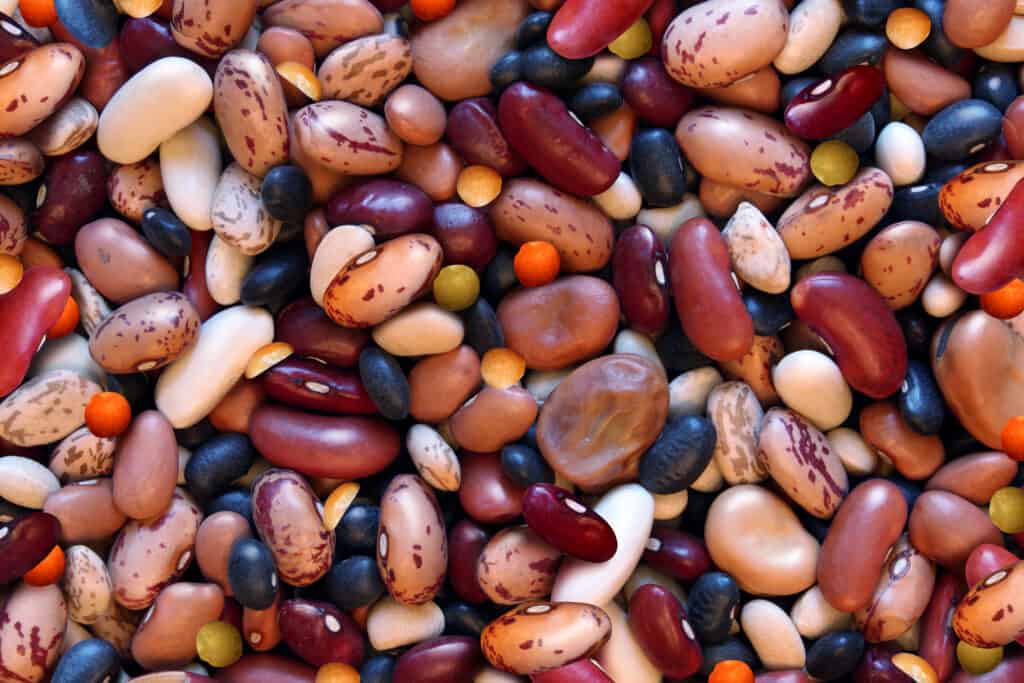
Dried bean varieties to grow
There are many types of dried or shelled beans. Horticultural beans or French flageolets are a type of dry bean usually eaten in the green-shell stage. Other dry or shell beans include cranberry, Great Northern, pinto, and red kidney.
- Fava or English broad bean shell beans: Aquadulce Very Long Pod (90 days); Broad Long Pod (85 days); Express (71 days); Imperial Green Longpod (84 days); Sweet Lorraine (90 days); Windsor Long Pod (65 days).
- Horticultural shell beans: Dwarf Horticultural (65 days); French Horticultural (64-90 days); Horticultural Shell (85 days); Speckled Bale (75 days); Tongue of Fire (70 days).
- Soybean shell beans: Black Jet (104 days); Envy (75 days); Hakucho Early (95 days); Prize (85-105 days).
- Kidney shell beans: Aztec Red Kidney (90 days); Cannelone Bean (70-90 days); Dark Red Kidney (95 days); Red Kidney (95-100 days); White Kidney (100 days).
- Other shell beans: Adzuki (90-125 days); Anasazi (90 days); Black Bean (90 days); Borlotto (68 days); Cannellini (75 days); Flageolet (65-100 days); Garbanzo (65-100 days); Improved Pinto (90 days); Midnight Black Turtle (85-104 days); Mung (120 days); Pink Bean (85 days); Pinto (90 days); Red Mexican (85 days); Rice Bean (85 days); Soldier (85 days); Urdi Black Gram (85 days).
- Navy shell beans: Navy (85-95 days).
- Red, purple, cranberry shell beans: Cranberry Bean (60 days); Jacobs Cattle (65-85 days); Mexican Red Bean (85 days) Montezuma (95 days); Speckled Cranberry Egg (65 days); Vermont Cranberry (60-90 days).
- White shell beans: Cannellini (80 days); Great White Northern (90 days).
Other types of beans
- Edible pod beans can be eaten fresh seed, pod, and all. These beans are often called green or snap beans.
- Fresh-shelled beans are harvested and shelled when their seeds are full-sized but have not yet dried. These beans are sometimes called shellies or shuckies.
About beans
- Beans are legumes whose seeds or pods can be eaten at various stages of maturity and belong to many different plant species. They have been used as food for thousands of years.
- Beans originated in Southern Mexico and Guatemala and Peru. The cultivation of beans dates to at least 8,000 B.C. There are more than 100 varieties of beans.
- Common name. Dry bean, dried bean, shell bean, pinto bean, navy bean, horticultural bean, flageolet
- Botanical name. Phaseolus vulgaris and species
- Origin. South Mexico, Central America
Related articles:
How to Plant, Grow, and Harvest Southern Peas
How to Plant and Grow Snap Beans
How to Harvest and Store Snap Beans
Bean Growing Problems: Troubleshooting
Five Ways to Quick Cook and Serve Snap Beans
How to Can Green Snap Beans for Beginners
Cooking and Serving Yard-Long Beans
How to Grow Plant, Grow, and Harvest Chickpeas and Garbanzo Beans
How to Cook and Serve Chickpeas
How to Plant and Grow Lima Beans
How to Plant, Grow, and Harvest Broad Beans and Fava Beans
Five Ways to Cook and Serve Fava Beans
All About Dried Beans – Growing and Cooking
Container Growing Beans – Plant, Grow, and Harvest Tips
Also of interest more kitchen tips:
Bring your harvest to the table. Kitchen prep tips and easy recipes for the vegetables you grow. Click below for vegetable prep and recipes you can use now.
- Almonds
- Apples
- Apricot
- Aprium
- Artichoke
- Arugula
- Asparagus
- Avocado
- Bamboo Shoots
- Banana
- Basil
- Beans, Dried
- Beans. Long
- Beans, Shell
- Beans, Snap
- Beets
- Bitter Melon
- Blackberry
- Bok Choy
- Broccoli
- Broccoli Raab
- Brussels Sprouts
- Cabbage
- Cardoon
- Carrots
- Cauliflower
- Celeriac
- Celery
- Chard
- Chayote Squash
- Cherimoya
- Cherries
- Chestnut
- Chickpea
- Chinese Cabbage
- Chives
- Cilantro
- Citron
- Clementine
- Collards
- Coriander
- Corn, Sweet
- Corn, Baby
- Corn Salad, Mache
- Cranberry
- Cress
- Cucumber
- Daikon
- Dandelion
- Dill
- Eggplant
- Endive, Belgian
- Endive and Escarole
- Fava Beans
- Fig
- Florence Fennel
- Garlic
- Ginger
- Grapefruit
- Grapes
- Guava
- Horseradish
- Jerusalem Artichoke
- Jicama
- Jujube
- Kale
- Kiwifruit
- Kohlrabi
- Kumquat
- Leeks
- Lemongrass
- Lemons
- Lettuce
- Lime
- Mache (Corn Salad)
- Mandarin Orange
- Mango
- Maple Syrup
- Marjoram
- Melons
- Michihili
- Mint
- Mizuna
- Mushrooms
- Mushrooms, Cremini
- Mustard Greens
- Napa Cabbage
- Nectarine
- Okra
- Olives
- Olive oil
- Onions
- Oranges
- Oregano
- Parsley
- Parsley Root
- Parsnips
- Passion Fruit
- Pawpaw
- Peaches
- Pears
- Peas, Garden Snap
- Peas, Snow
- Pei Tsai
- Peppers, Chili
- Peppers, Sweet
- Persimmon
- Pineapple
- Pineapple Guava
- Plantain
- Plums
- Pluots
- Pomegranate
- Potatoes
- Prickly Pear
- Pumpkin
- Quince
- Radicchio
- Radishes
- Raspberries
- Rosemary
- Rhubarb
- Rutabaga
- Sage
- Salsify
- Sauerkraut
- Savory
- Shallots
- Sorrel
- Spinach
- Squash, Summer
- Squash, Winter
- Strawberries
- Sunchokes
- Sunflower
- Sweet Potato
- Swiss Chard
- Tangerine
- Taro
- Tarragon
- Thyme
- Tomatillo
- Tomato
- Turnip
- Turnip Greens
- Yams