The Ultimate Onion Growing Guide: From Seed to Harvest

Onions can be grown for their green immature stems or they can be grown for their mature bulbs. These strong-smelling plants have been extremely popular for centuries.
Two main types of onions are grown in the home garden: the young, green or white, bunching sorts eaten fresh and before the mature bulb has formed, and those that develop a large, coated bulb with a papery skin that is most often eaten boiled or fried (and also eaten fresh though some are pretty strong).
Related articles:
- Onion Cooking and Serving Tips
- Planting Onions Seeds and Sets
- Growing Onion Bulbs: Pick the Right Variety
- How to Grow Onion Sets
- How to Harvest and Store Onions
- How to Grow Green Onions
- How to Plant, Grow, and Harvest Welsh Onions
- Onion Family Growing Problems Troubleshooting
- How to Plant and Grow Onions
- How to Plant, Grow, and Harvest Shallots
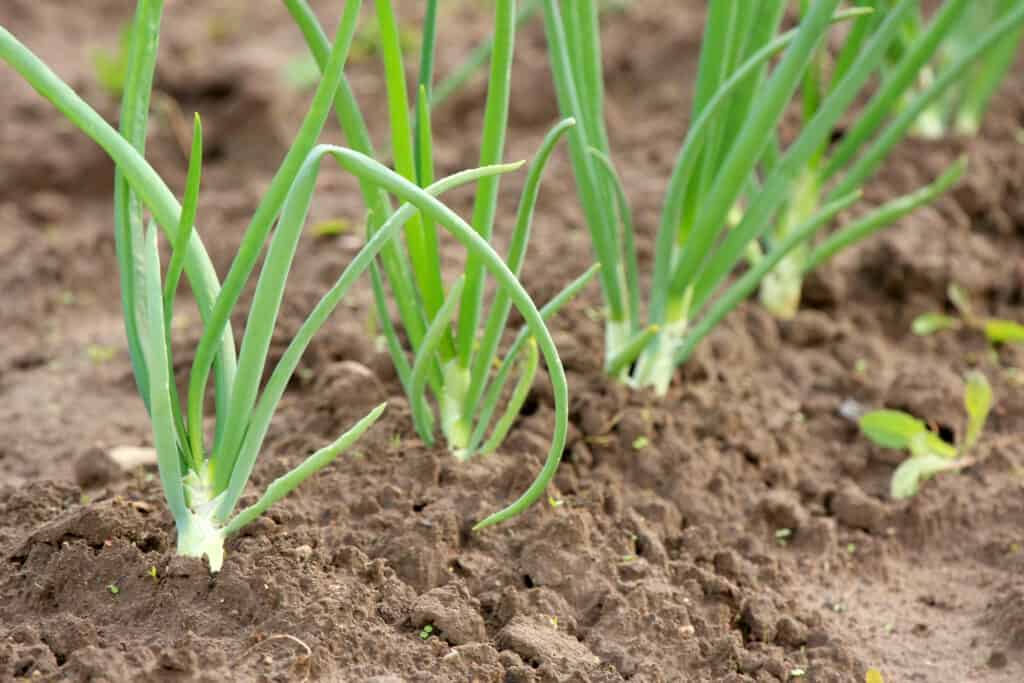
Onions grown for their green stems are also called green onions, spring onions, and scallions. (The terms are often used interchangeably.) Bulb-forming onions can be harvested early as green onions. But not all green or bunching onions will grow bulbs if allowed to mature. So when you select an onion to grow in your garden, make sure you get the type of onion you want—bulbing or bunching.
Here is your complete guide to growing onions.
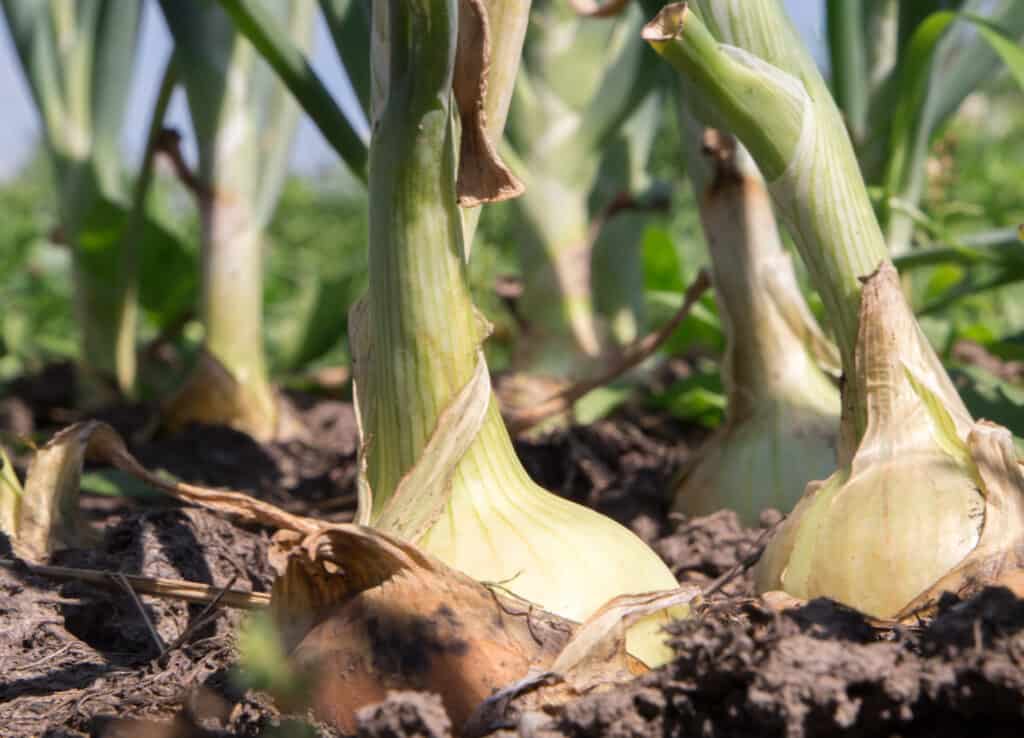
Raising onions in your garden
There are three ways of starting onions: by seeds, by sets, and by multipliers or potato onions that develop among onion flower clusters. Here’s a primer on each of these ways to grow onions:
- Seeds: Raising onions from seeds is often difficult in the home garden, but seedlings raised by commercial nurseries are inexpensive and save time. Seedlings are one of the easiest ways to start an onion patch.
- Set: Onion sets are also inexpensive and easy to grow. The “set” consists of a small, immature bullet that has been harvested from a large bulb grown for that purpose. These immature bulblets will produce a mature onion during the season. Sets are used for growing spring onions for eating fresh and for growing mature onion bulbs. Sets are easy to plant and seldom fail.
- Bulbils among the flower clusters: Flower bulbils are not true bulbs like the set, but aerial, bulb-like organs from which a new plant will grow. These plants are often called multiplier- or potato-onions. Tree onions–also called topsetting onions, walking onions, or Egyptian walking onions produce bulbils among the flower clusters.
Whichever way you choose to start onions, it is important to get true stock, authentic as to the variety from a reliable local garden center.
Selecting onions for your garden
Shape and size
- Bunching onion: Some onions produce very small, nearly insignificant bulbs; these are called bunching onions, green onions, and scallions.
- Pickling onions: Some onions produce small bulbs that are round or spindle in shape; these are called picking onions.
- Bulb or storage onions: Some onions produce medium-sized globe-shaped bulbs; these tend to be sharp-flavored storage onions.
- Fresh-use onions: Some onions produce large, round, mild-flavored bulbs for fresh use; Spanish and Bermuda onions are large, mild, and sometimes sweet.
Color and flavor
Onion colors range from white or yellow to red or purple.
- Yellow onions are all-purpose onions; they have a balance of astringency and sweetness in their flavor.
- White onions have a sharper more pungent flavor; they are also more tender and have a thinner, papery skin.
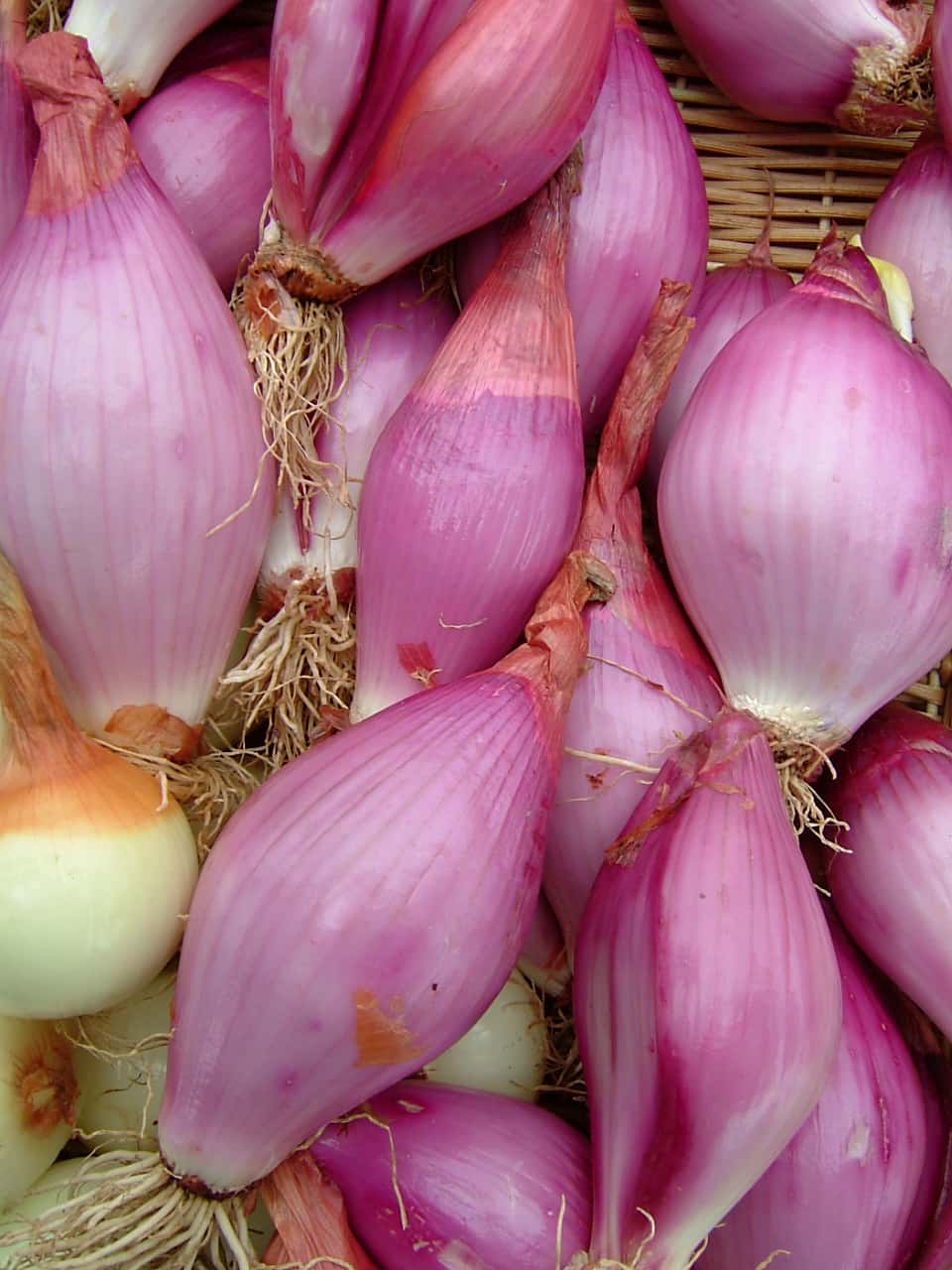
- Red onions have red flesh and purple skin; the flavor of red onion is similar to a yellow onion but the layers of red onion are less tender and less meaty than a yellow onion. Generally, the strongest-tasting onions are the best choice for storing into the winter; they have the toughest skins.
Onion daylight requirements
- Bulb onion varieties differ according to the amount of daylight needed for bulb formation. Some varieties require 12 hours of light each day to form bulbs (called short-day); some require 13 to 16 hours of daylight to form bulbs (called long-day).
- If you live in the North where summer days are long, grow a long-day variety.
- If you live in the South, where daylight hours do not vary by much year-round, grow a short-day variety.
- Grow short-day varieties where winters are mild; where you can grow onions through autumn and winter.
- Grow-long day onions where winters are cold. Onions are not sensitive to mild frost in either spring or autumn.
- It may be worth noting, long-day onions tend to be round, and globe-shaped and short-day onions tend to be flatter in shape.
Onion seeds, seedlings, and sets
- Onions can be grown from seeds, seedlings, or sets (sets are small bulbs grown the previous year).
- Onion sets (small onion bulbs) have a head start; they will mature more quickly.
- Onion seedlings will need more time to produce bulbs than sets.
- Onion seeds will need a long growing season to produce bulbs; sometimes they produce a bulb the second season they are in the ground.
- Sets are only available in spring. There will be a greater selection of varieties if you shop for seeds than in sets or seedlings.
- If you live in a short-growing season region, choose sets to ensure you have enough time to grow bulbs.
Where to plant onions
- Grow bulb onions in full sun. Green onions can be grown in a partially shady spot.
- Onions prefer loose, well-worked, well-drained soil rich in organic matter.
- Loosen the soil to 6 inches (15cm) deep and remove all lumps, stones, and roots.
- Add well-aged compost or a commercial organic planting mix to the planting bed before planting. Turn the soil under to 12 inches (30cm) deep.
- Sandy loam is good soil for growing onion sets. Loam is good soil for seeds and seedlings. Heavy clay soil can impede the development of bulbs.
- If the soil is not well-drained, grow onions in raised or mounded beds. Good drainage is important.
- A soil pH of 6.0 to 6.5 is recommended for growing onions. Perform a soil test before planting onions.
- Onions are light feeders. Onions can follow fruiting vegetables such as tomatoes and peppers in a crop rotation. They can be planted ahead of legumes in the crop rotation.
Onion planting times
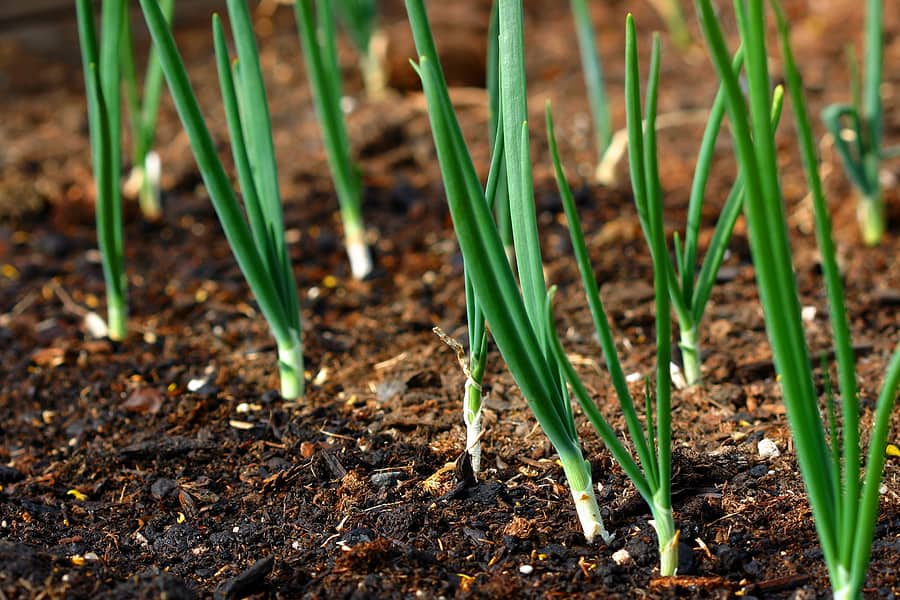
- Onions are temperature sensitive: they require cool weather to produce their tops (early stages of growth) and warm weather to produce their bulbs (late stages of growth). Onions grow best in air temperatures of 55° to 75°F (13-24°C) Temperatures greater than 85°F (29°C) can cause soft, gray, watery bulbs.
- Plant onion sets (small bulblets) 3 to 4 months before the time you want to harvest mature bulbs; plant sets 3 to 4 weeks before you want to harvest green onions.
- Onion seeds are best started indoors: start seeds 4 to 6 weeks before the average last frost date in spring and transplant them into the garden as soon as the soil can be worked. (Cold temperatures can affect the germination rate; wait until the soil is at least 40°F before sowing seeds.) In mild-winter regions, plant onions in the fall or winter, depending on the variety.
- Most onions are sensitive to day length. American and Spanish onions need long days to produce their bulbs, and Bermuda onions prefer short days.
- Green onions for autumn harvest: Plant green onions 4 to 6 weeks before the first expected fall frost for autumn harvest; late summer or early fall temperatures should not be greater than 75°F (24°C).
- Green onions for winter and early spring harvest: In mild winter regions, plant green onions in autumn for winter and early spring harvest.
About temperature and day-length: Bulb Onion Growing: Day Length and Temperature.
Planting onion seeds
- Onion seeds can be started indoors 4 to 6 weeks before you plan to set seedlings out or you can direct sow seed in the garden when the soil temperature is at least 40°F (4.4°C).
- Sow seed ¼ to ½ inches (12mm) deep.
- The seed will germinate in 7 to 10 days at 70°F (21°C), longer in cooler soil.
- Thin seedlings from 1 to 2 inches (2.5-5cm) apart in rows 12 to 18 inches (30-45cm) apart; thin again for bulb onions from 4 to 6 inches (10-15cm) apart.
- The final size of the onion will depend on how much growing space it has.
Planting onion seedlings
- Seedlings are onions that have begun growing. You can start seedlings indoors from seed or you can purchase onion seedlings at the garden center.
- Place transplants in the garden just slightly higher than the surrounding soil and they will settle into place.
- Space seedling transplants 2 to 3 inches (5-7cm) apart in rows 12 to 18 inches (30-45cm) apart
- Thin seedlings from 4 to 6 inches (10-15cm) or more apart allowing for bulb development.
Planting onion sets
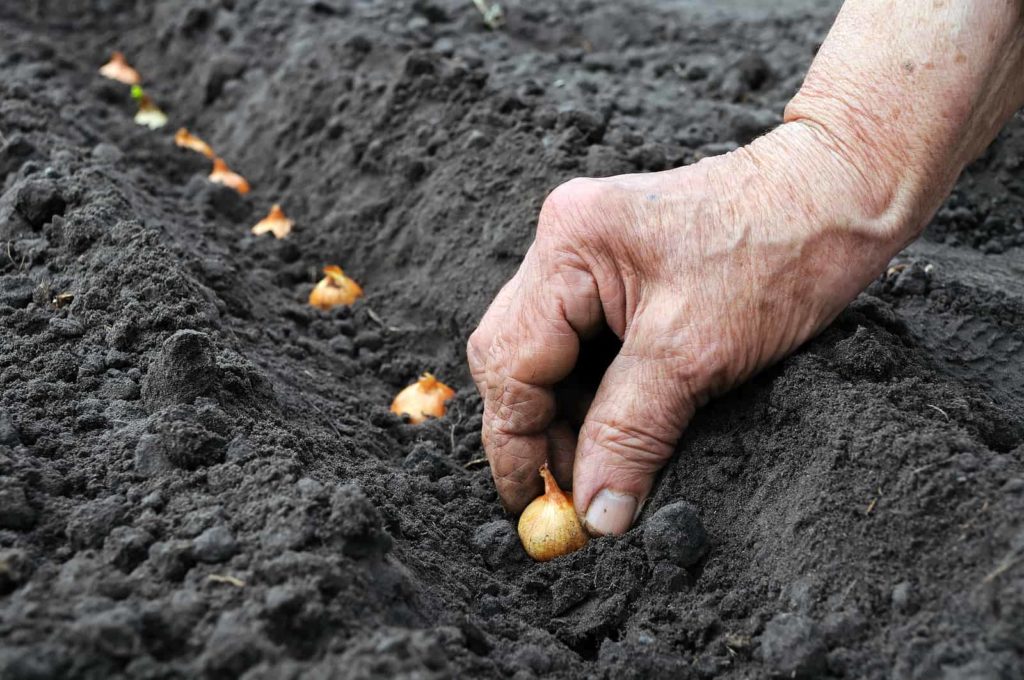
- Sets are small bulblets–about the size of a large pea–whose growth was interrupted before the bulbs developed. Bulblets larger than ¾ inch (19mm) in diameter may go to seed before developing bulbs (these are best grown as green onions).
- \Plant sets 1 to 2 inches (2.5-5cm) deep.
- Plant sets pointed side up.
- Space sets 2 to 3 inches (5-7cm) apart in rows 12 to 18 inches (30-45cm) apart.
- Thin to 4 to 6 inches (10-15cm) or more apart allowing for bulb development. The final size of the onion will depend on how much growing space it has.
Companion plants for onions
- Grow onions with beets, lettuce, strawberries, summer savory, and tomatoes.
- Onions are easily inter-planted between larger crops such as cabbages or tomatoes.
Container growing onions
- Green onions easily grow in containers 6 inches deep (15cm); grow 8 to 10 green onions in a container 8 inches across.
- Grow bulb onions in containers 8 to 10 inches (20-25cm) deep.
Watering onions
- Keep the soil evenly moist until onion plants begin to mature. Dry soil can cause onions to split; wet soil can cause bulbs to rot.
- Transplants need more water than sets.
- To conserve soil moisture, lay down 8 to 10 inches (20-25cm) of mulch when the soil warms in early summer.
- Soil can be allowed to dry when leaves start to get yellow and brown and to droop over.
Feeding onions
- Side-dress onion plants with a nitrogen-rich organic fertilizer such as alfalfa meal. You can also plant beans nearby; bean roots set nitrogen in the soil.
- Some growers place aged chicken manure between onion rows before planting. Gently and shallowly work the manure into the soil. The high nitrogen content can benefit onions. Do not let the mature touch the plants.
Onion care
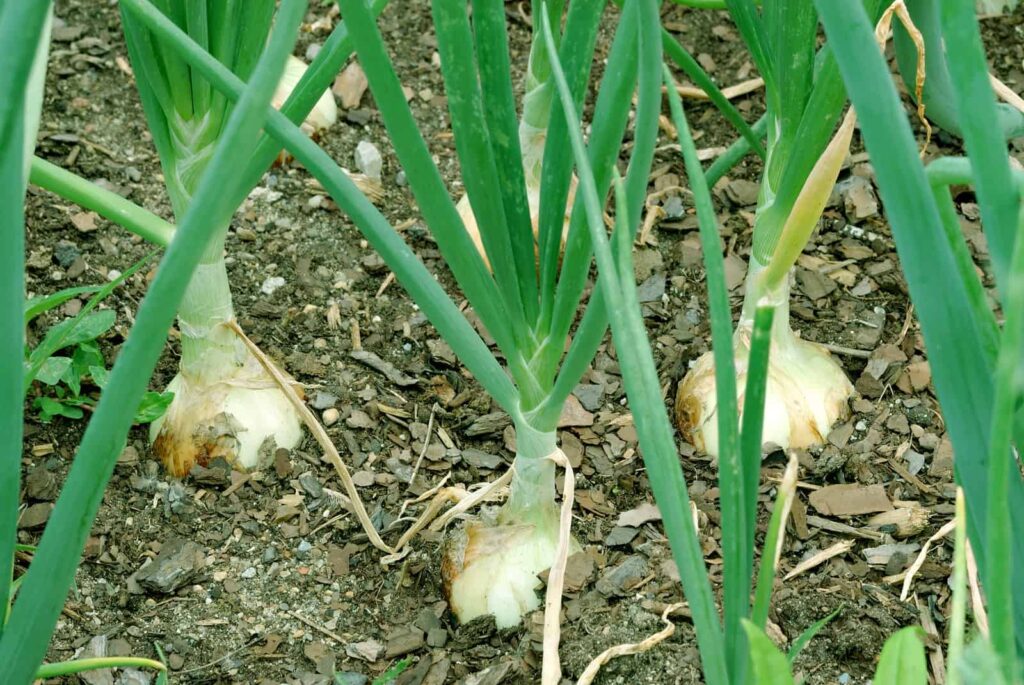
- Keep planting beds free of weeds to avoid competition for light, water, and nutrients. Weed control is important in the onion patch.
- Onion roots are very shallow; cultivate weeds with a shuffle hoe or remove them by hand being careful not to injure the shallow root system.
- Thin plants early to give bulbs room to mature to the desired size. Use the thinnings as green onions.
- Bend but do not break stalks 2 to 3 weeks before harvest to hasten bulb development.
- Cut back on watering close to harvest to keep the necks from rotting.
- Heavily mulch onions that you plan to over-winter and harvest the second season. Use an organic mulch such as aged compost or straw.
- Avoid planting onions near sweet potatoes; both can be attacked by wireworms.
Onion pests
- Onions can be attacked by onion thrips and onion maggots.
- Onion thrips are barely visible. They cause white spots on leaves and stems and weaken plants. Control onion thrips with insecticidal soap or spray them away with a stream of water.
- Onion maggots feed on roots and in bulbs. Spray young plants with a Bordeaux mixture; several applications may be needed.
- Place a 3 to 4-inch (7-10cm) square of plastic around the plants to discourage maggot flies from laying their eggs near plants.
- Cover plants with a floating row cover to keep adult onion maggot flies from laying eggs on young plants.
Onion diseases
- Onions are susceptible to several fungi: Fusarium bulb rot, smut, onion leaf blight, onion smudge, and downy mildew, especially in commercial onion growing districts.
- Plant disease-resistant varieties and keep the garden clean of debris.
- Avoid planting onions where onions or garlic have grown the year before.
- Remove and dispose of diseased plants immediately.
- Be sure to select varieties that are suited to the day length in your area.
- Warm the soil with clear plastic before planting, this will help prevent smut which appears as blisters on the skin of leaves and bulbs.
- Parasitic nematodes applied to the soil can help control cutworms and onion maggots.
- Pre-soak seed in compost tea for an hour to prevent damping off and other fungal diseases.
Harvesting onions
- Harvest onions for flavoring throughout the season by snipping the ends of leaves.
- Harvest green onions when bulbs are no larger than the diameter of the leaves.
- Bunching onions can be harvested when bulbs are 1 to 2 inches (2.5-5cm) in diameter; split them off from the outside of the bunch.
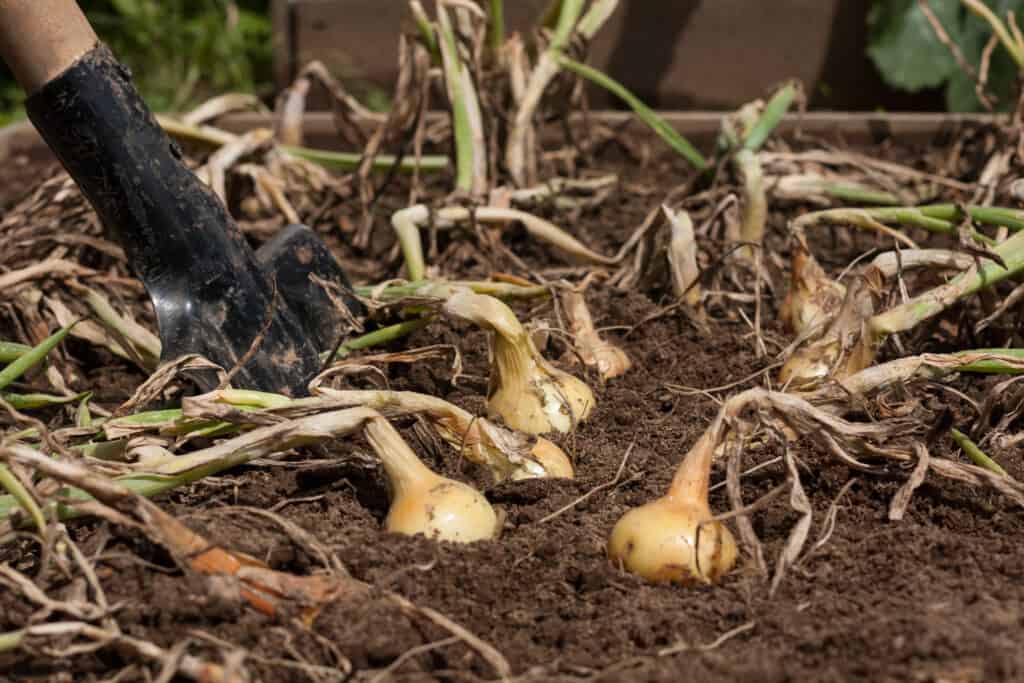
- Bulbing onions are mature when the tops turn yellow and start to fall over. To speed maturation, bend over the tops with your foot or the back of a rake.
- Lift dry onion bulbs when they are 3 to 5 inches (7-12cm) in diameter after the leaves have dried. Use a spading fork to help loosen the soil and lift bulbs.
- Be careful not to bruise bulbs when you lift them; bruised bulbs can rot in storage.
- Cure onions after harvest by leaving them outdoors to dry for a few days. Spread them out on wire mesh set above the ground. Cure them out of direct sunlight to prevent sunscald.
- If you allow lifted onions to cure in the garden, be sure to lift them root and all from the soil or they may start growing again and become soft and watery.
- Cut tops away from stalks 1½ inches from the bulb if you do not plan to braid the stalks.
- Onions that come to maturity in cool weather tend to be sweet; onions that come to maturity in hot weather will be stronger flavored.
Storing and preserving onions
- Green onions will keep in the refrigerator for up to one week. Wrap them in plastic wrap.
- Mature bulbs should be allowed to air dry for about a week outside before being stored in a cold, dry place for up to 6 months. Place onions on a drying rack in a shaded, dry place. When the skins are dry and papery, cut the tops off about one inch above the bulb then store the bulbs in mesh bags. Storage life is reduced if the tops are not removed.
- Do not refrigerate mature onions.
Onions in the kitchen
- Use fresh onions raw when mild in salads, soups, sauces, stews, and curries.
- Use onion as a condiment raw or cooked, chopped, minced, or sliced.
More harvest tips: How to Harvest and Store Onions.
Onions frequently asked questions
Q: Are onions hard to grow?
A: Not if you choose a variety suited for your location. Onions are particular about the number of hours of light and darkness they get as they grow. You must plant the appropriate variety for your area and plant at the right time of the year. It is important to plant short-day types such as Yellow Bermuda if you live in the South, and long-day types such as Early Yellow Globe if you live in the North.
Q: What is the best way to prepare the soil for onions?
A: Onions are heavy feeders. They need well-limed, well-fertilized, heavy soil. Onions do best when organic matter has been added to the soil. Work in lots of aged manure before you plant. Add a balanced organic fertilizer to the soil as well.
Q: Should I plant seeds or sets?
A: Grow onions from seeds if you want to harvest in autumn for winter storage. Grow from sets if you want to harvest in summer.
Q: How do I plant onion sets?
A: Plant sets so that their tops are about a half inch below the soil surface. To grow large onions, space sets 3 to 4 inches apart; for scallions or bunching onions, space sets about 1 inch apart.
Q: How do I plant onion seeds?
A: Sow onion seeds indoors 5 to 6 weeks before you want to transplant seedlings into the garden. Space transplants 4 inches apart. Snip off a bit of the tops and a bit of the bottoms of the roots at transplanting time to encourage rapid growth. Seeds can be planted outdoors as early as the ground can be worked in early spring. Sow seeds a quarter inch deep.
Q: Why is it important to plant onions early in spring?
A: Onions need to grow big tops before days grow longer and trigger bulb formation. If the tops are small when bulbs begin to form, the bulbs will be small. Tall leaves are needed to feed the bulbs to grow big.
Q: What care do onions need?
A: Keep the garden weeded; mulch to keep down weeds. Be careful when weeding because onions have shallow roots. Water during dry weather; the ground should never dry out below the surface. When flowers begin to form, break the flowering stalks so that they hang over; this will ensure the bulbs continue to form and ripen.
Q: When do I harvest onions?
A: To harvest bulb onions, wait until the tops have fallen over and begun to brown. When you lift the bulbs let them dry outside in the sun for a week or more or place them in a warm, well-ventilated place that is dry.
Onion varieties to grow
- Red: ‘Benny’s Red’ (112 days); ‘California Wonder Red’ (85 days); ‘Giant Red Hamburger’; ‘Lucifer’ (106 days); ‘Mars’; ‘Mercury’; ‘Red Baron’; ‘Red Burgermaster’; ‘Red Dutch’; ‘Red Globe’; ‘Red Mac’; ‘Redman’ (105 days); ‘Rio Kyda Von’; ‘Southport Red Globe’ (120 days); ‘Stockton’; ‘Wethersfield’.
- Yellow or White: ‘Alisa Craig’ (110 days); ‘Bingo’ (100 days); ‘Blanco Duro’ (120 days); ‘Buffalo’ (88 days); ‘Burgos’; ‘Capable’; ‘Celebrity’; ‘Condor’; ‘Copper King’ (95 days); ‘Copra’ (111 days); ‘Duration’ (110 days); ‘Early Yellow Globe’ (114 days); ‘Eskimo’ (85 days); ‘Fiesta’; ‘First Edition’ (105 days); ‘Frontier’; ‘Gazette’; ‘Giant Zittau’; ‘Granex’ (110 days); ‘Gringo’; ‘Headliner’; ‘Joint Venture’; ‘Kelsae Sweet Giant’ (110 days); ‘Legacy’ (108 days); ‘Lisbon White’; ‘New York Early’ (98 days); ‘Norstar’ (85 days); ‘Prince’ (106 days); ‘Reliance’ (110 days); ‘Riverside Sweet Spanish’; ‘Simcoe’ (110 days); ‘Southport White Globe’ (110 days); ‘Sweet Sandwich’; S’weet Spanish Hybrid’ (110 days); ‘Tarmagon’; ‘Texas Yello Grano’, ‘Valiant’.
- Sweet Onions-Eating: ‘Walla Walla’ (110-300 days), ‘Yellow Sweet Spanish’ (110 days), ‘Vidalia’ (110 days).
- Green Onions-Scallions: Any of the above can be harvested as new onions–before bulbs are fully developed.
About onions
- The onion is a hardy cool-season biennial usually grown as annuals.
- The onion has narrow hollow leaves and a base that enlarges to form a bulb.
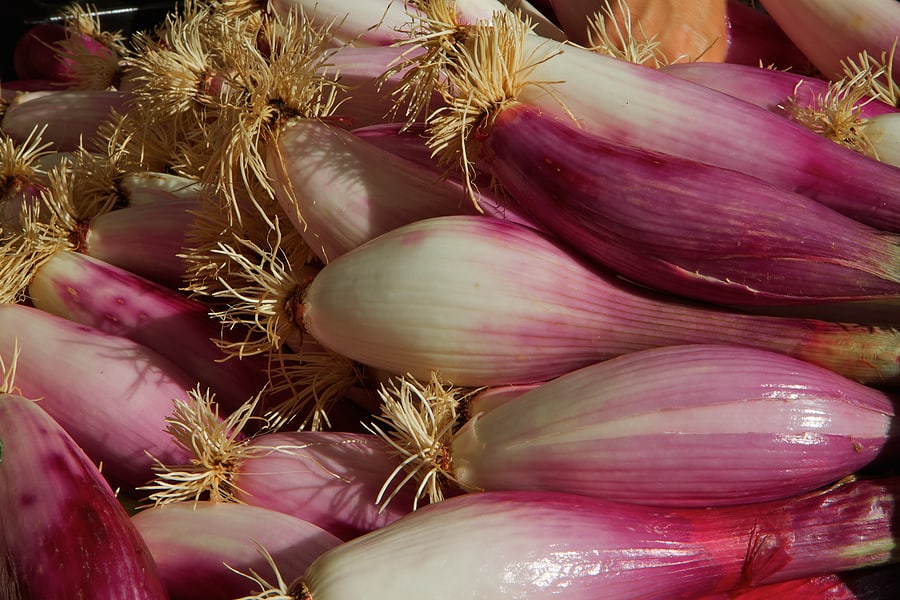
- The bulb can be white, yellow, or red.
- The onion flower stalk is taller than the leaves and will be topped by clusters of white or lavender flowers.
- All varieties can be eaten young–within a few weeks of planting–as green onions.
- Spring onions, bunching onions, scallions, and green onions are grown especially for their green tops.
- Bulb onions require 80 to 150 days to reach harvest.
- Bermuda and Spanish onions are milder than American onions.
- American and Spanish onions require more days to mature than Bermuda onions.
- Botanical name: Allium cepa
- Family: Alliaceae (Liliaceae)
- Origin: Southwest Asia
Onion Growing Hub
Start here: The Ultimate Onion Growing Guide: From Seed to Harvest
🌱 Planning & Varieties
- How to Choose the Best Onion Varieties for Your Region – Match flavor, storage, and climate to your garden.
- Daylength and Onion Growth: Understanding Short, Intermediate, and Long-Day Varieties – Pick the right type for your latitude.
- Growing Bulb Onions: Pick the Right Variety for Your Garden – Choose the right variety for where you live.
- Onion Sets vs. Seedlings vs. Seeds: Which Is Best for Your Garden? – Pros and cons of each planting method.
🌿 Planting & Starting
- Step-by-Step Guide to Starting Onion Seeds Indoors Successfully – Timing and troubleshooting for strong transplants.
- Planting Onions Seeds and Sets – Here’s how to get started.
- How to Grow Onion Sets – You can grow your own onion sets from seed for next year.
- Growing Onions in Containers: Soil, Pots, and Care Tips – Small-space planting success.
- How to Grow Green Onions, Spring Onions, and Scallions – Learn how these alliums differ.
- How to Plant, Grow, and Harvest Welsh Onions – Learn to grow these mild-flavored members of the onion family.
🌞 Care & Maintenance
- Watering Onions for Optimal Growth: Techniques and Tips – How much and how often to water.
- Feeding and Fertilizing Onions: Organic and Synthetic Options – Nutrient needs for strong bulbs.
- Companion Planting with Onions: Plants to Grow With and Avoid – Beneficial pairings and plants to avoid.
- Onion Family Growing Problems: Pest, Disease, and Problem Controls – Natural control of thrips, maggots, and more; identifying and treating fungal or bacterial problems.
🧅 Harvest & Storage
- How to Harvest Onions at Peak Maturity for Best Storage – Signs onions are ready and how to cure.
- How to Harvest and Store Onions – Here are the basics for harvesting and storing onions.
- Onion Storage Techniques: Keep Your Harvest Fresh for Months – Best environments for long-term keeping.
🍳 Using Your Onions
- Cooking with Onions: Recipes and Tips to Bring Out Flavor – From fresh salads to caramelized dishes.
- How to Make Onion Soup with No Recipe – Enjoy this tasty classic!
Onion articles at Harvest to Table:
How to Grow Green Onions, Spring Onions, and Scallions
Growing Onion Bulbs: Pick the Right Variety for Your Garden
How to Plant, Grow, and Harvest Welsh Onions
How to Harvest and Store Onions
Onion Family Growing Problems: Troubleshooting
Onion Cooking and Serving Tips
Tasty Ways to Cook and Serve Shallots
How to Make Onion Soup with No Recipe
How to Plant, Grow, and Harvest Shallots
English Peas, Spring Onions and Roasted Almonds
Tropea Onion – The Red Torpedo
Garden Planning Books at Amazon:
- Vegetable Garden Grower’s Guide
- Tomato Grower’s Answer Book
- Vegetable Garden Almanac & Planner
- Kitchen Garden Grower’s Guide Vegetable Encyclopedia
More how to grow articles:
Learn how to plant, grow, and harvest your favorite vegetables. Click below for all you need to know.
- Artichoke
- Arugula
- Asparagus
- Beans, Snap
- Beets
- Broad Beans
- Broccoli
- Brussels Sprouts
- Cabbage
- Cantaloupe — Melons
- Cardoon
- Carrots
- Cauliflower
- Celeriac
- Celery
- Chard
- Chayote Squash
- Chickpeas
- Chicory
- Chinese Cabbage
- Collards
- Corn Salad
- Corn, Sweet
- Cresses
- Cucumbers
- Eggplant
- Endive and Escarole
- Fava Beans
- Florence Fennel
- Garbanzo Beans
- Garlic
- Horseradish
- Jerusalem Artichoke
- Kale
- Kohlrabi
- Leeks
- Lettuce
- Lima Beans
- Melons
- Mizuna
- Mustard Greens
- New Zealand Spinach
- Okra
- Onions
- Parsnips
- Peanuts
- Peas
- Peppers
- Potatoes
- Pumpkins
- Radicchio
- Radishes
- Rhubarb
- Rutabaga
- Salsify
- Shallots
- Sorrel
- Southern Peas
- Soybeans
- Spinach
- Squash, Summer
- Squash, Winter
- Sunchokes
- Sweet Potato
- Swiss Chard
- Taro
- Tomatillo
- Tomatoes
- Turnips
- Watermelon
- Zucchini