The Ultimate Celery Growing Guide: From Seed to Harvest

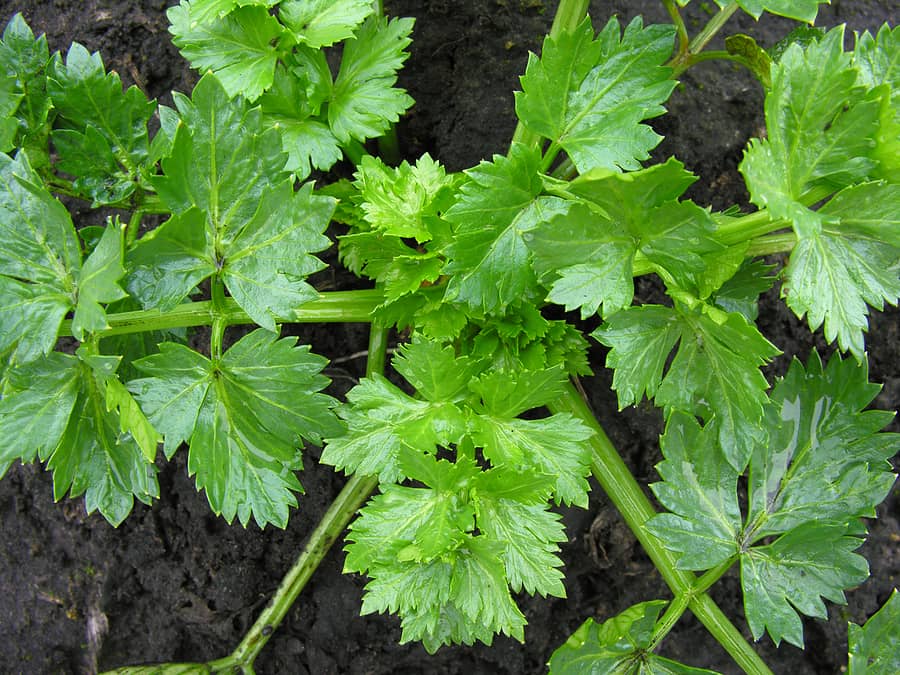
Celery is a cool-weather crop. It requires a long growing season–16 weeks of cool weather to come to harvest. Celery is a hardy biennial grown as an annual. It has a rosette of 12- to 18-inch (30-45cm) stalks, topped with divided leaves. Celery is grown for its edible stalks, leaves, and seeds.
Celery is the descendant of a marsh plant. It typically needs twice as much water as other crops in the garden. Celery also needs 4 months or more of daytime temperatures in the 60sF and nighttime temperatures of about 50°F. Because of these cultural requirements, celery is not an easy crop to grow. However, homegrown celery is almost always more flavorful than the commercially-grown celery you’d find at a grocery store or produce market.
Related articles:
- Tasty Ways to Cook and Serve Celery
- Celery Seed Starting Tips
- How to Plant and Grow Celery
- How to Harvest and Store Celery
- Celery Growing Problems Troubleshooting
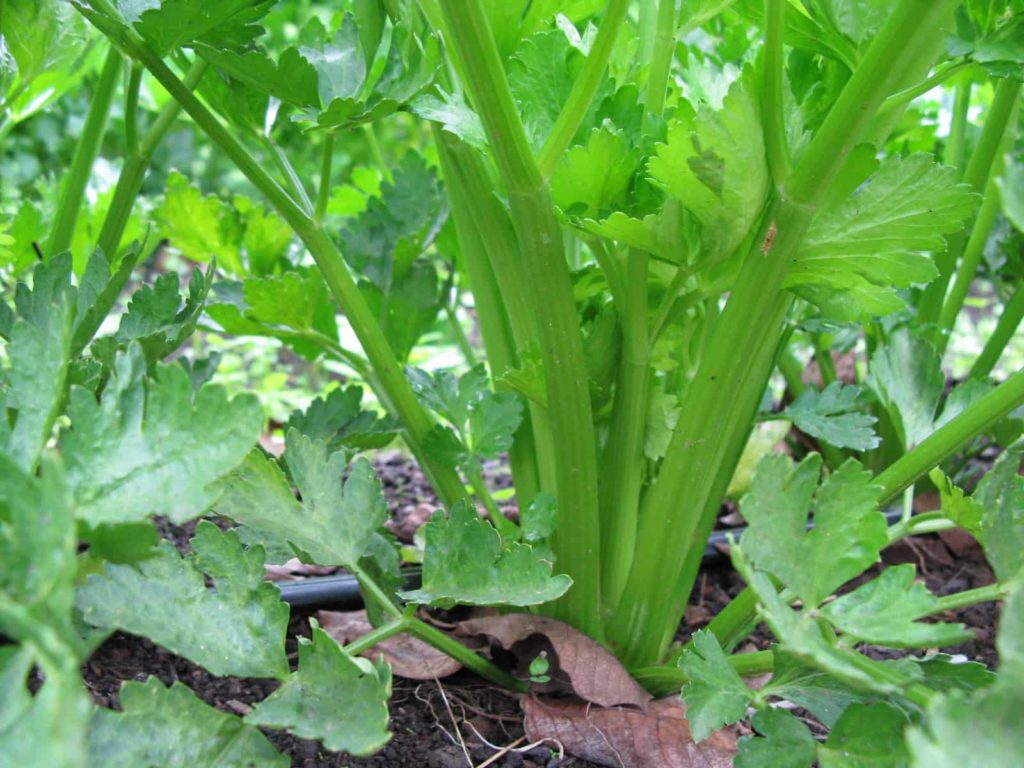
Celery has thick, well-developed roots above which is a short, compact crown stem. From the compact crown, leaf stalks emerge. Celery’s flavorful leafstalks are used in salads, soups, and casseroles. Fresh celery leaves add zest to soups and are more nutritious than stalks. Finally, celery seeds produce delicious sprouts.
Here’s your complete guide to growing celery!
Types of celery
Celery is classed by color: green varieties and golden varieties. Green varieties include Utah which is stringless and has a nutty flavor and Summer Pascal which is darker green and tender-hearted. Interestingly, almost all green celery is lumped together and called Pascal by grocers. Golden celery has yellowish leaves and stalks and is the standard in France. The most popular golden variety is called Golden Self Blanching which is stringless and succulent.
Celery cultivars include traditional green stalks and so-called self-blanching golden stalks. Green varieties have green leaves and stalks. Golden-yellow types have white stalks and yellow-green leaves.
Traditional green stalk cultivars are usually bright green with stronger flavor and higher vitamin content than self-blanching types. Green-stalked celery varieties in years past were commonly blanched by covering the stalks with paper to keep the sunlight from greening them. Blanching of green celery is for the most part no longer practiced.
If you prefer a milder flavor, grow golden or self-blanching celery varieties, or blanch green cultivars by wrapping the stalks in brown paper.
The growing conditions of green and self-blanching types are the same.
Avoid problems by choosing blight- and disease-resistant cultivars.
Celery growing quick tips
- Celery needs a long season of relatively stable temperatures between 60°F and 70°F (15-21°C), between 60°F and 65°F is optimal.
- Celery thrives in cool, moist conditions. Celery tolerates shade more than most crops.
- Celery needs 90 to 120 days to reach maturity depending on the variety.
- Start celery seed indoors 8 to 10 weeks before the last frost in spring.
- Set transplants in the garden 2 to 3 weeks before the average last frost date when seedlings have 5 to 6 leaves.
- In cool spring and summer regions, plant celery in early spring.
- In warm spring and summer regions, plant celery in late summer plant celery for harvest in late autumn or early winter.
- Celery is tolerant of heat after it becomes established, but it is intolerant of sudden drops in temperature near maturity. Freezing temperatures can damage celery as it approaches harvest..
- Exposure to temperatures in the 40s and 50sF when young will cause plants to bolt.
- Celery yield: Plant 5 plants per household member.
Where to grow celery
- Grow celery in a sunny, cool location. Celery can tolerate light shade but should get at least one-half day of sun. Celery grown in full shade will be lanky and strongly flavored.
- Grow celery in compost-rich, moisture-retentive soil that borders on wet but still drains.
- Celery prefers soil with a pH between 5.8 and 6.8.
- Celery has a low tolerance for heat and prefers a cool, cloudy location where growing temperatures range between 60°F and 70°F (15-21°C).
- Plant celery where the growing season offers 4 months of cool weather.
- Celery is a heavy feeder, plant celery where legumes have grown in the previous season.
- Celery can grow where the soil stays moist; it can withstand waterlogged conditions better than most crops.
Celery planting time
- Celery is a cool-weather crop. It requires 16 weeks of cool weather to come to harvest.
Indoor seed starting
- Start celery seed indoors 8 to 10 weeks before the last frost in spring.
- Soak seeds overnight in warm water before planting.
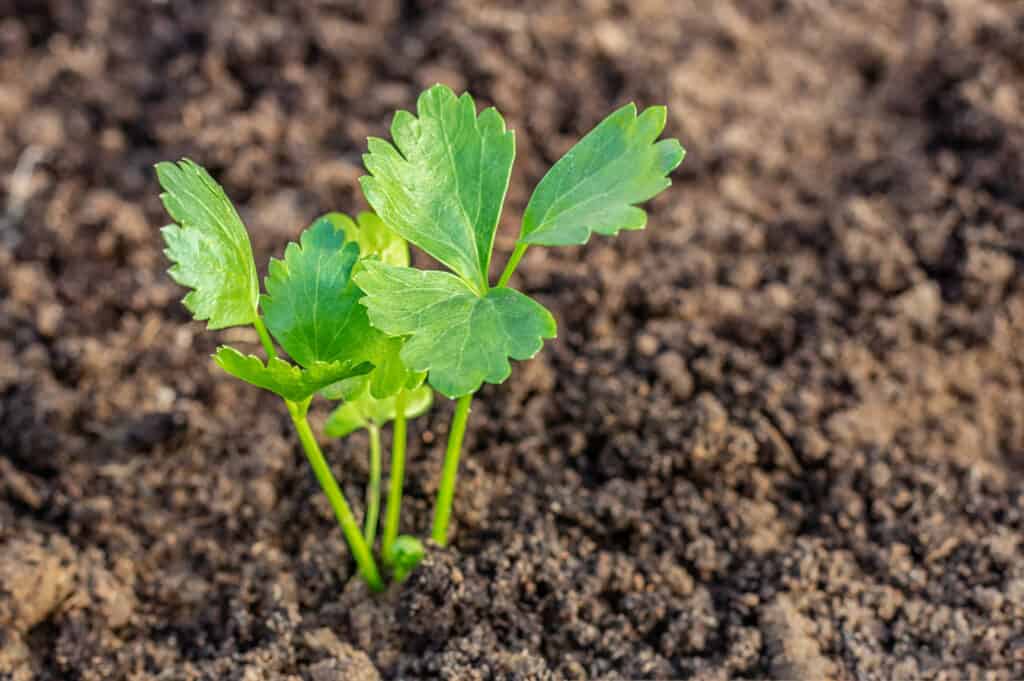
- Set transplants in the garden 2 to 3 weeks before the average last frost date when seedlings have 5 to 6 leaves. (To delay transplanting time and slow growth, cut seedlings down to 3 inches (7.6cm) tall and allow them to grow on.)
- Cold weather will inhibit growth and so will warm weather. Temperatures below 50°F and 70°F (10°C) for more than 12 hours may cause celery to bolt especially when plants are young.
Outdoor seed starting
- Direct sow celery seeds in the garden only in mild climates with a long growing season.
- Sow celery seeds outdoors 2 to 4 weeks before the last frost in spring when the soil is at least 60°F.
- With variable outdoor temperatures, seeds can take as long as 20 days to germinate.
- Make sure that the seeds remain moist and that the soil does not crust over.
- In cool spring and summer regions, plant celery in early spring.
- In warm spring and summer regions, plant celery in late summer for harvest in late autumn or early winter.
Planting and spacing celery
- Sow celery seed ¼ to ½ inch deep, 6 to 10 inches (15-25cm) apart; space rows 24 inches (61cm) apart.
- Soak the seed for several hours in tepid water before planting. Presoak seeds in compost tea to speed germination and prevent blight problems.
- Transplant seedlings to the garden anywhere from 3 to 4 weeks after the last frost in spring. Set out transplants when there is no danger of the air temperature and soil temperature falling below 50°F.
- Harden off seedlings for a few days before setting them in the garden.
- Set out seedlings that are 4 to 5 inches tall. Set the root crown level even with the soil or set plants a bit deeper than they were in the seed starting flat.
- Transplant seedlings started indoors in trenches 3 to 4 inches (7.6-10cm) deep and spaced 6 to 10 inches (15-25cm) apart.
- When plants are 6 inches tall mulch around them to conserve soil moisture. Frequent irrigation may be needed to keep the shallow roots from drying out.
- As plants grow mound up soil around the stems to blanch them.
- Plant self-blanching celery in blocks 6 to 12 inches (15-30cm) apart; planting closer will give a higher yield but more slender stalks.
Celery companion plants
- Grow celery with lettuce, spinach, and English peas.
- Avoid growing celery with pumpkins, cucumbers, and squash.
Container growing celery
- Celery can be grown in an 8-inch (20cm)container. One plant will grow in an 8-inch container.
- Set celery at 10-inch centers in large containers.
- Get an organic potting mix at the garden center.
- To blanch celery growing in a container, tie paper, or cardboard cylinders around the stalks.
Watering celery
- Keep celery well-watered during all phases of growth. Plenty of water will help plants grow quickly to maturity.
- Celery is shallow-rooted and frequent irrigation is needed for plants to become established.
- Lack of water will slow growth, cause stalks to become stringy, and encourage plants to send up flower stalks.
- Water established celery plants every 10 to 14 days at a minimum, more if the weather is dry.
- Avoid overhead watering when may cause moisture to collect inside the bunch of stalks; this may cause pest and disease problems.
Feeding celery
- Celery is a heavy feeder. Add aged compost to planting beds before planting and side-dress plants with compost at midseason.
- Feed celery with a solution of 1 tablespoon of fish emulsion and 2 tablespoons of kelp extract in 1 gallon of water. Drench each plant with 1/2 cup of the solution at transplanting and every week after until plants are 8 inches tall.
- Grow celery where nitrogen-fixing legumes have grown the previous season.
- Give celery an extra boost by applying blood meal (1/2 pound for every 10 feet of row); add bloodmeal ahead of planting or side dress plants before mulching.
- Feed celery manure or compost tea every 3 weeks throughout the growing season.
- Keep the area around celery free of weeds which compete for nutrients and moisture.
Celery care
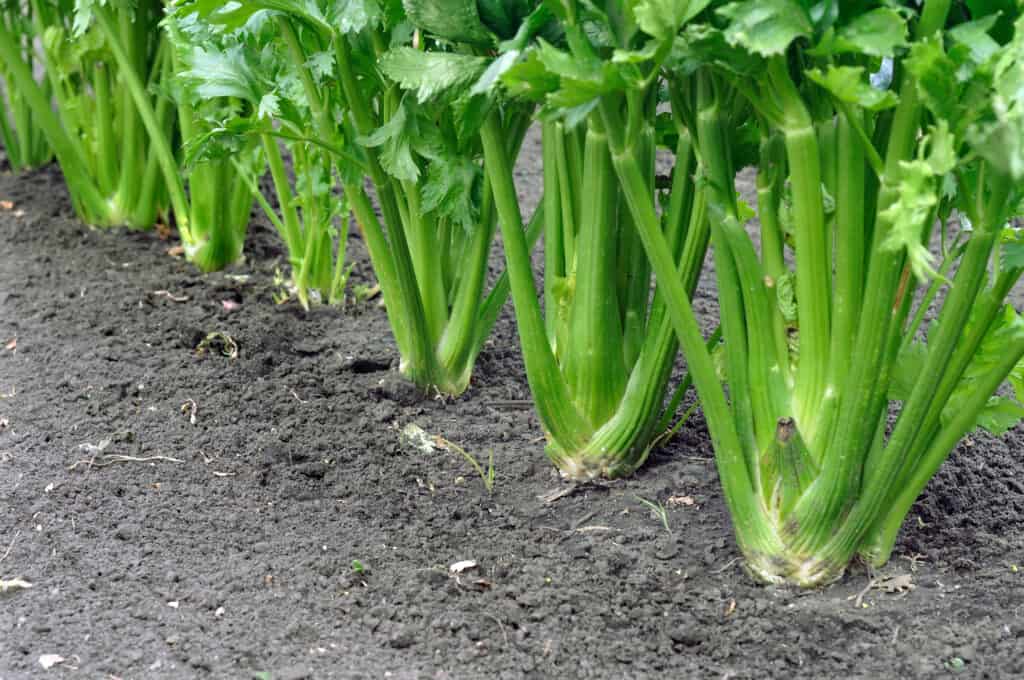
- Keep celery planting beds weed-free to avoid competition for moisture and nutrients. Keep cultivation shallow so as not to damage roots.
- Air temperatures of 75°F or greater can slow celery growth and cause leaf edges to turn brown.
- Rotate celery each year to a new location to avoid most disease problems.
Blanching celery
- Blanch celery to enhance its sweet flavor and whiten stalks. Dark green celery that is not blanched can be bitter tasting.
- Blanching protects the stalks from the sun, which encourages them to produce chlorophyll and turn green. The absence of chlorophyll leaves the stalks white.
- Blanching is achieved by tying the stalks together and then wrapping the stalks with brown paper or placing paper cylinders rolled up to the top of the stalks. Hold the paper in place with twine.
- Another blanching method is to place 12-inch wide boards up against both sides of the plant; hold the boards in place with stakes.
- Another blanching method is covering the stalks with soil or straw up to the top of the stalks. This method will likely leave the soil in the interior of the stalks which can be difficult to clean and can leave the plants susceptible to rot.
- Start blanching when plants are 12 to 15 inches tall and blanch for about 2 weeks or up to 10 to 14 days before harvesting.
- Celery that sits too long after blanching will become pithy and may rot.
Celery pests
- Celery can be attacked by aphids, cabbage loopers, carrot rust flies, carrot weevils, leafhoppers, and whiteflies.
- Celery seedlings can be attacked by cutworms.
- Celery is susceptible to attack by slugs and snails that will be attracted to the consistent moisture celery needs for best growth.
Celery diseases
- Celery is susceptible to early and late blights, fusarium yellows, and pink rot diseases. Magnesium and calcium in the soil discourage these conditions; feeding celery will also discourage these diseases.
- Brown-checking (a boron deficiency) and blackheart (excessive soil salinity in combination with high nitrogen and lack of water) can happen where growing conditions are poor.
- Adequate magnesium and calcium in the soil to discourage pink rot and black heart diseases.
Harvesting celery
- The time from sowing celery seed to harvest is 100 to 130 days from transplants about 20 days longer from seed.
- Start harvesting before the first hard frost when the head is about 2 to 3 inches (5-7.6cm) in diameter at the celery base.
- The entire plant can be harvested at once or individual stalks can be harvested as needed before the plant matures.
- Cut the whole plant at or slightly below the soil level.
- Cut individual stalks from the outside and work toward the middle.
- A 10-foot (3m) row should yield about 20 heads of celery.
Storing and preserving celery
- Fresh celery is the most flavorful and crisp.
- Celery will keep in the refrigerator for up to two weeks in a plastic bag.
- If stalks start to wilt, refrigerate them in a container of cold water.
- Celery chilled quickly after picking in a cold water bath will last longer in storage than celery that is not rapidly cooled.
- Celery leaves cut for use as an herb will keep in the refrigerator for up to one week.
- Celery can be dried, canned, and frozen. Seeds can be used as an herb.
- Celery can be stored for a few months in a box with moist sand mounded around the roots and kept in a cool, humid, dark place.
Celery in the kitchen
- Celery can be served raw or cooked.
- Serve raw celery as a snack, appetizer, or salad.
- Use celery leaves and stems to flavor soups, sauces, stews, pasta, tofu, quiches, omelets, and rice.
- Steamed or braised celery is a delicious side dish.
- Use diagonal celery slices in stir-fries.
- Add celery stalks and leaf tips to soups and stews.
- Celery provides a good amount of food fiber.
- Celery leaves contain vitamin A. Stalks are not particularly nutritious.
Celery pollination
- Celery is pollinated by insects
- Celery can cross-pollinate with other celery cultivars and also with celeriac.
- Cross-pollination can occur if more than one cultivar is flowering at a time.
Celery frequently asked questions
Q: Is there a good reason to blanch celery?
A: Blanching or whitening celery stalks will make the stalks lighter colored and less bitter flavored. Covering the stalks in order to exclude sunlight will limit the production of chlorophyll which can leave celery stalks bitter.
Q: How long does it take to blanch celery?
A: Blanch celery stalks for not more than 10 days to two weeks; blanching longer will cause stalks to become pithy and possibly rot.
Q: What causes celery stalks to crack?
A: Celery stalks can become stiff and brittle and the edges of young leaves can become streaked and turn brown if the soil is boron deficient. Apply 1 teaspoon of borax in 4 quarts of water per 30 feet of row. Crack-resistant varieties include ‘Dwarf Golden Self-Blanching’, ‘Giant Pascal’, and ‘Utah 52-70’.
Q: Why does a celery plant produce lots of leaves but no stalks?
A: This is caused by sudden fluctuations of temperatures in the early stages of growth (up to about 4 inches tall). Protect young plants by covering them with hot caps or other protective devices which can be removed with the temperature warms up.
Celery varieties to grow
- ‘Fordhook’: compact, dark green stalks grow to 18 inches tall; stalks are tender and relatively stringless; last well in storage; 130 days to maturity.
- ‘Giant Pascal’: dark green stalks grow thick and overlap to 18 inches tall; blight-resistant; 120-140 days to maturity.
- ‘Summer Pascal’: compact, bright green stalks to 26 inches tall; well-developed heart; vigorous grower; blight resistant; 120 days to maturity.
- ‘Golden Self-Blanching’: self-blanching type; stocky, compact yellow stalks to 24 inches tall relatively stringless; blight resistant; good in storage; 90 days to maturity.
- ‘Utah 52-70’: compact, upright growth to 24 inches or more; 124 days to maturity.
More varieties: ‘Golden Plume’ (85-116 days); ‘Golden Self-Blanching’ (80-118 days); ‘Green Giant’ (95-115 days); ‘Summer Pascal’ (‘Tall Fordhook’) (115 days); ‘Red Celery’ (120 days); ‘Starlet’ (120 days); ‘Utah 52-70’ (125 days); ‘Ventura’ (80-100 days); ‘French Celery Dinant’ (Chinese celery) (55 days).
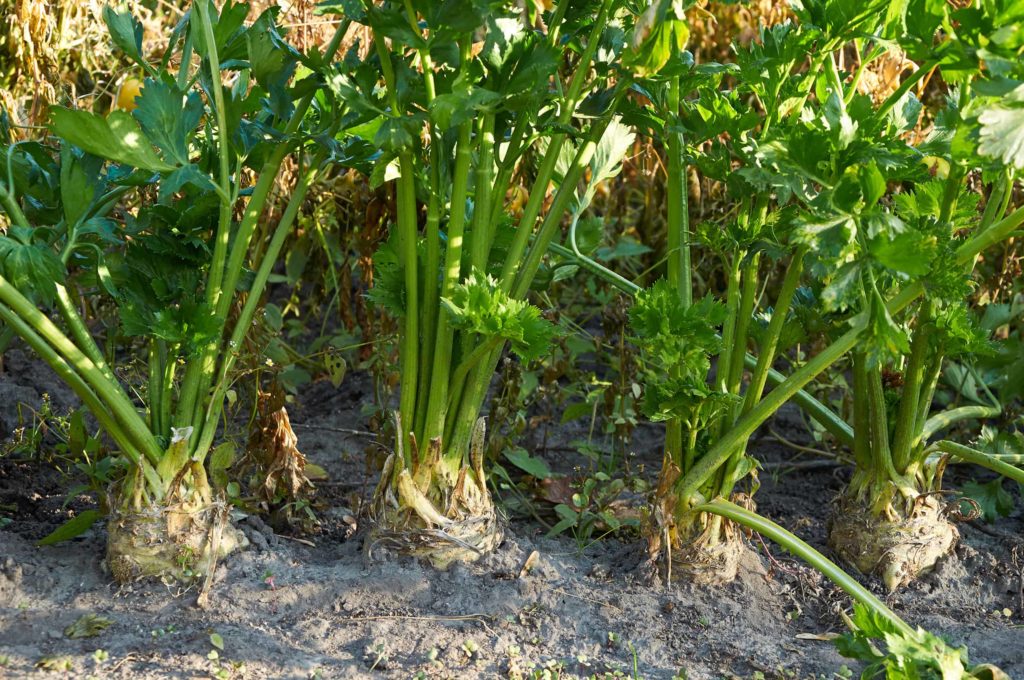
Celeriac or Celery Root
- Celeriac, celery root, or knob celery, celery root, or celeriac, botanical name Apium graveolens var. rapaceum) is a relative of celery.
- The edible part of celeriac is its enlarged, knobby base which is part stem and part crown.
- Grow celeriac as you would celery; it is easier to grow than celery.
- Celeriac is ready for harvest when the base is 2 to 4 inches thick.
About Celery
- Celery botanical name. Apium graveolens dulce
- Origin. Europe
Celery Growing Hub
Start here: The Ultimate Celery Growing Guide: From Seed to Harvest
Celery Basics & Types
- Types of Celery Explained: Pascal, Leaf, and Celeriac Compared
- Best Celery Varieties for Home Gardeners
- Celery vs. Celeriac: Growing, Harvesting, and Cooking Differences
- What You Should Know About Celery Pollination
Planting & Site Prep
- When to Plant Celery by USDA Zone
- Celery Seed Starting Tips
- Direct Sowing Celery: Outdoor Seed Starting Guide
- Proper Celery Spacing and Planting Layout for Healthy Growth
- The Best Companion Plants for Celery and What to Avoid
- How to Grow Celery in Containers or Pots
Care & Maintenance
- How to Water Celery for Crisp, Tender Stalks
- Fertilizing Celery: Feeding Tips for Bigger, Tastier Stalks
- Celery Blanching Techniques: How to Get Tender, Mild Stalks
- Celery Care Throughout the Growing Season
Pests & Diseases
- Common Celery Pests and Diseases How to Control Them Naturally
- Celery Growing Problems: Troubleshooting
Harvest & Beyond
- How to Harvest Celery for the Best Flavor and Yield
- How to Harvest and Store Celery
- Tasty Ways to Cook and Serve Celery
Celery articles at Harvest to Table:
How to Harvest and Store Celery
Tasty Ways to Cook and Serve Celery
How to Plant, Grow, and Harvest Celeriac
Five Ways to Cook and Serve Celeriac
Celery Growing Problems Troubleshooting
More how to grow tips:
Learn how to plant, grow, and harvest your favorite vegetables. Click below for all you need to know.
- Artichoke
- Arugula
- Asparagus
- Beans, Snap
- Beets
- Broad Beans
- Broccoli
- Brussels Sprouts
- Cabbage
- Cantaloupe — Melons
- Cardoon
- Carrots
- Cauliflower
- Celeriac
- Celery
- Chard
- Chayote Squash
- Chickpeas
- Chicory
- Chinese Cabbage
- Collards
- Corn Salad
- Corn, Sweet
- Cresses
- Cucumbers
- Eggplant
- Endive and Escarole
- Fava Beans
- Florence Fennel
- Garbanzo Beans
- Garlic
- Horseradish
- Jerusalem Artichoke
- Kale
- Kohlrabi
- Leeks
- Lettuce
- Lima Beans
- Melons
- Mizuna
- Mustard Greens
- New Zealand Spinach
- Okra
- Onions
- Parsnips
- Peanuts
- Peas
- Peppers
- Potatoes
- Pumpkins
- Radicchio
- Radishes
- Rhubarb
- Rutabaga
- Salsify
- Shallots
- Sorrel
- Southern Peas
- Soybeans
- Spinach
- Squash, Summer
- Squash, Winter
- Sunchokes
- Sweet Potato
- Swiss Chard
- Taro
- Tomatillo
- Tomatoes
- Turnips
- Watermelon
- Zucchini
How to Harvest and Store Celery
Garden Planning Books at Amazon:
- Vegetable Garden Almanac & Planner
- Kitchen Garden Grower’s Guide Vegetable Encyclopedia
- Vegetable Garden Grower’s Guide
- Tomato Grower’s Answer Book
Grow 80 vegetables and herbs: KITCHEN GARDEN GROWERS’ GUIDE available at Amazon.com.