How to Grow Ceropegia

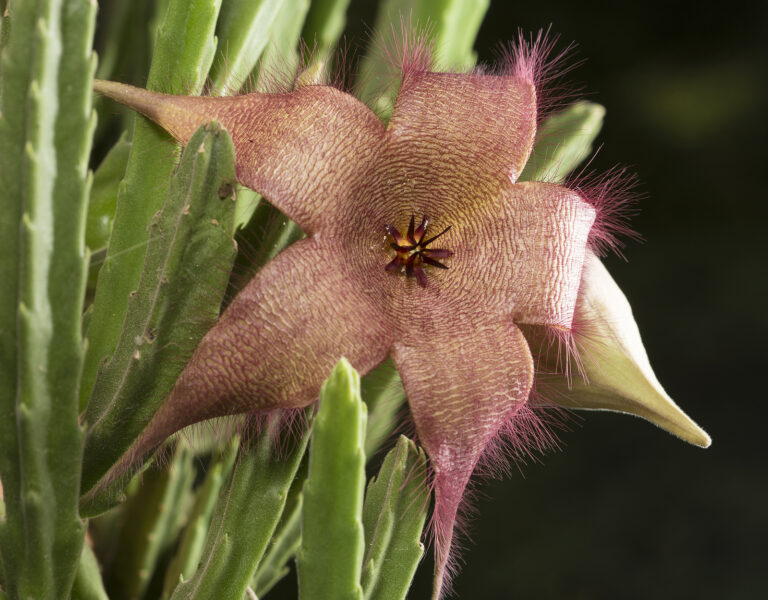
Ceropegia is a genus of quick-growing, shrubby plants or vining ones with tuberous roots. Leaves are opposite or in whorls of three. Flowers are widely flared at the tips resembling parachutes or lanterns.
Ceropegia grow outdoors in warm, dry climates. Vining species can be trained on a trellis, pergola, or other support. Ceropegia are also dependable house plants. They can withstand dry, warm indoor conditions. They make excellent hanging basket plants.
Ceropegia is a genus of as many as 200 species. Ceropegia are native to desert to tropical regions Africa, Madagascar, Asia, and Australia
Get to know Ceropegia
- Plant type: Succulent in the Milkweed Family
- Hardiness temperature: 35℉ (1.7℃)
- Optimatl growing temperature: day 69° to 72°F (20°-22°C), night 50° to 55°F (10°-13°C)
- Shape and size: Above-ground vines or upright stems; leaves are opposite or in whorls of 3, ovate-heart-shaped to lance-shaped or linear
- Flowers: Flowers are borne singly or in cymes often widely flared at the tips in the forms of parachutes or lanterns
- Bloom time: Summer and autumn
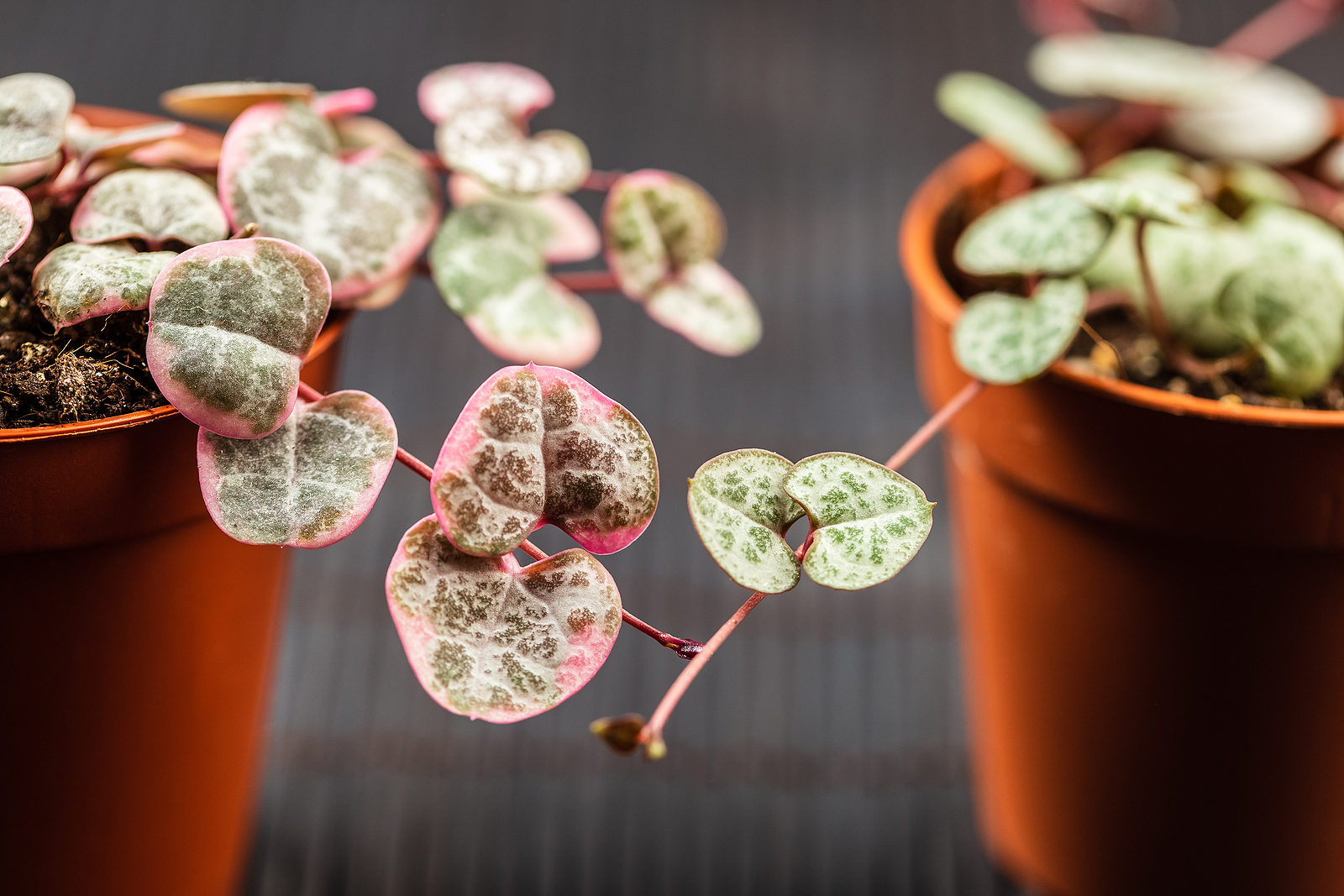
- Common name: Ceropegia, string of hearts
- Genus name: Ceropegia
- Family name: Asclepiadaceae
- Origin: Desert, tropical and subtropical regions in the Canary Islands, Africa, Madagascar, Asia, and Australia
Planting Ceropegia
- Grow Ceropegia in a mix of 2 parts sharp sand and 1 part each loam, peat, and leaf mold.
- Grow Ceropegia in bright filtered light.
How to water and feed Ceropegia
- Water Ceropegia moderately during he growing season.
- Keep Ceropegia dry during the dormant winter season. Overwatering during cool temperatures can lead to rot.
- Fertilizer Ceropegia with a low-nitrogen liquied fertilizer 2 or 3 times during the growing season.
Ceropegia care
- Ceropegia are suited for hanging baskets or containers where stems can trail.
- The drier the cultivation, the more prominent the color contrast of the leaves.
- To avoid a stringy apperance, cut back or pinch stems near the soil line.
Growing Ceropegia as a houseplant
- Give Ceropegia bright to direct light; insufficient light will result in off-color leaves or elongated stems with few leaves.
- Ceropegia needs medium humidity, an average day temperature, and a slightly cooler temperature at night.
- Water thoroughly, then let the soil dry to the touch before watering again.
- Fertilize Ceropegia once a month in spring and summer.
Ceropegia pests and diseases
- Ceropegia is susceptible to attack by mealybugs and mites.
Ceropegia propagation
- Propagate Ceropegia from stem cuttings. Repot cuttings in a cactus mix.
Ceropegia species to grow
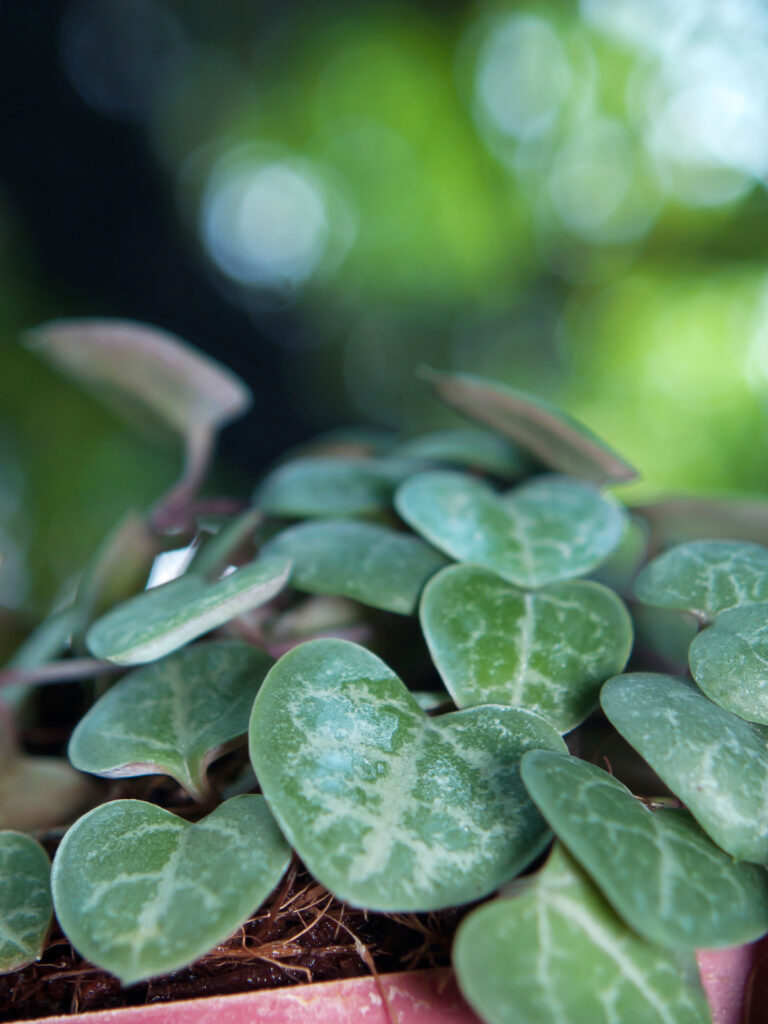
- Ceropegia barkleyi. Oval green leaves, veined with white, grow on trailing stems; slender, funnel-shaped flowers are white with light purple markings.
- C. sanderesonii, parachute plant. Vining stems from 4 to 6 feet long; mottled green leaves; flowers are green and resemble tiny parachutes and bloom in summer.
- C. woodii (rosary vine, string of hearts). Trailing stems grow to 3 feet long; heart-shaped fleshy, mid-green leaves, marbled with silver, grow on trailing stems; tiny purple blooms.