How to Grow Sedum

Sedum are mostly low-growing spreading or creeping succulents that grow in clumps or clusters. They are one of the most common succulent species grown. There are about 600 species in the Sedum genus.
Sedum have fleshy leaves that may be either cylindrical or flat. Sedum flowers are generally star-shaped and 5-petaled and appear in summer or autumn. Flower heads 2- to 3-inch (5 to 8 cm) flower heads in spring and summer. Flowers are at the stem tips; they can be white, pink, red, or yellow.
Sedums love sunlight so keep them in a well-lit place. They are hardy and can grow in poor soil. Many are dependable ground cover plants for rock gardens.
Sedums are fast-growing. Many can be grown outdoors year-round. Most can be grown indoors as houseplants.
Know What to Plant This Week
Every week I answer the gardener's most important question: what should I plant now? Get seasonal planting advice free — or go Pro for my full Soil Temperature Garden Report, with soil temperature, moisture, weather trends, and crop-by-crop recommendations.
Get to know Sedum
- Plant type: Succulent in the Crassula Family
- Hardiness temperature: 35℉ (1.7℃)
- Optimal growing temperature: day, 68° to 80°F (20° to 27°C); night, 50° to 65°F (10° to 18°C).
- Shape and size: Various sizes from mat-forming species to large shrubs.
- Foliage: Fleshy leaves may be either cylindrical or flat and are found on erect, creeping, or trailing stems.
- Flowers: Flowers are five-petalled and are borne on multi-branches. Flowers range from white to red to yellow.
- Bloom time: Throughout the year
- Common name: Many common names (see some below)
- Genus name: Sedum
- Family name: Crassulaceae
- Origin: Dry regions of Central America
Planting Sedum
- Grow Sedum in bright light or sun.
- Indoors grow Sedum in full sun from southern exposure, year-round. Does well under artificial light, needing 12 to 16 light hours daily.
- Grow Sedum in sandy loam that is well drained. Mix equal parts garden loam and sand.
How to water and feed Sedum
- Give Sedum regular water during the summer growing period. Let the soil surface dry moderately between thorough waterings.
- Keep Sedum drier in winter.
- Sedum wants humidity at 20% to 25%.
- Fertilize Sedum during the growing period with a cactus-succulent fertilizer.
Sedum care
- Keep Sedums neat with regular trimming. Remove dried leaves.
- Sedum leaves easily break off when touched; keep them back from walkways.
- Pot-on Crassula in spring when roots occupy ½ of pot space. As the plant ages, it becomes less attractive; replace it with cuttings.
- Check for mealybugs, root rot, and scale insects.
- Crassula should rest from fall through spring. Keep the plant at 40° to 50°F (4° to 10°C). Give Crassula just enough water to keep the plant from shriveling; withhold fertilizer.
- Propagate Crassula by division, stem cuttings taken in spring, or seeds. Allow cuttings to dry for several days before placing in a rooting medium.
Growing Sedum as a houseplant
- Give Sedum direct light, average to warm room temperature, and medium humidity.
- Let the soil dry moderately between waterings.
- Do not fertilize Sedum. Sedim makes sufficient use of available nutrients in the soil and the addition of fertilizer may burn the plant.
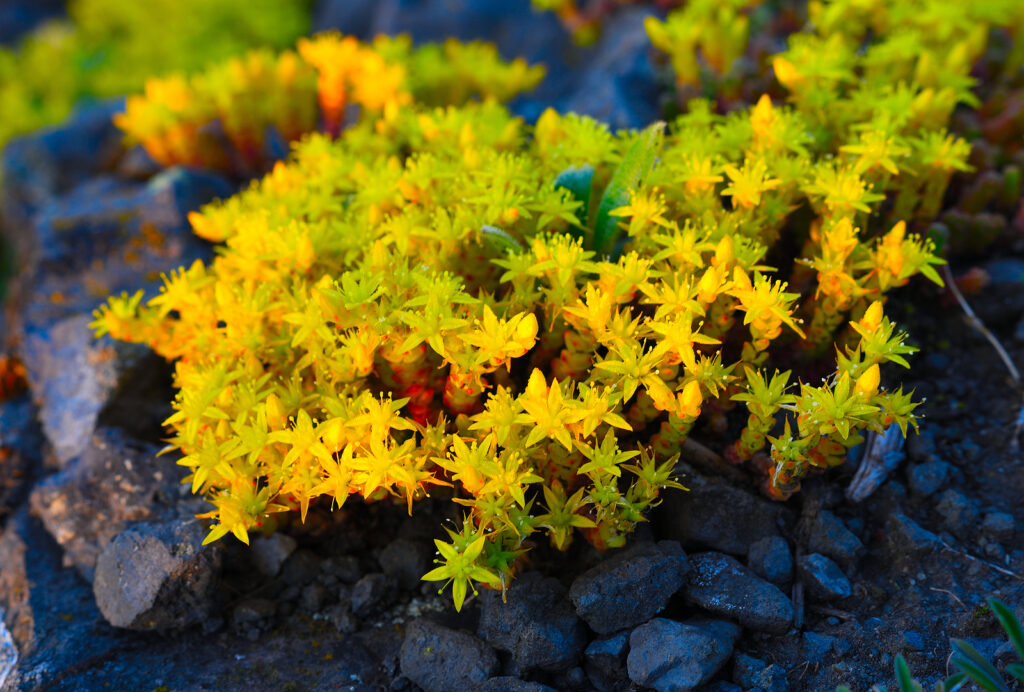
Sedum species to grow
- Sedum acre (wall pepper, gold moss). Creeping growth of tiny, overlapping leaves; yellow blooms.
- S. adolphi, golden sedum. Grows to 12-inch (30 cm) tall on upright stems; yellow-green leaves edged in red; white flowers may appear in early spring.
- S. dasyphyllum. Carpet of blue-green leaves on upright stems and white flowers with pink edges; use in rock gardens.
- S. hirsutum. Runners bear dense rosettes of spicy-scented leaves; summer blooms are white with red veining.
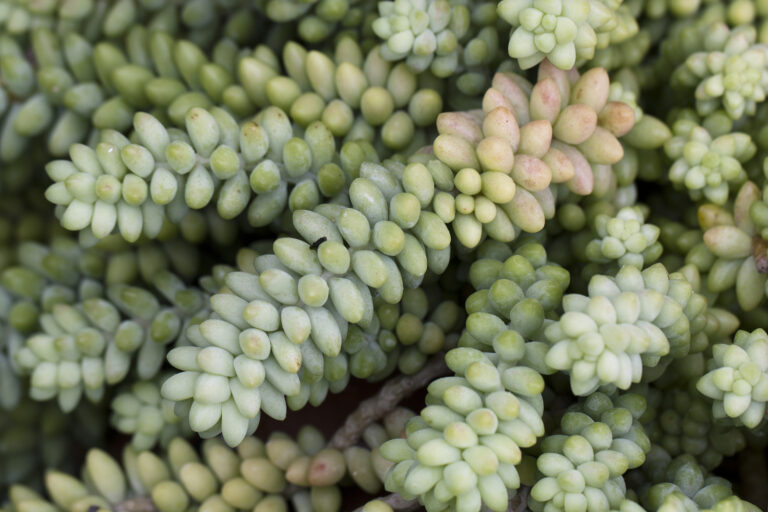
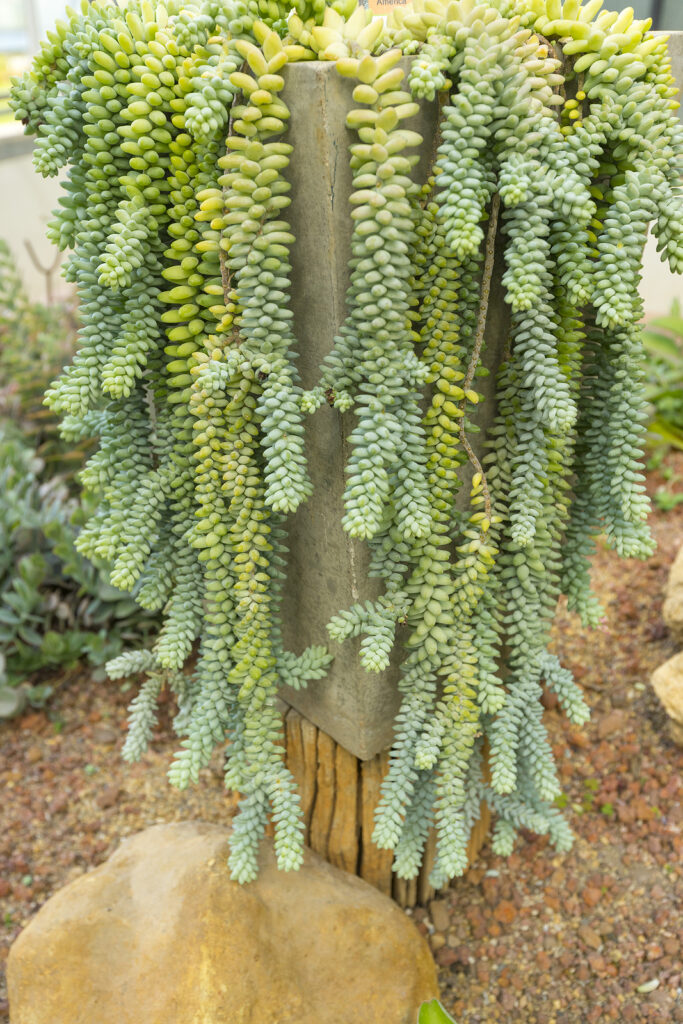
- S. morganianum (donkey’s tail). Produces 12 to 36 inches (30 to 91 cm) long trailing stems, with densely overlapping tear-shaped leaves; yellow-green leaves are waxy with light blue powder; rose-colored flowers appear in spring.
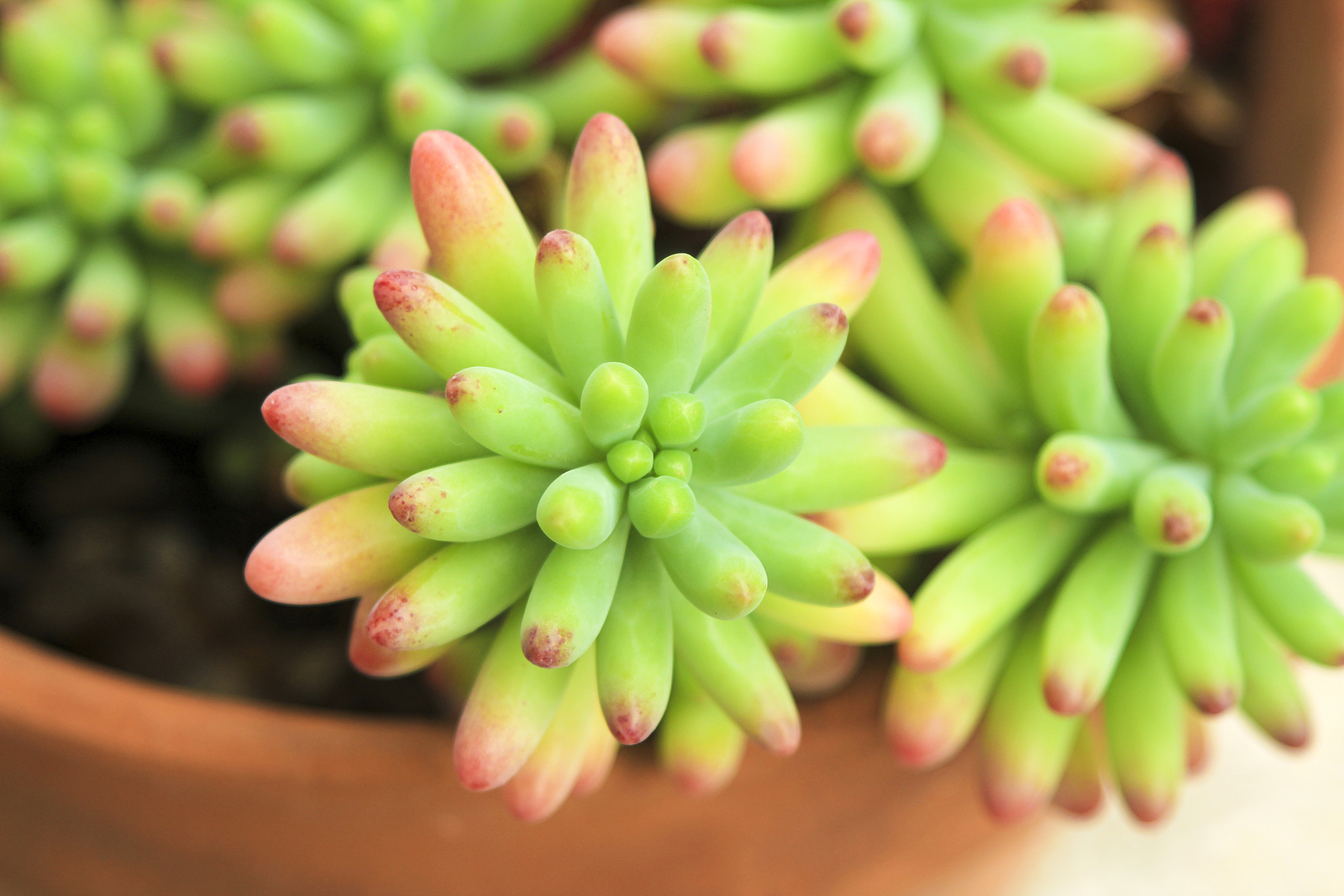
- S. pachyphyllum (jelly beans, many fingers). Low shrubby growth with cylindrical, blue-green leaves; yellow flowers.
- S. x rubrotinctum (pork and beans). Grows 6- to 9-inch (15 to 23 cm) tall; branches bear clusters of thick bright green leaves tinged yellow and red at the tips; leaf tips may turn red in full sun; yellow flowers appear in winter and spring.
- S. sleboldil. Scallop-edged, bluish leaves; clusters of pink flowers.
- S. spathulifolium. A low grower with tiny, fleshy rosettes, bears small, starry yellow flowers.
- S. spectabile. Tiny pink flowers grow in flat, fluffy clusters; dormant in winter.