How to Grow Huernia

Sharing is caring!

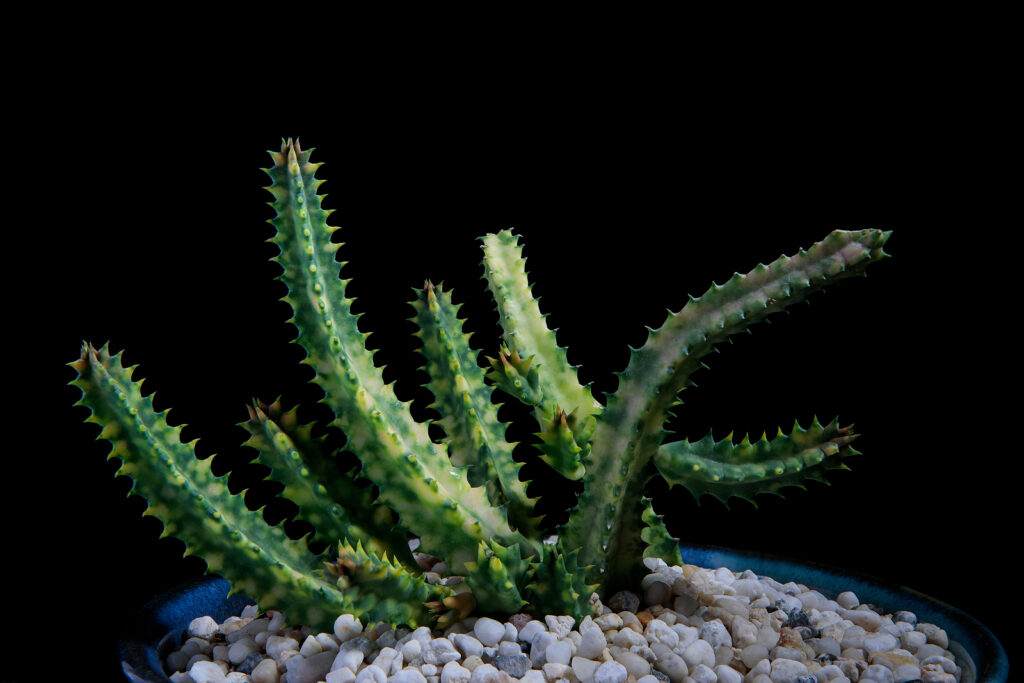
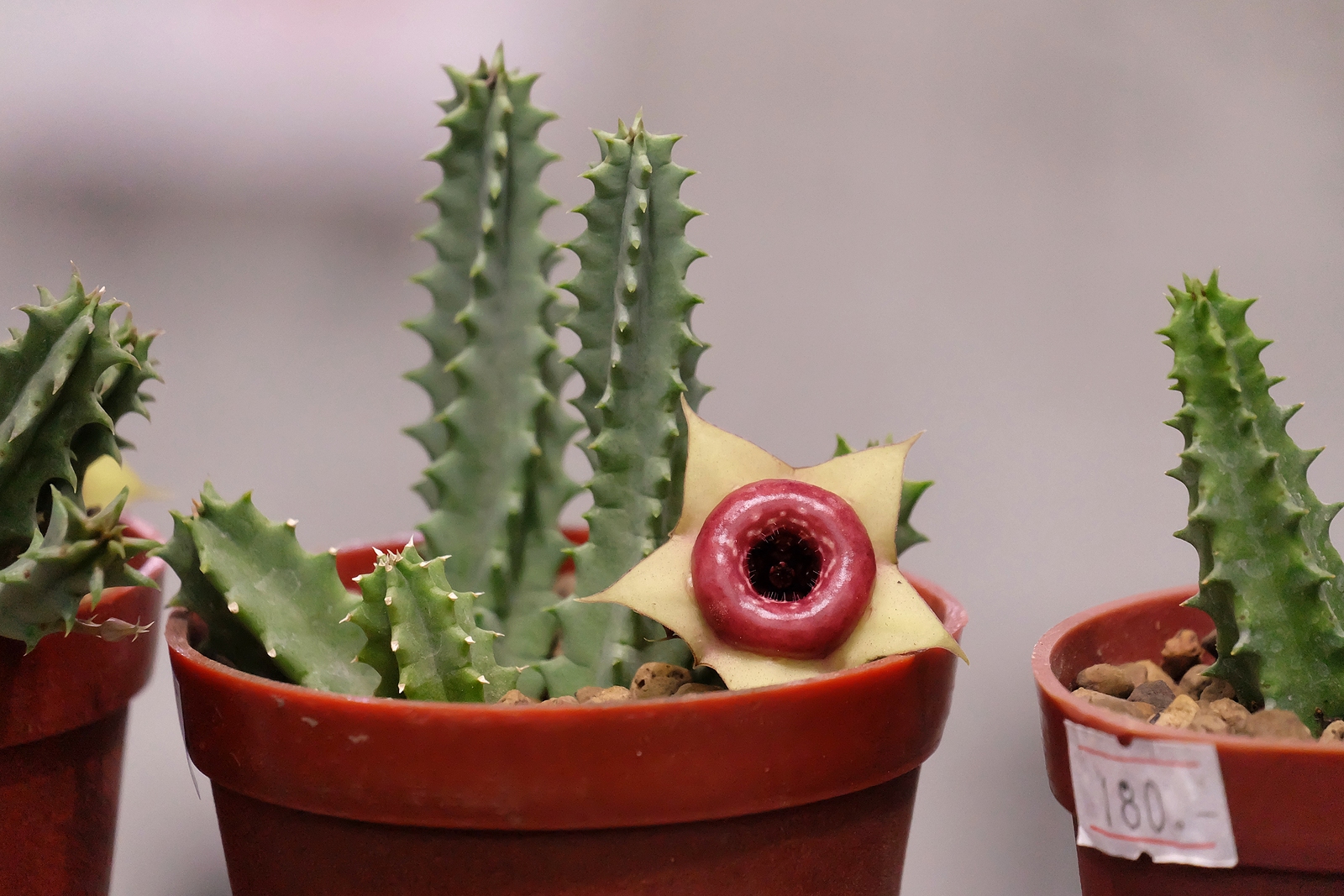
Huernia is a genus of dwarf succulents whose freely branches angled stems that are toothed or notched. Plants grow slowly to about 4 inches high in clusters.

Huernia bears tubular or cup-shaped to shallowly saucer-shaped , warty, fleshy flowers that are diversely colored–reddish, greenish-yellow, brownish, or purple; flowers are often colored, dotted, or striped. Flowers also can be foul-smelling.

Huernia is a genus of about 70 species of low-growing perennial succulents. Hernia are native from South Africa to Ethiopia.

Get to know Huernia

  • Plant type: Succulent in the Milkweed Family
  • Hardiness temperature: 35℉ (1.7℃)
  • Shape and size: Large clumps of short, angled fleshy stens that are freely branched; leaves are scale-like
  • Flowers: Tubular or cup-shaped to shallow saucer-shaped, warty, fleshy, 5-pointed lobed flowers are borne on short-stalked umbles
  • Bloom time: Summer to early autumn
  • Common name: Hernia
  • Genus name: Huernia
  • Family name: Asclepiadaceae
  • Origin: South Africa to Ethiopia
Huernia schneideriana

Planting Huernia

  • Grow Huernia in bight filtered or indirect light.
  • Grow Huernia in standard cactus potting mix with added leaf mold.
  • Grow Huernia in poor to moderately fertile soil outdoors.

How to water and feed Huernia

  • Water Huernia moderatley during the growing season; keep Huernia almost dry in winter.
  • Apply a half-strength, low-nitrogen liquid fertilizer monthly during the growing season.

Huernia care

  • Protect Huernia from excessive winter moisture.

Huernia species to grow

  • Huernia confusa (lifesaver plant). Species grows to 4 inches high; glossy, yellow and marron flower is star-shaped.
  • H. pillansii. Red-marked yellowish blossoms.
  • H. schneideriana. Velvet-like blossoms, brownish on the outside, black on the inside with a pink border.
  • H. zebrina (zebra flower, owl’s eyes). Short, 5-angled grayish greems stem with thick, conical teeth; bear yellow flowers tingled with red.

Similar Posts

  • How to Grow Sempervivum

    Sempervivum is a genus of thick, mat-forming evergreen succulents that bear rosettes of thick, pointed leaves sometimes covered with white hairs and flat, branching terminal panicle-like cymes of star-shaped white yellow, red, or purple flowers borne on upright stems. Sempervivum blooms in summer. The rosettes die after flowering but are replaced by new, offset rosettes…

  • How to Grow Haworthia

    Haworthias are small, easy-to-grow plants. They form a spiky rosette of upright, spotted, or striped, succulent leaves. Haworthia grows in matlike groups. Their distinctive foliage shapes and patterning make them delightful additions to a window garden.  HHowarthias bear small, tubular to funnel-shaped white flowers in loose racemes Haworthia is a genus of about 160 species…

  • How to Grow Stapelia

    Stapelia is a succulent that bears diurnal, star-shaped solitary or clustered flowers. Stapelia has a unique shape, but also a unique foul smell. They emit an odor that smells like rotting flesh. The odor attracts flies which, in turn, pollinate the flowers. Stapelia has erect, angular, coarsely toothed fleshy leaves. Stems branch from the bases…

  • How to Grow Sempervivum – Hens-and-Chicks

    Sempervivum — commonly called hens-and-chicks or houseleeks–is an evergreen perennial succulent with tightly packed rosettes of leaves that occasionally bears star-shaped flowers in tight or loose clusters. Flowers can be white, yellowish, pink, red, or greenish and appear in summer. Blooming rosettes usually die back after setting seed. Plants produce small offsets around the mother plant; offsets…

  • How to Grow Aeonium

    Aeonium is a rosette-forming succulent. Some Aeonium have leafy rosettes at the base; some have rosettes that sit atop sturdy stems. The leaves can be green, pink, deep red-black, and some have yellow edges or variegation. Aeonium can grow from a few inches tall to as tall as 4 feet. Aeonium can bear brightly colored…