How to Grow Gasteria

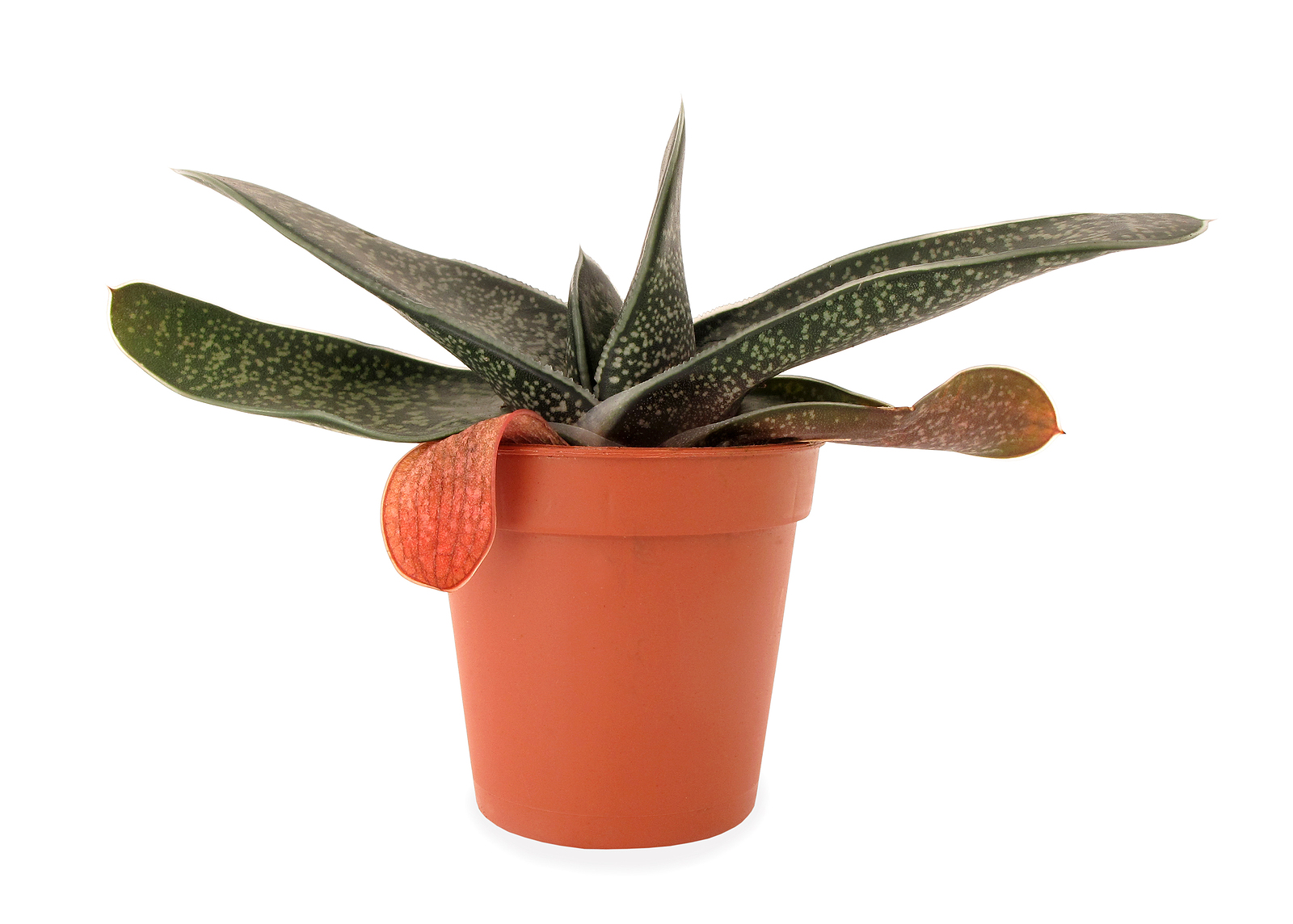
Gasteria is a succulent member of the lily family grown for its flowers and foliage. Gasteria has firm, dark green leaves sometimes suffused with red and white tubercles. Gasteria leaves grow opposite in ranks.
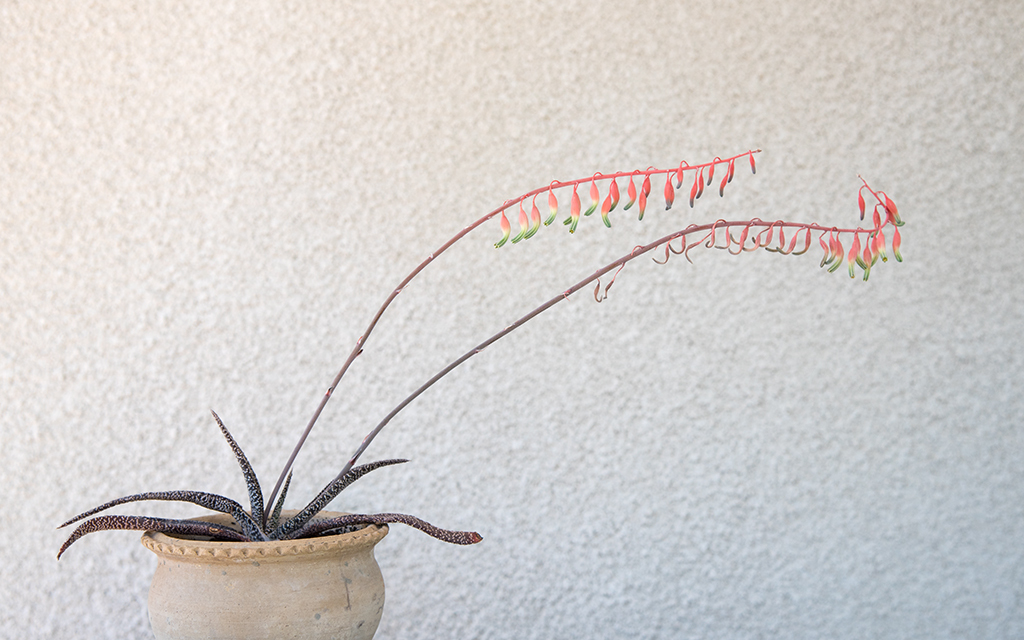
Gasteria flowers are tubular and usually pendulous. The flowers appear in clusters or in panicles. The flowers are pink or red and white. Gasteria blooms from late winter to early summer.
Gasteria is a genus of 50 or more species of stemless, very short-stemmed perennial succulents. They are native to Namibia and South Africa. Gasteria are easy to grow.
Get to know Gasteria
- Plant type: Succulent in the Lily Family
- Hardiness temperature: 35℉ (1.7℃)
- Optimal growing temperature: day, 68° to 85°F (20° to 29°C); night, 50° to 70°F (10° to 21°C).
- Shape and size: Grows 3 to 6 inches or more tall; thick fleshy dark green leaves are arranged in 2 opposite ranks; leaves are often spotted white
- Flowers: Gasteria flowers are tubular and usually pendulous; flowers appear in clusters or in panicles; the flowers are pink or red and white.
- Bloom time: Spring
- Common name: Gasteria, cow’s tongue
- Genus name: Gasteria
- Family name: Liliaceae
- Origin: Namibia and South Africa
Planting Gasteria
- Grow Gasteria in cactus mix.
- Grow Gasteria in bright filtered light.
- Indoors grow Gasteria in bright, indirect, or filtered light from southern exposure. Does well under artificial light, needing 14 to 16 light-hours daily.
- Outdoors, grow Gasteria in well-drained, loamy soil in full sun or dappled shade.
How to water and feed Gasteria
- Water Gasteria moderately during the growing season. Let the soil dry between thorough waterings.
- Gasteria wants humidity of 20% to 25%.
- Apply a low-nitrogen liquid fertilizer every 4 to 5 weeks.
Gasteria care
- Repot Gasteria when the roots occupy ½ of pot space, in spring.
- Check for aphids, mealybugs, spider mites, root rot, scale. Also be alert for fungus disease.
- Gasteria rests during winter. Set the plant in a cool site, 50°F (10°C). Water just enough to keep leaves from shriveling; withhold fertilizer
- Sow Gasteria seed in spring or summer. Separate offsets or take leaf cuttings during the growing season.
Gasteria species to grow
- Gasteria x hybrida (bowtie plant). Numerous hybrids of unknown parentage; all plants under this name have long, tongue-like leaves, which may be speckled with white.
- G. maculata. Thick, tongue-shaped, fleshy leaves 8-inch (20 cm) long with tips curving upwards; leaves are mottled with white and twist in spiral growth; red flowers appear in clusters on tall stalks.
- G. verrucosa (ox-tongue, warty aloe). Sharply tapered leaves rising upwards are covered with prominent white warts (tubercles).