How to Grow Opuntia – Prickly Pear

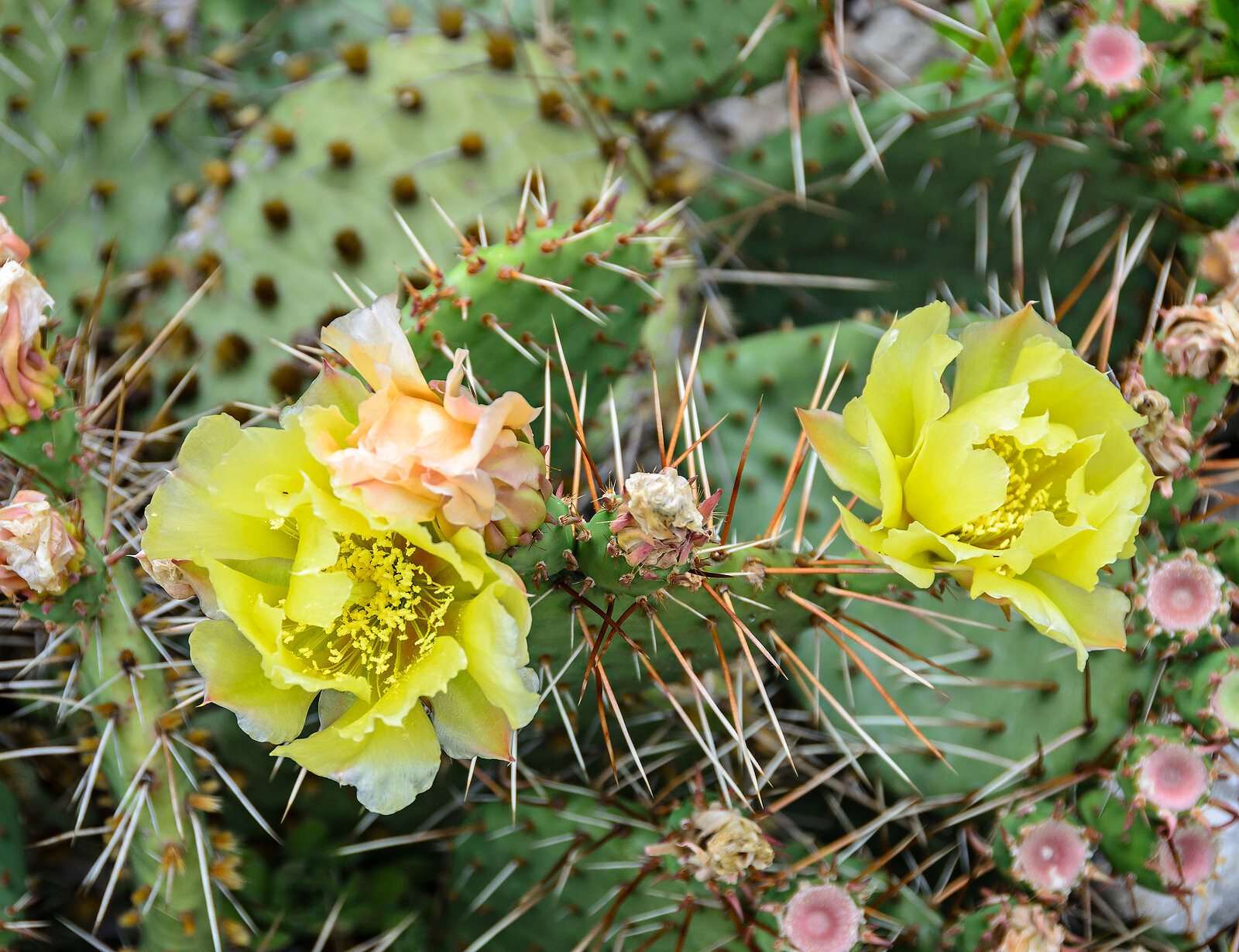
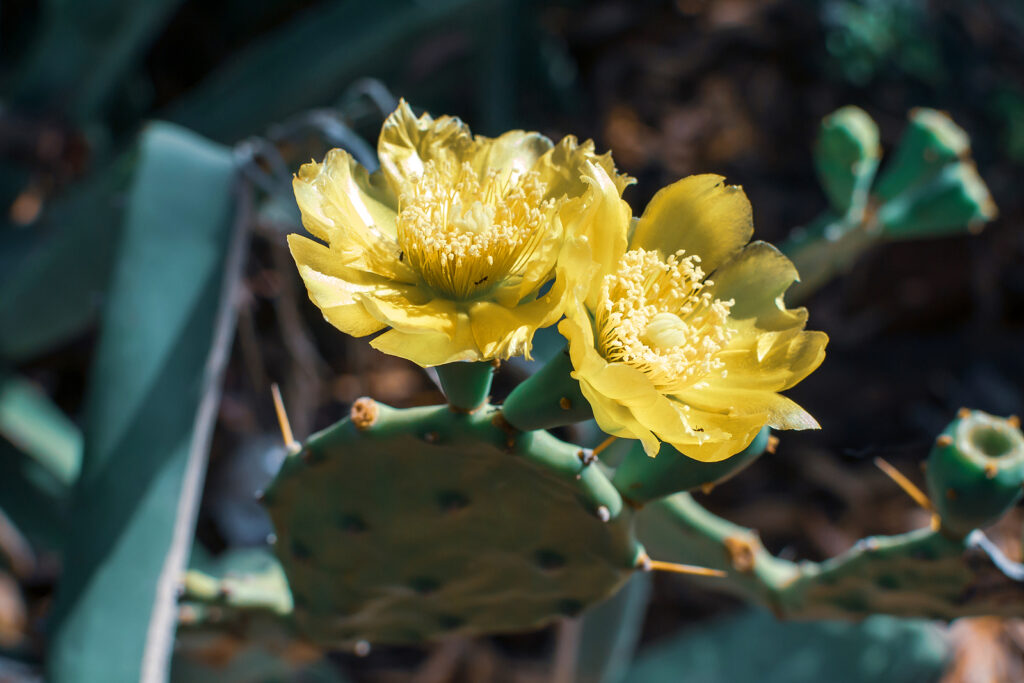
Opuntia — commonly called prickly pear–are cacti that usually have pad-like and flattened or sometime cylindrical and club-shaped or spherical segmented branches. Optunia bear funnel- or bowl-shaped flowers usually at the tips or from the sides of branch segments.
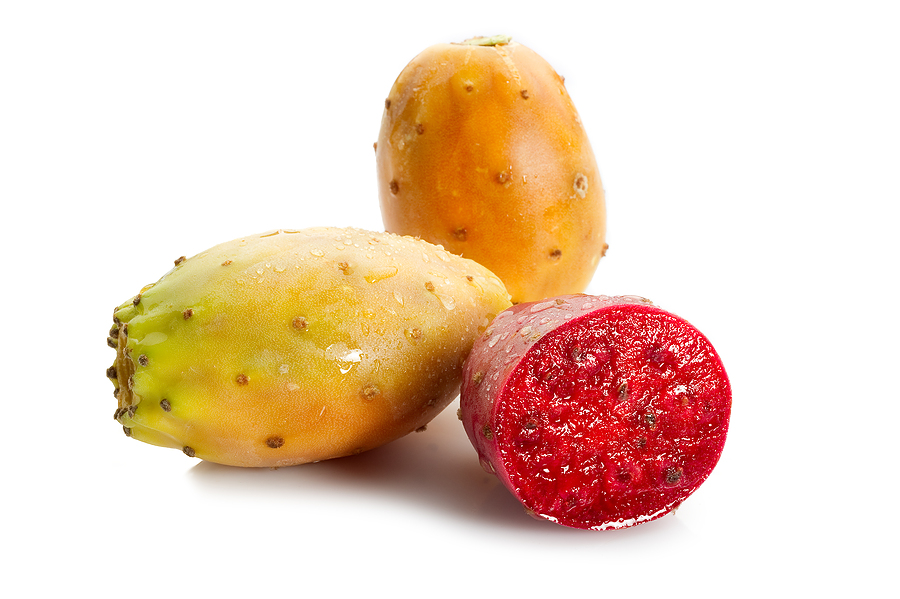
Optunia bear spiny obovoid or spherical fruits called prickly pears. In a few species, the prickly pears are edible. Optunia is armed with barbed spines that can be large and needle-like or small and hairlike. Spines can easily pierce a glove. The number of spines varies, but all species have tufts of barbed bristles in each areole.
Optunia needs full sun and sandy or gritty soil that is well-drained. In well-drained soil, Optiunia can survive cold and even freezing weather.
Optunia is a genus of more than 200 species of cacti ranging from tree-like to bushy to groundcover size. Opotunias can be grown in cactus gardens and small species can be grown as houseplants.
Know What to Plant This Week
Every week I answer the gardener's most important question: what should I plant now? Get seasonal planting advice free — or go Pro for my full Soil Temperature Garden Report, with soil temperature, moisture, weather trends, and crop-by-crop recommendations.
Get to know Opuntia
- Plant type: Perennial.
- Growing zones and range: Zones 4 to 10; optimal temperature is day, 75° to 85°F (24° to 29°C); night, 65° to 70°F (18° to 21°C).
- Hardiness: Hardy in coldest winters but requires perfect drainage to survive freezes
- Height and width: 10 to 15 feet (3-4.5m) tall and 24 inches (61cm) to 5 feet (1.5m) wide depending on the variety.
- Foliage: Succulent, cactus that lacks true leaves; produces fleshy branches that are either flat and padlike or rounded; branches are well armed with barbed spines, which can be large or very small.
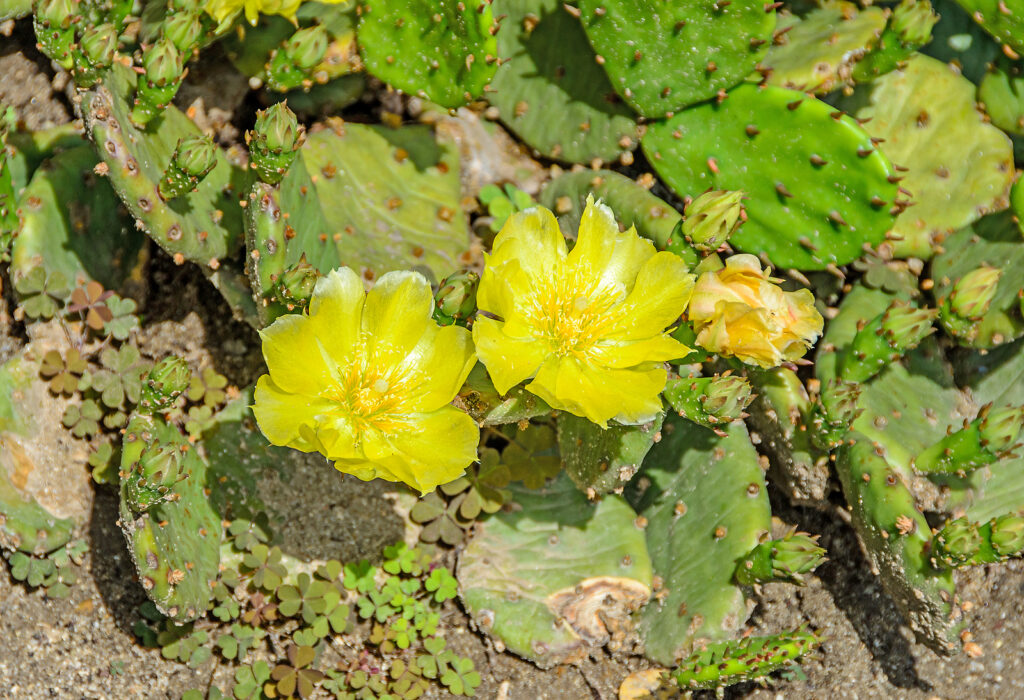
- Flowers: Showy bowl-shaped flowers bloom in summer, open during the day; spiny, rounded fruit called “pears” follows the flowers; “pears” are edible; in some cases, they turn a handsome red when ripe.
- Bloom time: Late spring into summer.
- Uses: Cactus or rock garden or speciment
- Garden companions: Stonecrops (Sedum), yuccas.
- Common name: Prickly pear, beavertail, bunny ears
- Botanical name: Opuntia
- Family name: Cactaceae
- Origin: Arid regions of North, Central, and South America
Where to plant Opuntia
- Plant Opuntia in full sun.
- Plant indoors in bright light, with 4 hours direct sun daily, from southern to eastern exposure.
- Air circulation is important.
- Plant Opuntia in fertile, well-drained soil. Use sandy or gritty soil that is fairly rich.
- Growing indoors in pots use a cactus/succulent mix.
- Keep Opuntia away from areas where unwary visitors may come in contact with the spines.
- Small species can be grown as a houseplant.
When to plant Opuntia
- Set out container-grown plants in spring or summer. Handle plants with folded newspaper or thorn-proof gloves.
- Sow seed in warm soil in late spring or summer
Planting and spacing Opuntia
- Space Optunia 24 inches (61cm) to 5 feet (1.5m) apart depending on the variety
- Weed Opuntia thoroughly before planting to avoid problems later.
- Pre-soak seed before sowing; sow seed in a succulent or cactus mix.
How to water and feed Opuntia
- Give Opuntia moderate to little water. Let soil dry between thorough waterings. Avoid overwatering.
- Wet soil, especially in winter, is fatal to Opuntia.
- Fertilize Optunia every 6 weeks during growing season, with low-nitrogen, high-potassium fertilizer; for plants at least 1 year old.
How to care for Opuntia
- Keep small weeds from growing large near Optunia.
- Keep Optunia away from areas where people are close by.
- Repot contianer-grown Optunia each year.
- Optunia should rest during winter. Set it in cool, bright location. Give Optunia just enough water to keep plant from shriveling and withhold fertilizer during the dormant period.
- Propagate Optunia by stem cuttings or seeds.
Opuntia pests and diseases
- Opuntia can develop crown gall and rot.
- Opuntia is susceptible to aphids, mealybugs, spider mites, nematodes, and scales.
Opuntia propagation
- Take Opuntia cuttings from the older parts of the stem and root them..
- Sow pre-soaked seed in warm soil.
Opuntia varieties to grow
There are more than 200 species of Optunia; here are a few commonly planted:
- Optunia basilaris, beavertail. Slow grower to 8 to 12 inches (20 to 30 cm) tall; pink blooms appear on 4- to 5-year-old specimens.
- O. compressa (also known as O. humifusa) is hardy as far north as Zone 4; grows 6-12 inch (15.2-30.1cm) tall, clump-forming; bears bowl-shaped yellow flowers followed by round or oval fruits, usually with spines: the “prickly pears”; needs desert conditions–full sun and sandy soil; grow them in a border, add a bit of soil to raise their planting area a few inches to ensure good drainage, because they cannot tolerate wetness over winter; excellent container plant and also a good choice for planting along the top of a rock wall where drainage is excellent; propagate it by dividing the clumps in spring or rooting the individual flattened pads. Wrap the pads in folded pieces of newspaper to avoid contact with spines.
- O. cylindrica. Columnar, bright green stem growing to several feet with a diameter of 2 inches (5 cm); stem is covered with flat, diamond-shaped tubercles with a woolly white areole in the center.
- O. ficus-indica, big shrubby or treelike cactus to 15 feet (4.6m) wide; bears yellow flowers in spring or early summer; the large red or yellow fruit that follows is sold in groceries in some areas; can be grown as a common hedge or houseplant.
- O. microdasys, bunny ears: sometimes a house plant; fast growth to 2 feet (.6m) high, 4-5 feet (1.2-1.5m) wide (much smaller in pots); pads flat, thin, nearly round, to 6 inches (15.2cm) across, velvety soft green with neatly spaced tufts of short golden bristles in polka-dot effect; yellow flowers may appear in summer. ‘Albispina’ has white bristles; small, round new pads atop larger old ones give plant silhouette of rabbit’s head. A favorite with children.
- O. ovata. Grows to 6 inches (15 cm) tall with pale green, thick, oval pads which spread out to form a clump; bristles are pale yellow.
- O. robusta. Large plant composed of flattened, gray-green, jointed segments with a bluish coating; circular in form that vary from 2 inches (5 cm) to more than 12 inches (30 cm) across.