How to Grow Sempervivum – Hens-and-Chicks

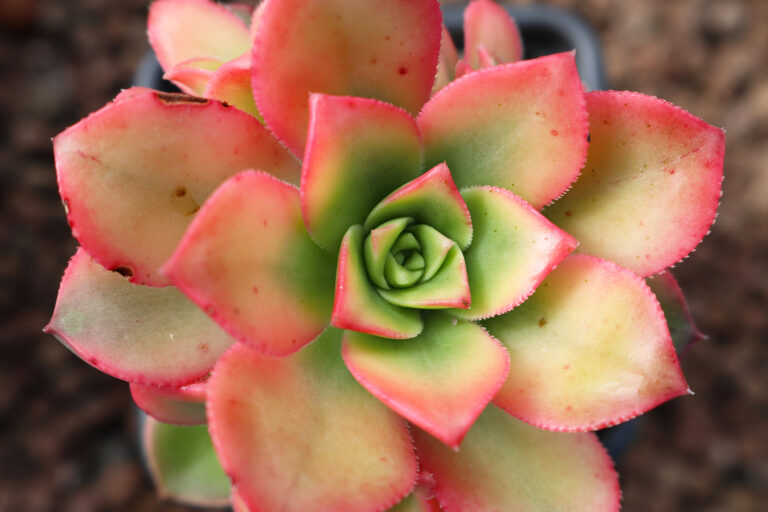
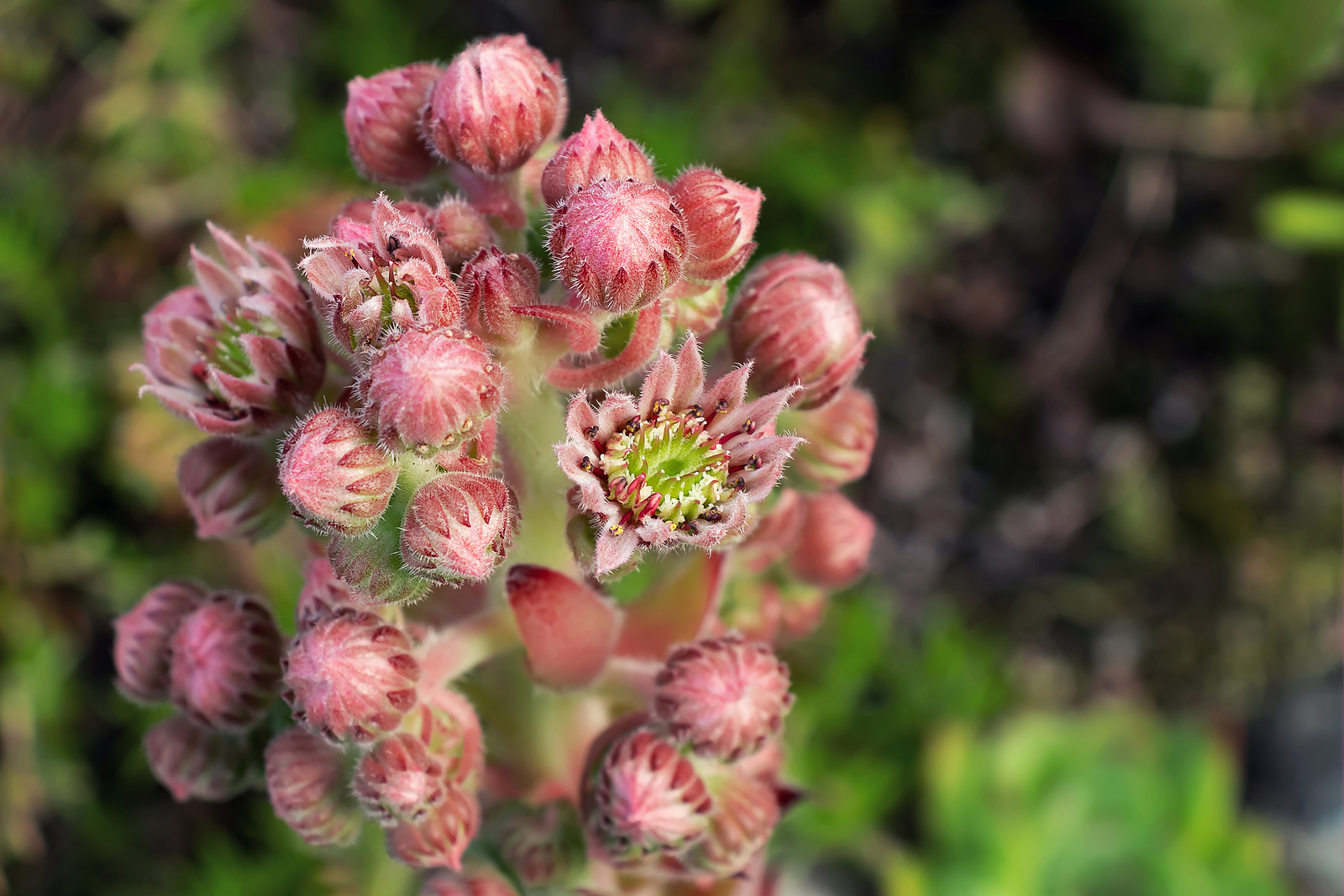
Sempervivum — commonly called hens-and-chicks or houseleeks–is an evergreen perennial succulent with tightly packed rosettes of leaves that occasionally bears star-shaped flowers in tight or loose clusters. Flowers can be white, yellowish, pink, red, or greenish and appear in summer.
Blooming rosettes usually die back after setting seed. Plants produce small offsets around the mother plant; offsets are easily separated and replanted.
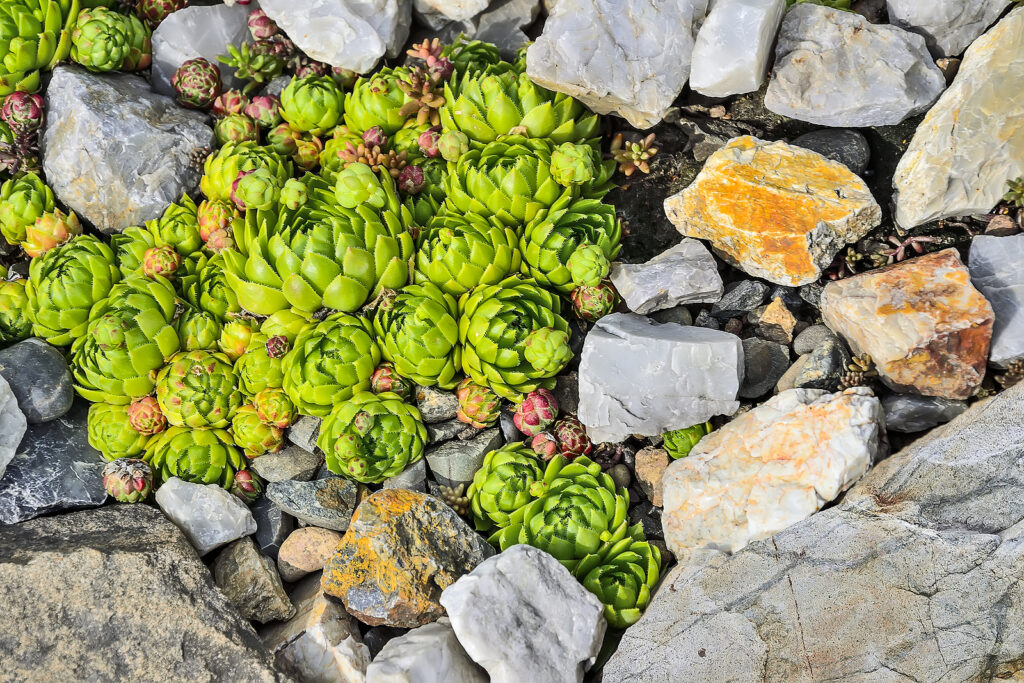
Sempervivum is a genus of about 40 species. All are dense, mat-forming evergreen perennials that are well-suited for rock gardens, scree beds, wall crevices, and throughs.
Get to know Sempervivum
- Plant type: Perennial.
- Growing zones and range: Zones 4 to 8
- Hardiness: Hardy to Zone 4; leaves can be damaged by freeze
- Height and width: From 3 to 12 inches (7.6-30cm) tall and wide.
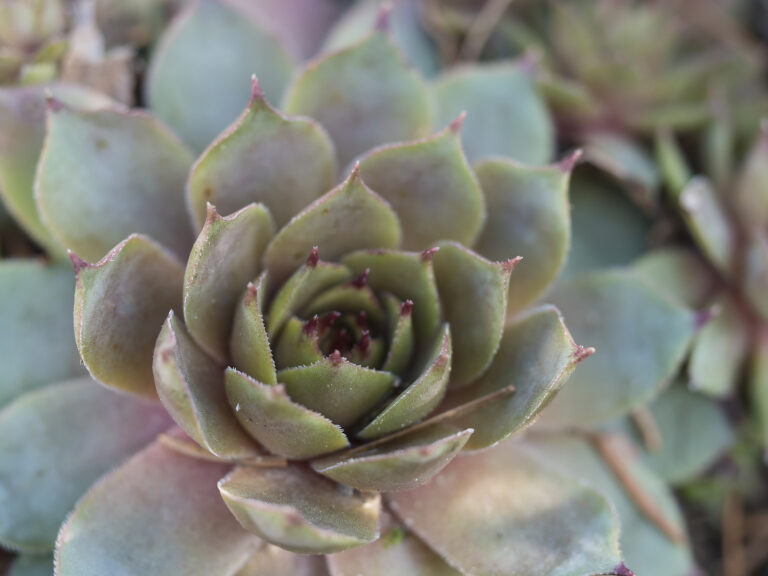
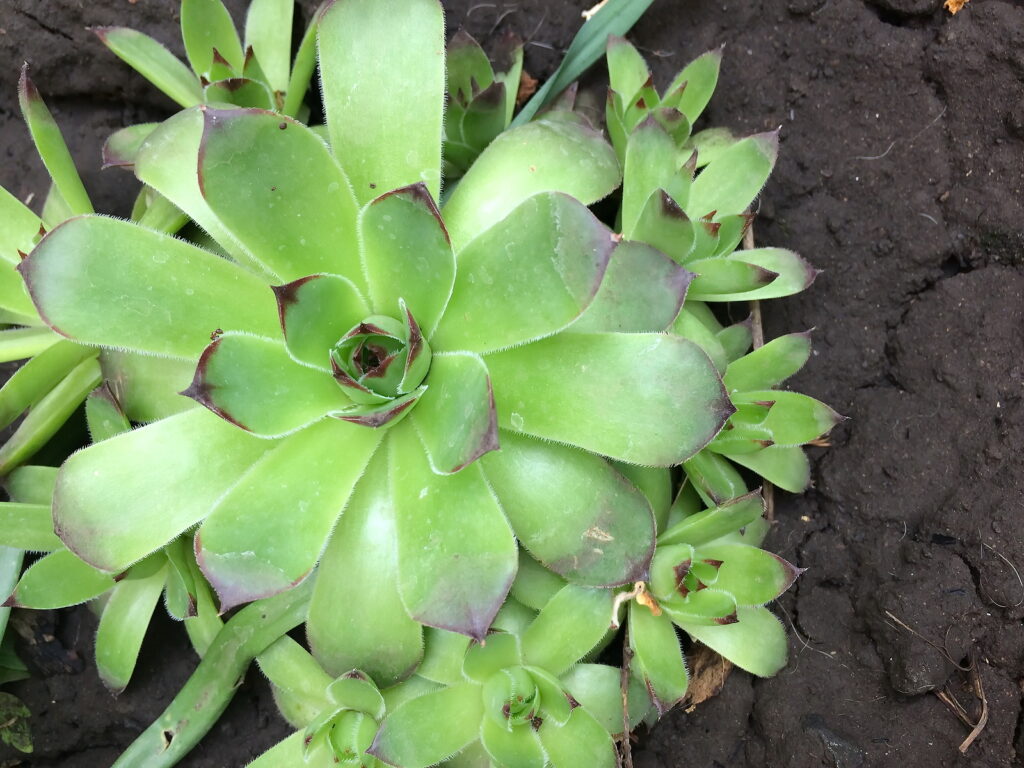
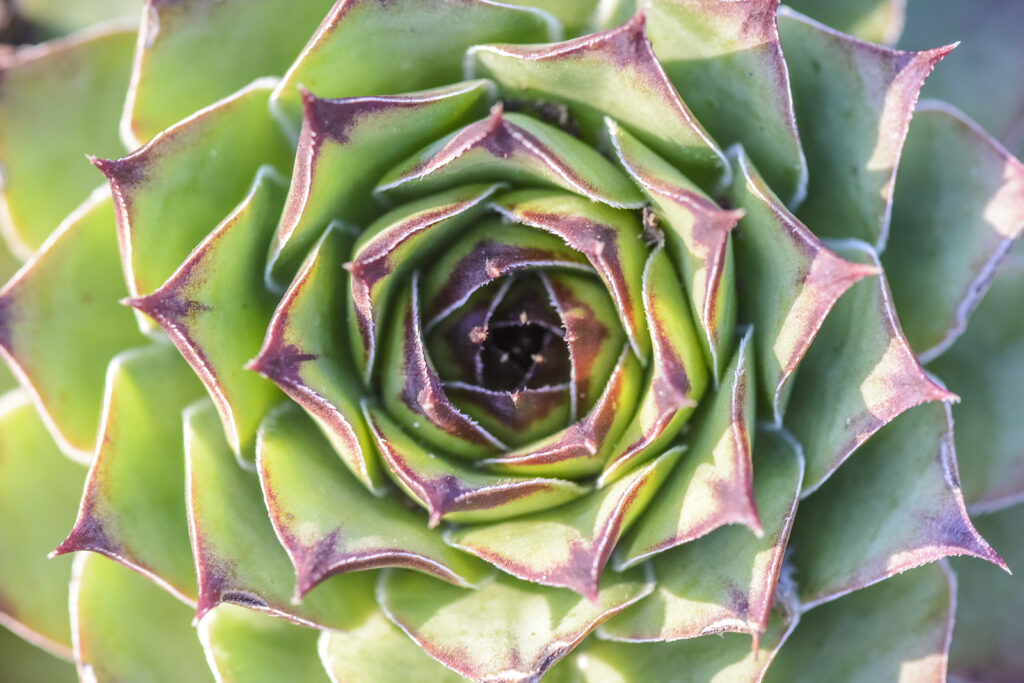
- Foliage: Rosettes of thick, pointed leaves, often with bristle-fringed margins and sometimes covered with a web of white hair.
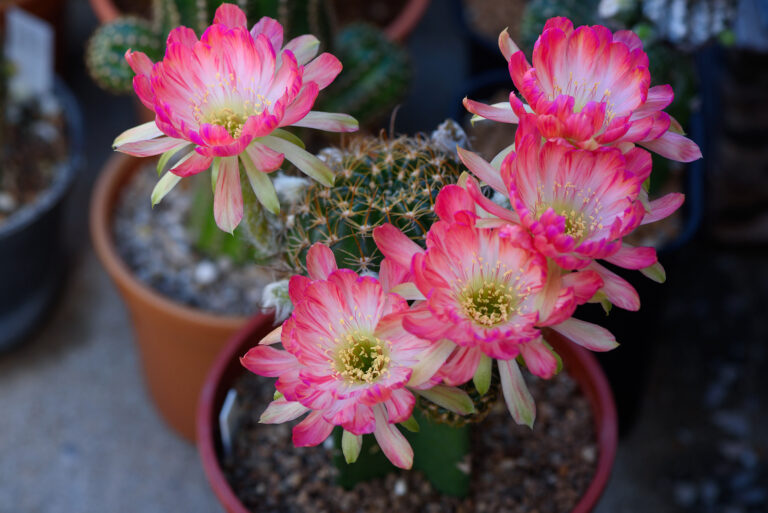
- Flowers: Star-shaped red, purple, yellow, or greenish flowers borne on upright stems, pretty in detail, but not showy.
- Bloom time: Summer.
- Uses: Terraces, rock walls, as well as edgings for foundation plantings and perennial borders; some mat-forming types grow so densely, they make good groundcover.
- Garden companions: ‘Rosabella’ rock cress (Arabis x arendsii ‘Rosabella’)
- Common name: Hens-and-chicks, houseleeks
- Botanical name: Sempervivum
- Family name: Crassulaceae
- Origin: Mountains of Europe and Asia
Where to plant Sempervivum
- Plant Sempervivum in full sun.
- Plant Sempervivum in dry, poor to somewhat fertile, well-drained soil or rock walls.
When to plant Sempervivum
- Plant Sempervivum seed anytime.
- Set container-grown Sempervivum in the garden from spring to autumn.
Planting and spacing Sempervivum
- Space Sempervivum 4 to 12 inches (10-30cm) apart depending on the variety.
- Sow seed 1/8 inch deep in evenly prepared soil.
How to water and feed Sempervivum
- Give Sempervivum little water; avoid overwatering.
- Sempervivum does well with a little dryness because they are able to store moisture in their succulent stems.
- Fertilize Sempervivum with a cactus or succulent fertilizer following label directions.
How to care for Sempervivum
- Sempervivum rosettes, commonly referred to as “hens”, or mother plants, die after they flower, but new rosettes, or “chicks”, quickly fill in the space they leave.
- If a lot of Sempervivum seem ready to bloom at one time, cut the buds from most of them before they open, to preserve the planting.
- Although they thrive in warmth, the hardy species need a cool dormant period, so if you bring them indoors for the winter as houseplants, leave them outside for several weeks first.
Sempervivum pests and diseases
- Sempervivum can develop rot or rust.
- Sempervivum is susceptible to attack by mealybugs.
Sempervivum propagation
- Separate Sempervivum offsets anytime.
- Divide Sempervivum clumps or pick off individual “chicks”.
Sempervivum varieties to grow
- Sempervivum arachnoideum, spiderweb or cobweb houseleek: a popular species; grows 3-4 inches (7.6-10.2cm) tall with showy, 4 inches (10.2cm), bright red flowers, and leaves that are connected by light threads that give a cobweb-covered appearance; tiny gray-green rosettes, .75 inch (1.8cm) across; spreads slowly to make dense mats; seldom blooms. Zones 5 to 8.
- S. montanum, houseleek: grows in dark green rosettes with sharp-pointed leaves and purplish-blue flowers. 5-6 inches (12.7-15.2cm) tall. Zones 5 to 8.
- S. tectorum, hens-and-chicks: a widely grown species, is also one of the hardiest if grown in a sheltered location; grows to 6 inches (15.2cm) tall; bears rosettes of gray-green leaves, spreading quickly by offsets; bears clusters of 1 inch (2.5cm) wide, lavender-red flowers; many cultivars have colorful leaf rosettes with red edgings; easy to grow in rock gardens, borders, and pattern plantings. Zones 3 to 8.