How to Grow Kentia Palm — Howea

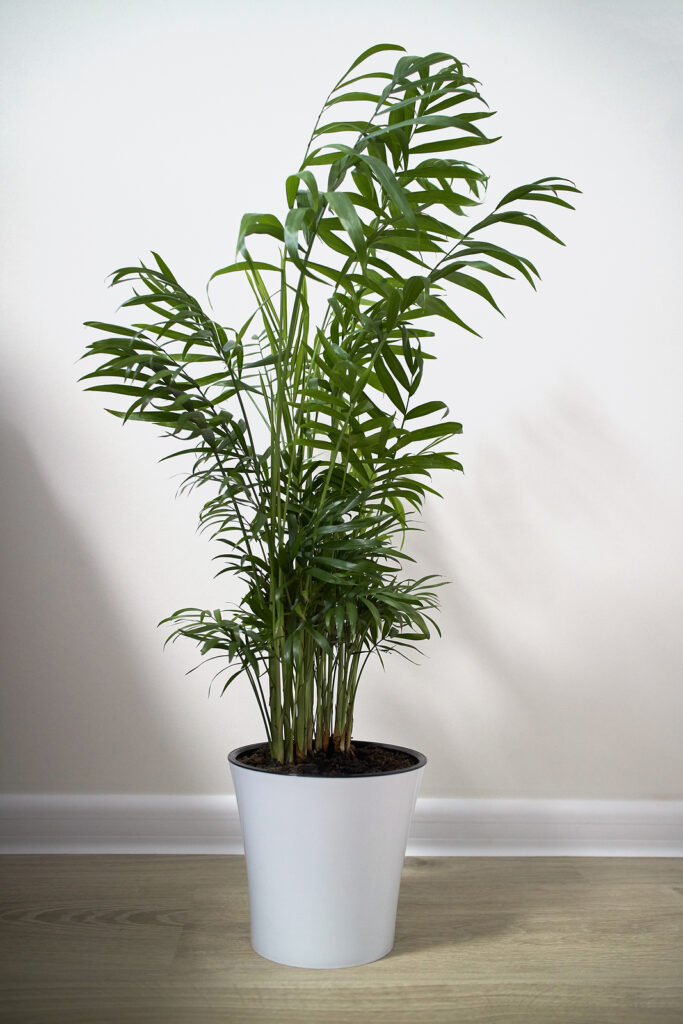
Howea–commonly called Kentia palm or sentry palm–is a dark green, feather-leaved palm with deeply cleft, arching fronds that grow from a single stem. It is often grown as a houseplant; indoors it usually grows to not more than 8 feet (2.4m) tall.
Howea is a slow grower and easy to maintain indoors. It has a tolerance for air-conditioned and poorly lit environments. It has been a much sought-after houseplant for more than 100 years.
Howea grows best indoors in bright filtered or full light. Outdoors it can be grown in full sun. Outdoors it is best grown against a warm wall and should be sheltered from cold, drying winds.
Howea is a genus of just two species of single-stemmed palms. Howea is native to Lord Howe Island, Australia.
Know What to Plant This Week
Every week I answer the gardener's most important question: what should I plant now? Get seasonal planting advice free — or go Pro for my full Soil Temperature Garden Report, with soil temperature, moisture, weather trends, and crop-by-crop recommendations.
Get to know Howea
- Plant type: Palm
- Growing zones and range: Zones 11-12
- Hardiness: Tender
- Temperature: day, 70°F (21°C); night, 50° to 55°F (10° to 13°C). An average temperature and medium humidity.
- Height and width: Indoors 8 feet tall and 6 feet wide; in tropical regions outdoors to 60 feet (18m) tall and 20 feet (6m) wide
- Flowers: Star-shaped , 3-petaled flowers are borne on long spikes
- Bloom time: Summer
- Uses: Use young specimens as houseplants; in warm regions, use as a free-standing lawn specimen or in a courtyard garden
- Common name: Kentia palm, paradise palm, sentry palm.
- Botanical name: Howea
- Family name: Arecaceae
- Origin: Howe Island, Australia
Where to plant Howea
- Light: Bright to low light, no direct sun, from any exposure. Does well under artificial light. Air circulation is important. Give sentry palm limited to bright light, an average temperature and medium humidity.
- Soil: All-purpose mix, with good. An all-purpose soil mix.
When to plant Howea
- Set Howea outdoors any time of the year in tropical and subtropical regions.
Planting and spacing Howea
- Space Howea 6 feet wide (2m) apart indoors; in tropical regions outdoors space Howea 20 feet (6m) apart.
How to water and feed Howea
- Water: Keep soil evenly moist, not soggy. Allow the soil to dry between thorough watering. Howea can stand occasional dryness.
- Mist Howea twice daily. It prefers humidity of 45% to 60%.
- Feeding: Fertilize Howea every 2 weeks, with mild liquid fertilizer during spring and summer.
Howea care
- Howea rests in winter. Set plants in cool pace at about 55°F (13°C). Keep the soil barely moist and withhold fertilizer.
Growing Howea as a houseplant
- Howea will grow with limited to bright light, an average temperature and medium humidity.
- Allow the soil to dry between thorough waterings and fertilize during spring and summer.
- Shower the plant regulalry with tepid water to keep the fronds clean
- Repot Howea once every two to three years and use an all-purpose soil mix.
Howea pests and diseases
- Howea is vulnerable to attack from mealybugs, scale insects and spider mites.
Howea propagation
- Propagate Howea by seeds. It is a slow grower and not recommended for home propagation
Howea varieties to grow
- Howea belmoreana, Belmore sentry palm, curly palm. Grows slowly to 8 feet (2.4 m); has a short-stemmed trunk with a thick base; leafstalks are erect, 10 to 18 inches long and bear graceful, erect, bright green fronds to 18 inches in length; leaflets are rigid near midrib, then arch downwards; fronds spread while plant is young.
- H. forsterana, Kentia palm. Grows to 8 feet (2.4 m) tall; has fronds that reach 2 feet in length and spread horizontally from the stem.