How to Grow Flame of the Woods — Ixora

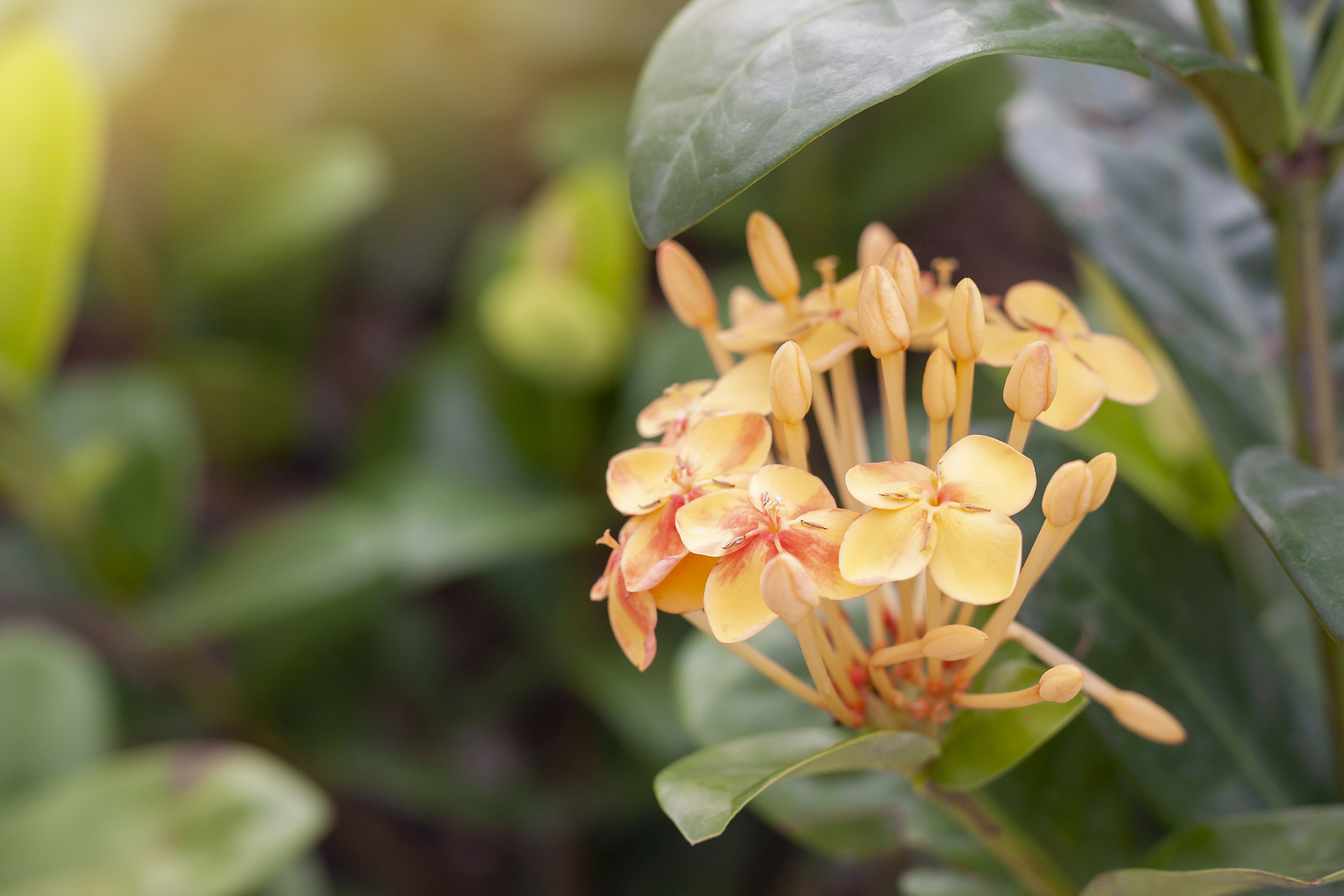
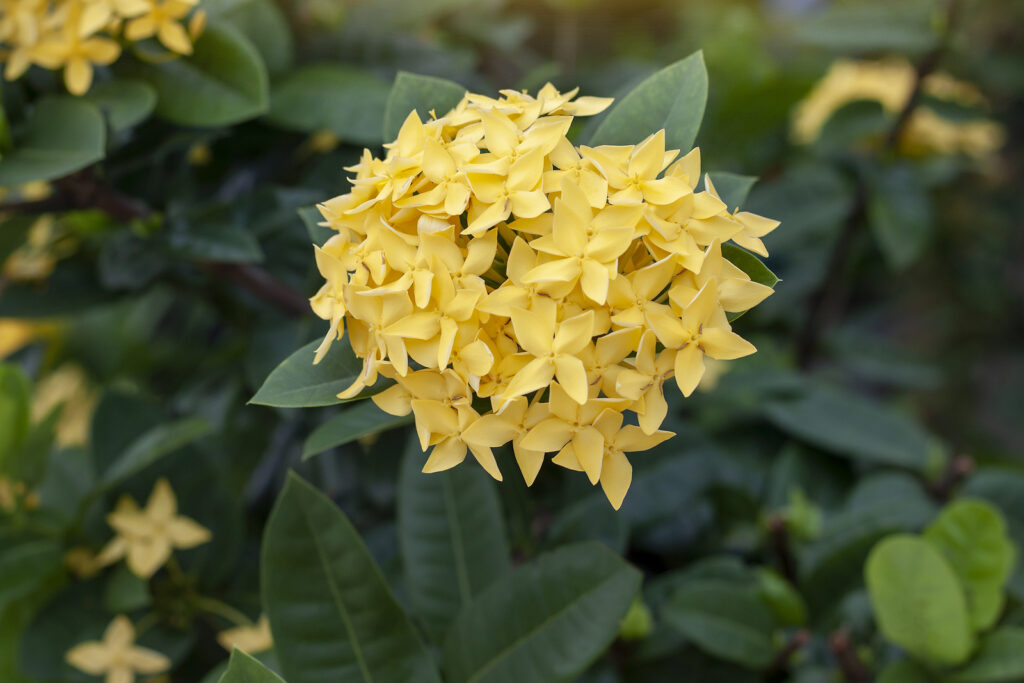
Ixora is a tropical shrub grown for its vibrantly colored, scented flowers. Ixora has shiny, leathery green leaves and four-lobed tubular flowers that can be red, yellow, orange, pink, or white.
Ixora grows best outdoors in a warm, humid climate. It can be planted in a shrub border or grown as a free-standing specimen. Where temperatures drop below 59°F (15°C), Ixora should be grown as a houseplant.
Ixora is a genus of about 400 species of evergreen shrubs and small trees. Ixora is native to tropical woodland and mountains worldwide.
Get to know Ixora
- Plant type: Bulbous perennials
- Growing zones and range: Zones 14-15
- Hardiness: Tender; where temperatures drop below 59°F (15°C) grow Ixora as a houseplant
- Height and width: 6 to 8 feet (2-2.5m) tall, 3 to 6 feet (1-2m) wide
- Foliage: Whorled leaves are simple and entire
- Flowers: Large, vibrantly colored, sented 4-petaled, salverform leaves in terminal panicles
- Bloom time: Summer
- Uses: Shrub border, freestanding specimen, houseplant
- Common name: Flame of the woods
- Botanical name: Ixora
- Family name: Rubiaceae
- Origin: Tropical woodland worldwide
Where to plant Ixora
- Light outdoors: Plant Ixora in a spot that is shaded from midday sun.
- Light indoors: Grow Ixora in bright filtered or indirect light.
- Soil outdoors: Plant Ixora in fertile, moist, but well-drained soil.
- Soil indoors. Grow Ixora in a soilless potting mix wiht added leas mold and grit.
When to plant Ixora
- Set container grown Ixora outdoors in spring.
Planting and spacing Ixora
- Space Ixora 3 to 6 feet (1-2m) apart.
How to water and feed Ixora
- Water Ixora freely during the growing season; water sparingly in winter.
- Fertilize Ixora with a blanced slow-release fertilizer.
Ixora care
- Prune Ixora after flowering to keep it compact and shaped.
Growing Ixora as a houseplant
- Ixora coccinea can be grown as a houseplant.
- Place Ixora in a room with warm temperature, high humidity, and direct light.
- Grow in average, soilless potting medium and keep it evenly moist when te plant is growing and flowering. At other times, allow the medium to dry out slightly begween waterings.
- Fertilize twice monthly during sprng and summer and monthly in fall and winter.
- After Ixora flowers, it can be pruned to keep it compact.
Ixora pests and diseases
- Aphids and scale insects may attack Ixora.
- Iron deficiency, Xanthomonas spot, and fungal leaf spots can occur.
Ixora propagation
- Root semi-ripe cuttings in summer with bottom heat.
Ixora varieties to grow
- Ixora chinensis. Bushy, grounded shrub to 6 feet tall and often as wide; ovate, semi-lustrous mid- to deep green leaves; bears flattened cymes of red, orange, pink, or white flowers in summer.
- I. coccinea, flame of the woods. Bushy , rounded shrub with oblong glossy mid to deep green leaves; produces loose cymes of red, orange, pink, or yellow flwoers. Several cultivars: ‘Fraseri’ has salmon-red flowers.