How to Grow Jack-in-the-Pulpit — Arisaema

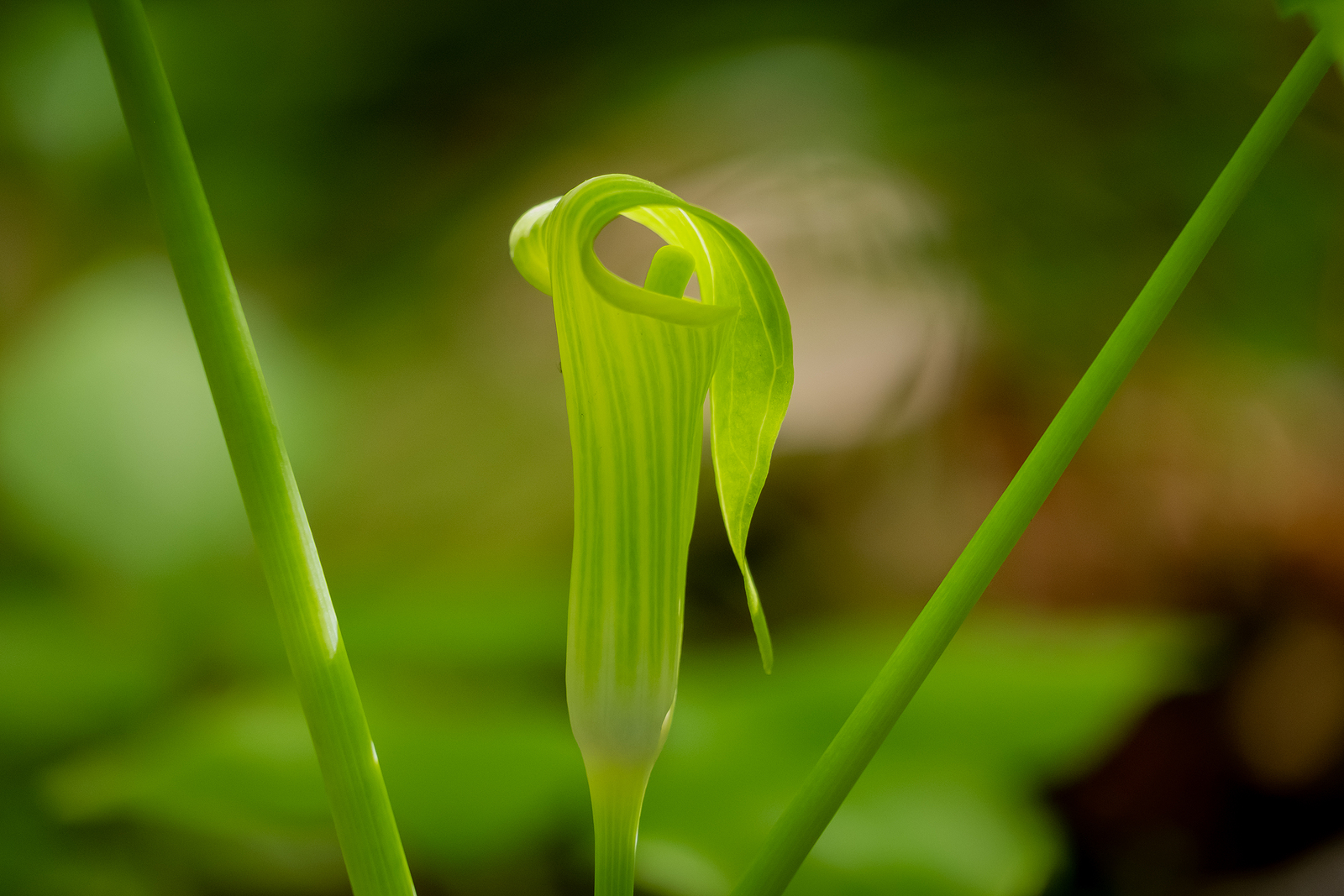
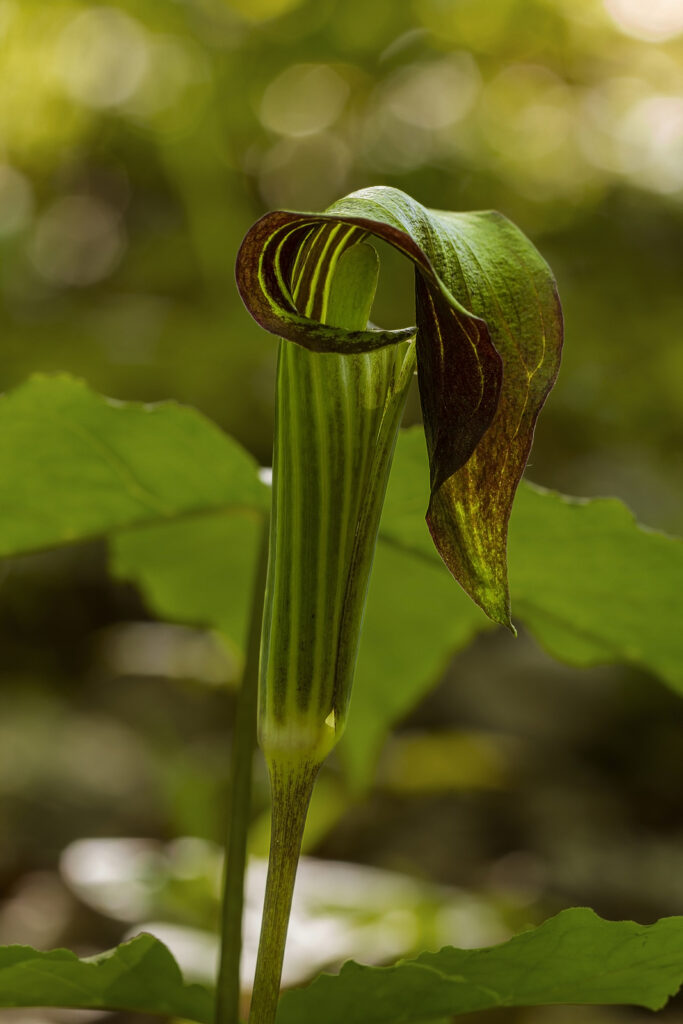
The best known members of this genus is the North American wildflower commonly called Jack-in-the-pulpit, Arisaema triphyllum. The tiny flowers are clustered on a central stalk (the “jack”) which is a spadix; the spadix is surrounded by a modified leaf (the “pulpit”) which is a spathe. Commonly the spathe bends over at its tip to shelter the spadix.
The Arisaema includes about 150 species from North America, Japan, China and the Himalaya. Many are similar in appearance to jack-in-the-pulpit.
Plants are either tubers or rhizomes. Flowers appear in spring or summer. The flowers are followed by red berries in the fall.
Plant Arisaema in partial shade in humus-rich, well-drained soil. Add plenty of organic matter to the soil and mulch with aged compost in autumn.
Know What to Plant This Week
Every week I answer the gardener's most important question: what should I plant now? Get seasonal planting advice free — or go Pro for my full Soil Temperature Garden Report, with soil temperature, moisture, weather trends, and crop-by-crop recommendations.
Get to know Arisaema
- Plant type: Tuberous-rooted perennials
- Growing zones and range: Zones 3 to 9
- Hardiness: Hardy to Zone 3
- Height and width: 6 to 24 inches (15-61cm) tall; 6 to 12 inches (15-30cm) wide
- Foliage: Leaves are divided into segments.
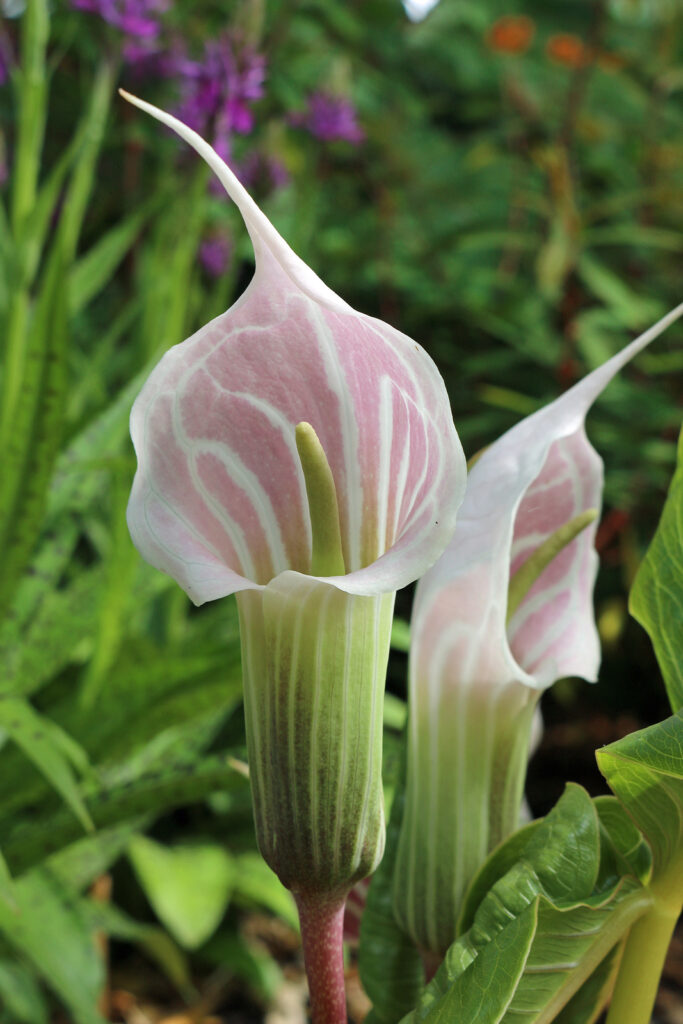
- Flowers: Upright, trumpet-shaped flower is green or purple-and-green spathe capped with a hood (the pulpit); inside, the flowers are borne on a narrow, upright structure known as a spadix (or the “Jack”); the spathe eventually falls off, and the flowers on the spadix develop into red berries in the summer.
- Bloom time: Late spring to early summer
- Uses: Good in shady wildflower gardens and woodland plantings.
- Garden companions: Turtleheads (Chelone), trilliums, false Solomon’s seal (Smilacina racemosa)
- Common name: Jack-in-the-pulpit
- Botanical name: Arisaema species; A. triphyllum, Jack-in-the-pulpit is best known
- Family name: Araceae
Where to plant Arisaema
- Arisaema grows well in full to moderate shade.
- Plant Arisaema in moist and well-drained slightly acidic soil.
When to plant Arisaema
- Plant Arisaema bulb offshoots or seeds in the fall.
- Sow seeds in spring or in a cold frame in autumn; plant in evenly prepared soil.
Planting and spacing Arisaema
- Set Arisaema tuber so its base is 2 to 3 inches (5-7.6cm) below the soil surface.
How to water and feed Arisaema
- Keep the soil evenly moist for best growth.
- Feed Arisaema with an all-purpose organic bulb fertilizer in spring; then apply a balanced fertilizer monthly.
Arisaema care
- Mulch in winter to protect roots.
- Protect leaves of early-flowering species from late frost.
- Do not let dormant tubers dry out.
Arisaema pests and diseases
- Arisaema can be attacked by weevils, slugs, and snails.
- Arisaema is susceptible to rust, leaf blight, and anthracnose.
Arisaema propagation
- Divide Arisaema bulb offshoots in fall.
- Sow seed in containers in a cold frame in spring or autumn.
Arisaema varieties to grow
- Arisaema consanguineum: Grows to 3 feet tall; bears hooded 4 to 8 inch spathes striped with white; blooms in summer.
- A. sikokianum: Native to Japan; grows to 20 inches tall; bears 6-inch spathe that is deep purple outside and yellowish within and has white spadix with a rounded tip.
- A. speciosum, showy cobra lily: Grows to 3 feet tall; leafstalk is marbled dark purple; spathe is dark purple striped white.
- A. tortuosum: Native to China; grows 3 to 4 feet tall with narrow leaflets; green or purplish 6-inch spathe is strongly curved downward at tip; green or purple spadix thrust out and upward in a strong curve.
- A. triphyllum, Jack-in-the-Pulpit: Native to northeastern North America; two leaf stalks bear three 6-inch leaflets; flowering stems usually taller than the leaves; hooded spathe to 6 inches is green or purple with white stripes; a common woodland plant.