How to Make Tomato Juice—Simply

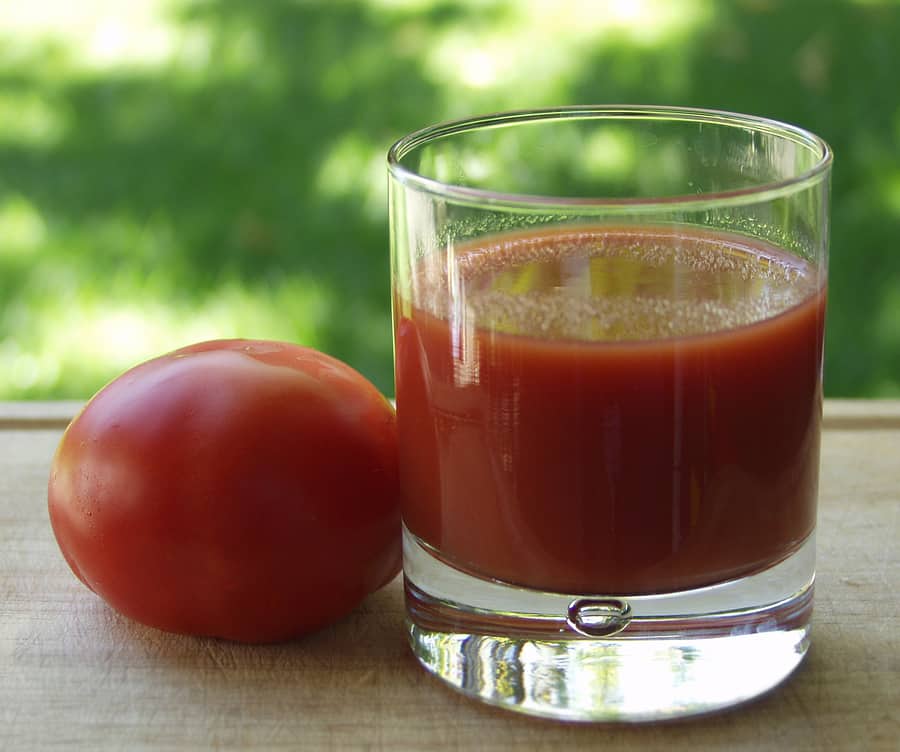
To make the most nutritious tomato juice the easy way, do this: wash your tomatoes, cut out the cores and bruised or bad spots, and place the whole tomatoes in a blender—no peeling required. Blend until smooth and drink. Freeze what you don’t drink now for later use.
Most recipes for tomato juice ask you to scald and peel the tomatoes, then cook them and run them through a colander; that method leaves many of the tomato’s most important nutrients behind.
Tomatoes are rich in nutrients: they are an excellent source of vitamins C and A (and also heart-healthy potassium, folic acid, and vitamin B6 to name a few); they also contain alpha- and beta-carotene and the carotenoids lutein, zeaxanthin, and lycopene. Lycopene is an antioxidant that protects cells, cholesterol, and DNA from oxygen damage.
Tomato skins—which are tossed away in old-fashioned tomato juice recipes—have the tomato’s richest concentration of lycopene and dietary fiber. Skins also contain flavonoid phytonutrients—which are effective in warding off allergies, inflammation, ulcers, and viruses.
Know What to Plant This Week
Every week I answer the gardener's most important question: what should I plant now? Get seasonal planting advice free — or go Pro for my full Soil Temperature Garden Report, with soil temperature, moisture, weather trends, and crop-by-crop recommendations.
Tomato-Vegetable Juice Recipe: No Cooking
To spice up your fresh blended tomato juice, add the following to the blender or food processor: one rib of celery with leaves (cut or diced), one carrot cut into pieces, one small onion quartered, a couple of fresh basil leaves, and salt and freshly ground pepper to taste.
Tomato articles at Harvest to Table:
How to Plant and Grow Tomatoes
How to Choose a Tomato for Your Garden
Growing Tomatoes in Containers
Growing Early Season Tomatoes for Great Taste
Epsom Salt, Milk, and Organic Fertilizers for Tomatoes and Peppers
How to Prevent Blossom Drop – Tomatoes and Peppers
How to Harvest and Store Tomatoes
Nine Ways to Cook and Serve Tomatoes
Tomato Sauce–Basic, Herbed, or Vegetables Added
How to Make Tomato Juice Simply
How to Home Can Tomatoes for Beginners
How to Sun Dry and Oven Dry Tomatoes
Tomato Growing Problems Troubleshooting
How to Prevent Tomato Blossom Drop