Vines to Grow by Height

Vines can be used to clothe porches, trellises, arbors, pergolas, and post. Vines can be used to clamber up old tree-trunks or cover the bare ground beneath. Vines are used for both their floral and foliage effect.
Most vines are vigorous growers and are expected to remain in place for many years. Determine how high and wide you need a vine to cover, then go shopping.
As a general rule, planting is best done in spring, and in most cases it is a good plan to cut the plants back pretty severely so as to induce good basal growth. Watch young shoots and see that they are properly secured from the start.
Here are easy-to-grow vines by height at maturity. All of these vines will grow in average soil with minimal care once established.
Know What to Plant This Week
Every week I answer the gardener's most important question: what should I plant now? Get seasonal planting advice free — or go Pro for my full Soil Temperature Garden Report, with soil temperature, moisture, weather trends, and crop-by-crop recommendations.
Small Vines/ 10 feet (3m) tall or less
| Common Name | Botanical Name | Zone |
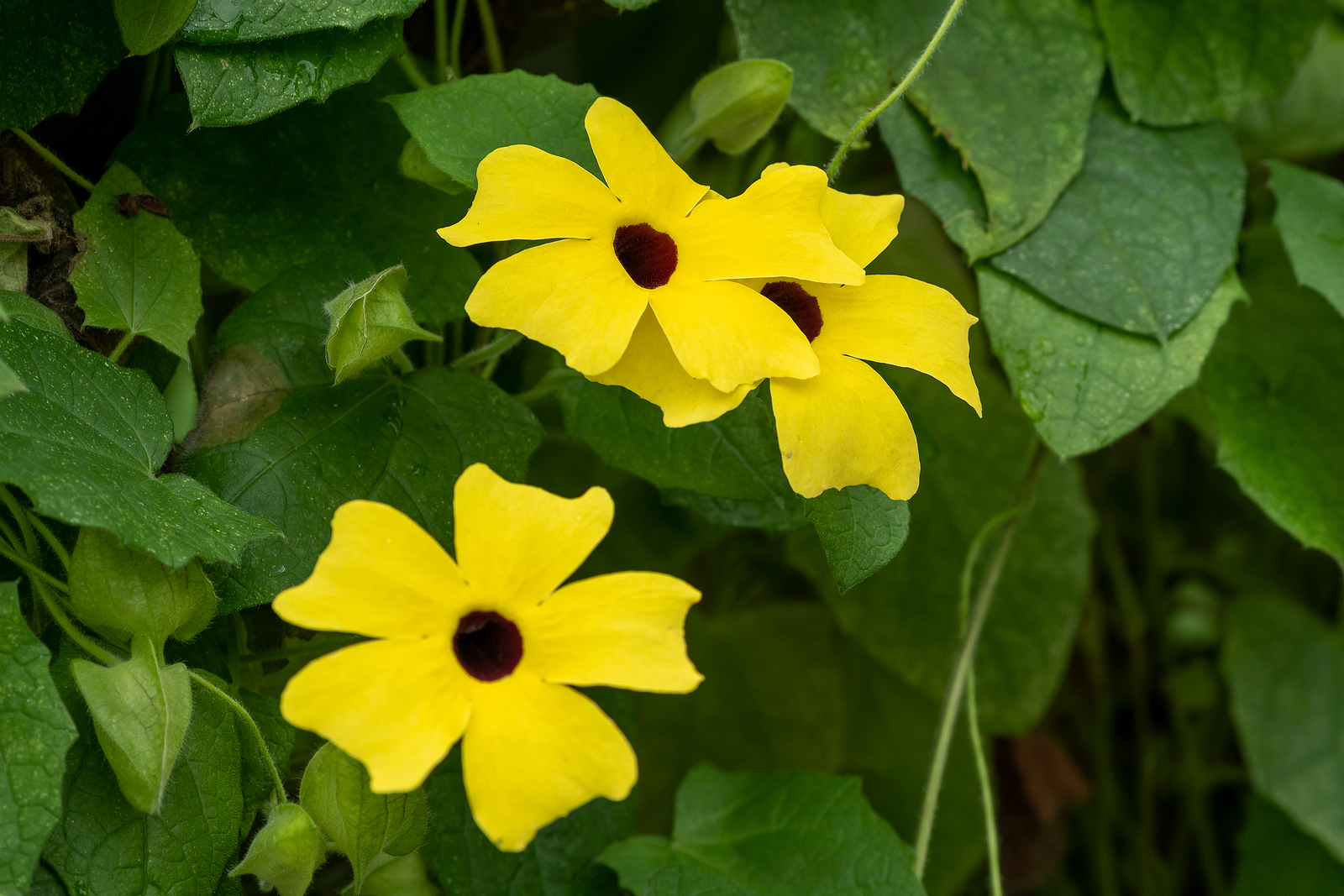
| Black-eyed Susan vine | Thunbergia alata | 9-12 |
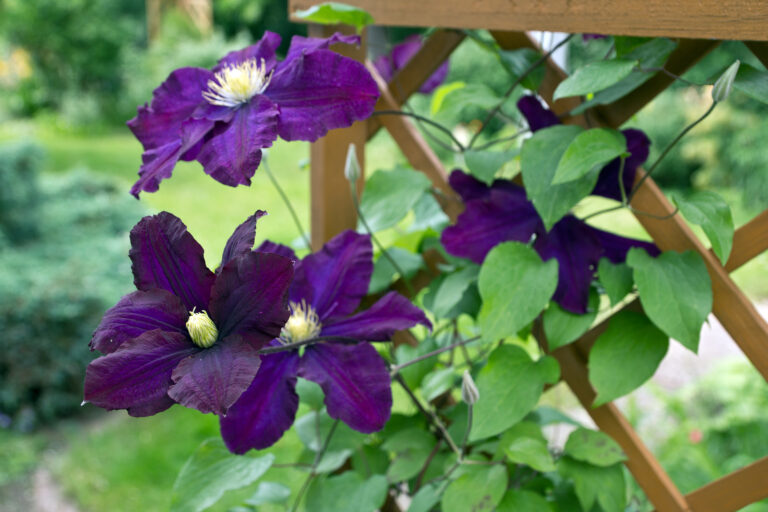
| Clematis, large flowered | Clematis spp. | 4-11 |
| Jasmine, star | Tracelospermum jasminoides | 9-10 |
| Nasturtium | Tropaeolum majus | 9-11 |
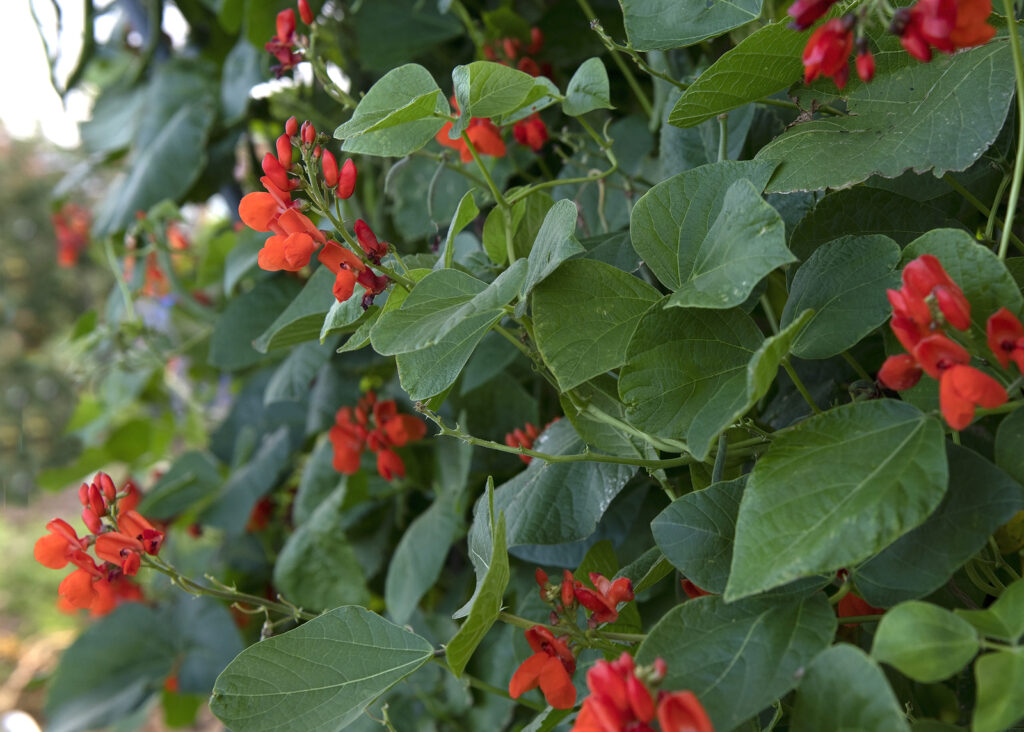
| Bean, scarlet runner | Phaseolus coccineus | 7-11 |
| Sweet pea | Lathyrus odoratus | 9-10 |
| Sweet potato vine | Ipomoea batatas | 9-11 |
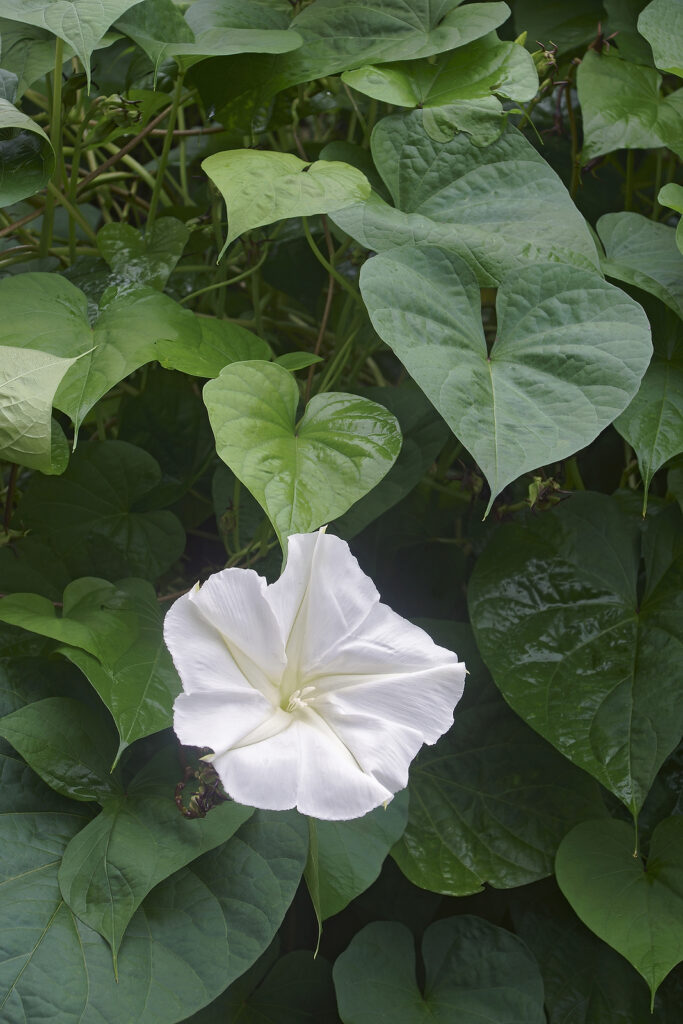
Medium Tall Vines/ 10-20 (3-6m) feet tall
| Common Name | Botanical Name | Zone |
| Cardinal climber | Ipomoea x sloteri | 9-12 |
| Hyacinth bean | Lablab purpureus | 9-11 |
| Moonflower | Ipomoea alba | 9-12 |
| Morning glory | Ipomoea tricolor | 9-12 |
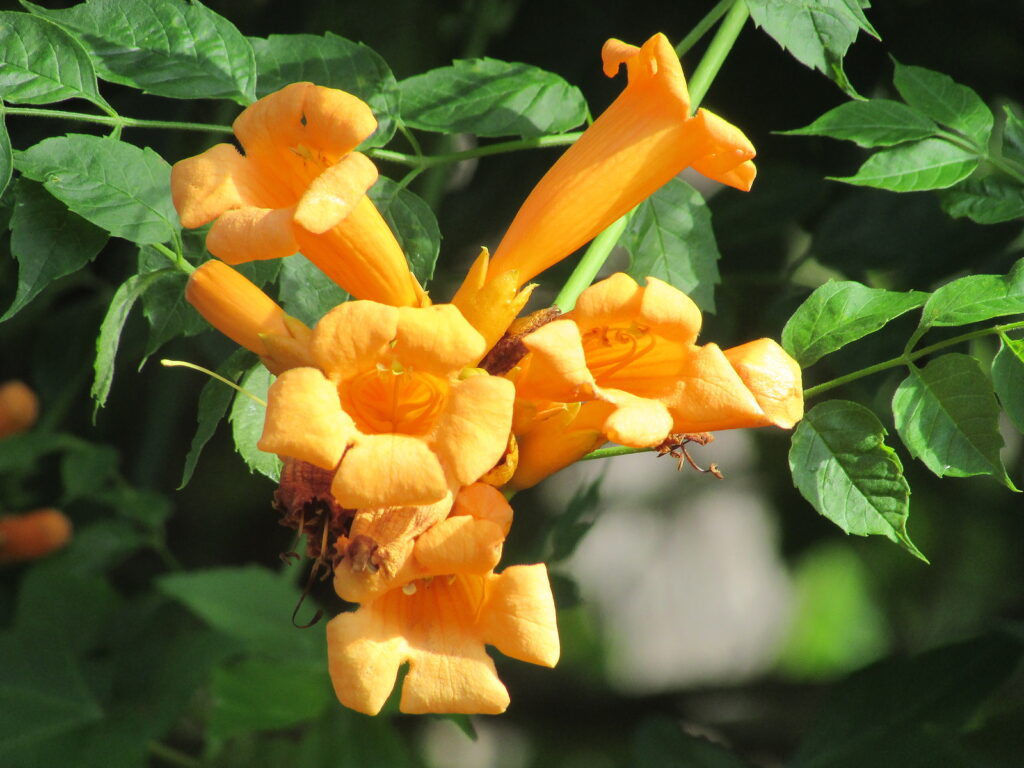
Tall Vines/ 20 feet (6m) or more
| Common Name | Botanical Name | Zone |
| Bittersweet, American | Celastrus scandens | 3-8 |
| Euonymus, wintercreeper | Euonymus fortunei | 5-9 |
| Hydrangea, climbing | Hydrangea anomala | 4-9 |
| Ivy, English | Hedera helix | 5-11 |
| Firethorn | Pyracantha coccinea | 6-9 |
| Honeysuckles | Lonicera spp. | 4-9 |
| Sliver lace vine | Polygonum aubertii | 4-8 |
| Trumpet creeper | Campis radicans | 5-9 |
| Virginia creeper | Parthenocissus quiquefolia | 4-9 |
Also of interest: