How to Grow Ponytail Palm — Beaucarnea

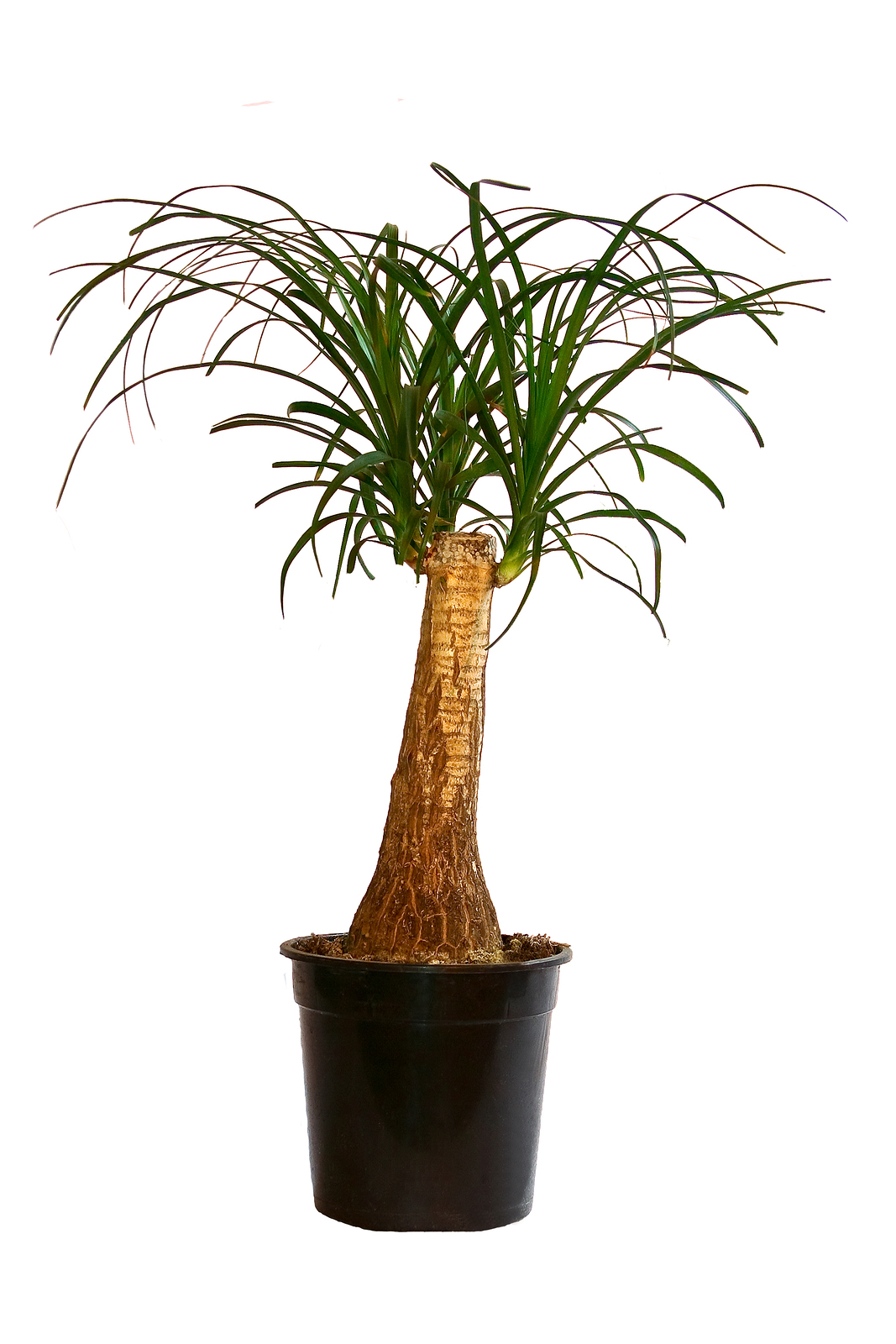
Beaucarnea–commonly called Ponytail palm–is an evergreen palm that is native to semi-desert southern regions. Its swollen base and tuft of strap-shaped leather leaves give it specimen quality. It can be grown indoors in bright light.
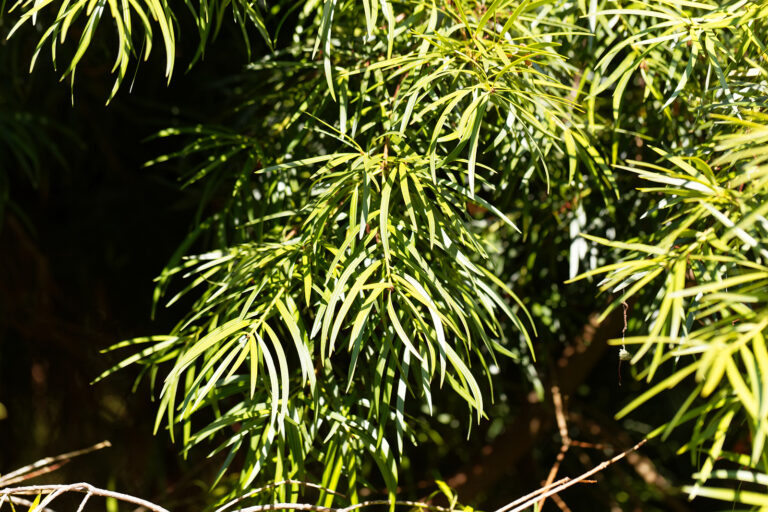
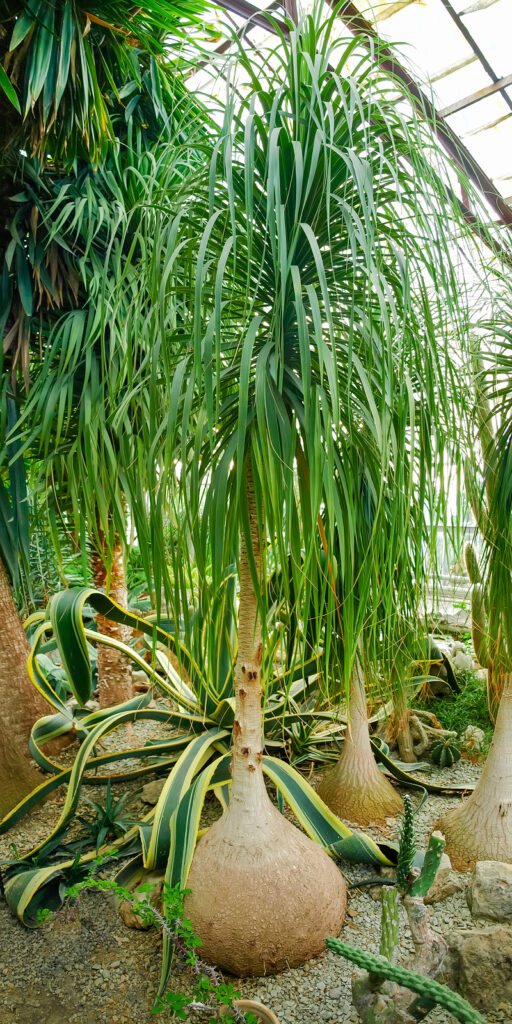
Young plants are single-stemmed often with a flared base. Once a tree flowers it will begin to branch. Trees can grow from 3 to 25 feet tall. Leaves are evergreen, linear, and strap-shaped; they are leathery with finely serrated margins.
Beaucarnea is a genus of flowering plants native to Mexico and Central America.
Get to know Beaucarnea
- Plant type: Palm native to deserts of Mexico
- Growing Zones and range: 10-11
- Optimal growing temperature: day 68° to 75°F (20°-24°C), night 50° to 60°F (10°-26°C).
- Height and width: Mature plants can reach 3 feet (90cm) tall.
- Foliage: Grassy clump of narrow leaves growing from a swollen, enlarged base. As plant ages, the base expands and the plant develops a greenish-brown trunk topped with a tuft of thin, leathery, strap-like, green leaves. Ponytail palm produces only one flush of growth a year in spring
- Common name: Ponytail palm, elephant foot palm
- Botanical name: Beaucarnea recurvata
- Family: Agavaceae
- Origin: Semi-desert and scru southern United States to Guatemala
Where to plant Beaucarnea
- Beaucarnea needs high to medium light.
- Grow Beaucarnea in a well-drained cactus mix.
How to water and feed Beaucarnea
- Water Beaucarnea thoroughly, then allow the soil to dry before you water again.
- Fertilize Beaucarnea annually in early spring.
Beaucarnea care
- Too little sun causes limp, pale leaves; move the plant to a brighter location.
- Wait several years between repotting.
Growing Beaucarnea as a houseplant
- Give Beuacarnea direct light, average room temperature, and low humidity.
- Allow the soil to dry out substantially between thorough waterings; the swollen stem holds water to protect the plant against drought.
- Fertilize once a year in spring or summer with an all-purpose feritlizer.
Beaucarnea pests and diseases
- Spider mites and scale are problems indoors. Knock pests from the plant with a stream of water or spray with insecticidal soap.
- Beaucarnea is sensitive to fungal diseases and stem rot.
Beaucarnea propagation
- Separate and repot offsets in spring.
- Sow seed in warm soil in spring.
Beaucarnea varieties to grow
- Beaucarnea recurvata, ponytail palm. Evergreen tree grows 12 to 25 feet (4-8m) tall and 6 to 12 feet (2-4m) wide with flaring to flask-shaped base; trunk branches sparingly with age; rosetted, mid- to deep green leaves to 6 feet (1.8m) long; produces mauve-tinted creamy white flowers.
- B.r. var. intermedia is the houseplant variety with leavfes less than 36 inches (91cm) long.