How to Grow Michelia — Bannana Shrub

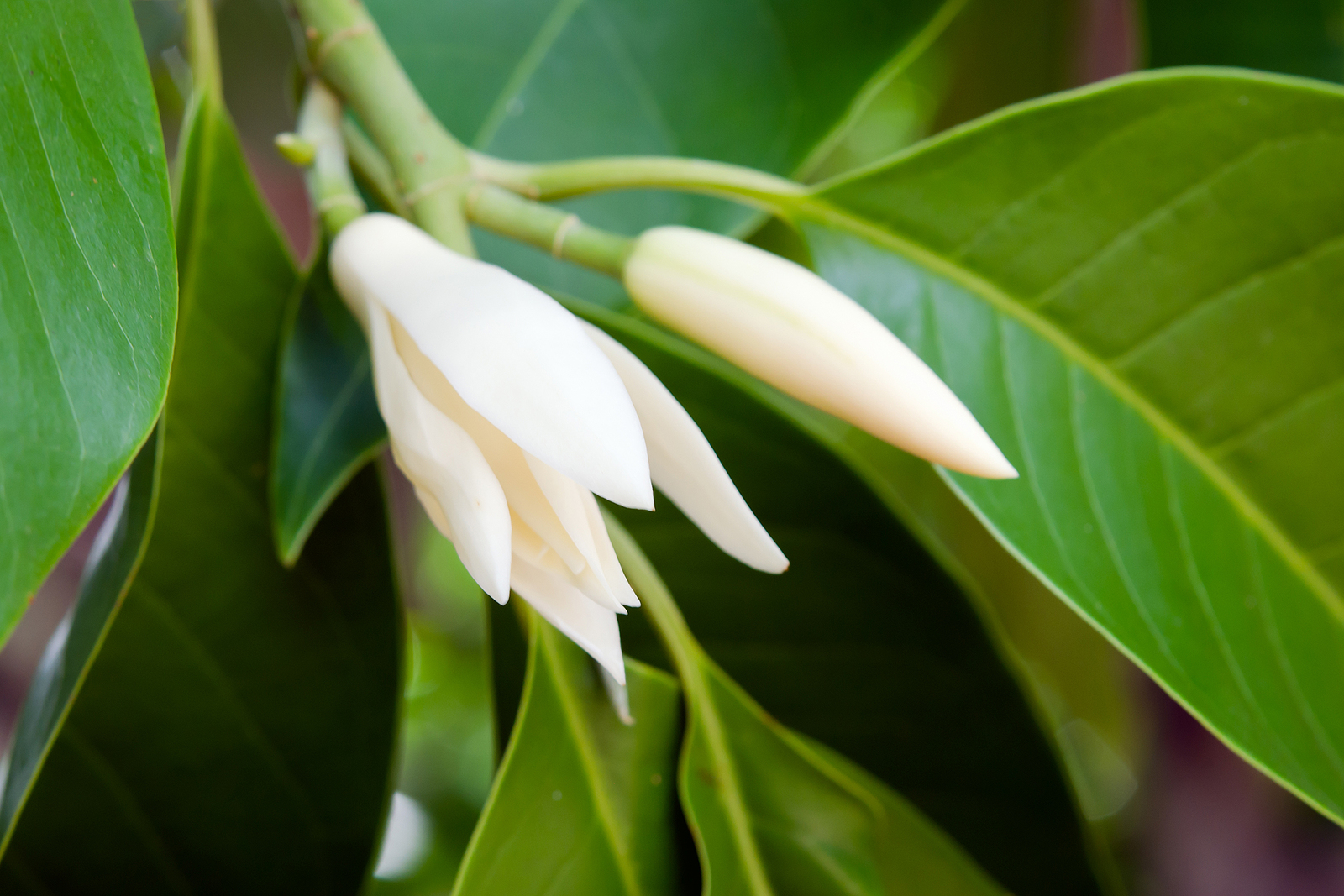
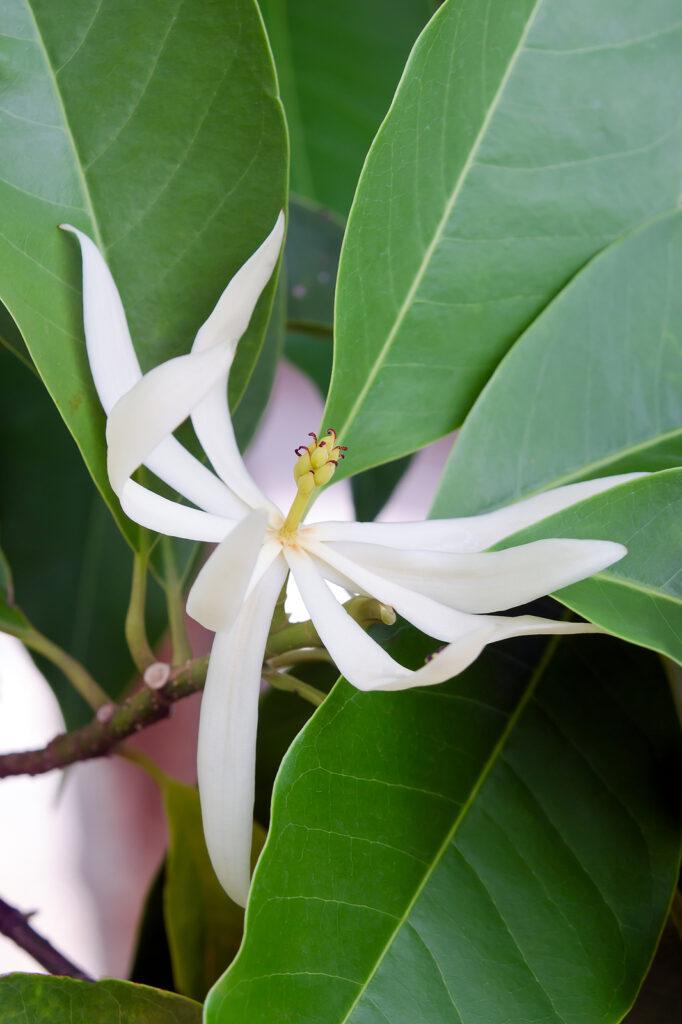
Michelia are evergreen shrubs and trees grown for their fruity fragrant, magnolia-like creamy or yellowish-white flowers and lustrous dark green leaves. Michelia is a subtropical plant that blooms on and off throughout the year.
Michelia belongs to the Magnolia family. Michelia flowers are borne among the leaves rather than singly at the end of branches as do magnolias.
Michelia shrubs can be grown in borders or as specimens in small gardens. They should be planted where their flowers and fragrance can be enjoyed. Tree-like forms can be grown as specimens or in woodland gardens.
Michelia is a genus of 45 species of evergreen and deciduous rounded and spreading shrub and upright broad trees. Only a few species are grown in gardens. Michelia are native to Southeast Asia.
Know What to Plant This Week
Every week I answer the gardener's most important question: what should I plant now? Get seasonal planting advice free — or go Pro for my full Soil Temperature Garden Report, with soil temperature, moisture, weather trends, and crop-by-crop recommendations.
Get to know Michelia
- Plant type: Evergreen shrubs or trees
- Growing zones and range: Zones 9 to 11
- Hardiness: Hardy to Zone 9
- Height and width: Shrub forms grow 10 to 20 feet (3-6m) tall and 5 to 11 feet (1.5-3.5m) wide; tree forms grow 25 to 50 feet (8-15m) tall and 15 to 30 feet (5-10m) wide.
- Foliage: Oblong or elliptic, lustrous, leathery green leaves
- Flowers: Bowl or cup-shaped yellowish-green to white flowers 3 to 4 inches across; flower have a fruity fragrance
- Bloom time: Spring and on and off through the year
- Uses: Border, specimen in small garden, or woodland garden
- Common name: Bannana shrub, champaca, doltsopa
- Botanical name: Michelia
- Family name: Magnoliaceae
- Origin: China and Southeast Asia
Where to plant Michelia
- Plant Michelia in full sun where summers are cool. Plant in partial shade in hot summer regions.
- Plant Michelia in humus-rich sandy loam that is well amended with organic matter. The soil should be moisture-retentive and well-drained..
- Plant Michelia where it is protected from cold, drying winds.
When to plant Michelia
- Set container-grown Michelia in the garden in spring or autumn.
Planting and spacing Michelia
- Space Michelia according to its size at maturity. Space shrubs 5 to 11 feet (1.5-3.5m) apart. Space tree forms 15 to 30 feet (5-10m) apart.
How to water and feed Michelia
- Give Michelia regular water; the soil should stay just moist. Water Michelia sparingly in winter.
- Fertilize Micelia with a balanced liquid fertilizer monthly.
Michelia care
- Mulch around Michelia with leaf mold to ehance soil moisture retention.
- Michelia needs little pruning, but it can be espaliered.
Michelia pests and diseases
- Michelia is prone to attack by scale insects and spider mites.
- Michelia is susceptible to leaf spot disease.
Michelia propagation
- Sow Michelia seed in containers in a cold frame in autumn.
- Root semiripe greenwood cuttings treated with hormones in summer.
- Layer Michelia in spring.
Michelia varieties to grow
- Michelia champaca. Tree grows 25 to 30 feet tall, with large, glossy leaves to 10 inches long; many-petaled, pale orange flowers to 3 inches wide; blooms off and on throughout the year, most heavily in winter and summer; rich, fruity fragrance. National flower of Philippines.
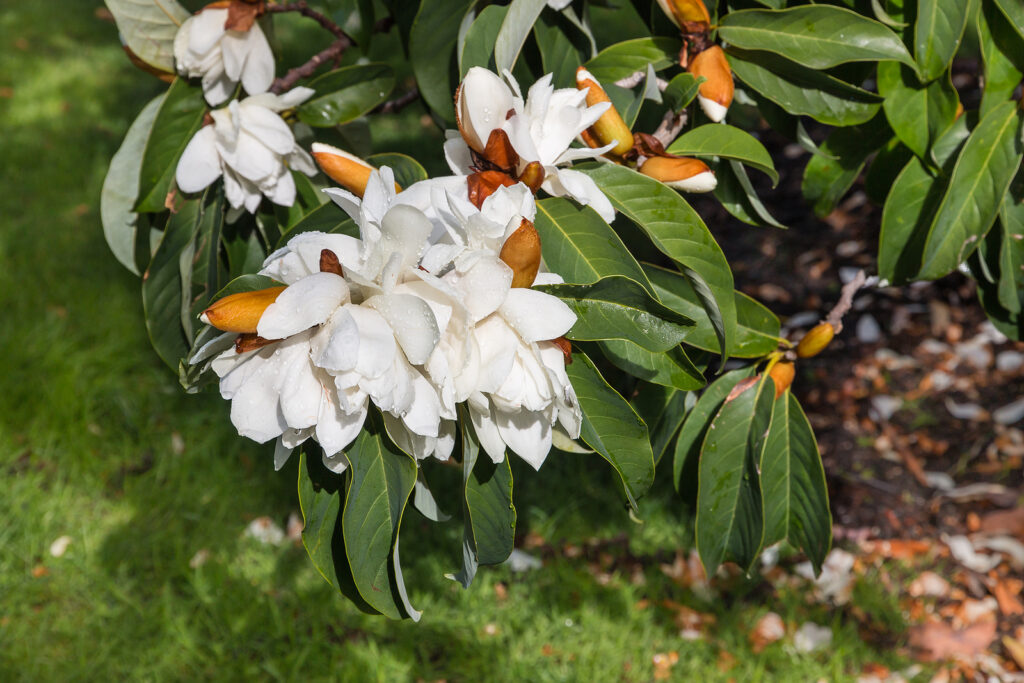
- M. doltsopa. Large shrub or tree can grow to about 40 feet tall; habit can vary from bushy to narrow and upright; thin, leathery, dark green leaves, 3 to 8 inches long; fragrant, 5 to 7-inch wide, creamy or white blossoms with 12-16 petals open in winter from brown, furry buds; flowers somewhat resemble flowers of saucer magnolia.
- M. figo (M. fuscata). Banana shrub. Slow, dense growth to 6 to 8 feet or more tall and wide; glossy, 3-inch-long, medium green leaves; 1-1 ½ inch wide, creamy yellow shaded brownish-purple flowers resemble small magnolia blossoms; fruity fragrance like that of ripe bananas; heaviest bloom in spring, scattered flowers often appear throughout summer. Cultivar ‘Port Wine’ has rose to maroon flowers.