How to Grow Globe Thistle — Echinops

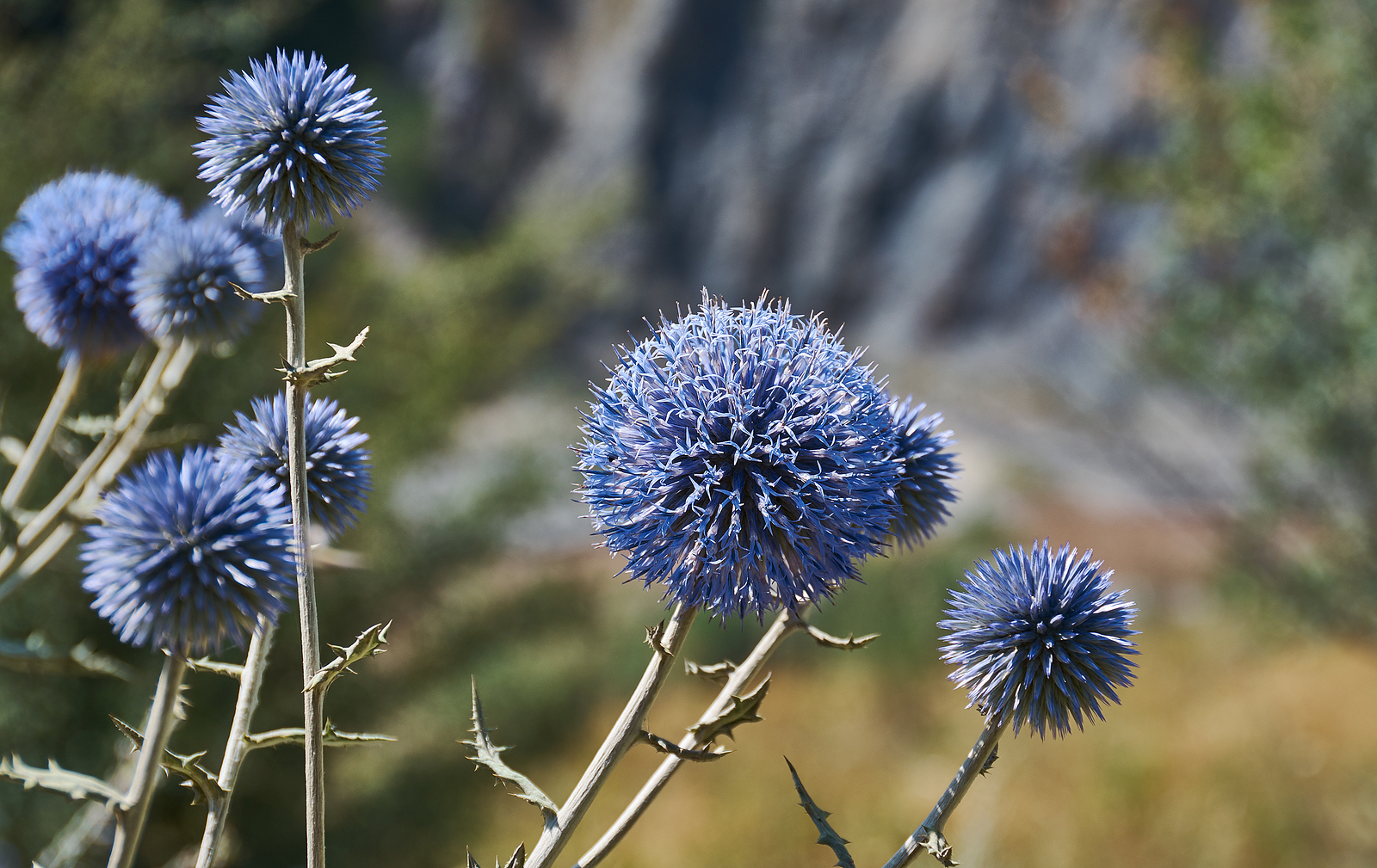
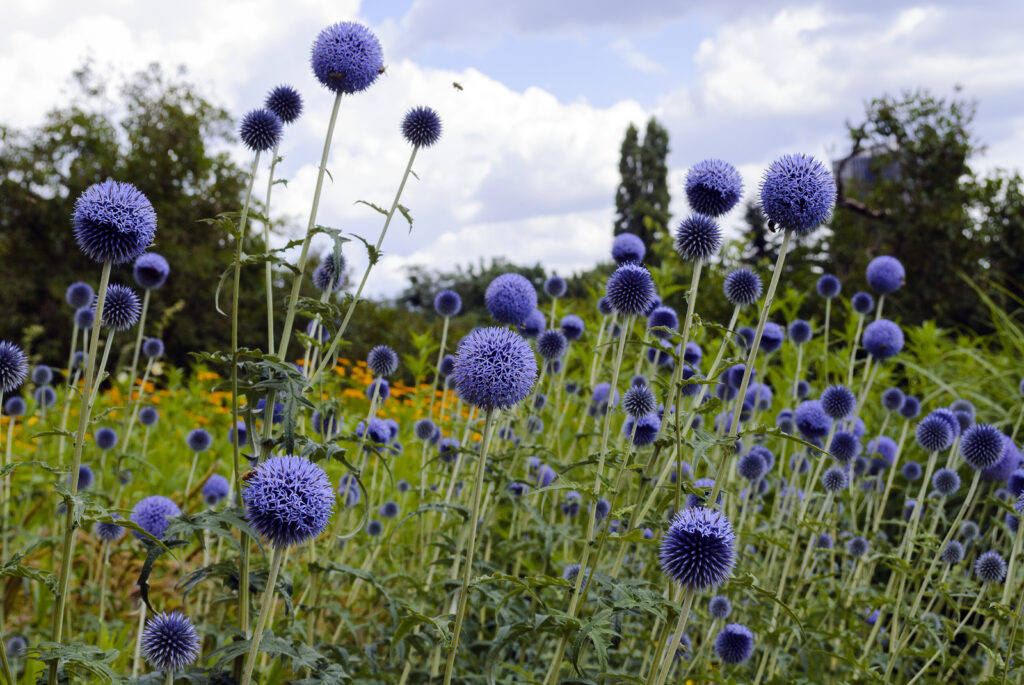
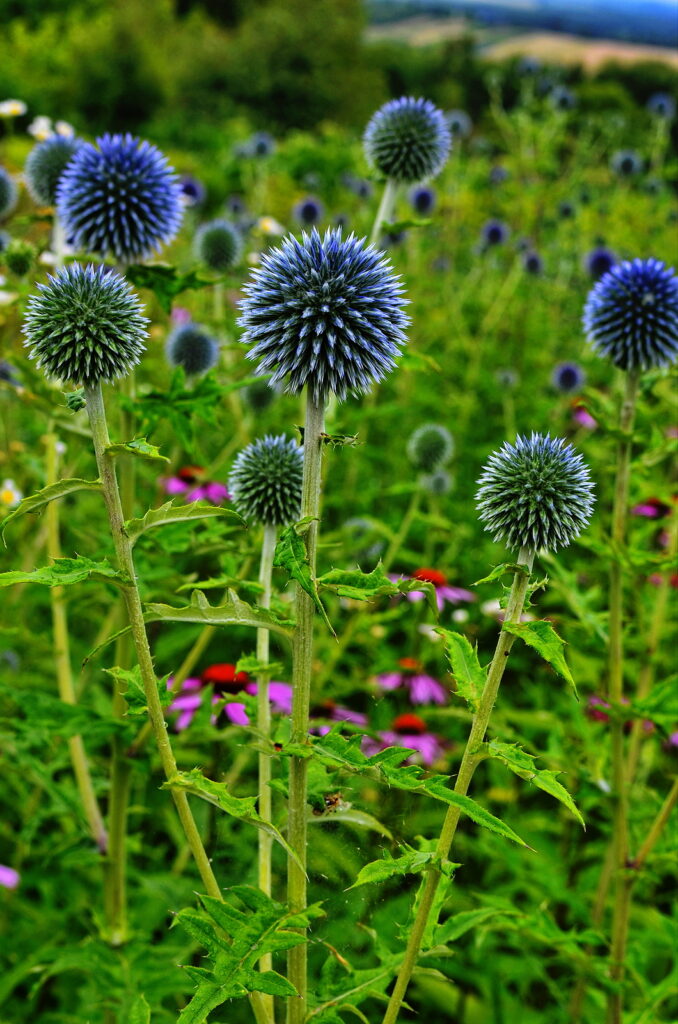
Echinops–commonly called globe thistle-has globe-shaped, spiky metallic blue flower heads in late summer. This upright perennial has prickly, divided green leaves.
Echinops flower heads are spherical, about the size of a golf ball. Flowers appear on erect stems. Echinops leaves are spiky, usually grayish-white and wooly. Leaves are deeply cut, prickly, and up to a foot long.
Echinops is an undemanding plant suitable for large borders, meadows, wild gardens. Echinops want a sunny, warm site in well-drained, average soil. For best growth, keep the soil evenly moist.
Echinops can grow undivided in the sam place for many years.
Know What to Plant This Week
Every week I answer the gardener's most important question: what should I plant now? Get seasonal planting advice free — or go Pro for my full Soil Temperature Garden Report, with soil temperature, moisture, weather trends, and crop-by-crop recommendations.
The Echinops genus contains about 120 species of perennials, biennials, and annuals.
Get to know Echinops
- Plant type: Perennial
- Growing Zones and range: Zones 3-8
- Hardiness: Hardy
- Height and width: 2 to 4 feet (.6-1.2m) tall; 2 to 3 feet (.6-1m) wide
- Foliage: Spiny leaves, deeply cut and pirckly up to a foot long; usually grayish-white and wooly
- Flowers: Spiky spheres with bristly bracts on erect stems
- Flower color: Lavender or steely blue
- Bloom time: Mid- or late-summer
- Uses: Combine with ornamental grasses; interesting foliage texture; use in mixed borders
- Common name: Globe Thistle
- Botanical name: Echinops species
- Family: Asteraceae
- Origin: Grasslands of Europe and Asia
Where to plant Echinops
- Grow Echinops in full sun.
- Plant Echinops in average to poor, well-drained soil. Good drainage is important in winter.
Echinops uses and companions
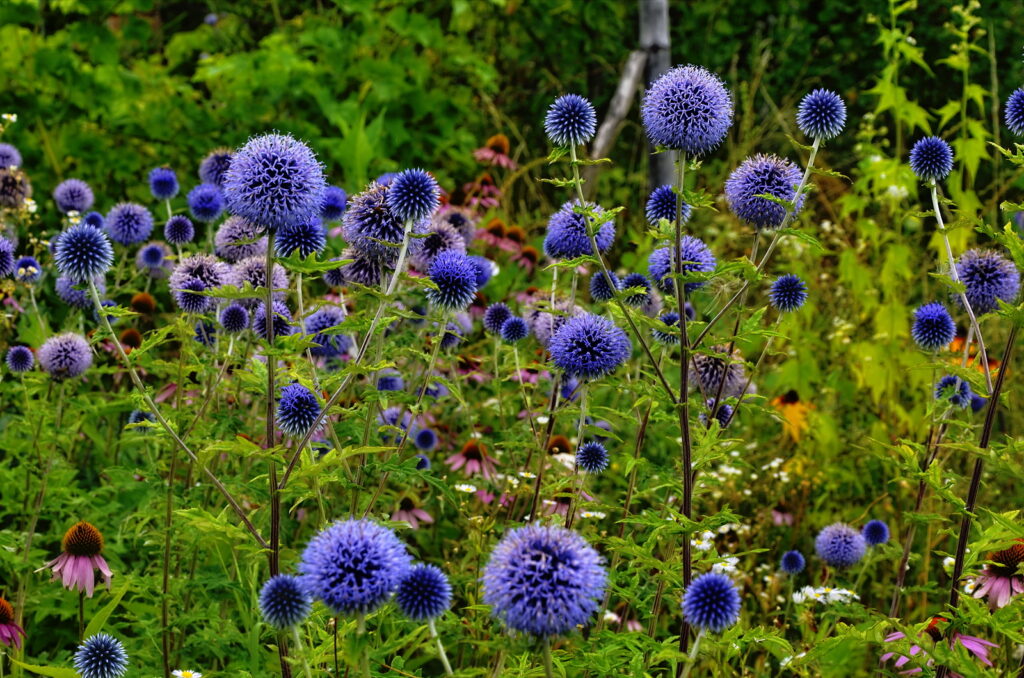
- Plant Echinops in groups in a formal or informal garden for the best effect.
- Echinops is an excellent dried flower.
- Good garden companions for Echinops include Achillea, Gypsophila paniculata, Helenium autumnale, Papaver orientale, Rudbeckia.
When to plant Echinops
- Set established Echinops in spring or autumn.
- Sow seed in spring in evenly prepared soil.
Planting and spacing Echinops
- Space globe Echinops 2 to 3 feet (.6-1m) apart.
- Sow seed 1/8 inch deep.
- Echinops does not like transplanting to situate plants where they will grow to maturity.
How to water and feed Echinops
- Give Echinops moderate water; plants will tolerate drought when they mature.
- Echinops does not require feeding.
Echinops care
- Echinops will grow tall in rich soil and will need staking.
- Remove spent blooms. to encourage re-blooming.
- Divide plants in spring or fall every 3 to 4 years as needed.
- Echinops is usually pest-free.
Echinops pests and diseases
- Echinops is susceptible to infestation by aphids.
Echinops propagation
- Sow seed in spring. Echinops seeds will germinate in about 14 days at 55°-72°F (18°-22°C).
- Divide perennials from autumn to spring or insert root cuttings in autumn.
Echinops varieties to grow
- Echinops bannaticus: Grows 1.5 to 4 feet tall and forms a clump 2 feet wide; bears violet-blue to blue-gray flower heads from mid to late summer; cultivar ‘Taplow Blue’ is very popular.
- E. ritro, small globe thistle: Compact growth to 2 feet tall; bears blue-purple flower heads in mid to late summer; cultivar ‘Veitch’s Blue’ has dark metallic blue flowers.
- E. sphaerocephalus: Large clump-forming species that grows to 6 feet tall and half as wide; bears silver-gray flower heads on gray stems in mid- and late-summer.