How to Grow Burnet — Sanguisorba

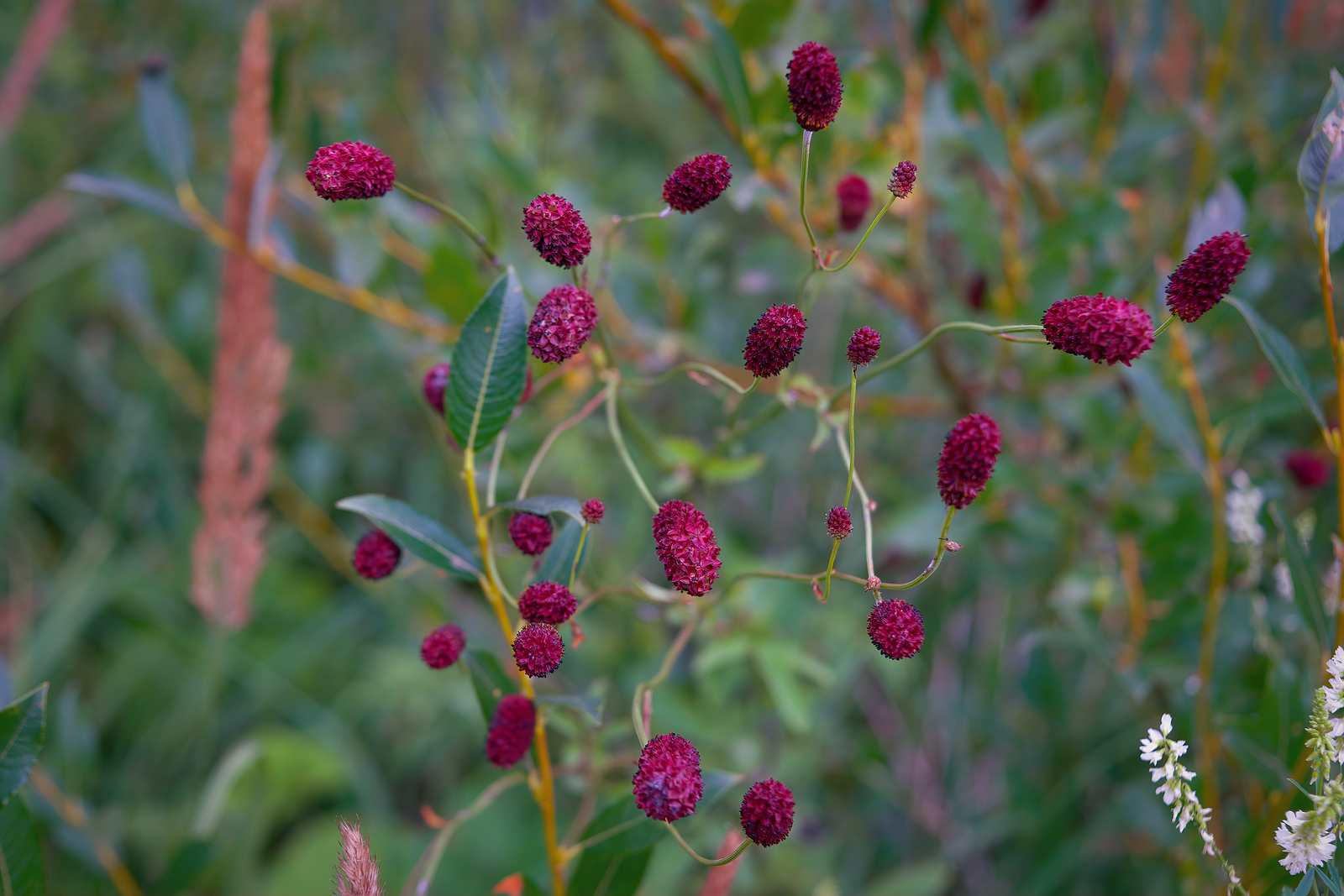
Burnet, botanical name Sanguisorba, is a rhizomatous perennial that typically grows to about 3 feet tall. Bare stems are topped dark red to black-purple flower spikes.
Burnet, commonly called Great Burnet, is a welcome addition to cottage and wildflower gardens. It can be placed in the middle of mixed borders.
Burnet is a culinary herb whose leaves, especially young ones, are excellent in salads and soups. It’s flowers add late-season color to herb gardens.
Get to know Burnet
- Plant type: Perennial
- Growing Zones and range: 4 to 8
- Hardiness: Rhizome is hardy
- Height and width: 2½ to 3 feet tall and 2 to 3 feet wide
- Foliage: Compound pinnate, medium green basal leaves are serrated; stems are sometimes tinged with red.
- Flowers: Small terminal flower spikes 1½ inch long are dark red to black purple
- Bloom time: Late summer into autumn
- Uses: Beds and borders, herb garden
- Botanical name: Sanguisorba officinalis
- Common name: Burnet, Great burnet
Where to plant Burnet
- Plant burnet in full sun.
- Grow burnet in humus-rich, well-drained soil. It will grow easily in average to medium-rich soil.
When to plant Burnet
- Set out established plants in spring or late summer.
Planting and spacing Burnet
- Space burnet 2 to 3 feet apart.
How to water and feed Burnet
- Keep the soil evenly moist.
- Fertilize burnet with an all-purpose fertilizer in spring and again at midsummer.
Burnet care
- Taller plants need staking or other support.
- Burnet is nearly deer resistant.
- Burnet has no serious pests or disease problems.
Burnet propagation
- Burnet freely self-seeds. Prompt removal of spent flowers will prevent unwanted self-seeding.