Drought-Tolerant Trees

Drought-tolerant trees can withstand dry conditions once established. No native or commonly used landscape plant is drought-resistant until it becomes established in the site. All plants require a steady supply of moisture when first planted.
Trees can tolerate drought if they are deep-rooted. Deep roots can harvest soil moisture from past rainfalls. Trees planted in the landscape should be deeply watered for the first two or three years before they can become full drought resistant.
Roots follow moisture in the soil; deep watering will result in deep roots. Surface watering–the water you might give a lawn or perennial plants–will be insufficient to sustain mature trees. Avoid shallow-rooted trees and increase drought tolerance by watering trees deeply until they are well established.
Drought-Tolerant Trees
| Common Name | Botanical Name | Zone |
| Acacia, Bailey | Acacia baileyana | 8-10 |
| Ash, green | Fraxinus pennsylvanica | 3-9 |
| Bald cypress | Taxodium distichum | 4-10 |
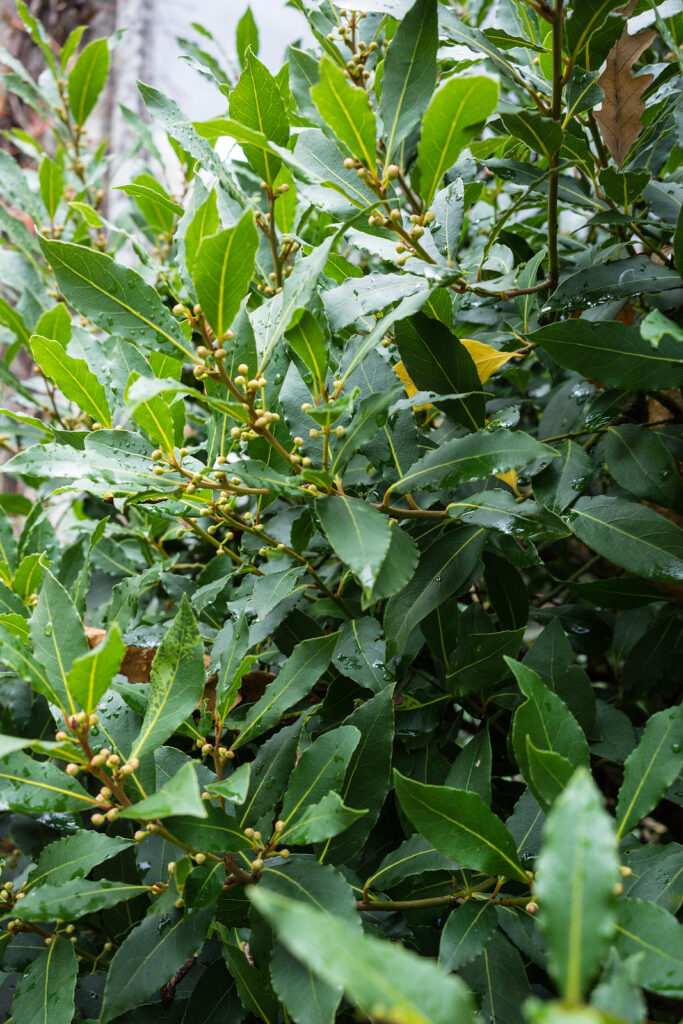
| Bay; sweet bay | Laurus nobilis | 8-11 |
| Birch, river | Betula nigra | 4-9 |
| Birch, Whitespire | Betual mandschurica japonica | 4-7 |
| Buckeye, California | Aeschulus californica | 6-10 |
| Buckeye, Ohio | Aesculus glabra | 3-7 |
| Common Name | Botanical Name | Zone |
| Cedar, blue atlas | Cedrus libani ‘Glauca’ | 6-9 |
| Cedar, deodar | Cedrus deodara | 6-9 |
| Crape myrtle | Lagersroemia indica | 7-9 |
| Cypress | Cupressus spp. | Varies |
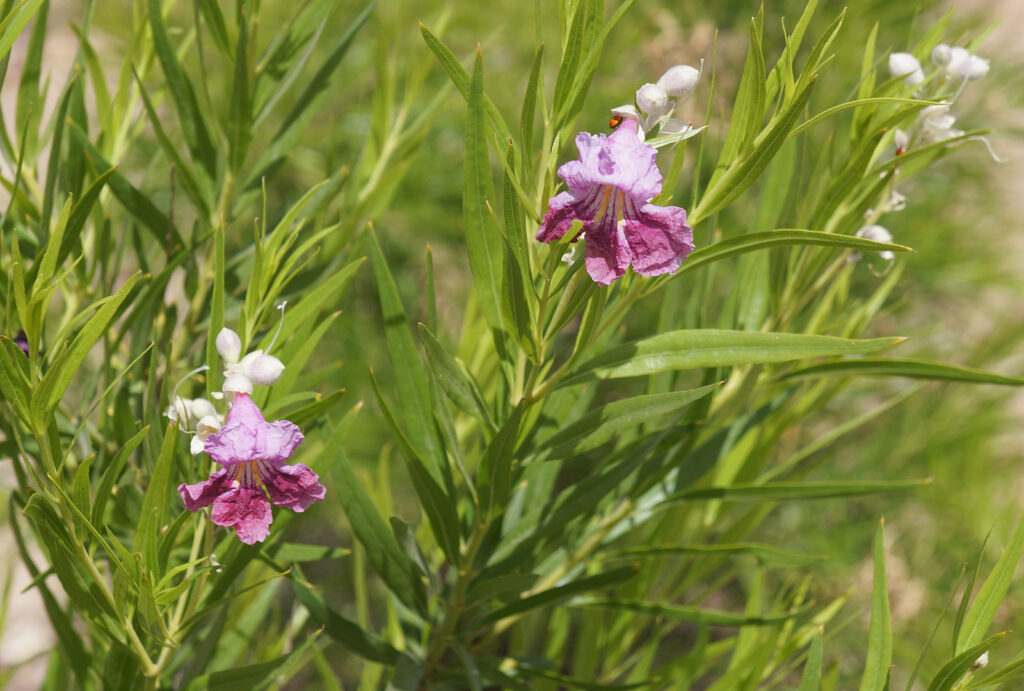
| Desert willow | Chilopsis linearis | 8-9 |
| Elm, Chinese | Ulmus parvifolia | 5-9 |
| Fir, white | Abies concolor | 3-7 |
| Ginkgo | Gingo biloba | 3-9 |
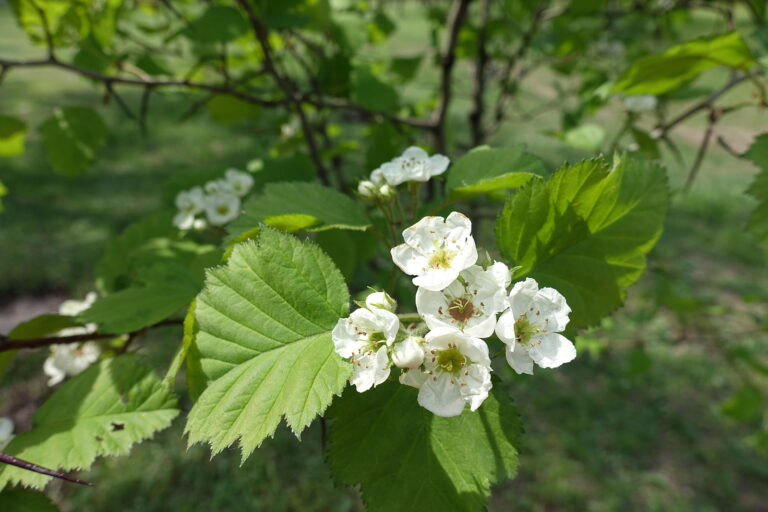
| Hawthron, Washington | Crataegus phaenopyrum | 3-9 |
| Honey locust, thornless | Gleditsia triacanthos var. inermis | 3-8 |
| Common Name | Botanical Name | Zone |
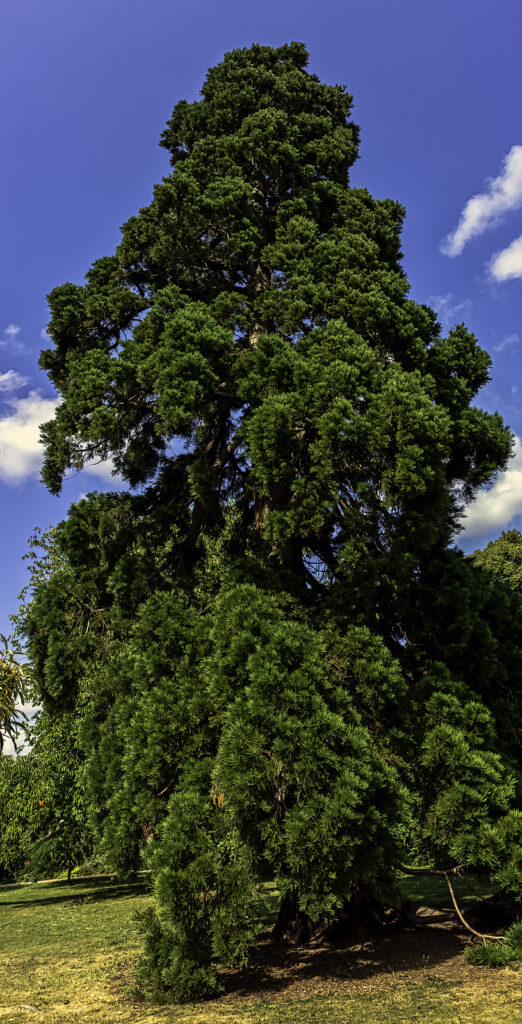
| Incense cedar | Calocedrus decurrens | 5-8 |
| Junipers | Juniperus spp. | Varies |
| Linden, silver | Tilia tomentosa | 3-7 |
| Magnolia, southern | Magnolia grandiflora | 6-10 |
| Mahonia, leatherleaf | Mahonia beali | 6-9 |
| Maple, Amur | Acer tartaricum spp. ginnala | 2-6 |
| Maple, Norway | Acer platanoides | 3-7 |
| Maple, red | Acer rubrum | 3-9 |
| Maple, silver | Acer saccharinum | 3-9 |
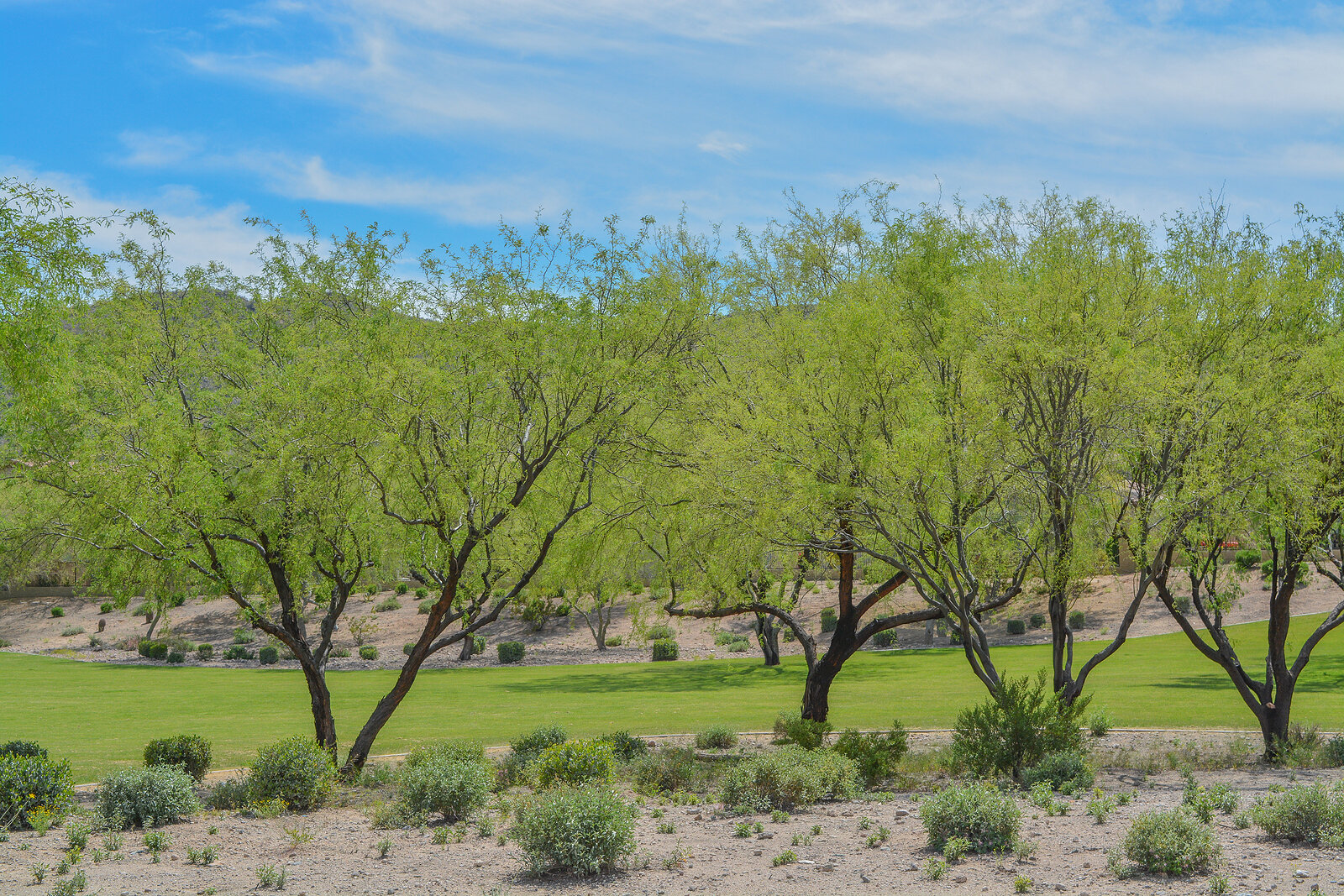
| Mesquite | Prosopis glandulosa | 10-11 |
| Mountain, ash European | Sorbus aucuparia | 3-6 |
| Common Name | Botanical Name | Zone |
| Oak, bur | Quercus macrocarpa | 2-8 |
| Oak, pin | Quercus palustris | 4-8 |
| Oak, white | Quercus alba | 4-9 |
| Oak, willow | Quercus phellos | 4-8 |
| Olive | Olea europaea | 8-10 |
| Pagoda tree, Japanese | Sophora japonica | 6-8 |
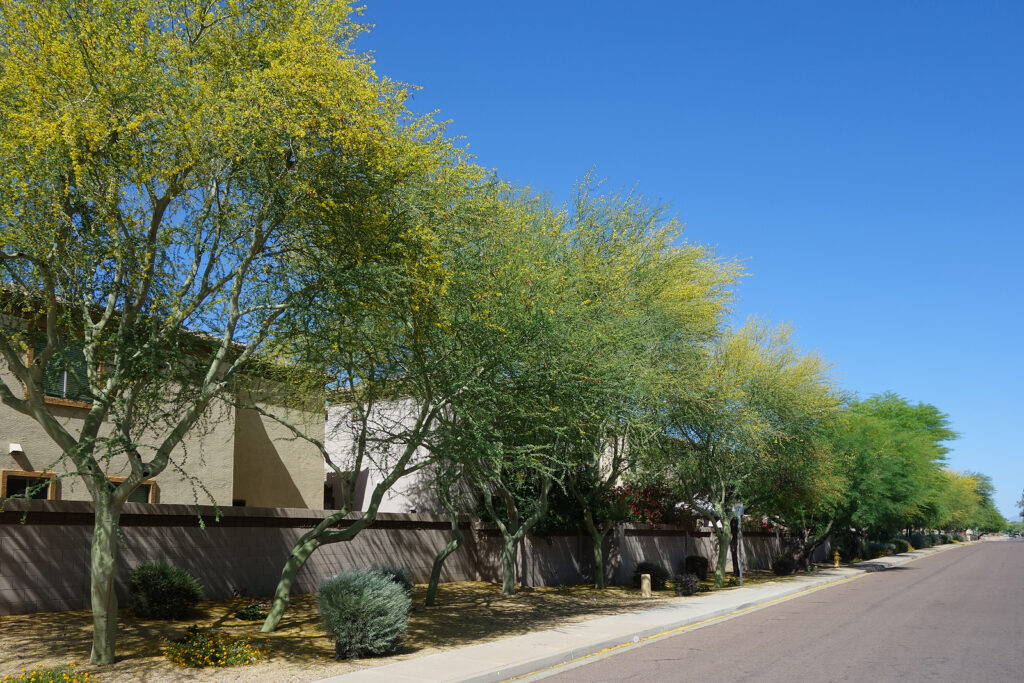
| Palo verde | Cercdium | 9-10 |
| Pine, Austrian | Pinus nigra | 4-7 |
| Pine, Jack | Pinus banksiana | 2-6 |
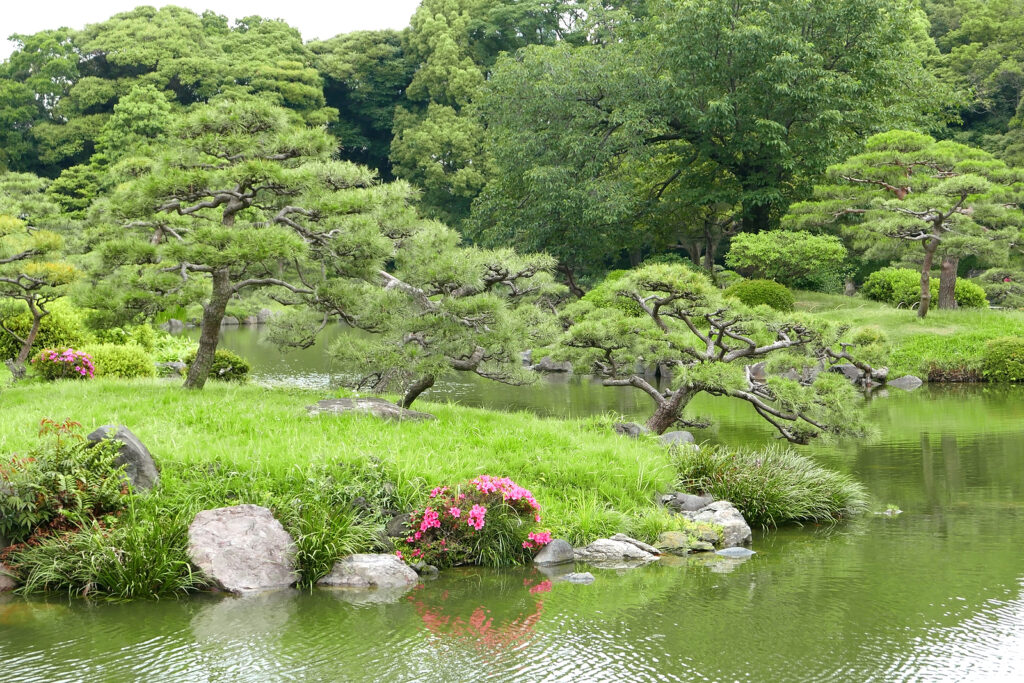
| Pine, Japanese black | Pinus thunbergii | 5-7 |
| Common Name | Botanical Name | Zone |
| Pine, mugo | Pinus mugo | 2-7 |
| Pine, Scotch | Pinus sylvestris | 3-7 |
| Pine, white | Pinus strobus | 3-8 |
| Pistachio | Pistacia chinensis | 6-9 |
| Redbud | Cercis canadensis | 3-9 |
| Russian olive | Elaeagnus angustifolia | 3-8 |
| Serviceberry, shadblow | Amelanchier spp. | 3-8 |
| Sugarberry; hackberry | Celtis spp. | Varies |
| Yellowwood | Cladrastis lutea | 6-8 |
| Yuccas | Yucca spp. | 4-10 |
Also of interest:
Know What to Plant This Week
Every week I answer the gardener's most important question: what should I plant now? Get seasonal planting advice free — or go Pro for my full Soil Temperature Garden Report, with soil temperature, moisture, weather trends, and crop-by-crop recommendations.