Why Are My Peppers Not Producing? (7 Common Reasons)

Few things are more frustrating than a healthy-looking pepper plant that grows leaves like crazy—but never sets fruit. You’re watering, feeding, and caring for it, yet still getting flowers that drop or plants that stall completely.
If this is happening in your garden, you’re not alone. Pepper production problems are extremely common in both in-ground and container gardens, especially in warm climates like California.
The good news: peppers almost always fail for a handful of predictable reasons—and once you fix them, production usually turns around quickly.
🌱 From Experience
After growing peppers for decades in Sonoma Valley gardens and containers, one pattern stands out:
peppers rarely fail because of one dramatic issue—they fail because of small environmental mismatches.
In fact, many of the same issues I see with peppers also show up in container gardening in general, like fast-drying soil, nutrient imbalance, and heat stress—topics I recently covered in posts like Why Container Plants Dry Out So Fast and Best Fertilizer for Peppers in Containers. The overlap is not a coincidence. Peppers are simply sensitive to consistency.
🌶️ 7 Common Reasons Your Peppers Are Not Producing
1. Too much nitrogen (leaf growth, no fruit)
This is the #1 mistake.
High-nitrogen fertilizers push:
- big leafy plants
- weak flowering
- poor fruit set
Your plant looks amazing—but it’s in “growth mode,” not “reproduction mode.”
Fix:
Switch to a fertilizer higher in phosphorus and potassium.
👉 Many gardeners use balanced vegetable fertilizers like tomato & pepper fertilizer blends to correct this quickly.
I discuss soil preparation for peppers in Soil Preparation for Peppers: The Secret to Strong Roots and Big Harvests.
2. Temperature stress (too hot or too cold)
Peppers are extremely temperature sensitive.
- Below 55°F: growth slows or stops
- Above 90°F: flowers drop
This is especially common in hot summer container setups where soil heats quickly—something I also discussed in Why Container Plants Dry Out So Fast.
Fix:
- Use afternoon shade cloth in heat waves
- Start peppers early in spring for a longer season
- Keep soil evenly moist
3. Inconsistent watering (big hidden cause)
Peppers hate extremes:
- dry → wet → dry cycles = flower drop
- stressed roots = no fruit set
Container plants are especially vulnerable to this problem because soil dries out fast.
👉 A moisture-stable setup like self-watering containers for vegetables can dramatically improve consistency.
Getting watering right is important for peppers; see this post How to Water & Fertilize Sweet Bell Peppers for Maximum Yield.
4. Poor pollination
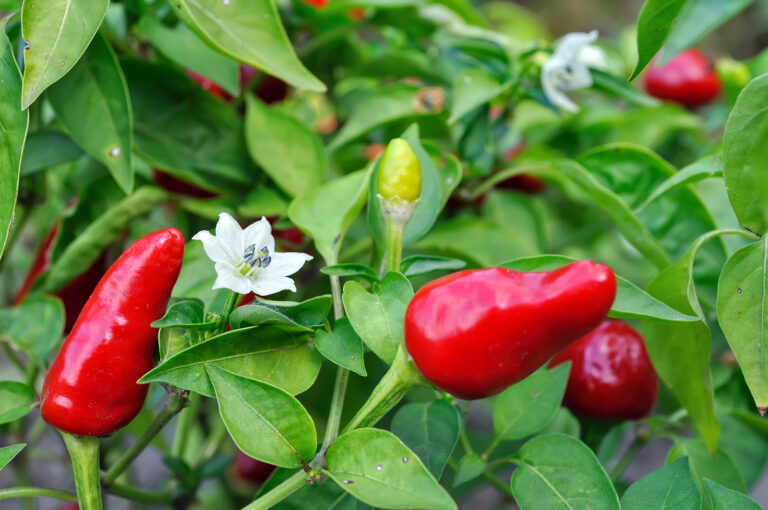
Peppers self-pollinate, but they still need movement.
In still air or indoor/covered patios:
- flowers may form but not set fruit
- pollen doesn’t transfer well
Fix:
- gently shake plants daily
- attract pollinators
- use a small fan for airflow in protected areas
5. Not enough sun (or too much shade stress)
Peppers need:
- 6–8 hours of direct sunlight minimum
Too little sun = leafy growth with no energy for fruiting.
But extreme reflected heat (patios, walls) can also cause stress.
Fix:
Find the “sweet spot”:
- morning sun + light afternoon shade is ideal in hot climates
6. Pot too small (container limitation)
In containers, peppers often stop producing because roots run out of space.
This connects directly to another common issue I see in gardens—fast-drying soil and root restriction, like I covered in How to Grow Peppers in Containers for Beginners (Step-by-Step for Strong, Productive Plants) and Why Container Plants Dry Out So Fast.
Fix:
- minimum 5-gallon pot
- ideal: 7–10 gallons or larger
👉 Fabric pots like 5–10 gallon grow bags for peppers help stabilize both moisture and root health.
7. Plant is too young (or stressed from transplant)
Peppers often “pause” after transplanting.
They may:
- look healthy
- but delay flowering for weeks
Stress can come from:
- root disturbance
- cold nights
- inconsistent watering
Fix:
Give time + stable conditions. Once roots settle, production starts.
🌿 How to Get Peppers Producing Again
If your peppers are stalled, here’s a simple recovery plan:
- Stop high-nitrogen fertilizer
- Ensure 6–8 hours of sun
- Stabilize watering (no dry-wet swings)
- Increase pot size if needed
- Add potassium-rich feeding
- Improve airflow and pollination
Most plants rebound within 1–3 weeks if stress is corrected.
My Experience
Long-term pepper growing shows that production issues are rarely random. They almost always trace back to environment—especially water consistency, soil balance, and heat stress. Peppers are “moderate stress-sensitive” crops. Unlike tomatoes, they don’t tolerate wide swings in moisture, nutrients, or temperature.
University extension research consistently identifies temperature extremes, excessive nitrogen, and poor pollination as leading causes of pepper flower drop and low fruit set. These fixes are practical, field-tested in home gardens and container systems, and aligned with real-world vegetable growing conditions.
❓ Q&A: Pepper Production Problems
Why are my pepper plants big but not producing fruit?
Most likely too much nitrogen or not enough phosphorus/potassium.
Why are my pepper flowers falling off?
Usually heat stress, inconsistent watering, or poor pollination.
Do peppers need to be hand-pollinated?
Not usually outdoors, but in containers or enclosed patios, light shaking helps a lot.
How long does it take peppers to start producing?
Typically 60–90 days from transplant, depending on variety and temperature.
Can overwatering stop peppers from producing?
Yes. Constantly wet soil suffocates roots and reduces flowering.
🌶️ Final Takeaway
Peppers don’t fail randomly—they fail when conditions shift too far from stability.
Once you correct:
- temperature stress
- watering consistency
- nutrient balance
- container size
…your plants usually transition quickly from leafy growth to steady fruit production.