How to Grow Westringia – Coast Rosemary

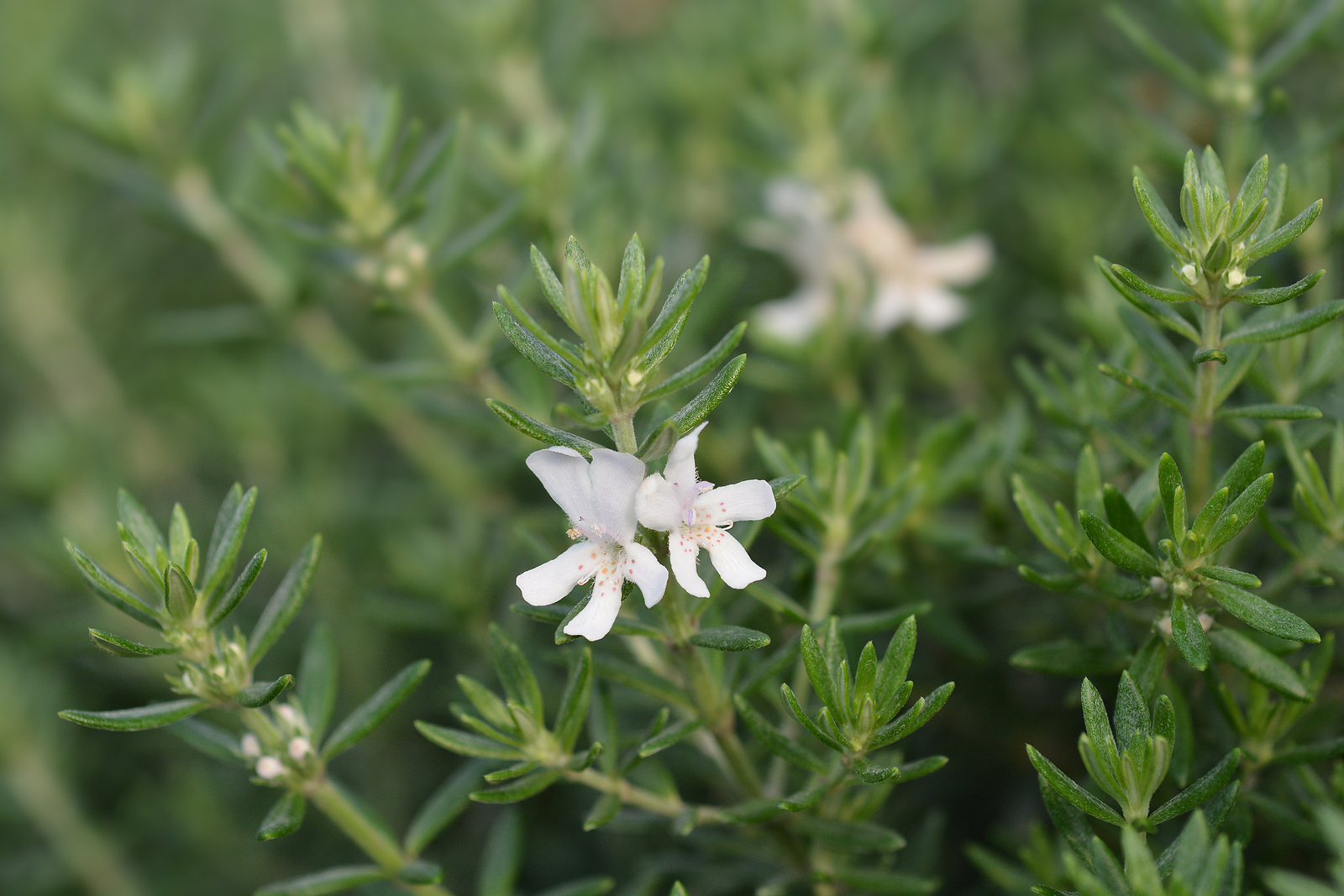
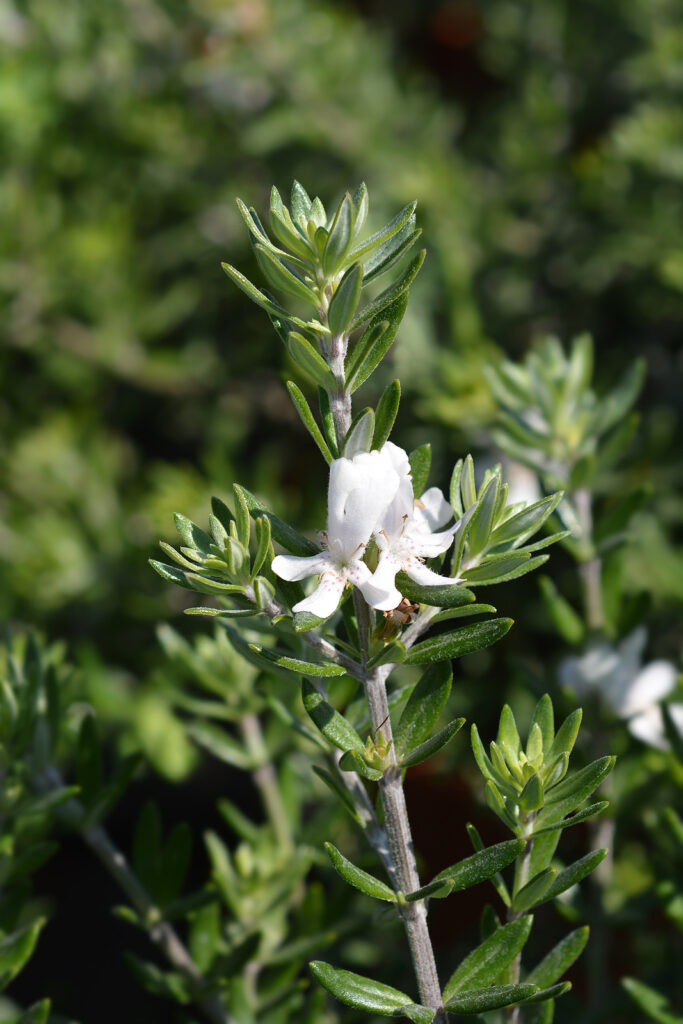
Westringia–commonly called coast rosemary–is a medium-size semi-tropical evergreen shrub that produces tubular, white to pale blue or mauve flowers. Westringia is native to Australia. The narrow, linear foliage is deep green above and pale gray beneath and similar to rosemary foliage.
Westringia is highly adapted to coastal or inland regions. Some varieties are mounded and suited for mixed shrub plantings or slopes; others are tall and upright and well-suited for border backgrounds or screens.
Westringia is a genus of about 20 species native to dry coastal heathland, scrubs, and sands in Australia.
Get to know Westringia – Coast Rosemary
- Plant type: Evergreen shrub
- Growing zones and range: Zones 10-15
- Hardiness: Hardy to Zone 10
- Height and width: 3 to 5 feet (1-1.5m) tall and wide
- Foliage: Narrowly linear to ovate, rosemary-like leaves in whorls
- Flowers: Tubular, white to pale blue or mauve 2-lipped flowers
- Bloom time: Late spring to early autumn
- Uses: Border, hedge, or screen
- Common name: Westringia
- Botanical name: Westringia
- Family name: Lamiaceae
- Origin: Australia
Where to plant Westringia – Coast Rosemary
- Grow Westringia in full sun.
- Plant Westringia in average to humus-rich soil, well-drained soil.
When to plant Westringia – Coast Rosemary
- Set container-grown Westringia in the garden in spring or autumn.
Planting and spacing Westringia – Coast Rosemary
- Space Westringia 3 to 5 feet apart.
How to water and feed Westringia – Coast Rosemary
- Water Westringia moderately during growth. Water sparingly in winter.
- Fertilize Westringia with a balanced liquid fertilizer monthly.
Westringia – Coast Rosemary care
- Trim Westringia hedges in late spring and late summer.
Westringia – Coast Rosemary pests and diseases
- Leaf spot and root rot can occur.
Westringia – Coast Rosemary propagation
- Sow seed in spring.
- Root greenwood cutting in early summer or semi-ripe cuttings in midsummer.
Westringia – Coast Rosemary varieties to grow
- Westringia fruticosa, Australian rosemary. Bushy, rounded shrub when young becomes open with age; grows 3 to 5 feet tall and wide; solitary, tubular, white to very pale blue flowers; linear lance-shaped leaves.
- W. longifolia. Tall upright shrub to 5 feet tall and wide; medium green leaves; flowers are white to pale blue.
- W. ‘Wynyabbie Gem’. Mounding shrub 3 to 4 feet tall; colorful lavender to mauve flowers throughout the year.