How to Grow Andromeda – Pieris

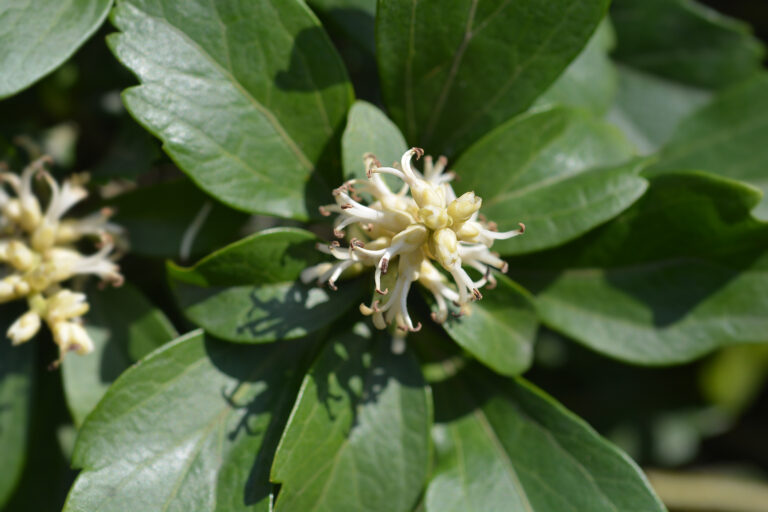
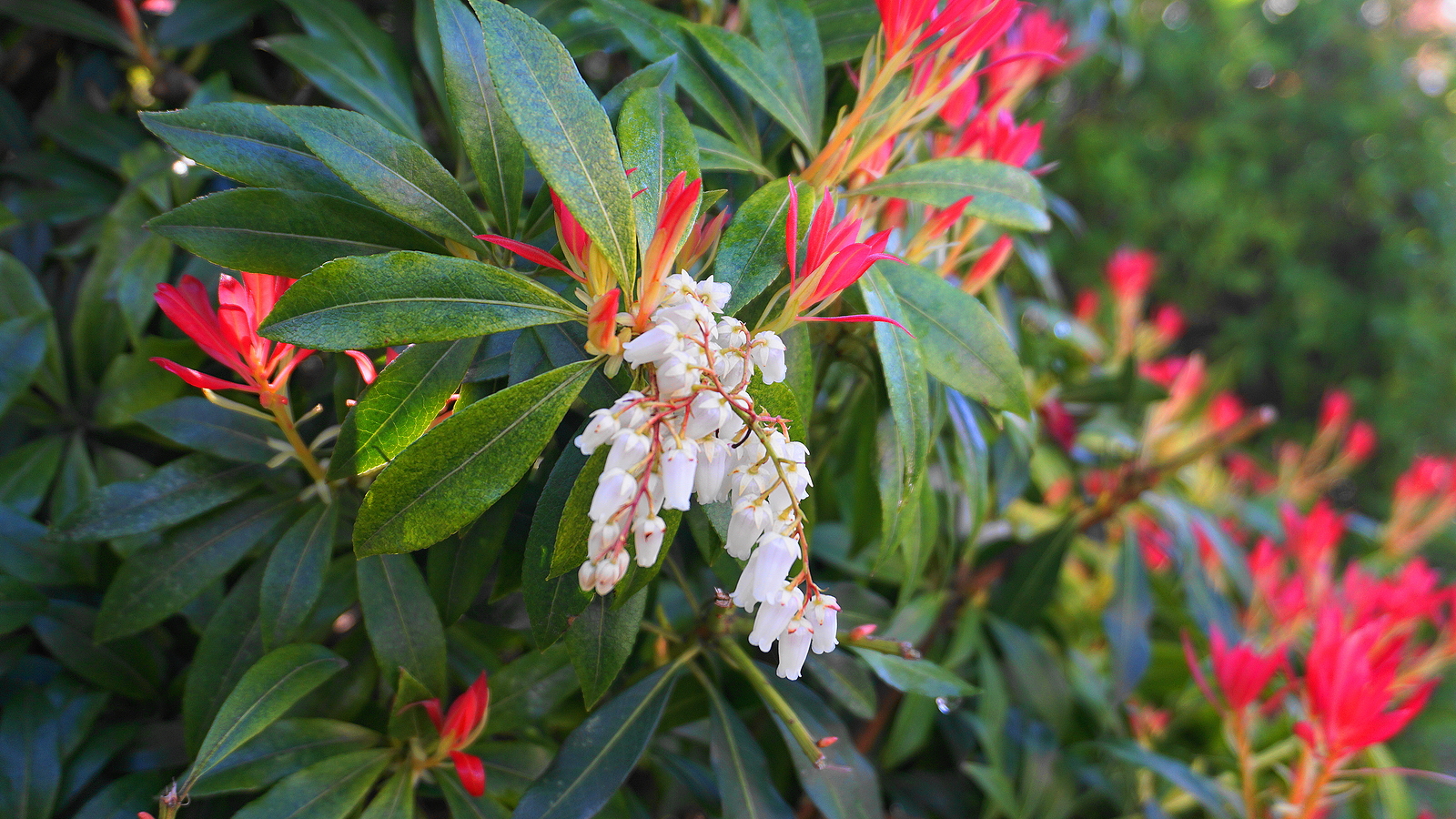
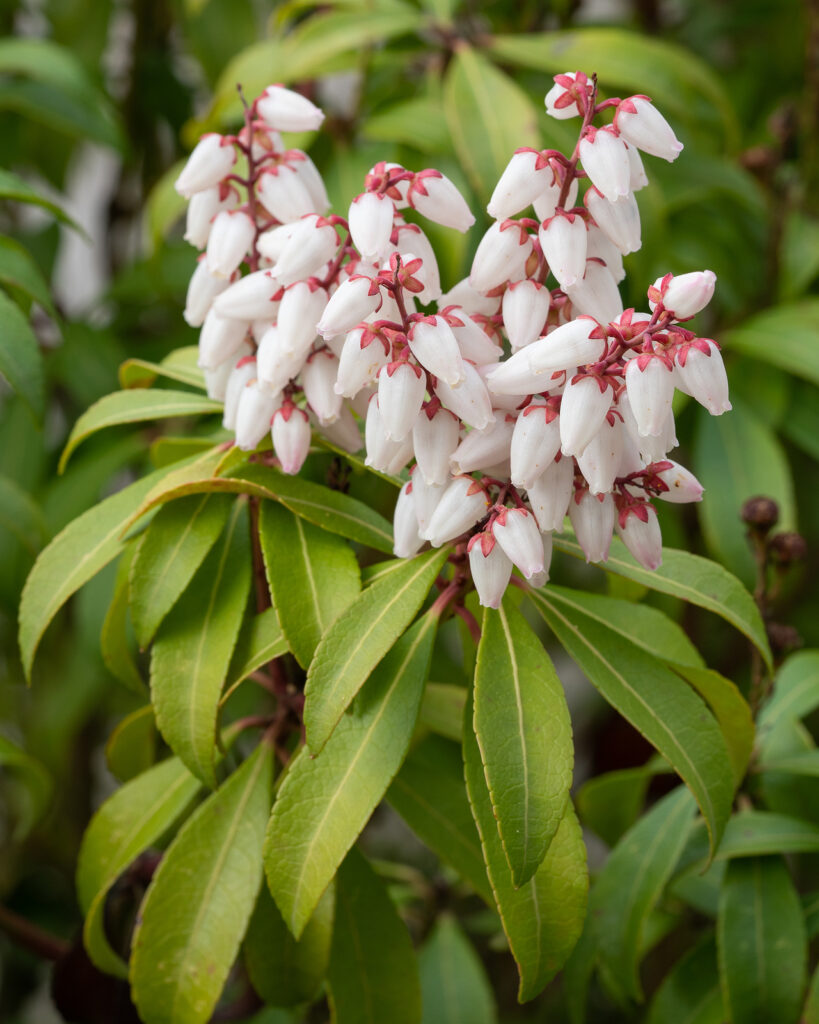
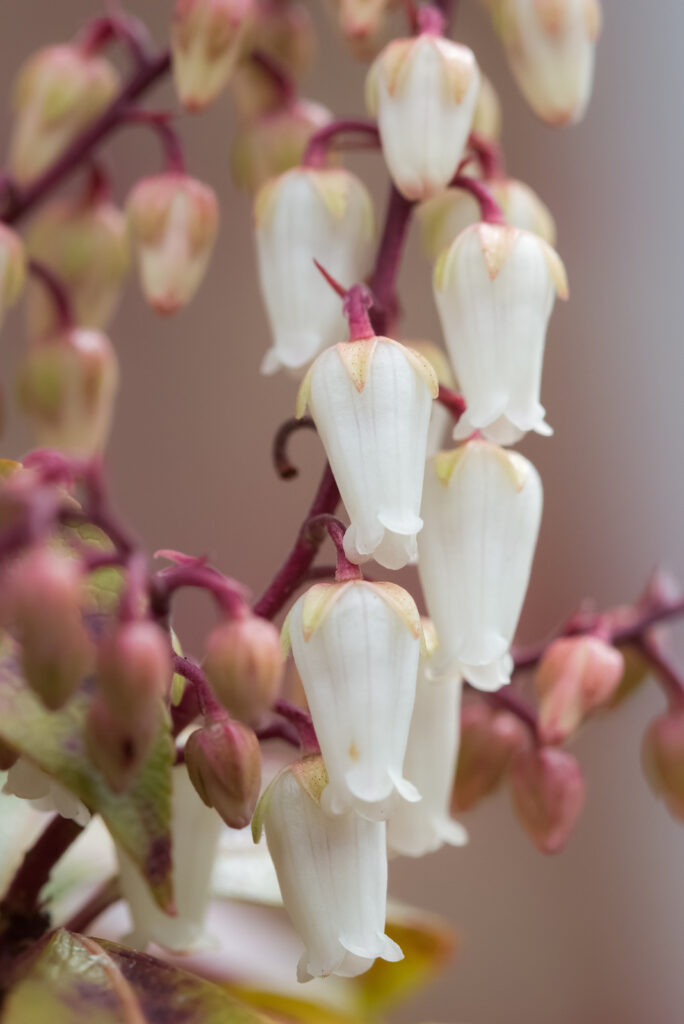
Pieris — sometimes call Andromeda–is an evergreen shrub grown for both its foliage and flowers. New spring leaf growth is bright-colored (pink to red or bronze) and then matures to a glossy dark green. Clusters of small, usually white, urn-shaped flowers appear in early spring. Flower buds for the following spring appear in autumn as greenish-pink beads; they begin to open in late winter.
Pieris is a good companion for rhododendrons and azaleas; they all share the same cultural needs–well-drained but moisture-retentive acid soil and cool to moderate summers. They do not thrive in hot, dry conditions.
Pieris is a must for Oriental and woodland gardens. Its year-round features make it a good choice for entryways and containers close to the house.
Pieris is a member of the heath family. There are 7 species in the genus. Some are native to the Himalayas and East Asia and some are native to North America.
Know What to Plant This Week
Every week I answer the gardener's most important question: what should I plant now? Get seasonal planting advice free — or go Pro for my full Soil Temperature Garden Report, with soil temperature, moisture, weather trends, and crop-by-crop recommendations.
Get to know Pieris
- Plant type: Evergreen shrub.
- Growing zones and range: Zones 4 to 9 depending on the variety
- Hardiness: Hardy to Zone 4
- Height and width: 3 to 12 feet (1-3.6m) tall and 3 to 10 feet (1-3m) wide depending on the variety
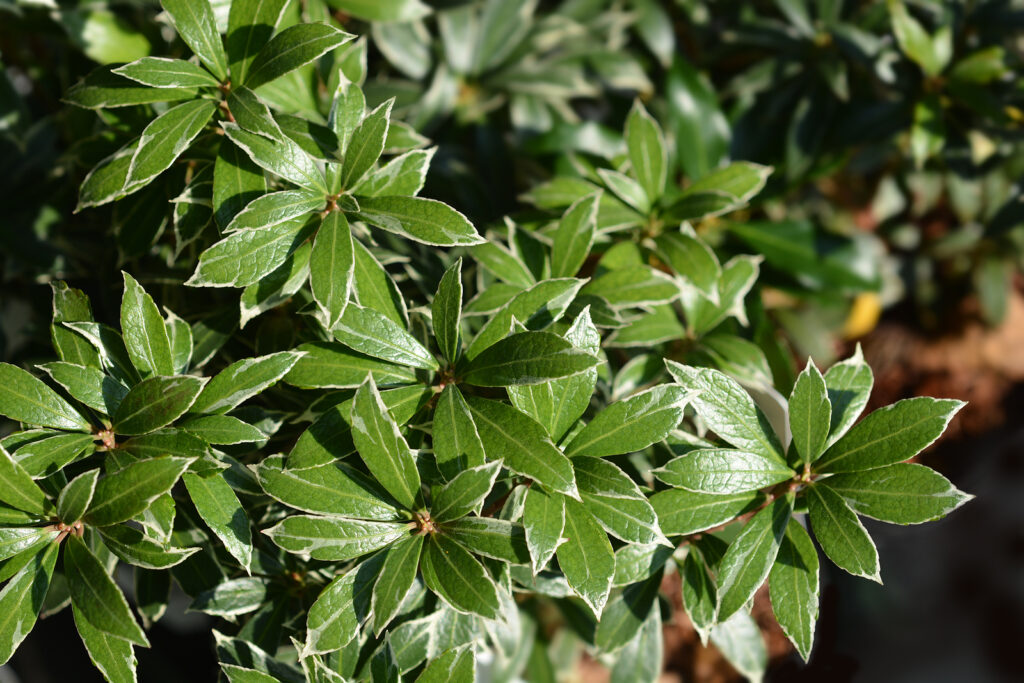
- Foliage: Whorls of leathers, narrowly oval colorful leaves; the fissured bark is attractive when exposed to older specimens.
- Flowers: Clusters of small, urn-shaped flowers, and drooping tassels of beadlike buds that last from midsummer to the next spring’s flowering.
- Bloom time: Early spring.
- Uses: Year-round in gardens. Splendid in containers, in Oriental and woodland gardens, in entryways where year-round good looks are essential.
- Garden companions: Variegated Japanese Pieris with purple-leaved barberry (Berberis thunbergia f. atropurpurea), rhododendrons, and azaleas.
- Common name: Andromeda
- Botanical name: Pieris
- Family name: Ericaceae
- Origin: Forest in the Himalayas, East Asia, also North America
Where to plant Pieris
- Plant Pieris in full sun to light shade.
- Plant Pieris in well-drained, fertile, acidic soil, amended with peat moss or other organic matter for moisture retention and excellent drainage.
- Protect Pieris from strong wind.
When to plant Pieris
- Set container-grown Pieris in the garden in spring or autumn.
- Plant Pieris seeds of seed as soon as it’s ripe.
Planting and spacing Pieris
- Space Pieris 3 to 10 feet (1-3m) apart depending on the variety.
- Plant Pieris in masses, interplanted with rhododendrons and azaleas, or, if compact, against a wall.
- Pieris seeds need light and mist to germinate.
How to water and feed Pieris
- Give Pieris regular water.
- Fertilize Pieris with an all-purpose organic fertilizer in spring.
How to care for Pieris
- Pieris doesn’t require trimming but can be trimmed lightly after flowering to remove seedpods.
Pieris pests and diseases
- Pieris can develop dieback, canker, and rot.
- Pieris can be attacked by lace bugs and nematodes.
- Pieris leaves and nectar are poisonous if ingested
Pieris propagation
- Sow seeds in a cold frame in spring or autumn.
- Take Pieris softwood cuttings in early summer.
- Pieris cuttings root readily.
- Layer Pieris in spring.
Pieris varieties to grow
- Pieris japonica, Japanese Pieris, sometimes called lily-of-the-valley bush, has drooping clusters of small, waxy, white fragrant flowers, to 6 inches (15.2cm) long; grows 9-12 feet (2.7-3.7m) tall, spreading 6-8 feet (1.8-2.4m) wide, and produces oblong or lance-shaped leaves that emerge bronze or reddish. Among its many cultivars are: ‘Christmas Cheer’, with pink flowers; ‘Daisen’, with red flowers; ‘Variegata’ has green leaves edged with white; ‘Little Heath’ grows only 2 feet (.6m) tall, with white-edged leaves that are pink when new. Zones 5 to 8.
- P. floribunda, Mountain Pieris (sometimes called mountain fetterbush or mountain Andromeda): like other members of this genus, is closely related to rhododendrons; native to the southeastern United States; new leaves are often pinkish or reddish in early spring, later turning dark green, and it has upright-growing clusters of small, pink or white fragrant flowers; resists the lace bug that often plagues Asian forms but doesn’t like heat and will develop problems where drainage is poor; grows to 6 feet (1.8m) tall and wide. Zones 5 to 8.
- P. formosa has bronze-red leaves when young and nodding white flower clusters; grows to 15 feet (4.6m) tall. Zones 7 to 9.
- P. forestii, Chinese Pieris: dense, broad grower reaches 10 feet (3m) tall., with greater spread; polished leaves to 6 inches (15.2cm) long; large, drooping flower clusters; new growth ranges from brilliant scarlet (in best forms) to pale salmon pink; try to purchase this plant when plants are producing new growth to get good color; the best selections are sometimes offered as ‘Bright Red’; good espalier in shaded locations.
- ‘Forest Flame’, a hybrid, is large, growing to 12 feet (3.7m) tall and spreading 6-8 feet (1.8-2.4m). Zones 6 to 9.
- ‘Brouwer’s Beauty’, a hybrid of P. japonica and P. floribunda, growing 6 feet (1.8m) tall and wide, with yellow-green new foliage and mahogany flower buds. Zones 5 to 8.