How to Grow Mahonia

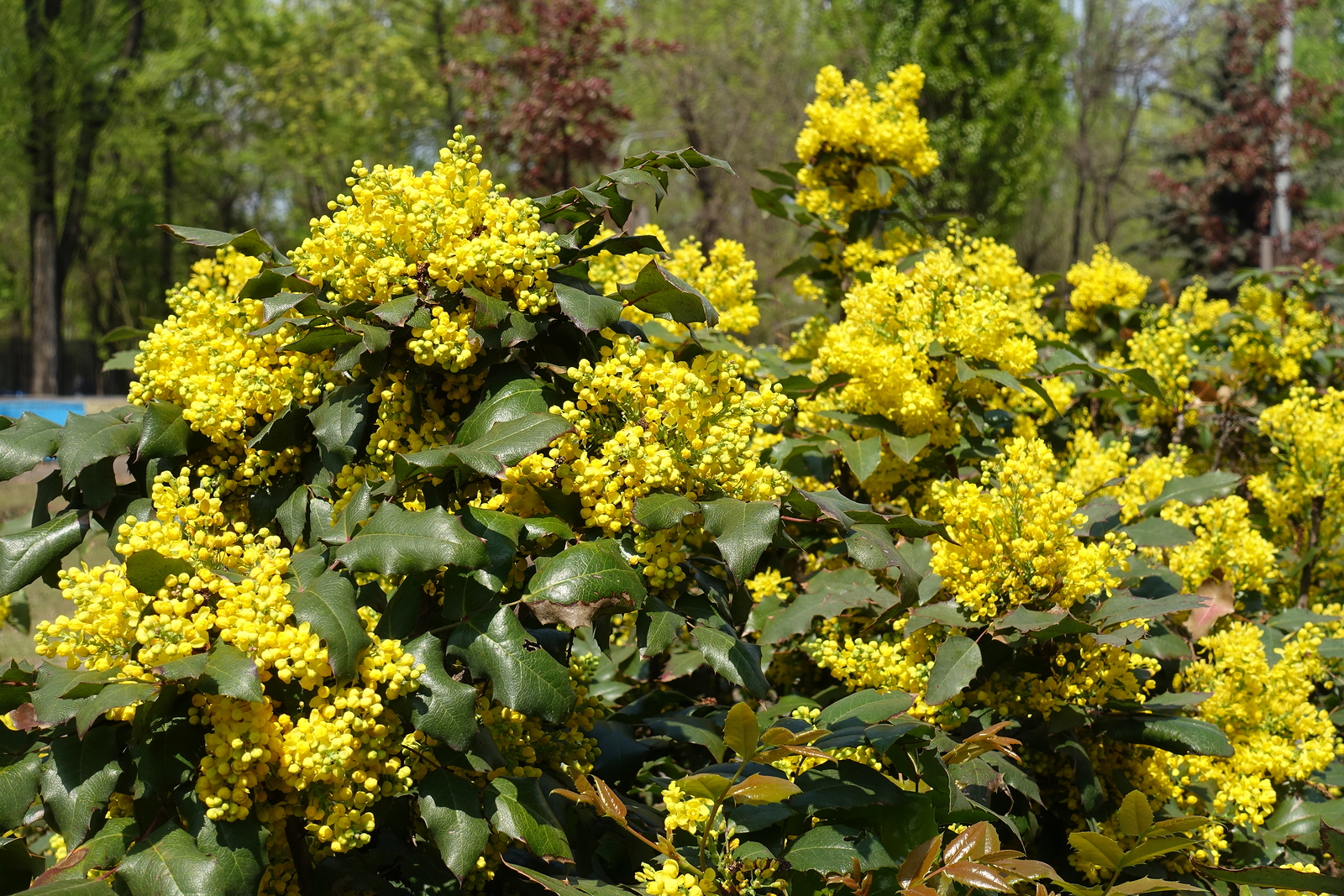
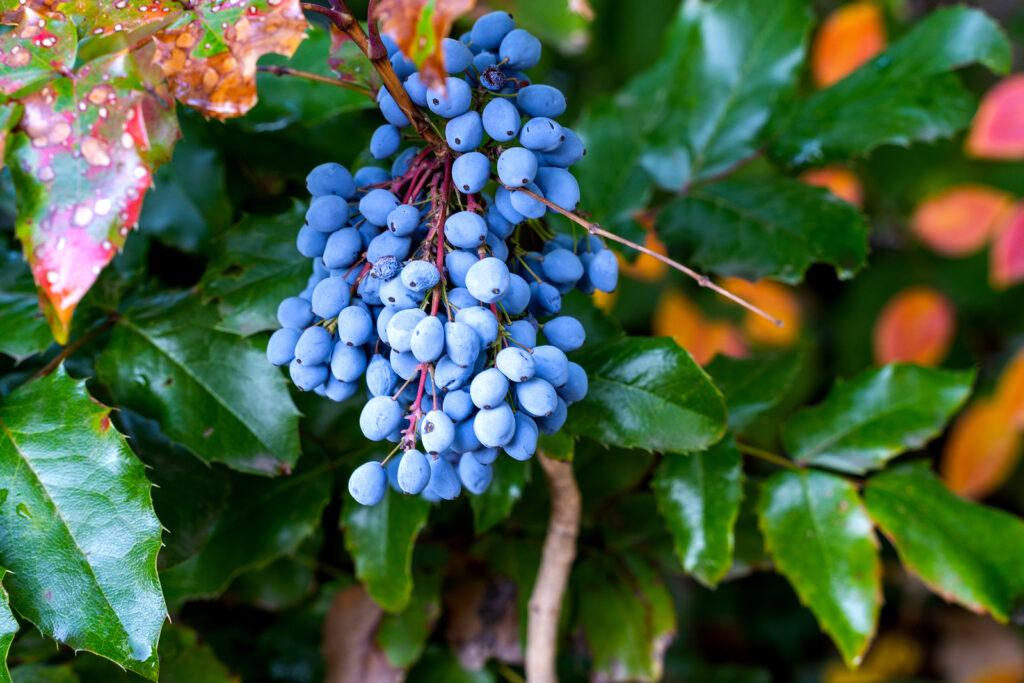
Mahonia is an easy-to-grow evergreen shrub with spiny-toothed leaves and spiky clusters of bright yellow flowers. Flowers are usually followed by blue-black, sometimes red, berry-like fruit.
Mahonias are useful for a variety of situations; low-growing varieties can be used as a groundcover; taller varieties can be grown in a shrub border, hedge, or woodland garden. Mahonias are perfect for shady foundation areas.
Most Mahonias do best in full shade. In partial sun or sun, they need moist soil. Spiky varieties should be sited away from paths or use them as a security hedge.
Mahonia is a genus of about 70 evergreen species. Mahonias are native to North and South America and East Asia. Several species are popular in gardens.
Know What to Plant This Week
Every week I answer the gardener's most important question: what should I plant now? Get seasonal planting advice free — or go Pro for my full Soil Temperature Garden Report, with soil temperature, moisture, weather trends, and crop-by-crop recommendations.
Get to know Mahonia
- Plant type: Evergreen flowering shrub
- Growing zones and range: Zones 6 to 8
- Hardiness: Hardy to Zone 6
- Height and width: 2 to 8 feet (1.8-2.4m) tall and wide depending on the variety
- Growth rate: Slow
- Form and habit: Upright and spreading
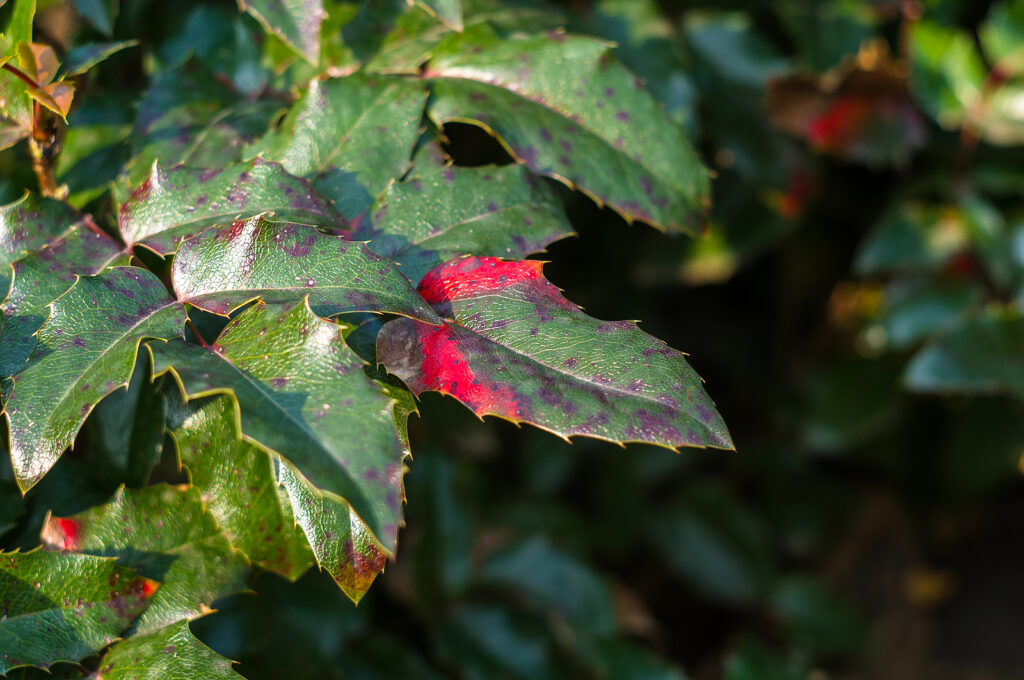
- Foliage: Compound leaf to 18 inches (45.7cm) long with 9 to 15 spiny, hollylike leaflets.
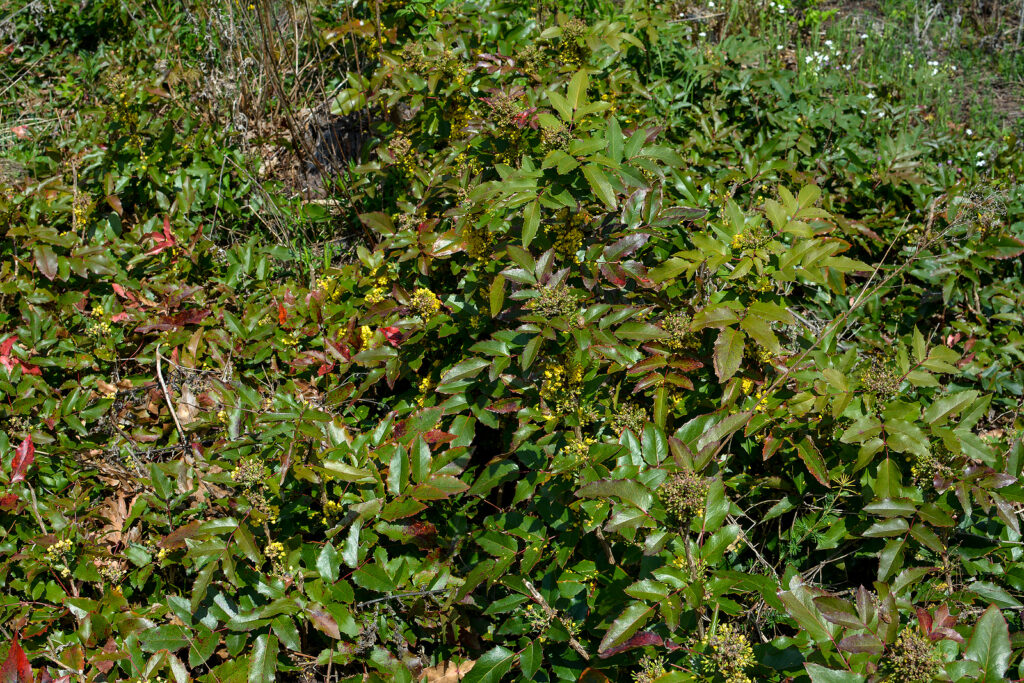
- Flowers: Fragrant yellow flowers clustered on erect spikes 4-8 inches (10.2-20.3cm) long; sweet, rather pervasive, scent.
- Fruits: Grapelike clusters of blue-black oval berries.
- Bloom time: Early spring.
- Uses: Foundation plant, shrub border, screening, woodland gardens.
- Garden companions: The two most popular species are often used with hollies.
- Common name: Mahonia, leatherleaf mahonia, Oregon grape
- Botanical name: Mahonia
- Family name: Berberidaceae
- Origin: Himalayas, East Asia, North and Central America
Where to plant Mahonia
- Plant Mahonia in full to partial shade depending on the variety.
- Most Mahonia needs protection from drying winds.
- Site spiky varieties of Mahonia away from paths, or use them as security hedges.
- Plant Mahonia in well-drained, humusy soil, pH 6.0 to 7.0.
When to plant Mahonia
- A young container-grown or balled-and-burlapped Mahonia transplants easily in early spring.
- Sow seed outdoors in autumn or when seed is ripe.
Planting and spacing Mahonia
- Space Mahonia 2 to 8 feet (1.8-2.4m) apart depending on the variety.
How to water and feed Mahonia
- Keep Mahonia evenly moist.
- Feed Mahonia with an all-purpose organic fertilizer in spring.
How to care for Mahonia
- Pruning season for Mahonia is after flowering.
- If Mahonia becomes too leggy, cut gangling older canes back to ground level when blooming is over.
- Remove suckers as they arise to keep Oregon Grape Holly from spreading.
Mahonia pests and diseases
- Mahonia is susceptible to rust and leaf spots and galls.
- Mahonia can be attacked by scale insects, small looper caterpillars, and whiteflies.
- All Mahonia species attract birds.
Mahonia propagation
- Propagate stratified Mahonia seeds in a seedbed or containers in autumn.
- Root semi-ripe cuttings or leaf cutting from late summer to autumn.
Mahonia varieties to grow
- Mahonia aquifolium, Oregon Grape Holly, is a 3-6 foot (.9-1.8m) plat with shiny refined leaves that turn bronze-plum in winter. Hardier than leatherleaf mahonia, it thrives in Zones 4 or 5 to 8. Clusters of small fragrant yellow flowers appear in late winter or early spring; blue-black fruits follow. ‘Apollo’ is an outstanding cultivar with yellow-orange flowers. ‘Compacta’, a dwarf 2-3 feet (.6-.9m) tall, is hardy in Zones 6 to 8.
- M. bealei, Leatherleaf Mahonia, is a 6-8 foot (1.8-2.4m) shrub with large, handsome compound blue-green leaves up to 18 inches (45.7cm) long that are composed of 4 inch (10.2cm) toothed leaflets. The leaves sit almost horizontally; they retain their color in winter. In late February and early March, leatherleaf mahonia bears drooping clusters of perfumed yellow flowers followed by blue-black grapelike fruits that birds love. Its legginess can be disguised easily by an under planting Sarcoccoca ruscifolia and hellebore.
- M. fortunei, Chinese Mahonia, is similar but has softer foliage and is hardy only in Zones 7 to 9. On the West Coast it blooms in the fall. An erect and somewhat stiff species to 6 feet (1.8m) tall, whose slender leaflets are more ferny and less spiky than those of other species. The yellow flowers are borne in upright racemes in late summer or early fall. Berries seldom appear. Zones 8 to 9; to Zone 7 with winter protection.
- M. japonica, Japanese Mahonia, similar to M. bealei, but usually only 6 feet (1.8m) tall and spreading half again as wide, with flowers more relaxed than upright and brighter yellow. The oval berries are bluish purple. Zones 7 to 8.
- M. nervosa, Cascades Mahonia, sometimes called longleaf mahonia, this 12-18 inch (40.48-45.72cm) suckering shrub is native from British Columbia to northern California. The thick, glossy gray-green leaves are bristly and have 11 to 23 leaflets up to 3 inches (7.6cm) long. A ground cover with the habit of a stiff fern. Flowers bloom in upright clusters in mid- to late spring, followed by purple-blue berries. Zones 5 to 7.
- M. repens, Creeping Mahonia, also called dwarf Oregon grape-hlly, this cold-hardy ground cover is native from northern Mexico and California to British Columbia and east to the Rockies. Rarely growing much higher than a foot (.3m), it spreads by underground stolons to 2-3 feet (.6-.9m) across. The somewhat dull, blue-green spiny leaves turn purple-bronze in winter. Yellow flowers are borne in 1-3 inch (2.5-7.6cm) racemes in midspring, and blue-black berries develop in late summer. Zones 4 to 7.