How to Grow Burro’s Tail – Sedum

Sharing is caring!

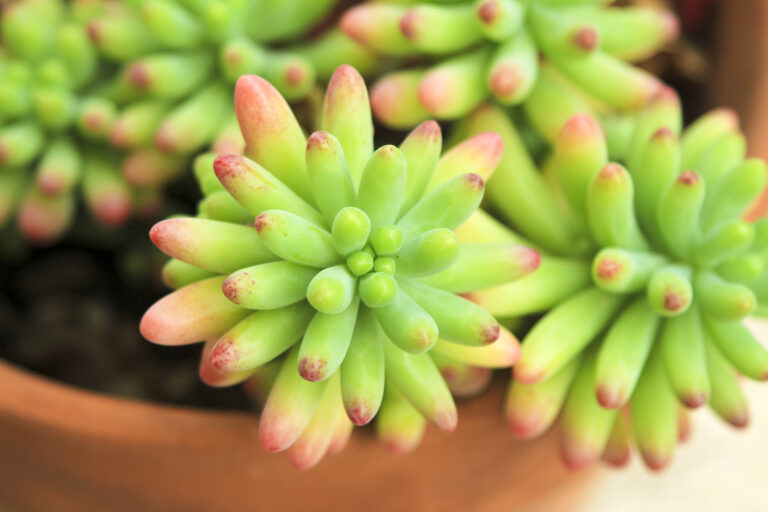
Burro’s tail, Sedum, is an evergreen succulent with small pointed leaves that trail. Grow burro’s tail in containers or hanging baskets where the blue-green stems can cascade.

Get to know Burro’s Tail

  • Plant type: Succulent evergreen perennial
  • Growing Zones and range: 10-11
  • Hardiness: Tender
  • Temperature: Average room temperature
  • Light: High light with some direct sun
  • Height and width: Stems trail to 3 feet long
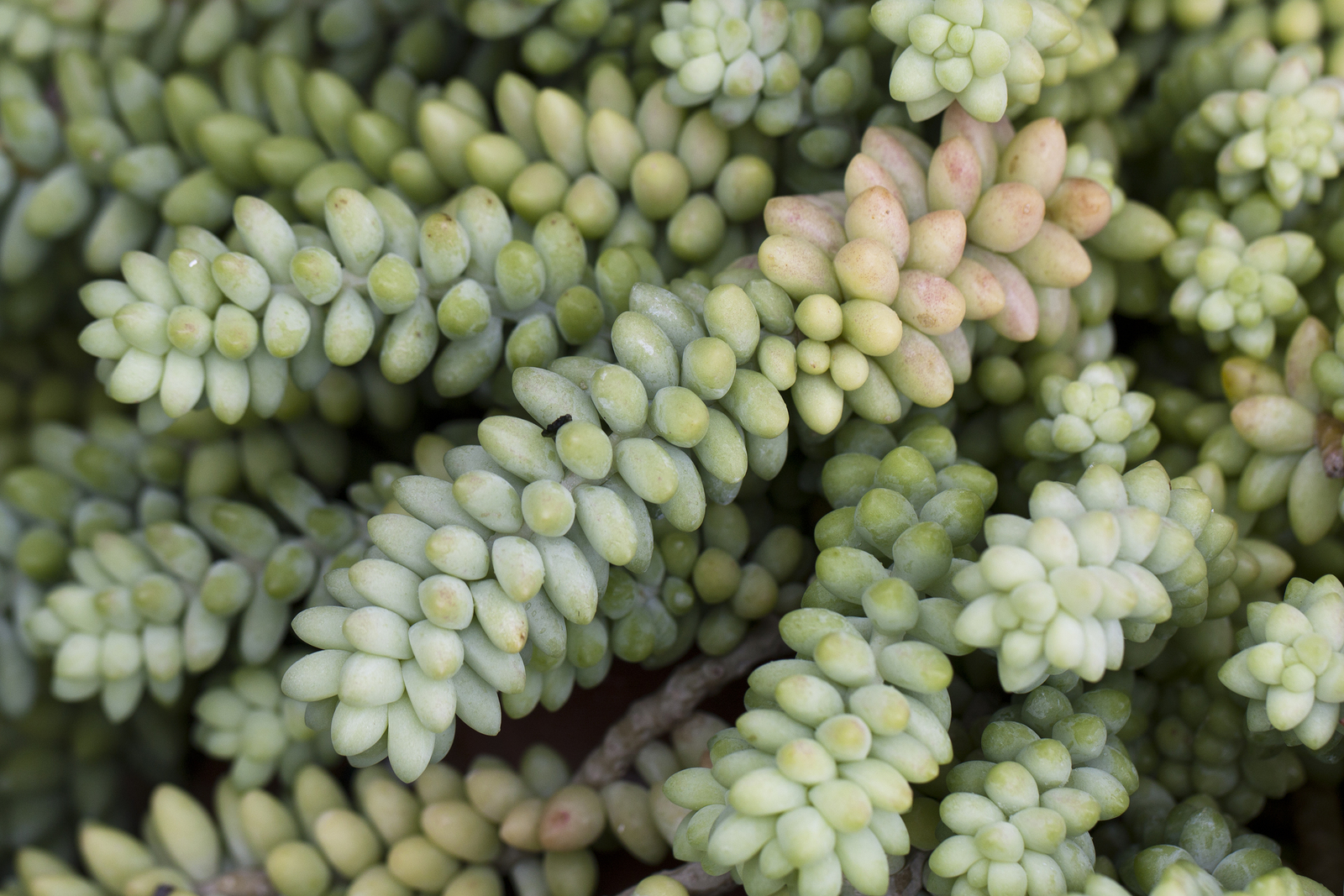
  • Foliage: Succulent, grayish blue-green, 1-inch (2.5cm) pointed leaves densely strung on hanging stems to 3 feet long
  • Flowers: Coral to red flowers occasionally
  • Uses: Houseplant, container plant
  • Common name: Burro’s tail, donkey tail
  • Botanical name: Sedum morganianum
  • Family: Crassulaceae

Where to plant Burro’s Tail

  • Grow burro’s tail in high light with some direct sun.
  • Plant burro’s tail in all-purpose mix with sand added for better drainage.
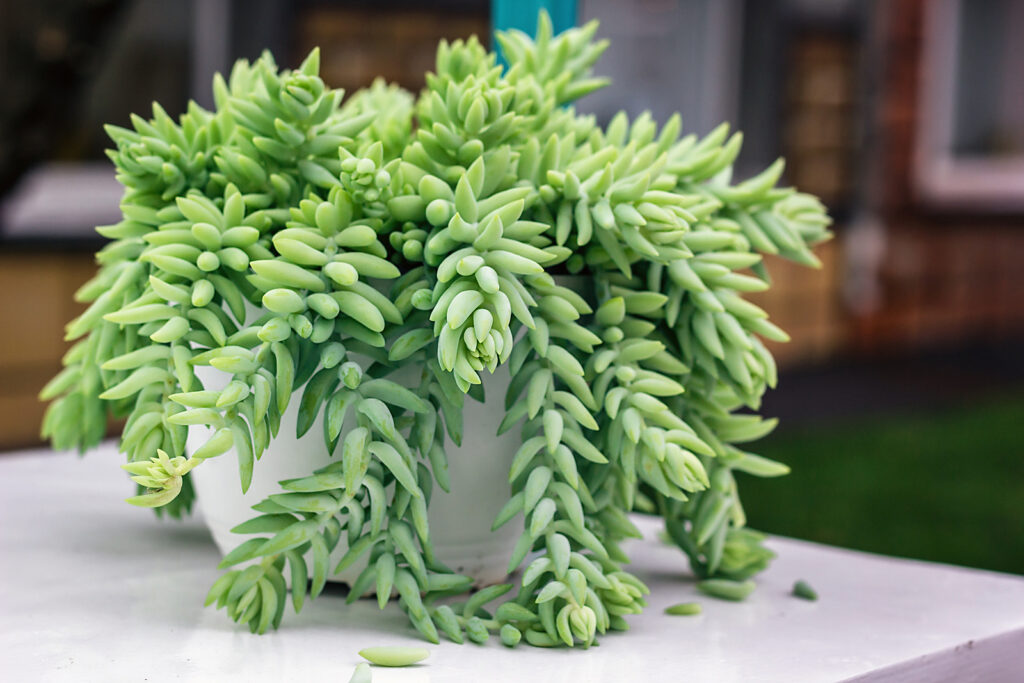
Sedum morganianum, Burro's Tail
Sedum morganianum, Burro’s Tail

How to water and feed Burro’s Tail

  • Keep the soil moderately moist and spring to tall; in winter, water only to prevent shriveling.
  • Fertilize burro’s tail three times a year: in early spring, late spring, and late summer.

Burro’s Tail care

  • Repot only when absolutely necessary since the leaves break easily when the plant is handled.

Burro’s Tail common problems

  • Roots rot if you provide too much water; otherwise, these plants are mostly trouble free.

Burro’s Tail propagation

  • Tip or leaf cuttings root easily in damp soil.

Similar Posts

  • How to Grow Sempervivum

    Sempervivum is a genus of thick, mat-forming evergreen succulents that bear rosettes of thick, pointed leaves sometimes covered with white hairs and flat, branching terminal panicle-like cymes of star-shaped white yellow, red, or purple flowers borne on upright stems. Sempervivum blooms in summer. The rosettes die after flowering but are replaced by new, offset rosettes…

  • How to Grow Haworthia

    Haworthias are small, easy-to-grow plants. They form a spiky rosette of upright, spotted, or striped, succulent leaves. Haworthia grows in matlike groups. Their distinctive foliage shapes and patterning make them delightful additions to a window garden.  HHowarthias bear small, tubular to funnel-shaped white flowers in loose racemes Haworthia is a genus of about 160 species…

  • How to Grow Stapelia

    Stapelia is a succulent that bears diurnal, star-shaped solitary or clustered flowers. Stapelia has a unique shape, but also a unique foul smell. They emit an odor that smells like rotting flesh. The odor attracts flies which, in turn, pollinate the flowers. Stapelia has erect, angular, coarsely toothed fleshy leaves. Stems branch from the bases…

  • How to Grow Gasteria

    Gasteria is a succulent member of the lily family grown for its flowers and foliage. Gasteria has firm, dark green leaves sometimes suffused with red and white tubercles. Gasteria leaves grow opposite in ranks. Gasteria flowers are tubular and usually pendulous. The flowers appear in clusters or in panicles. The flowers are pink or red…