What to Do After Heavy Rain: A Vegetable Garden Checklist

Heavy rain can leave a vegetable garden looking battered, but there is usually no need to rush in and start repairing everything as soon as the rain stops.
The first job is to let the garden drain.
The second is to inspect what happened.
The third is to repair damage without making the soil problem worse.
Know What to Plant This Week
Every week I answer the gardener's most important question: what should I plant now? Get seasonal planting advice free — or go Pro for my full Soil Temperature Garden Report, with soil temperature, moisture, weather trends, and crop-by-crop recommendations.
A heavy rain can flatten plants, wash away soil, expose roots, spread disease, crack ripe tomatoes, and leave the soil saturated. But the damage is often less serious than it first appears. Many plants will recover if you give them time.
Use this checklist to work through the garden after a heavy rain.
Immediately After the Rain
☐ Stay out of saturated garden soil
This is the first rule.
Do not walk through vegetable beds simply because the rain has stopped. Saturated soil is easily compacted.
Walking, digging, cultivating, or pushing a wheelbarrow through wet soil can destroy the pore spaces that allow air and water to move through the root zone.
If you must enter the garden, stay on established paths or use boards to distribute your weight.
☐ Check for standing water
Look across the garden for puddles and areas where water remains standing.
A puddle that disappears within a few hours may not be a serious problem. Water that remains for a day or more deserves attention, particularly around vegetable roots.
Note where the water collects.
Those observations will help you identify drainage problems that should be corrected when the soil dries.
☐ Check drainage and runoff
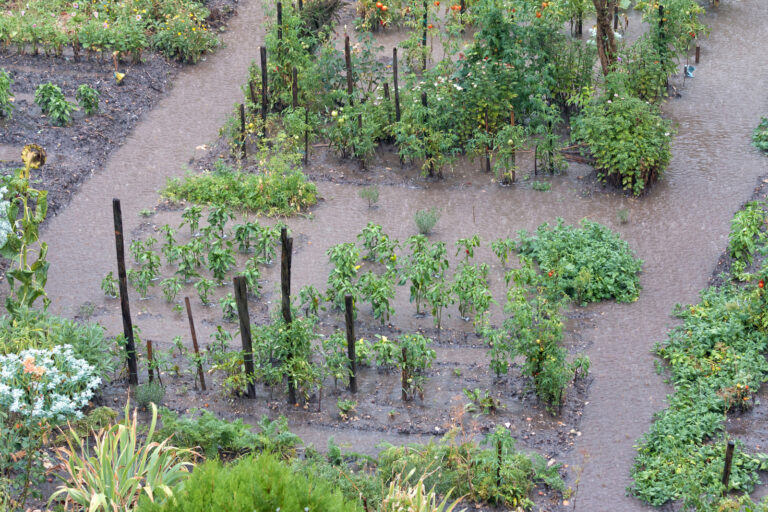
Look at the paths, bed edges, drainage channels, and low areas.
Ask:
- Where did water enter the garden?
- Where did it flow?
- Where did it collect?
- Where did soil move?
- Did water flow through a vegetable bed?
- Did a downspout or roof drain discharge into the garden?
- Did a path become a drainage channel?
A heavy rain gives you information that is difficult to see during dry weather.
☐ Check for erosion
Look for soil that has been washed from the surface of beds.
Pay particular attention to:
- exposed roots
- washed-out seed rows
- small channels or gullies
- exposed irrigation tubing
- eroded bed edges
- soil deposited in paths
- mulch that has been washed away
Do not immediately rake everything back into place.
First determine why the soil moved.
When the Garden Begins to Dry
☐ Wait until the soil is workable
Do not dig, cultivate, plant, or broadfork saturated soil.
A simple test is to squeeze a handful of soil.
If it forms a sticky ball and remains muddy, wait.
If the soil crumbles easily when squeezed, it is becoming workable.
The exact timing varies with soil type. Sandy soil may drain rapidly; clay soil can remain wet for considerably longer.
☐ Check plants for damage
Walk through the garden and inspect plants individually.
Look for:
- broken stems
- bent plants
- uprooted seedlings
- exposed roots
- damaged branches
- torn leaves
- plants buried by mud
- fruit lying on wet soil
Do not assume that a plant that looks wilted after the storm is dead. Waterlogged roots can temporarily reduce a plant’s ability to take up oxygen and water.
Give plants time to recover as the soil drains.
☐ Stand up flattened plants
Once the soil is firm enough to work, gently lift plants that have been flattened by rain or wind.
Stake or tie them if necessary.
Do not pull aggressively on plants whose roots have been loosened. Support the stem and gently settle the root system back into the soil.
☐ Cover exposed roots
If rain has washed soil away from plant roots, gently replace soil around the roots once the ground is workable.
Do not bury the stem deeply.
The objective is simply to return the root zone to its original level and protect exposed roots from drying.
Check the Harvest
☐ Harvest ripe tomatoes
Heavy rain can cause tomatoes to crack.
Harvest ripe and nearly ripe tomatoes before cracks widen or insects and disease enter the fruit.
Tomatoes with small, clean cracks can often be used immediately.
Discard fruit that is badly split, rotting, or heavily damaged.
☐ Pick beans and other tender crops
Inspect beans, cucumbers, summer squash, peppers, eggplants, and other tender vegetables.
Rain and wind can bruise fruit and cause stems to break.
Harvest mature vegetables rather than leaving them on damaged plants.
☐ Remove fruit lying on wet soil
Any fruit resting directly on wet soil is more likely to rot.
Pick it if it is usable or remove it if it is damaged.
Keeping decaying fruit out of the garden also removes a potential source of insects and disease.
Check for Disease
☐ Inspect leaves for new spots
Disease problems can become more apparent several days after a heavy rain.
Look for:
- brown or black leaf spots
- yellowing leaves
- soft or collapsing stems
- rotting fruit
- mildew
- rapidly spreading leaf damage
- lesions on stems
Do not diagnose a disease simply because a leaf looks damaged after a storm. Wind, hail, mud, and physical abrasion can also damage leaves.
Watch how the symptoms develop.
☐ Remove badly damaged or diseased foliage
Remove leaves that are badly diseased, broken, or lying against wet soil.
Avoid stripping healthy plants of large amounts of foliage simply because the leaves are wet or dirty.
Give plants time to dry and recover.
☐ Avoid overhead irrigation
Once the rain has passed, do not immediately return to overhead watering.
Wet foliage needs time to dry.
If irrigation is needed later, water the soil rather than repeatedly wetting the leaves.
Check Soil Moisture
☐ Do not water according to the calendar
Heavy rain can make a normal irrigation schedule temporarily irrelevant.
Check the soil before watering again.
The surface may appear dry while the root zone remains saturated.
Push a finger or soil probe several inches into the soil and check below the surface.
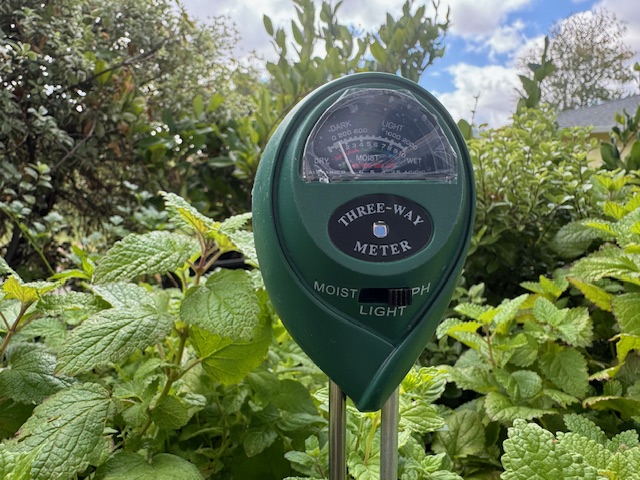
If you use a soil-moisture meter, check the root-zone reading rather than relying on surface appearance.
☐ Let the soil breathe
Healthy soil needs both water and air.
After heavy rain, the problem is often not a lack of water but a lack of oxygen around the roots.
Let excess water drain naturally.
Do not cultivate saturated soil in an attempt to “open it up.” Working wet soil can cause more lasting damage than the rain itself.
Restore the Soil
☐ Replace washed-away soil
If a bed has lost soil, replace it once the soil is workable.
Use good garden soil or finished compost as appropriate.
Do not simply pile soil against plant stems.
☐ Restore mulch
Heavy rain often moves mulch into paths and low areas.
Once the soil has drained, redistribute mulch over exposed soil.
Mulch helps protect the soil from the next heavy rain and reduces evaporation when dry weather returns.
Keep mulch away from the crowns and stems of plants that are prone to rot.
☐ Do not rush to fertilize
A heavy rain does not automatically mean that plants need fertilizer.
Wait until the soil has drained and plants have had time to recover.
If plants later show signs of a nutrient problem, determine what they need before applying fertilizer.
Check the Garden’s Infrastructure
☐ Inspect stakes and trellises
Wind and rain can loosen stakes and trellises.
Check:
- tomato cages
- tomato stakes
- bean trellises
- cucumber supports
- row-cover hoops
- fences
- irrigation lines
Repair weak supports before the next storm.
☐ Check irrigation
Inspect drip lines and emitters for damage or displacement.
Run the irrigation system only after the soil has dried sufficiently and irrigation is actually needed.
☐ Check paths and drainage
Look for places where soil or mulch has washed into paths.
If a path has become a stream during the storm, take note.
That may indicate that the garden needs a more permanent drainage solution.
Three Things Not to Do After Heavy Rain
1. Don’t dig wet soil
This is perhaps the most important rule.
Wait until the soil is workable.
2. Don’t water just because it is your normal watering day
Check the soil first.
3. Don’t immediately remove every damaged leaf
Some plants recover from surprisingly severe-looking damage.
Remove broken or diseased tissue, but give plants time to show you what has actually been damaged.
What to Watch for Over the Next Week
The garden may look different several days after the storm than it did immediately afterward.
Over the following week, watch for:
- new leaf spots
- rotting fruit
- cracked tomatoes
- yellowing leaves
- plants that continue to wilt
- exposed roots
- soil erosion
- standing water
- damaged stems
- renewed insect activity
A plant that is slightly battered but producing new growth is generally telling you that it is recovering.
A plant that continues to decline deserves closer attention.
Turn the Storm Into a Garden Lesson
After the garden has recovered, walk through it again.
This time, look at the garden as a drainage map.
Where did water collect?
Where did it run?
Where did soil erode?
Where did mulch stay in place?
Which beds drained quickly?
Which beds remained wet?
Where did plants suffer the most damage?
Make notes while the evidence is still fresh.
Then make improvements during the next dry period.
You might reshape a bed, redirect a downspout, add organic mulch, improve a drainage channel, reinforce a bed edge, or establish a better-covered path.
The objective is not to prevent rain from entering the vegetable garden.
The objective is to help the garden absorb rain, hold soil, drain excess water, and recover quickly.
After Heavy Rain: The Quick Checklist
First:
☐ Stay off saturated soil
☐ Check for standing water
☐ Observe runoff and drainage
☐ Look for erosion
As the garden dries:
☐ Check plants for damage
☐ Stand up flattened plants
☐ Cover exposed roots
☐ Check ripe fruit
☐ Remove badly damaged or diseased material
Before watering again:
☐ Check root-zone soil moisture
☐ Make sure excess water has drained
☐ Avoid unnecessary overhead irrigation
After the soil is workable:
☐ Repair erosion
☐ Replace washed-away soil
☐ Restore mulch
☐ Repair stakes and trellises
☐ Check irrigation lines
☐ Correct drainage problems
During the following week:
☐ Watch for disease
☐ Watch for rotting fruit
☐ Watch for continuing plant decline
☐ Record where water collected and where soil moved
The Garden Principle
After heavy rain, don’t rush to repair the garden. Let it drain, let the soil become workable, then repair what the storm actually damaged.
Rain is part of the garden’s natural water cycle. The goal is not to fight it. The goal is to build soil and garden structure that can receive a heavy rain without losing the soil, nutrients, and plants you have worked to grow.
Related Article: How to Prepare Your Vegetable Garden for Heavy Rain–and What to Do After