How to Prepare Your Vegetable Garden for Heavy Rain—and What to Do After

Heavy rain can be good for a vegetable garden—until too much water arrives too quickly.
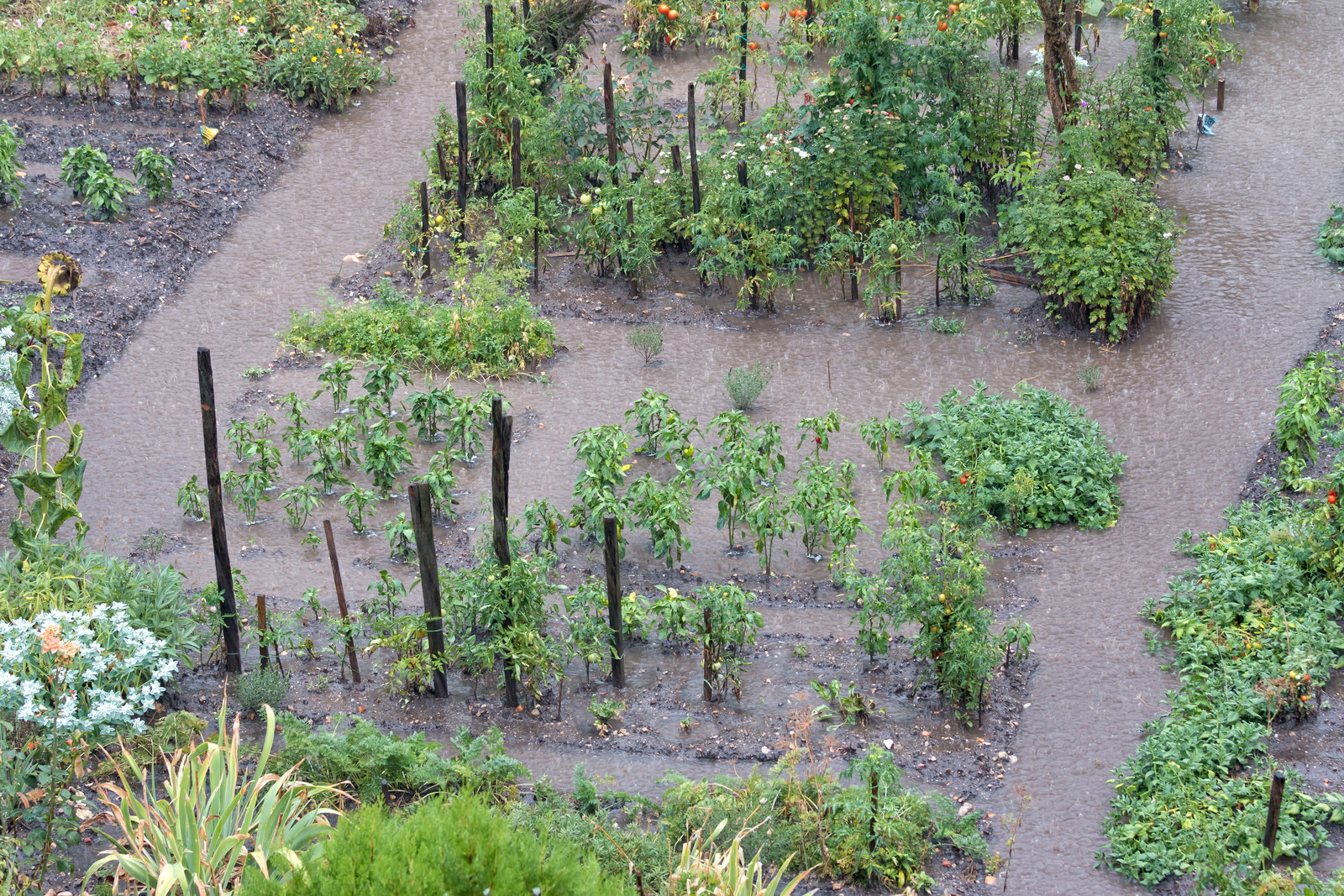
A slow, soaking rain can replenish soil moisture, wash dust from leaves, and reduce the need for irrigation. A downpour is different. When several inches of rain fall in a short time, water can run across the soil rather than soak in. Paths can become drainage channels, beds can erode, roots can become waterlogged, and young plants can be flattened or buried by mud.
The best way to deal with heavy rain is to prepare before it arrives. A few simple steps can keep water moving where you want it to go and protect the soil from erosion. After the storm, the important work is to let the garden drain, assess the damage, and avoid working wet soil before it is ready.
Here is how to prepare a vegetable garden for heavy rain and what to do afterward.
Know What to Plant This Week
Every week I answer the gardener's most important question: what should I plant now? Get seasonal planting advice free — or go Pro for my full Soil Temperature Garden Report, with soil temperature, moisture, weather trends, and crop-by-crop recommendations.
Before Heavy Rain: Prepare the Garden
1. Check where water already collects
Walk through the garden before the rain arrives and look for places where water tends to collect.
Low spots in beds, compacted paths, the bottoms of slopes, and areas beside buildings or fences are especially vulnerable. Look for places where roof runoff or water from a driveway or patio enters the garden.
You do not necessarily need to eliminate every wet spot. Instead, identify where the water is coming from and where you want it to go.
A heavy rain is easier on the garden when water has a clear path away from vegetable beds.
2. Clear drains, gutters, and drainage channels
Remove leaves, weeds, soil, and other debris from drains and drainage channels before the storm.
If a downspout empties near a vegetable bed, make sure its outlet is not blocked. A roof can deliver a surprising amount of water to one small area during a heavy storm.
Where practical, direct downspouts toward a lawn, planting bed designed to accept runoff, rain garden, or other suitable drainage area rather than directly onto cultivated soil.
3. Protect bare soil
Bare soil is especially vulnerable to heavy rain.
Rain striking exposed soil can break apart soil aggregates and wash fine particles away. Runoff can then carry soil from the bed into paths or drains.
Cover exposed soil with compost, leaf mold, straw, shredded leaves, or another suitable organic mulch. The goal is not simply to keep the soil attractive. A layer of organic material cushions the impact of falling rain and slows surface runoff.
In vegetable beds, keep mulch a few inches away from the stems of plants that are susceptible to rot.
4. Reinforce the edges of raised and mounded beds
Raised and mounded beds can drain well, but their edges can erode during a hard rain.
Check the sides of beds for places where soil is already loose or where water has previously cut channels. Add soil where necessary and firm the edges lightly.
Do not pack the soil hard. The objective is to stabilize the bed while preserving good drainage.
If a bed repeatedly loses soil during heavy rain, the long-term solution may be to reshape the bed, slow the runoff above it, or create a more permanent edge.
5. Cover newly planted seeds
Newly planted seeds are among the most vulnerable things in a vegetable garden during a downpour.
Heavy rain can wash seeds from their planting rows, bury them under sediment, or expose them by moving soil downhill.
If heavy rain is expected shortly after sowing, consider protecting the seedbed with lightweight row cover or another breathable material that breaks the force of falling rain.
Very small seedlings may also benefit from temporary protection if wind and rain are expected to be severe.
6. Stake or support tall plants
Wind and rain together can cause more damage than rain alone.
Tall tomato plants, peppers, eggplants, pole beans, young fruit trees, and other top-heavy plants may bend or break when foliage becomes saturated and wind pushes against it.
Check stakes, cages, trellises, and ties before the storm.
Tie plants loosely enough that stems can move without being girdled. Replace weak stakes and secure trellises that have become unstable.
7. Harvest ripe vegetables before the storm
If heavy rain is expected, harvest vegetables that are ready or nearly ready.
This is particularly important for ripe tomatoes, peppers, beans, cucumbers, summer squash, and other tender crops.
Ripe fruit is more susceptible to cracking, bruising, and disease after prolonged wetting. Harvesting also reduces the weight carried by plants that may already be vulnerable to wind and rain.
Do not wait until everything is perfectly ripe. Vegetables that are close to maturity can often finish ripening after harvest.
8. Remove diseased or damaged plant material
Heavy rain can spread plant pathogens by splashing water from the soil onto foliage.
Before the storm, remove badly diseased leaves, fallen fruit, and decaying plant material from the garden.
Do not put diseased material into a compost pile unless your composting system reliably reaches temperatures sufficient to destroy the pathogens involved.
A clean garden does not prevent every disease problem, but it reduces the amount of infected material available to be splashed around during a storm.
9. Stop irrigating
If significant rain is on the way, turn off irrigation.
Check soil moisture before the storm rather than watering according to the calendar. If the soil is already moist, additional irrigation only increases the amount of water the soil must absorb.
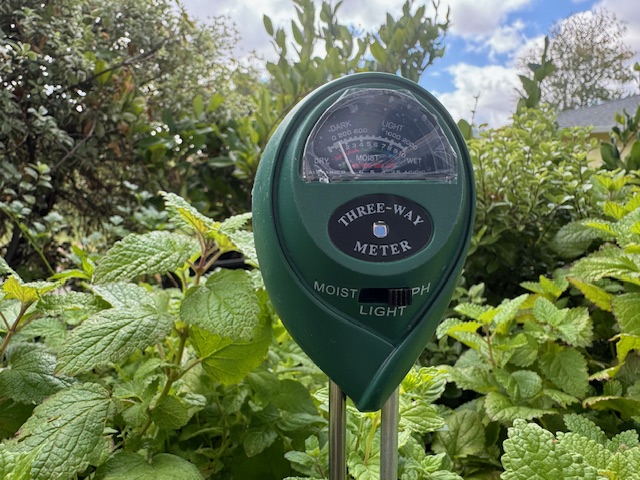
For gardeners who monitor soil moisture with a soil-water sensor, this is a particularly useful time to pay attention to the numbers.
The goal is not to keep the soil constantly wet. It is to maintain enough moisture for healthy roots while leaving room in the soil for incoming rainfall.
During Heavy Rain: Let the Garden Drain
Once the rain begins, there is usually less to do than you might think.
The most important thing is to stay out of wet garden soil.
Walking on saturated soil can compact it and destroy the pore spaces that allow air and water to move through the root zone. A garden can recover from heavy rain more easily than it can recover from repeated traffic on saturated soil.
If water is flowing across a bed, however, do not ignore it.
Watch where runoff is moving. If water is cutting a channel through a bed or carrying soil toward a drain, the problem may need to be addressed after the storm. During a dangerous storm, however, wait until conditions are safe before attempting to redirect water.
After Heavy Rain: Give the Garden Time
10. Wait before working wet soil
This is one of the most important rules after heavy rain:
Do not dig, cultivate, or work soil simply because the rain has stopped.
Wet soil can be easily compacted. Digging or tilling saturated soil can smear soil particles together and create dense layers that restrict roots and drainage.
Instead, let the garden drain.
The amount of time this takes depends on soil type, drainage, temperature, and the amount of rain. Sandy soil may drain quickly. Clay soil may remain saturated much longer.
A simple test is to squeeze a handful of soil from the root zone.
If it forms a sticky ball or leaves mud on your hand, it is probably too wet to work. If it crumbles readily rather than sticking together, it is closer to workable.
11. Look for erosion
Once the soil surface has dried enough to walk through the garden without damaging it, inspect the beds.
Look for:
- exposed roots
- washed-out seed rows
- gullies or channels
- soil deposited in paths
- displaced mulch
- exposed irrigation lines
- damaged bed edges
- areas where soil has accumulated against plants
Do not immediately rake everything smooth.
First determine where the water came from and why it moved through the garden. Otherwise, you may repair the symptom only to have the same problem occur during the next storm.
12. Repair eroded soil
If rain has removed soil from a bed, replace it with good garden soil or finished compost after the ground is workable.
Do not bury plants deeply to compensate for erosion. Soil piled against the stems of vegetables can encourage stem rot.
If roots are exposed, cover them gently with soil as soon as conditions permit.
For recurring erosion, solve the drainage problem rather than repeatedly replacing soil.
13. Check plants for damage
Heavy rain can flatten plants, break branches, split stems, and expose roots.
Gently lift flattened plants and stake them if necessary. Remove stems that are badly broken rather than leaving them attached to the plant.
Do not immediately prune every damaged leaf.
Some leaves that look battered may continue to photosynthesize. Remove foliage that is broken, diseased, or likely to decay against other plant tissue, but give slightly damaged plants time to recover.
14. Look for cracked tomatoes and other damaged fruit
Tomatoes are particularly vulnerable after heavy rain.
When roots suddenly have abundant water available, tomatoes can take up water faster than their skins can expand. The result can be radial or concentric cracking.
Harvest cracked tomatoes promptly. If the crack is clean and the fruit remains otherwise sound, use it quickly. Fruit with significant decay or insect damage should be removed.
Heavy rain can also cause beans, peppers, cucumbers, and other crops to become bruised or damaged.
Inspect the garden during the first harvest after the storm rather than assuming everything is fine.
15. Watch for disease in the days that follow
The disease problems associated with heavy rain often become apparent after the storm rather than during it.
Wet foliage, splashing soil, high humidity, and slow drying can create favorable conditions for fungal and bacterial diseases.
Watch for:
- new leaf spots
- rotting fruit
- soft stems
- rapidly yellowing leaves
- mildew
- blight symptoms
- damaged fruit lying on wet soil
Good air circulation becomes especially important after a wet period. Remove badly diseased plant material and avoid unnecessary overhead irrigation while foliage remains wet.
16. Check soil moisture before watering again
Do not assume that the garden needs irrigation simply because your normal watering schedule says it is time.
Check the soil.
Heavy rain may have replenished the root zone deeply. In some gardens, the soil may remain adequately moist for days or even weeks.
If you use a soil-moisture meter, compare the moisture reading with your normal target range. If you do not use a meter, push a finger or soil probe several inches into the root zone and check the moisture below the surface.
The surface can look dry while the root zone remains wet.
17. Restore mulch
Heavy rain can move mulch away from plants and expose soil.
Once the garden has drained, redistribute mulch over bare areas. A layer of organic mulch helps protect the soil during the next rain, reduces evaporation when dry weather returns, and contributes organic matter as it decomposes.
Do not bury plant stems under wet mulch.
18. Resist the urge to fertilize
A heavy rain does not automatically mean that plants need fertilizer.
Some nutrients may move through the soil during prolonged saturation, but adding fertilizer immediately after a storm can be unnecessary and, in some situations, can contribute to nutrient loss through runoff or leaching.
First let the soil drain and let plants recover.
Then assess the plants. If there is a genuine nutrient deficiency, address it based on the crop, soil, and growing conditions rather than simply reacting to the rain.
Heavy Rain Reveals How Your Garden Works
One of the most useful things about a major rainstorm is that it gives you a picture of how water actually moves through your garden.
During dry weather, drainage problems can remain hidden.
After a downpour, the evidence is obvious.
You may discover that one corner of a bed drains rapidly while another remains saturated. You may see that a path carries water toward a vegetable bed. You may find that a downspout is delivering far more water than the soil can absorb. You may see that bare soil erodes while mulched soil remains intact.
Pay attention to those observations.
The next dry period is the time to make permanent improvements.
How to Make the Garden More Rain-Resistant
A garden that handles heavy rain well usually has several things working together:
Healthy soil. Soil with good structure contains both water-holding spaces and air-filled pores. Organic matter and biological activity help maintain that structure.
Covered soil. Mulch and growing plants protect soil from the direct impact of rainfall.
Good drainage. Water has somewhere to go when the soil becomes saturated.
Defined paths. Paths provide places for people to walk without compacting the growing beds.
Appropriate bed shape. Beds should be shaped so that water does not repeatedly collect in low spots.
Managed runoff. Water from roofs, patios, driveways, and slopes should be directed away from vulnerable vegetable beds when possible.
Living roots. Plants growing in the soil help hold soil in place and contribute organic matter to the soil food web.
These improvements do more than prepare the garden for one storm. They make the garden more resilient to alternating periods of heavy rain and dry weather.
Heavy Rain Is a Soil Test
A heavy rainstorm is not only a threat to the garden. It is also a test.
It shows where water enters the garden, where it travels, where it stops, where soil erodes, and where drainage fails.
After the storm, walk the garden slowly.
Look at the soil surface. Look at the edges of beds. Look at the paths. Look beneath the plants. Notice where water pooled and where it disappeared quickly.
The most useful response to heavy rain is not simply to repair the damage. It is to learn from the water.
Then, during the next dry period, reshape the garden so that the next storm does less damage.
The Garden Principle
Prepare the soil before the rain, give water a place to go, and stay off saturated ground after the storm.
A garden with healthy soil, covered beds, good drainage, and managed runoff can absorb a surprising amount of rain. The objective is not to keep every drop of water out of the garden. It is to help the garden receive, hold, and release water without losing soil or damaging plants.
Related Article: What To Do After a Heavy Rain: A Vegetable Garden Checklist