How to Plant Parsnip Seeds for Straight, Long Roots

Planting parsnip seeds correctly is the foundation for getting long, straight, beautifully formed roots. After years of growing parsnips in raised beds, mounded rows, and even containers in Sonoma Valley, I’ve learned that root shape is determined less by variety and more by how the seedbed is prepared and how the seeds are sown. Here is the method that has given me consistently straight, sweet parsnips season after season.
Start with the Right Soil Conditions
Parsnips need to grow downward without hitting obstacles—any obstruction can cause forking or stunting.
Prepare a seedbed that is:
- Deep (12–18 inches loosened)
- Loose and stone-free
- Evenly moist but not soggy
- Low in nitrogen
- Fine-tilled on top for easy seed-to-soil contact
My experience:
Any time I rushed bed prep and left clods or small stones, the roots forked. The straighter the soil, the straighter the parsnips.
Use Fresh Seed Only
Parsnip seed loses viability quickly.
- Always plant fresh seed purchased that season.
- Store unused seed in a cool, dry place and discard the next year.
Using old seed is the number-one cause of spotty, uneven rows.
Sow at the Right Depth
Plant parsnip seed ½ inch deep in finely raked soil.
Why shallow sowing works:
- Small seeds need light and warmth to germinate
- Deep sowing delays sprouting and increases rot risk
I’ve found that ½ inch is the perfect balance—deep enough to stay moist, shallow enough for fast sprouting.
Sow Thickly—Then Thin
Parsnips naturally have low germination.
- Sow seeds close together in a line or grid pattern.
- After germination, thin seedlings to 3–4 inches apart.
My experience:
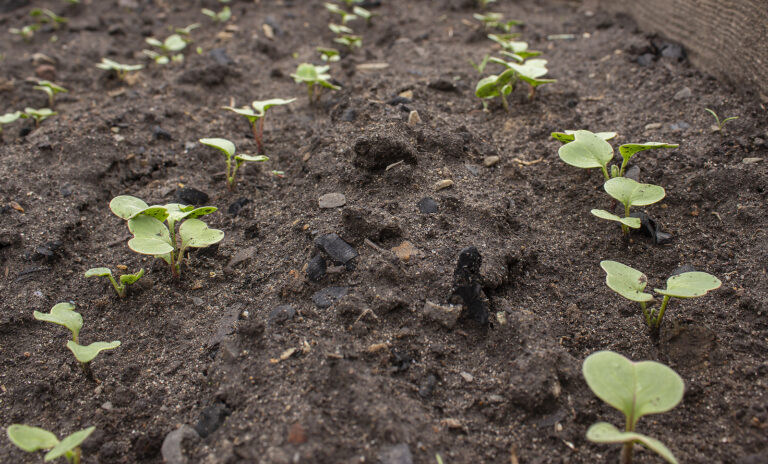
Thinning early (when seedlings are 2–3 inches tall) guarantees straight roots because crowded seedlings twist around each other.
The Board Method for Even Germination
Slow germination is the biggest challenge—parsnip seeds can take 10–21 days to sprout. Even moisture is essential.
My proven germination method:
- Prepare the row and sow seeds.
- Water thoroughly.
- Lay wooden boards directly over the seed row.
- Check daily.
- Remove the boards as soon as you see green tips emerging.
This method keeps soil perfectly moist and has given me the most uniform rows of straight-rooted parsnips.
Keep Moisture Consistent After Sprouting
Parsnip seedlings are delicate.
- Water gently and consistently.
- Never let the top few inches dry out.
- Avoid heavy irrigation that compacts soil on top of the seedlings.
A light mulch of screened compost helps maintain even moisture without crusting.
Avoid Early Fertilizer—Especially Nitrogen
Parsnips need very little feeding early on.
- High nitrogen encourages leafy tops, not roots.
- Excess fertility can create forked, hairy roots.
- Compost at planting is usually enough.
In my garden, feeding parsnips early always resulted in misshapen roots—so now I let them grow slowly and naturally through spring.
Protect Seedlings from Heat and Crusting
If temperatures spike, parsnip seedlings can stall.
Early protection options:
- Shade cloth during heatwaves
- Light compost mulch to prevent surface crusting
- Daily light watering in the morning
Seedlings grown under gentle, even conditions always develop better taproots.
Final Thought
Planting parsnip seeds isn’t difficult, but it does demand precision: a loose, stone-free bed; fresh seed; shallow, thick sowing; and consistent moisture. These steps—especially the board method—have produced long, straight, sweet parsnips for me year after year. With careful seedbed prep and patient germination, you can enjoy flawless roots every time.
Parsnip Learning Hub
Start here: How to Plant, Grow, and Harvest Parsnips: A Complete Guide
Planting & Timing
- When to Plant Parsnips: Best Soil Temperature & Seasonal Timing Explained
- How to Prepare Soil for Parsnips: Bed Prep, pH, and Amendments
- Parsnip Seed Germination Tips: How to Ensure Even, Fast Sprouting
Location & Setup
- Where to Grow Parsnips: Sun, Soil, and Garden Bed Requirements
- How to Grow Parsnips in Raised Beds
- Growing Parsnips in Containers: Soil Mix, Size, and Yield Expectations
Planting Techniques
- Parsnips Seed Starting Tips
- How to Plant Parsnip Seeds for Straight, Long Roots
- Parsnip Spacing Guide: Row Spacing, Thinning, and Root Development
Care & Maintenance
- How to Water Parsnips: Moisture Needs at Every Stage
- How to Feed Parsnips: Fertilizer Timing and Organic Amendments
- Parsnip Care Guide: Mulching, Weeding, and Protecting Roots
Companions & Intercropping
Pest & Diseases
Harvest & Kitchen
- How to Harvest and Store Parsnips
- How to Preserve Parsnips: Freezing, Drying, and Cellaring
- Five Ways to Cook and Serve Parsnips
Varieties