How to Grow Arborvitae — Thuja

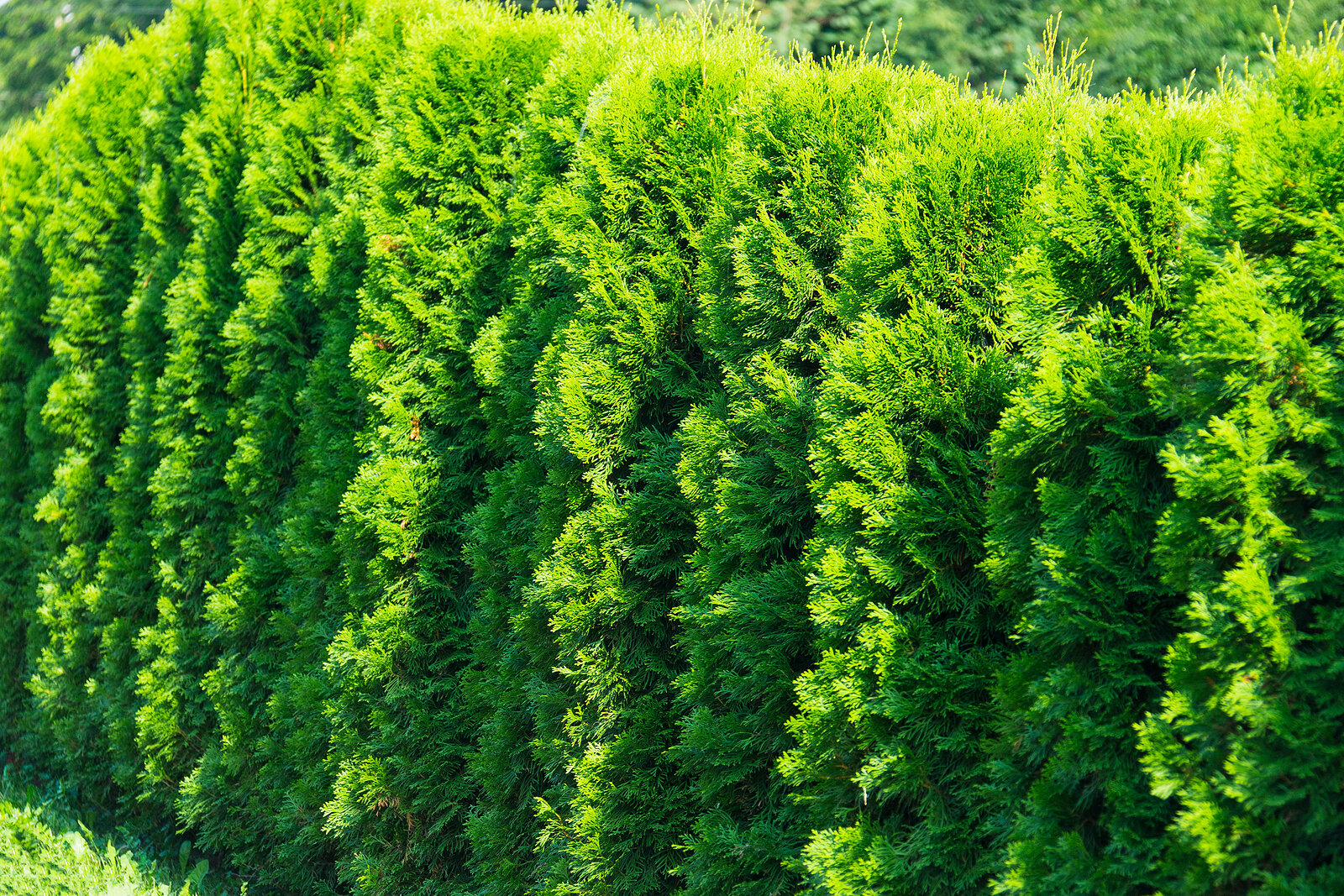
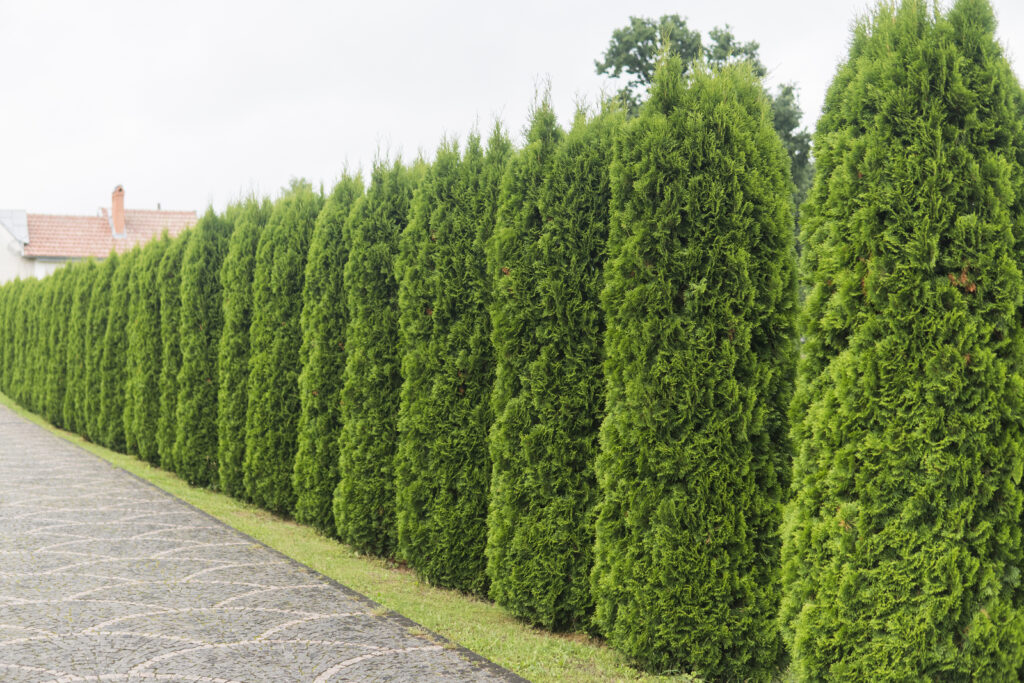
Thuja–commonly called arborvitae–neat, symmetrical, geometrical evergreen plants ideal for hedges and screens. They have a soft, informal look that lends them to mass planting. They can also be grown as specimen plants.
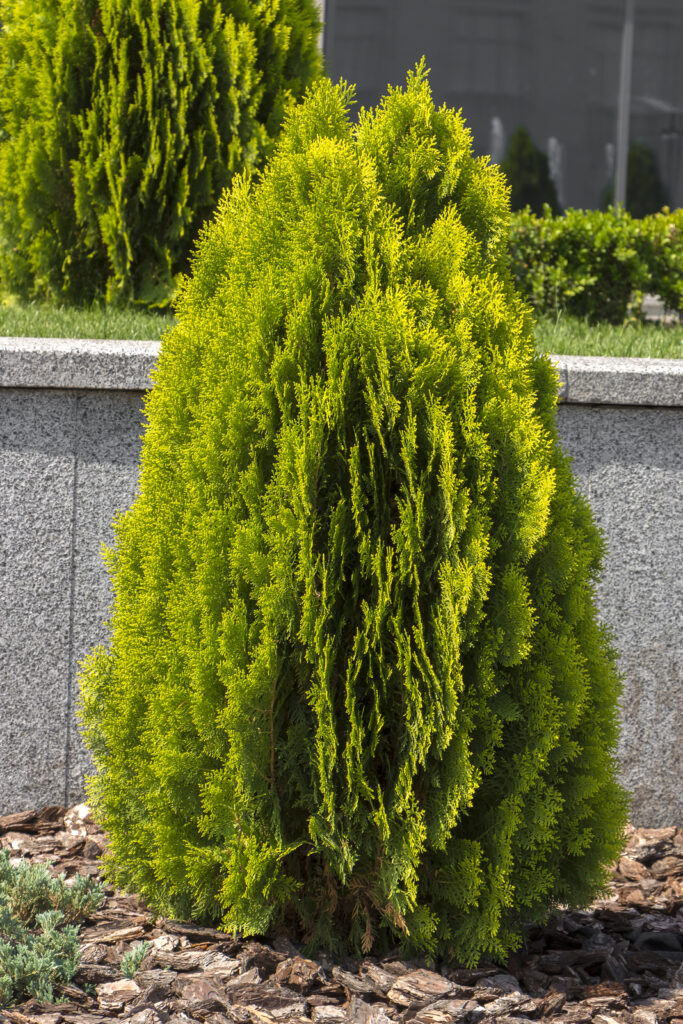
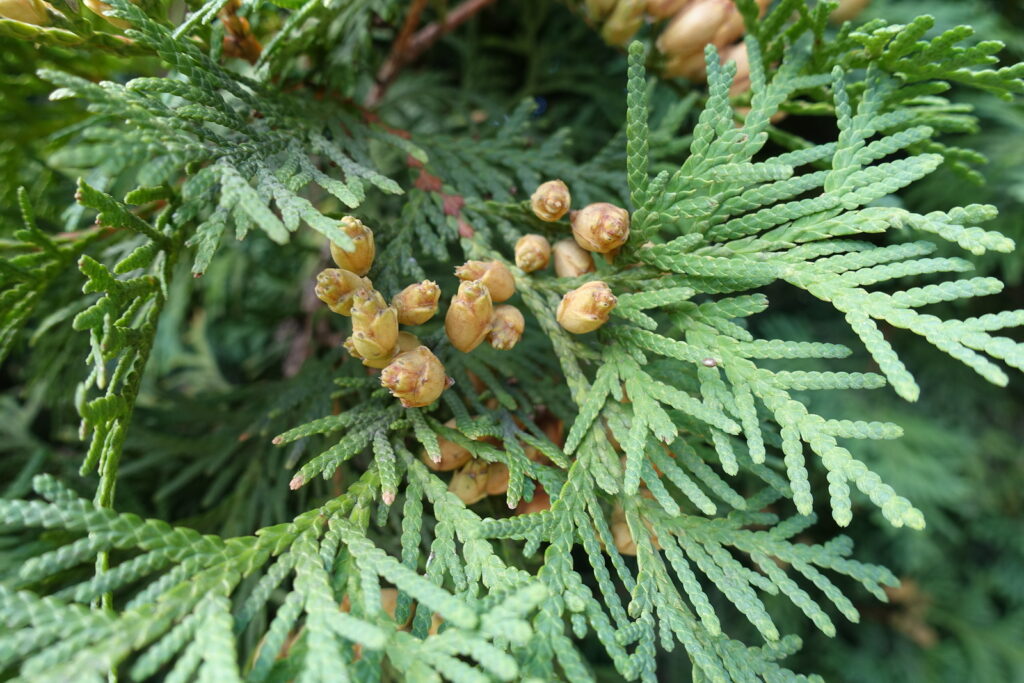
Mature Thjuas have scalelike foliage carried in flat sprays. Varieties often used in landscapes have yellow-green or bright golden yellow leaves. Thuja bears urn-shaped cones with overlapping scales that emerge green then turn brown.
Thujas can be grown in both damp and fairly dry soils. They grow best in just moist, well-drained soil. Thujas do best where there is some humidity; they can suffer where summers are hot and dry.
Thuja is a genus of six species. They range from narrowly to broadly conical, sometimes columnar. They are native to coniferous forests in East Asia and North America.
Know What to Plant This Week
Every week I answer the gardener's most important question: what should I plant now? Get seasonal planting advice free — or go Pro for my full Soil Temperature Garden Report, with soil temperature, moisture, weather trends, and crop-by-crop recommendations.
Get to know Thuja
- Plant type: Evergreen shrubs or trees
- Growing zones and range: USDA Zones 2 or 3 to 7 or 8
- Hardiness: Hardy to Zone 3
- Height and width: Varies
- Growth rate: Slow
- Form and habit: Neat, symmetrical, geometrical that run to globes, cones, cylinders
- Foliage: Juvenile foliage is feathery, with small, needlelike leaves borne on frondlike branches; mature foliage is scale-like, carried in flat sprays; foliage is often yellow green or bright golden yellow and aromatic
- Flowers: Inconspicuous
- Fruits: Urn-shaped cones with overlapping scales are .5 inch (1.3cm) long, green turning brownish; male cones are small and ovoid
- Uses: Hedges, screens, gardens, landscapes, shrubs, specimen trees
- Common name: Arborvitae
- Botanical name: Thuja
- Family name: Cupressaceae
- Origin: North America and eastern Asia
Where to plant Thuja
- Plant Thuja in full sun or partial shade in hot-summer areas.
- Thuja will take both damp and fairly dry soils, but they grow best in deep, well-drained fertile, moist soil; tolerates wet soil and clay.
- Thuja need humidity and suffer in regions where summers are hot and dry.
When to plant Thuja
- Sow seed in late winter in containers in a cold frame.
- Set container-grown plants in the garden in spring or autumn.
Planting and spacing Thuja
- Thuja look better when mass planted because they have a softer, more in.
- Thuja trees are shallow rooted in wet soil and thus mire likely to blow over in a storm.
- Plant Thuja trees 20-30 feet (6-9m) apart.
How to water and feed Thuja
- Give Thuja regular to moderate water.
- Feed Thuja with an all-purpose organic fertilizer in spring
How to care for Thuja
- Avoid storm damage by pruning young Thuja trees to a single leader or by tying multitrunked trees with an encircling support of twine from the winter.
- Prune Thuja before spring growth.
- Trim Thuja hedges in spring and late summer.
Thuja pests and diseases
- Thuja are susceptible to attacks by caterpillars (including bagworms), bark beetles, weevils, mites, and scale insects.
- Butt rot, twig dieback, gray mold (Botrytis), mushroom root rot, and needle blights are also common.
Thuja propagation
- Insert semi-ripe cuttings in late summer.
Thuja varieties to grow
- Thuja occidentalis, American arborvitae, Eastern arborvitae, native to eastern U.S. Upright, open growth to 30-60 feet (10-18m) tall and 10-15 feet (3-5m) wide, with branches that tend to turn up at ends. Leaf sprays bright green to yellowish green. Foliage turns bronze in severe cold. The species itself is seldom seen, but smaller garden varieties are common. Among these, the taller ones make good informal or clipped screens, while lower kinds are often used around foundations, along walks or walls, as hedges.
- T. orientalis, Oriental arborvitae, conical or irregularly crowned tree with fibrous, red-brown bark and flat, vertical, irregularly arranged sprays of scale-like, blunt, triangular, unscented, mid-green or yellow-green leaves, which often turn bronze in winter. Upright, flask-shaped, gray-bloomed female cones, .75 inch (2cm) long, have 3 or 4 pairs of scales, each with 2 prominent, dorsal, reflexed hooks. To 50 feet (15m) tall and 20 feet (6m) wide. China, Iran.
- T. plicata, Western red cedar, slender, drooping branchlets, set closely with dark green leaf sprays. Unlike many forms of T. occidentalis, this species has foliage that does not discolor in cold weather. Single trees are magnificent in large lawns, but lower branches spread quite broadly and trees lose their characteristic beauty when these are cut off. An alternative to the more pest-ridden Cupressocyparis leylandii. To 70-120 feet (20-35m) tall, 20-30 feet (6-9m) wide