How to Grow Pampas Grass – Cortaderia

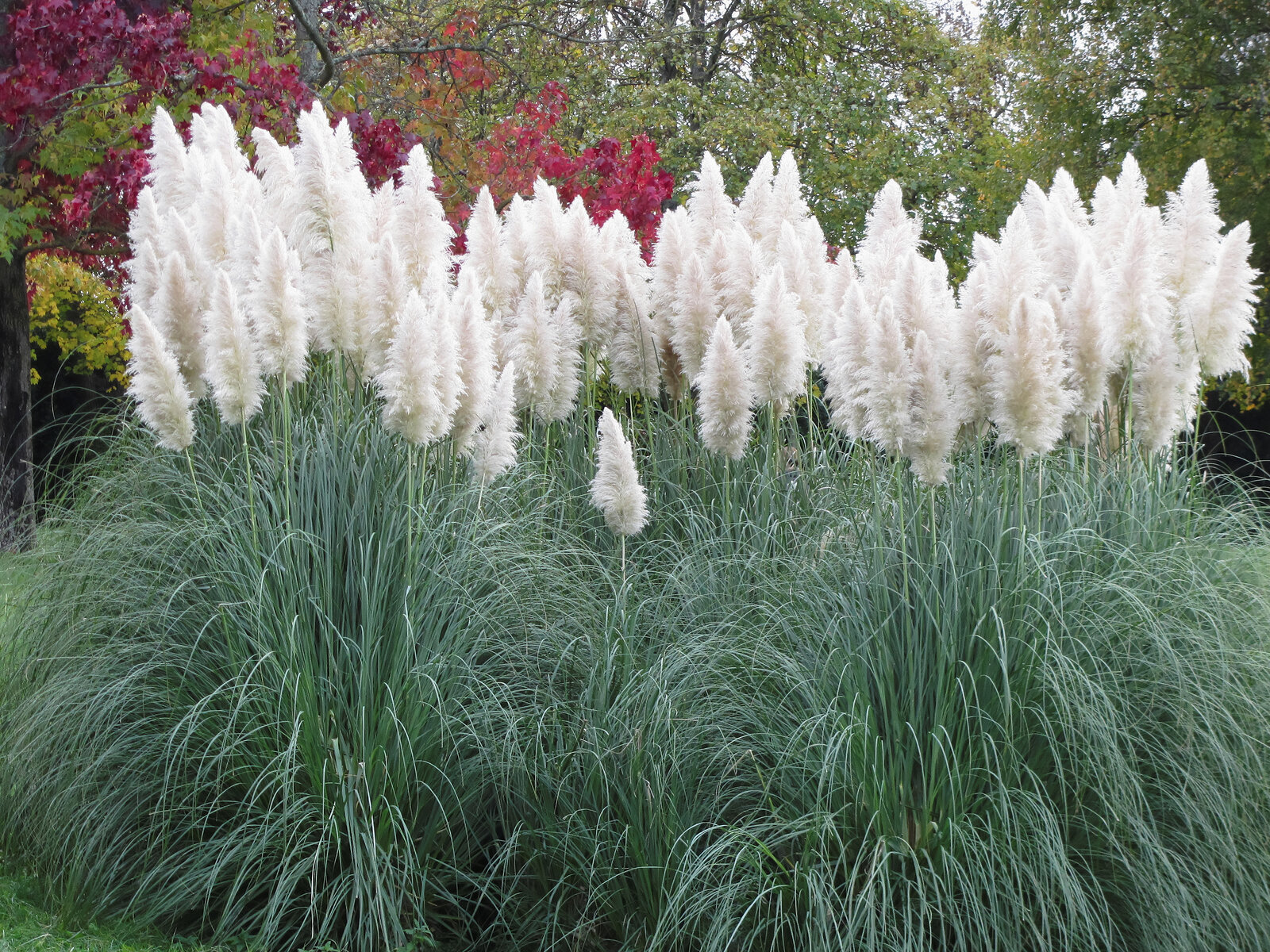
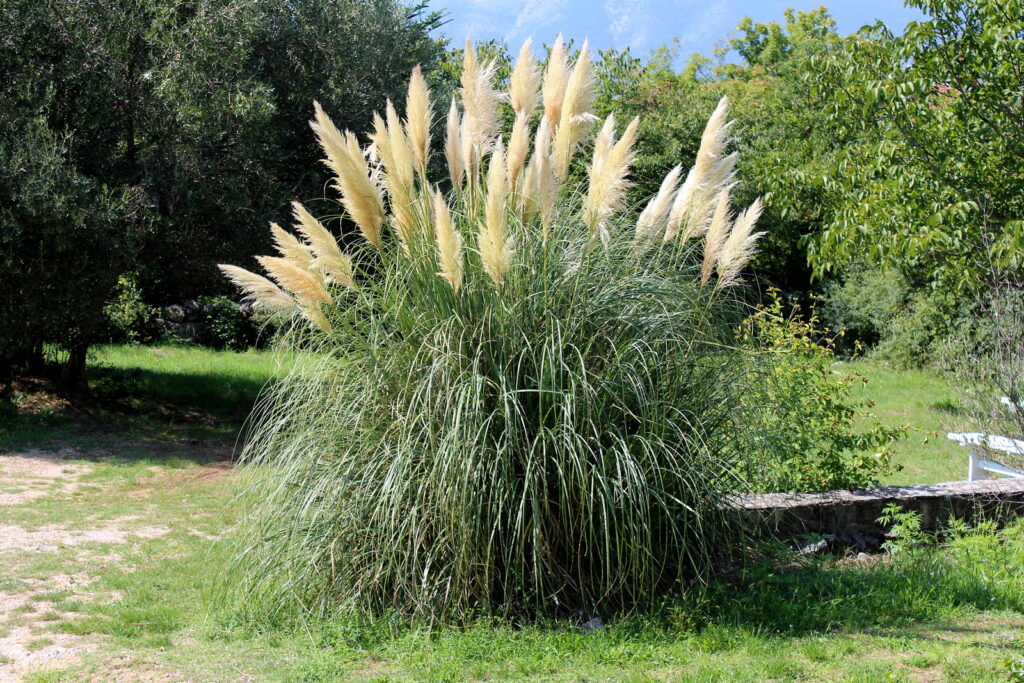
Cortaderia — commonly called Pampas grass — is a fast-growing ornamental grass that has a fountain-like form growing in dense tussocks. It can grow to 20 feet (6m) tall, as much as 8 feet in one season.
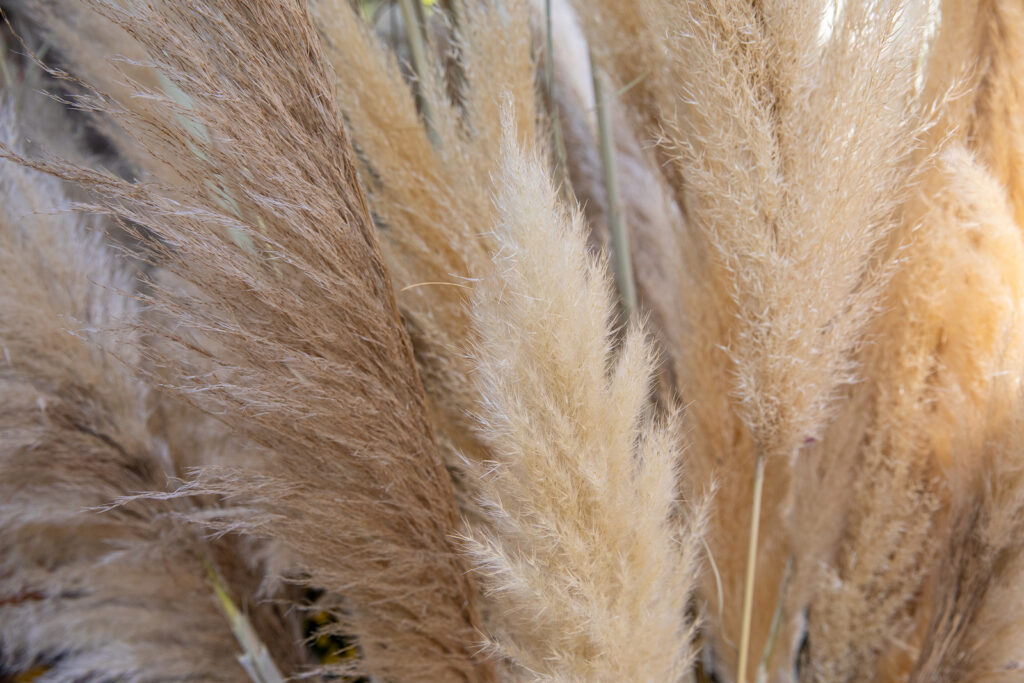
Cortaderia has arching, narrow, and arching saw-toothed leaves. It bears long white to chamois or pink flower plumes in late summer. The flower plumes are up to 3 feet (1m) long.
Cortaderia can be overwhelming in the landscape. It should be placed at the back of a border or grown as a free-standing specimen. Cortaderia readily self-sows. It can become invasive if not tended to. It should not be planted where it can escape into the wild.
Cortaderia is a genus of about 23 species of perennial evergreen or semi-evergreen grasses. Cortaderia is native to grasslands, often near water, in New Zealand, New Guinea, and South America.
Know What to Plant This Week
Every week I answer the gardener's most important question: what should I plant now? Get seasonal planting advice free — or go Pro for my full Soil Temperature Garden Report, with soil temperature, moisture, weather trends, and crop-by-crop recommendations.
Get to know Cortaderia
- Plant type: Evergreen or semi-evergreen giant ornamental grass
- Growing zones and range: Zones 6 to 9
- Hardiness:
- Height and width: 5-12 feet x 5 feet (1.5-3.7m x 1.5m)
- Growth rate: Fast
- Form and habit:
- Foliage: A fountain of saw-toothed, grassy leaves that are stiff, flat, narrowly linear, and often glaucous
- Flowers: Majestic feathery plumes; female plants have the showiest plumes; flower color varies from silvery to cream white or pink, 1-3 foot (.3-.9m), usually male or female spikelets on separate plants, but occasionally hermaphroditic; female spikelets have long, silky hairs at the base
- Fruits:
- Bloom time: Late summer through winter
- Uses: Dramatic accent, back of the border, or as free-standing specimen
- Garden companions:
- Common name: Pampas grass
- Botanical name: Cortaderia
- Family name: Poaceae (Gramineae)
- Origin: Argentina, New Zealand, New Guinea, and South America
Where to plant Cortaderia
- Plant Cortaderia in full sun.
- Plant Cortaderia in fertile, well-drained average soil.
- In cold areas, grow Cortaderia in a container and bring it inside in winter.
When to plant Cortaderia
- Set container-grown Cortaderia in the garden in spring or autumn.
- Sow Cortaderia seed at 55-64°F (13-18°C) in spring.
Planting and spacing Cortaderia
- Give Cortaderia ample space to develop; allow at least 5 feet (1.2m) between plants.
How to water and feed Cortaderia
- Keep Cortaderia continuously moist.
- Feed Cortaderia with an all-purpose organic fertilizer in spring.
How to care for Cortaderia
- Before new growth begins in spring, cut Cortaderia back and remove dead material collected near base, take care to avoid sharp leave margins.
- Protect crowns of young plants during winter.
Cortaderia pests and diseases
- Cortaderia can develop Helminthosporium leaf spot.
Cortaderia propagation
- Sow seed in spring or autumn in a greenhouse or indoors.
- Divide Cortaderia in spring.
Cortaderia varieties to grow
- Cortaderia richardii, Toe toe, densely tufted, clump-forming, evergreen, perennial grass with recurved, leathery, pale olive-green leaves, to 4 feet (1.2m) long. In early and midsummer, arching stems, to 9 feet (2.5m) tall, bear shaggy, pyramidal, creamy white or silvery white panicles, 24 inches (60cm) long, which persist into winter. To 9 feet (2.5m) tall and 6 feet (1.8m) wide. New Zealand.
- C. selloana (C. argentea), Pampas grass, densely tufted, clump-forming, evergreen, perennial grass with arching, glaucous, mid-green, to 8 feet (2.5m) or more long. In late summer, silky, silver, often pink- or purple- flushed spikelets are borne in pyramidal to oblong panicles, 18-36 inches (45-90cm) long, on erect stems. To 8-10 feet (2.5-3m) tall and 5 feet (1.5m) wide or more. Temperate South America.
- ‘Andes Silver’ is 6-7 feet (1.8-2.1m) tall with large silvery flower plumes.
- ‘Patagonia’ is 5-6 feet (1.5-1.8m) tall with striking silver plumes and bluish, gray-green foliage.
- ‘Pumila’ is a dwarf with creamy white flowers on 3-4 foot (.9-1.2m) stalks. It is very floriferous.