Carrot Companion Plants: What Grows Well Together

Companion planting is a time-tested gardening strategy that improves plant health, saves space, and boosts yields by pairing crops with mutually beneficial traits. When it comes to growing carrots, choosing the right companion plants can help deter pests, enhance soil health, and make the most of your garden layout.
Why Companion Planting Matters for Carrots
Carrots are relatively low-maintenance, but they can benefit greatly from the right neighbors. They grow best in loose, well-draining soil and prefer cool weather. Carrots are slow to germinate and slow to grow, which means they appreciate companions that offer protection, repel pests, or mature quickly.
My Insight:
I’ve grown carrots for more than 30 years in both large beds and small kitchen gardens. Pairing carrots with the right crops—especially those that grow quickly or offer shade—helps keep the soil cool and reduces competition from weeds during the critical early stages of growth. I’ve found that the right pairings not only boost yields but reduce pest damage significantly.
Best Companion Plants for Carrots
Here are some of the best companions for carrots, based on their benefits and compatibility:
1. Onions and Leeks
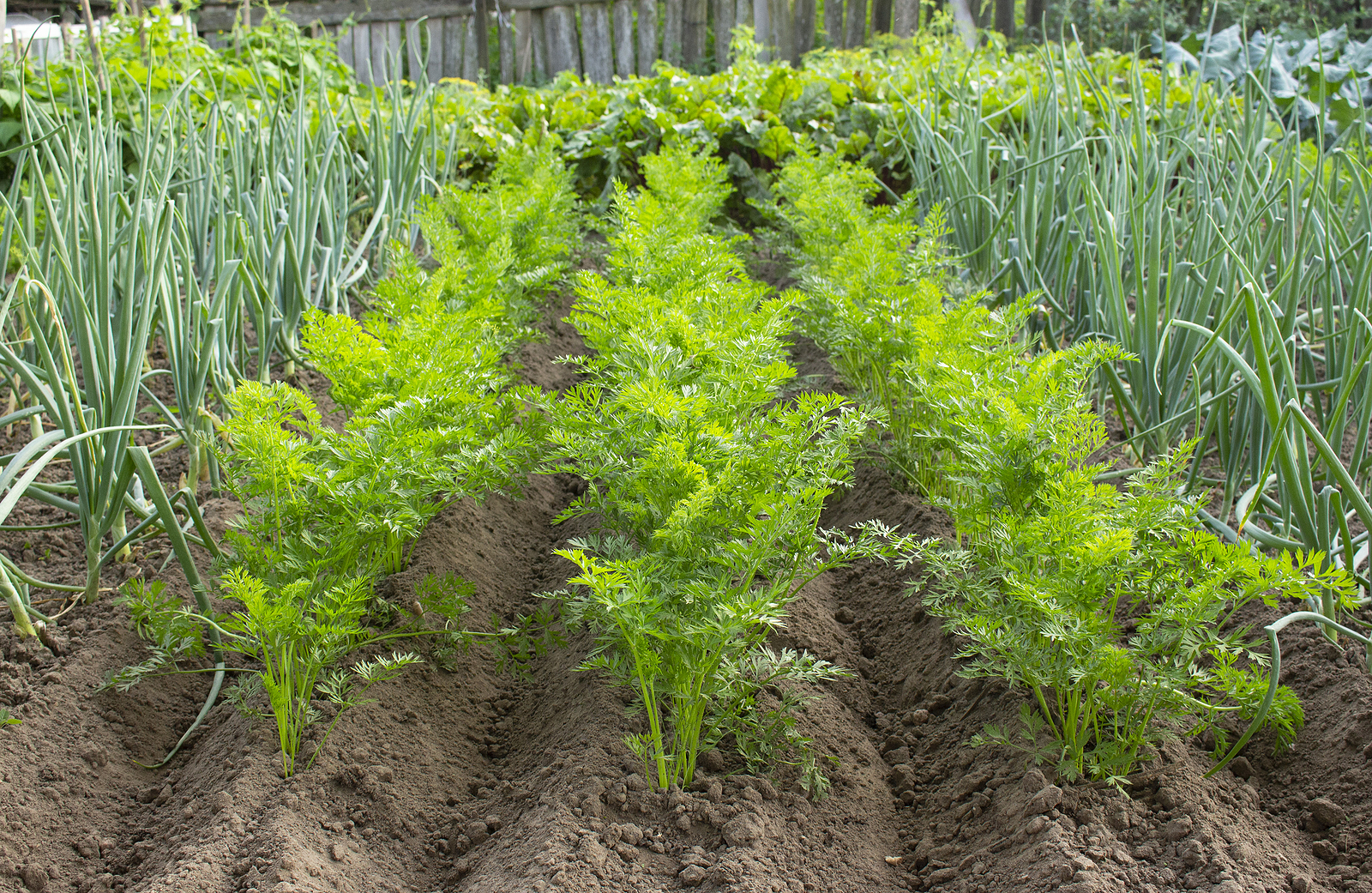
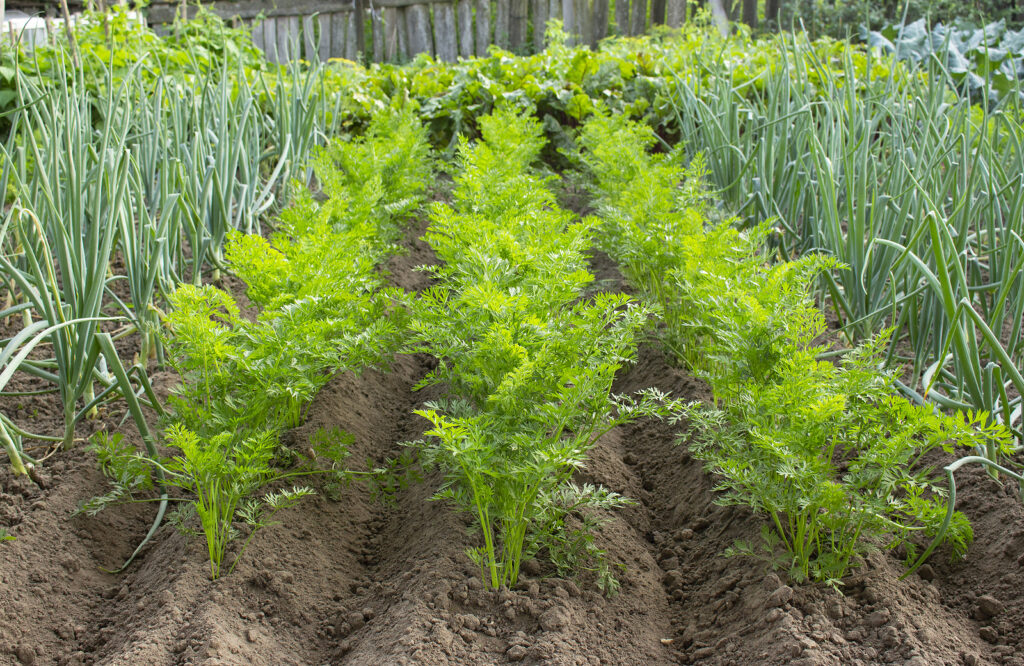
These alliums naturally repel carrot flies and other root maggots that commonly attack carrots. Their pungent smell confuses pests and protects both crops.
Tip: Interplant rows of carrots and onions or leeks to maximize this benefit.
2. Radishes
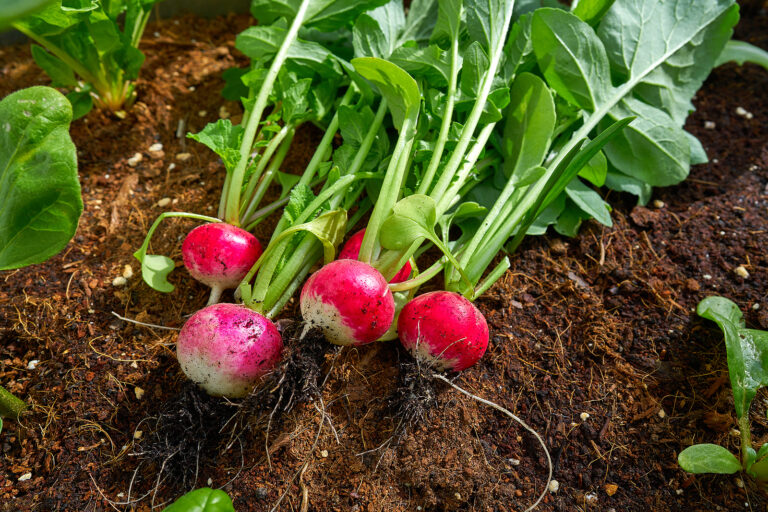
Radishes germinate quickly and help break up the soil surface, making it easier for slow-sprouting carrots to emerge. They also mark the row so you don’t disturb the carrot seedlings while waiting for them to sprout.
Tip: Harvest radishes early—about 3–4 weeks after sowing—before they compete with carrots for space.
3. Lettuce
Lettuce grows quickly and shades the soil, helping to retain moisture and suppress weeds around slower-growing carrots.
Tip: Loose-leaf varieties are best; they mature quickly and don’t take up much space.
4. Tomatoes
The feathery foliage of carrots can deter pests like aphids that target tomatoes. Meanwhile, the bushy tomato plants offer dappled shade that keeps carrot roots cooler in warm weather.
Note: Don’t crowd the tomatoes. Use compact or determinate varieties near carrots.
5. Chives
Like onions, chives have a strong aroma that can deter carrot root flies. They’re also great for attracting beneficial insects.
6. Marigolds
These colorful flowers help repel a wide range of garden pests, including nematodes and aphids. Their scent can confuse insects searching for carrot tops.
Plants to Avoid Near Carrots
Not all neighbors are good ones. Some plants compete for nutrients or attract pests that bother carrots.
1. Dill and Cilantro
These members of the carrot family can cross-pollinate or attract similar pests. Dill also produces chemicals that can inhibit carrot growth if planted too closely.
2. Parsnips
Closely related to carrots, parsnips are vulnerable to the same diseases and pests. Avoid growing them together to reduce risk.
3. Potatoes
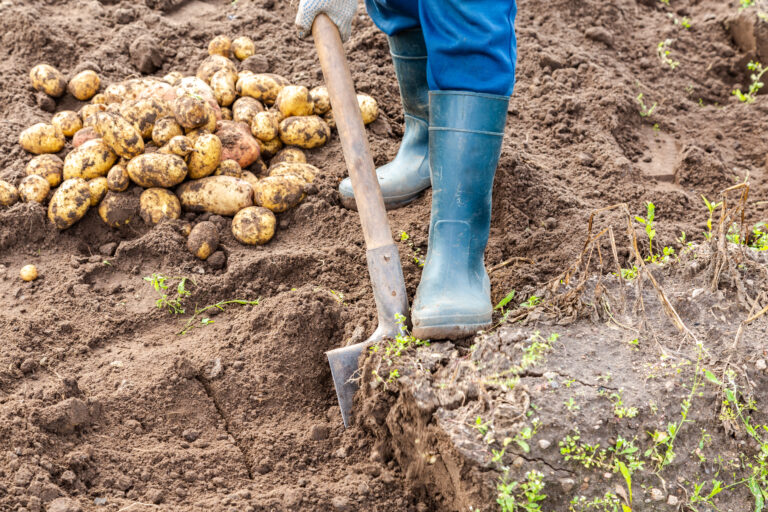
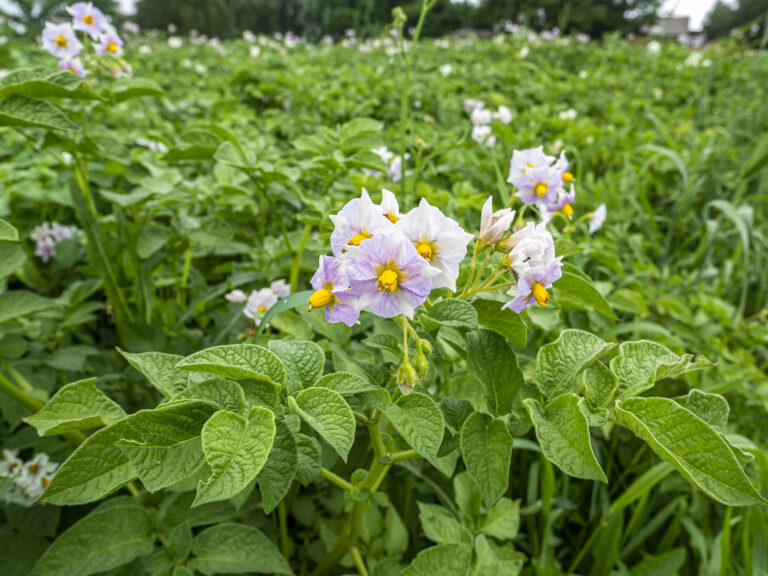
Potatoes and carrots compete heavily underground for nutrients and space. Both are root crops, and planting them together can reduce yields for both.
My Go-To Companion Strategy
In my raised beds, I often sow carrots between rows of onions and lettuce. The onions deter pests, the lettuce offers ground cover, and the carrots grow slowly in the protected, well-spaced environment. This layout has reliably given me healthy roots and clean, flavorful harvests.
Final Tips for Companion Planting Success
- Rotate crops yearly to prevent disease buildup in the soil.
- Mulch around your companion plants to suppress weeds and retain soil moisture.
- Thin seedlings carefully to avoid disturbing carrot roots.
- Observe your garden: what works one season may need adjusting the next based on spacing, shade, and pest pressure.
By integrating companion planting into your carrot-growing plan, you create a balanced and productive garden ecosystem that supports your crops naturally.
Carrot Growing Hub
The Ultimate Guide to Growing Carrots from Seed to Harvest
1. Getting Started (Site & Timing)
- Where to Plant Carrots for the Best Root Development
- When to Plant Carrots: Timing for Every Season
- Carrots Seed Starting Tips
- How to Plant and Grow Carrots in Winter
- Grow Carrots Anytime of the Year in Five Steps
- How to Grow Carrots in Containers or Raised Beds
2. Planting & Varieties
- How to Plant and Space Carrots for Optimal Growth
- Carrot Varieties by Type: Best Picks for Home Gardeners
- Orange, Yellow, Red, Purple, and White Carrots: How to Choose the Right One
- Carrot Companion Plants: What Grows Well Together
3. Growing & Care
- Caring for Carrots Throughout the Growing Season
- How to Water Carrots the Right Way
- Carrot Crop Rotation: What to Plant Before and After
- Carrot and Parsnip Growing Problems: Troubleshooting
4. Harvest, Storage & Use