How to Prevent and Treat Squash Pests and Diseases Naturally

Growing squash is incredibly rewarding, but if you’ve ever battled squash vine borers, aphids, or powdery mildew, you know how quickly pests and diseases can take over. Over the years, I’ve dealt with my fair share of squash plant problems—watching healthy vines suddenly wilt, fruit fail to develop, and leaves become covered in white fungal spots. Through hands-on experience, I’ve learned that prevention is key, and the best way to keep squash plants thriving is by using organic, natural methods that protect both your plants and the environment.
In this guide, I’ll share tried-and-true techniques I’ve used in my own garden, from companion planting and row covers to homemade organic sprays and beneficial insects that control pests naturally. Whether you’re dealing with cucumber beetles, squash bugs, or fungal infections, you’ll find safe, effective solutions to keep your plants healthy without resorting to chemical pesticides.
Let’s take a proactive approach and keep your squash plants strong all season long!
Squash can be susceptible to several garden pests and diseases. When it comes to solving plant problems, diagnosis is 9/10 of the cure. You must know what is wrong with your plant before you can select the right control measure.
Seed and seedling problems
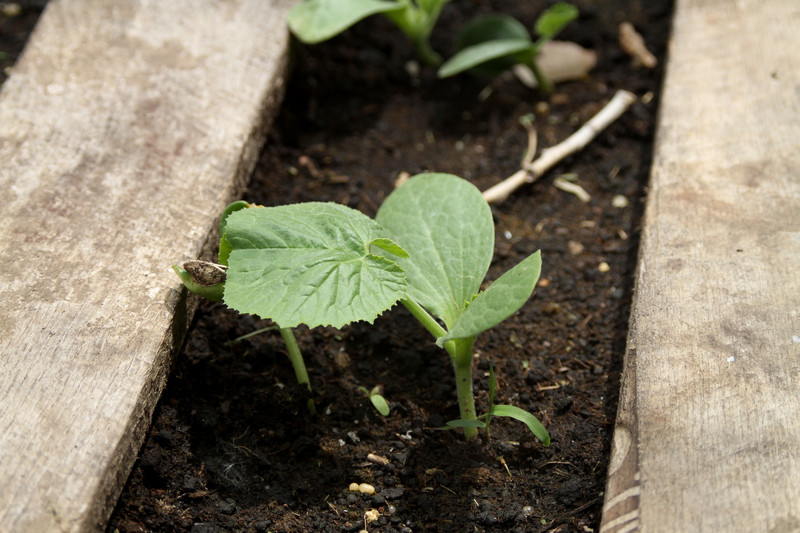
Seeds fail to germinate.
Some squash seeds are “hard”–that is naturally resistant to the uptake of water which results in sprouting. To overcome “hard” seeds, increase germination, and slightly decrease germination time, soak the seed in tepid water for 24 hours before sowing. Dry the seed on a paper towel before planting. Soak seeds in tepid water for 24 hours before planting; this will increase germination and decrease sprouting time slightly. Dry seed before planting.
Seedlings are eaten or cut off near the soil level.
Cutworms are gray grubs ½- to ¾-inch long that can be found curled under the soil. They chew stems, roots, and leaves. Place a 3-inch paper collar around the stem of the plant. Keep the garden free of weeds; sprinkle wood ash around the base of plants.
Leaf problems
Leaves curl under and become deformed and yellowish.
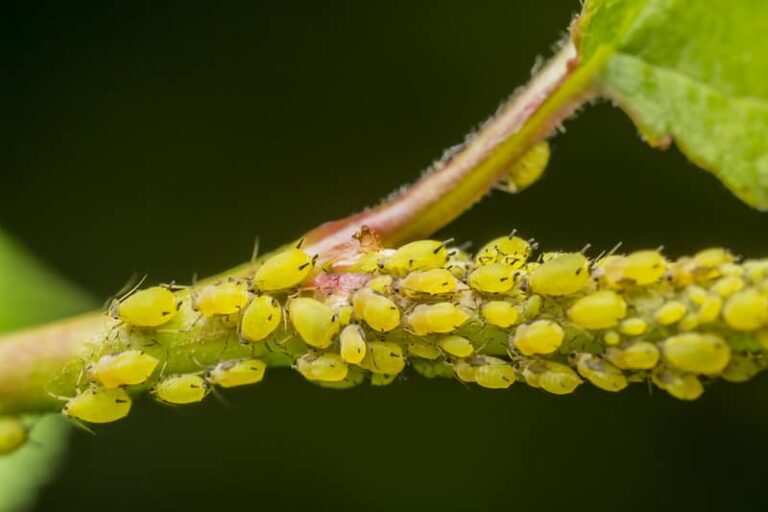
Aphids are tiny, oval, and yellowish to greenish pear-shaped insects that colonize the undersides of leaves. They leave behind sticky excrement called honeydew which can turn into a black sooty mold. Use insecticidal soap.
Leaves turn pale green, yellow, or brown; dusty silver webs on the undersides of leaves and between vines.
Spider mites suck plant juices causing stippling. Spray with water or use insecticidal soap or rotenone. Ladybugs and lacewings eat mites.
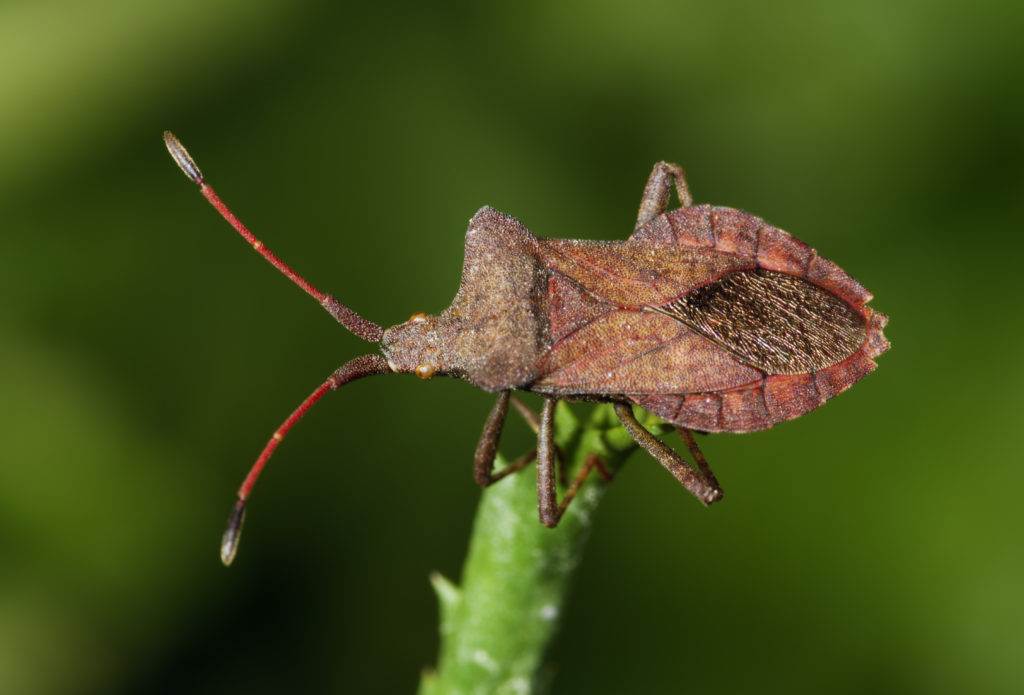
Leaves have yellow specks that turn brown, then black and crisp; vines wilt from the point of attack.
A squash bug is a flat, shield-shaped black or brownish bug with a triangle on its back; it sucks juices from plants. Trap adults beneath boards in spring, handpick, and destroy. Look under leaves for bugs.
Leaves yellow; tiny white-winged insects around plants.
Whiteflies will congregate on the undersides of leaves and fly up when disturbed. Remove infested leaves and the whole plant if the infestation is serious. Introduce beneficial insects into the garden.
Holes chewed in leaves, leaves skeletonized; runners, and young fruit scarred.
The spotted cucumber beetle is greenish, yellowish, ¼ inch (7mm) long with black spots and a black head. The striped cucumber beetle has wide black stripes on the wing covers. Handpick; mulch around plants; plant resistant varieties; dust with wood ashes. Cultivate before planting to disrupt the insect life cycle.
Runners wilt suddenly; holes in stems near the base of the plant.
Squash vine borer is a fat, white caterpillar with a brown head that emerges in late spring. It bores into stems to feed causing plants to wilt. Look for entrance holes where frass may accumulate; slit vine with a knife and remove borer; bury runner at that point to re-root. Exclude adult moths with floating row covers. Time planting to avoid insect growth cycle. Plant disease-resistant varieties.
Round to angular spots on leaves, reddish brown to black.
Anthracnose is a fungus disease that spreads in high humidity and rainfall. Leaves may wither and fall. The plant may die back. Generally found in eastern North America. Spray or dust with a fixed copper- or sulfur-based fungicide every 7 to 10 days. Remove and discard infected plants. Avoid working in the garden when it is wet which can result in the spread of spores. Keep tools clean.
Mottled, distorted leaves.
Mosaic virus causes leaves to become thickened, brittle, and easily broken from plants; plants are stunted and yields are poor. The virus is spread from plant to plant by aphids and leafhoppers. Remove diseased plants. Remove broadleaf weeds that serve as virus reservoirs.
Water-soaked blotches on leaves–not enlarging past leaf veins; water-soaked spots can appear on fruits.
Angular leaf spot or bacterial spot is a waterborne bacterium that causes irregular geometric patterns on leaves. Spots may turn yellow and crisp. Avoid wetting foliage with irrigation. Prune off infected leaves and stems. Clean up garden. Plant disease-resistant varieties. Rotate crops for up to 2 years.
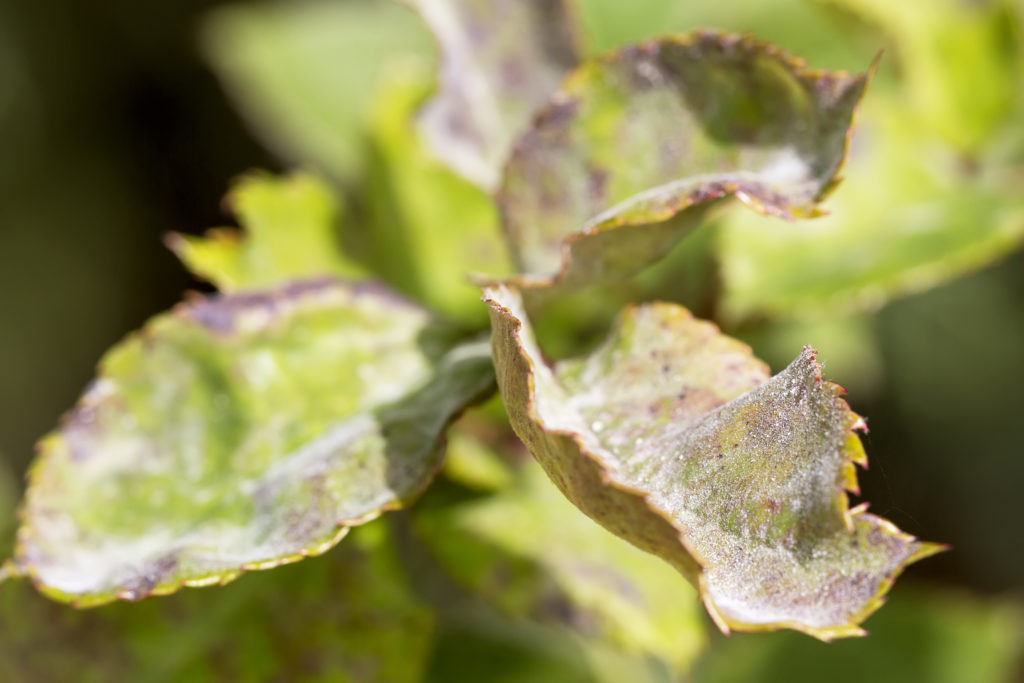
Round white powdery spots and coating on leaves.
Powdery mildew is caused by fungal spores. Spores germinate on dry leaf surfaces when the humidity is high; spores do not germinate on wet leaves. Common in late summer or fall but does not result in the loss of the plant. Avoid water stress. Pick off infected leaves.
Irregular yellowish to brownish spots on upper leaf surfaces; grayish powder or mold on undersides.
Downy mildew is caused by a fungus. Improve air circulation. Plant disease-resistant varieties. Rotate crops. Keep the garden free of plant debris.
Water-soaked spots on leaves; spots become circular with gray centers.
Leaf spot or Septoria leaf spot is a fungus disease. Plant disease-resistant varieties. Rotate crops. Keep the garden free of plant debris. Apply copper dust or liquid copper spray every 7 to 10 days.
Water-soaked spots on the leaves, stems, and fruits become covered with cottony mold.
Bacterial wilt clogs the circulatory system of plants. It is spread by cucumber beetles and is seen often where the soil stays moist. Remove and destroy infected plants before the disease spreads. Make sure the soil is well drained. Control cucumber beetles with rotenone or sabadilla. Rotate crops.
Whole plant problems
Vines wilt suddenly and die starting with one or two leaves.
Bacterial wilt clogs the circulatory system of plants. It is caused by bacteria that live in cucumber beetles and is seen often where the soil stays moist. Remove and destroy infected plants before the disease spreads. Control cucumber beetles with rotenone or sabadilla. Wash hands and clean tools with a bleach solution.
Plants are stunted and yellow; runners gradually die.
Fusarium wilt is a fungal disease that infects plant vascular tissues. Fungal spores live in the soil and can be carried by cucumber beetles. Plant disease-resistant varieties. Rotate crops. Remove and destroy infected plants. Fungicides are not effective.
Holes in leaves and flowers; tunnels in vines and fruits.
Pickle worms are the larvae of night-flying moths. Moths lay eggs on squash plants. Caterpillars feed on leaves and inside vines and fruits. Pupae may be found inside rolled leaves. Exclude moths with floating row covers. Plant fast-maturing varieties to promote strong growth before pickle worms attack. Plant a few squashes as trap crops. Keep the garden clean.
Flower problems
Early flowers don’t set fruit.
A couple of possible reasons: (1) the first flowers to appear are male; female flowers appear next. Fruit is produced by female flowers. Wait until female flowers appear and are pollinated. (2) There may not be enough pollinators, mostly bees, to carry the pollen from male to female flowers. Handpick off male flowers and dust the pollen into the female flowers using a craft brush.
Fruit problems
Water-soaked or pale green spot on leaves that turn white; fruit cracks.
Scab is caused by a soilborne bacterium. The disease can be cosmetic. Plant disease-resistant varieties. If scab occurs, change varieties next year. Sulfur may be worked into the soil to make it slightly acidic and reduce disease.
Stems on older plants appear water-soaked and turn into cracked brown cankers; fruits become water-soaked.
Gummy stem blight and black rot are fungus diseases. Infections can girdle stems and can cause collapse. Remove and destroy infected vines. Rotate crops where fungus can persist. Grow powdery mildew-resistant plants.
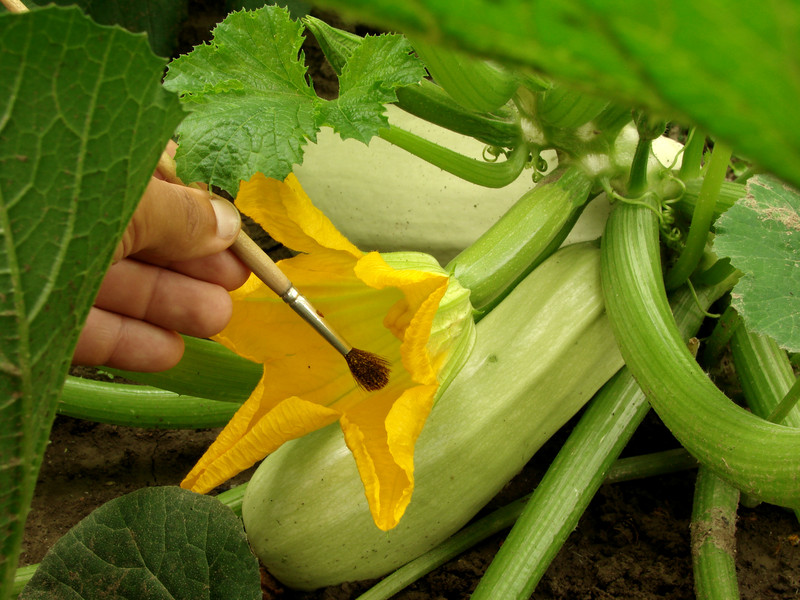
Hand pollinate female squash blossom
Few fruits form even though plants are flowering.
Not enough bees. The more bees the more flowers that will be pollinated and likely to set fruit. The average size of squash is increased when the vine is pollinated by many bees. Use chemical sprays sparingly being careful that pollinators are not harmed.
Small fruits form and then dry up.
Female flowers may have blossomed before the male flowers so the female flowers went unpollinated. When female and male flowers blossom at the same time pollination will occur and fruit will grow.
Dense white mold on blossoms or small fruits.
Choanephora fruit rot is a fungus that grows on blossoms and developing fruit. Remove and destroy infected blossoms and fruits. Keep the garden clean of debris that can harbor fungus. Rotate crops.
Too many fruits on the plant.
Keep fruit picked from summer squash. When fruits are picked, new fruits will form. Winter squash is picked when the shell hardens.
Dark, leathery areas appear on the blossom end of the fruit.
Blossom end rot is caused when there is too little moisture in the soil, particularly when temperatures are greater than 90°F. Sometimes there is a calcium deficiency in the soil which keeps roots from taking up water. Mulch planting beds to keep soil moisture even; water regularly. Test soil for calcium deficiency.
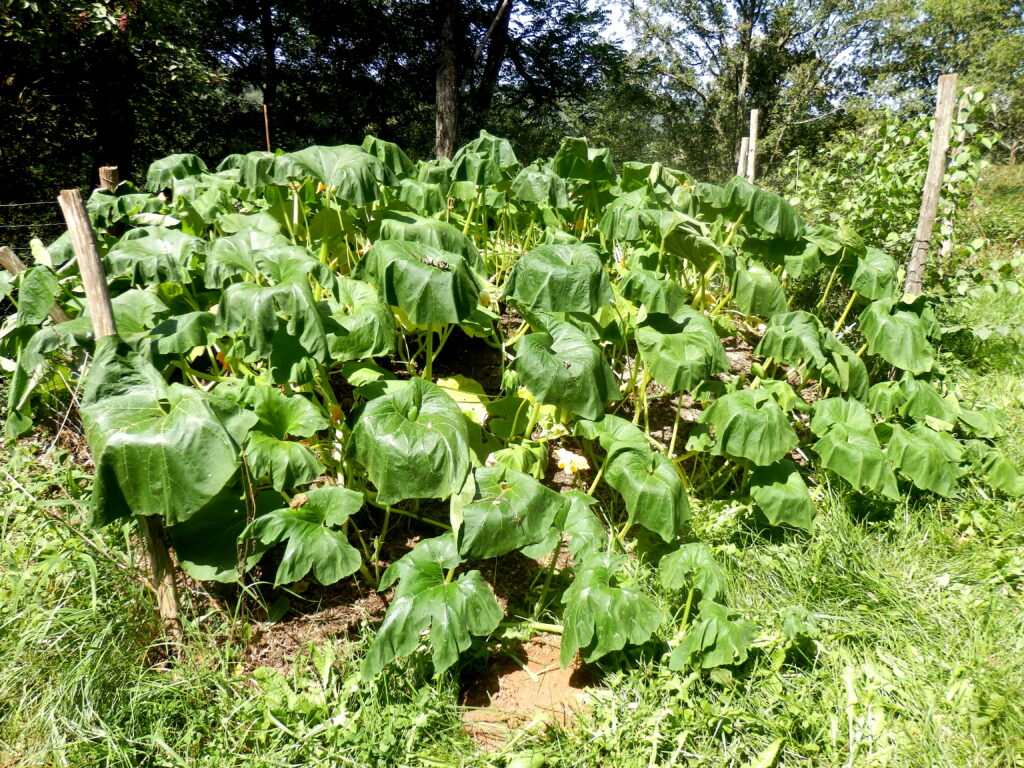
Ways to keep squash plants healthy
Squash growing success will come with a few simple growing strategies:
- Plant several squash plants. This will ensure at least one is successful and survives pests and diseases. Stagger planting times or plant seeds and transplants at the same time for continuous harvest.
- Give squash the space recommended. Check spacing requirements for each variety you grow. If the garden is tight, contain the plant by pinching out the growing tips after a vine has set a few fruits. Don’t grow squash too close together; this will help deter pests and diseases.
- Pick squash at the right time. Pick summer squashes when they are young and tender. Let winter squashes and pumpkins mature until their rinds are dull and hard. Pick and toss any fruit that is discolored or rotting before other plants or fruits are affected.
- Time to plant. Sow squash or set out transplants about 2 weeks after the last expected frost in spring. Sow or plant successive crops 4 weeks later.
- How to plant. Sow seed or set transplants in raised mounds at least 1 foot across. Place a generous amount of aged compost into each planting hill before planting.
- Outwit pests. Cucumber beetles, squash bugs, and squash vine borers must be controlled to successfully grow squash. Place floating row covers over young squash plants until they start to bloom. This will exclude attacking insects until plants are strong enough to withstand pest damage.
- Train plants up stakes or trellises. Training summer squash up stakes or trellises will increase air circulation and keep plants off the ground and clean and away from pests and diseases.
Squash growing success tips
Related posts you might find helpful:
Summer Squash
- How to Grow Summer Squash and Zucchini: A Gardener’s Guide
- Planting and Growing Summer Squash
- Summer Squash Care and Maintenance
- The Best Summer Squash & Zucchini Varieties for Your Garden
- How to Harvest and Store Summer Squash
- Eight Ways to Cook and Serve Summer Squash
Winter Squash
- The Ultimate Guide to Growing Winter Squash
- Planting and Growing Winter Squash
- Winter Squash Care and Maintenance
- The Best Winter Squash Varieties for Your Garden
- Harvesting & Storing Winter Squash for Long-Term Use
- Seven Ways to Cook and Serve Winter Squash
Squash Planting and Care
- Squash Seed Starting Tips: How to Grow Strong, Healthy Plants from the Start
- How to Maximize Squash Pollination for Bigger Harvests
- Growing Squash in Small Spaces: Trellising & Container Growing
- How to Prevent and Treat Squash Pests and Diseases Naturally
- Squash Vine Borer Organic Pest Control
- Squash Bug Organic Pest Control
Books to help you grow: