Cucumbers Growing Problems: Troubleshooting

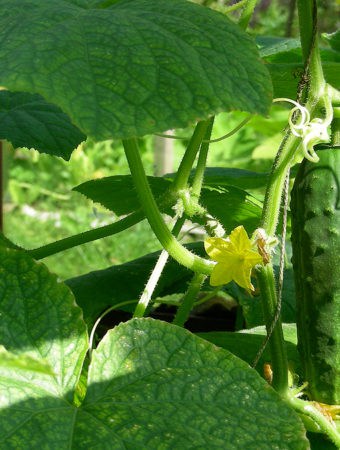
Cucumber flowerCumcumbers for slicing and salads. Cucumbers for pickling. Burpless cucumbers for eating out of hand. Cucumbers for containers. Give cucumbers the right conditions and they will be one of your top producing garden crops.

To keep ahead of cucumber problems, pests and diseases, here is a troubleshooting list of possible cucumber problems with brief control suggestions.

Plants are eaten or cut off near soil level. Cutworms are gray grubs ½- to ¾-inch long that can be found curled under the soil. They chew stems, roots, and leaves. Place a 3-inch paper collar around the stem of the plant. Keep the garden free of weeds; sprinkle wood ash around base of plants.

Small plants turn yellow and break off. Southern corn rootworm is the larvae of the spotted cucumber beetle (See below). Cultivate the soil before planting to expose larvae and interrupt the insect’s life cycle.
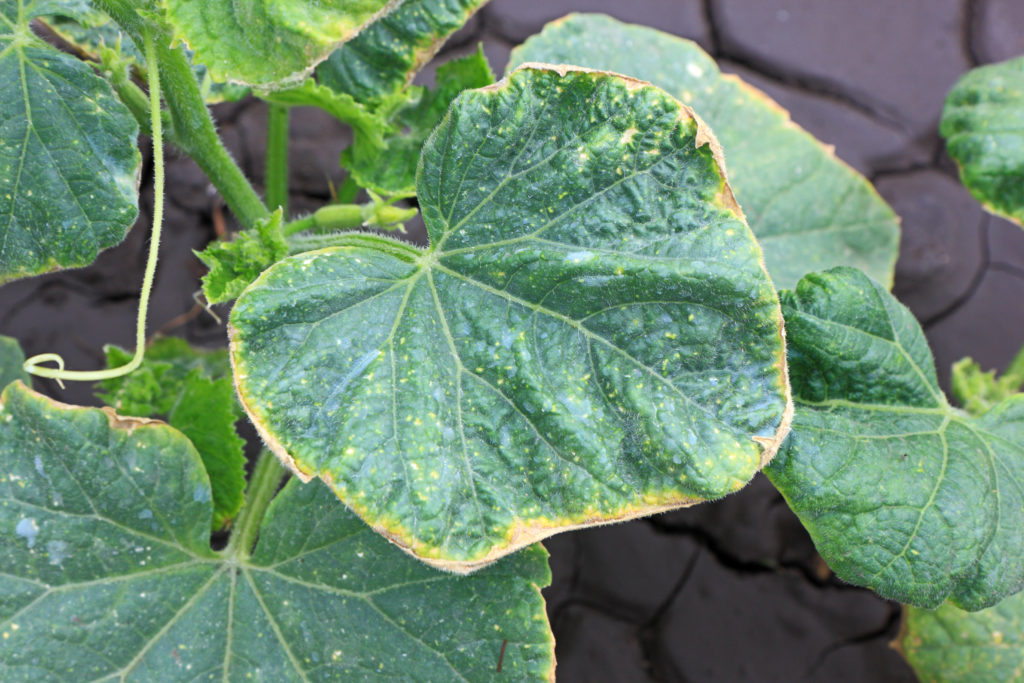
Leaves curl under and become deformed and yellowish. Aphids are tiny, oval, and yellowish to greenish pear-shaped insects that colonize on the undersides of leaves. They leave behind sticky excrement called honeydew which can turn into a black sooty mold. Use insecticidal soap.

Leaves turn pale green, yellow, or brown; dusty silver webs on undersides of leaves and between vines. Spider mites suck plant juices causing stippling. Spray with water or use insecticidal soap or rotenone. Ladybugs and lacewings eat mites.

Leaves yellow; tiny white winged insects around plants. Whiteflies will congregate on the undersides of leaves and fly up when disturbed. Remove infested leaves and the whole plant if infestation is serious. Introduce beneficial insects into the garden.

Coarse white speckling or stippling on upper surface of leaves; leaves may brown. Leafhoppers are green, brown, or yellow bugs with wedge-shaped wings. They suck the juices from leaves and stems. Use floating row covers to exclude bugs; spray with insecticidal soap.

Trails and tunnels in leaves. The leafminer larvae tunnel inside leaves. Destroy infected leaves and cultivate the garden to destroy larvae and keep adult flies from laying eggs. Cover crops with floating row covers.

Water-soaked blotches on leaves–not enlarging past leaf veins; water-soaked spot can appear on fruits Angular leaf spot or bacterial spot is a waterborne bacterium which causes irregular geometric patterns on leaves. Spots may turn yellow and crisp. Avoid wetting foliage with irrigation. Prune off infected leaves and stems. Clean up garden. Plant disease-resistant varieties. Rotate crops up to 2 years.

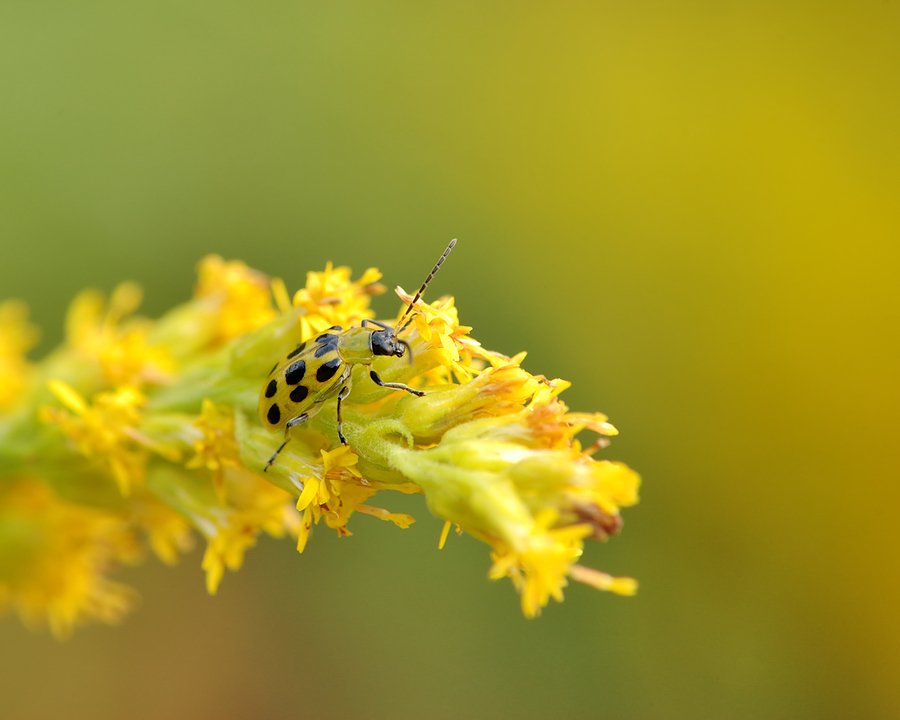
Holes chewed in leaves, leaves skeletonized; runners and young fruit scarred. Spotted cucumber beetle is greenish, yellowish, ¼ inch (7mm) long with black spots and black head. Striped cucumber beetle has wide black stripes on wing covers. Hand pick; mulch around plants; plant resistant varieties; dust with wood ashes.

Leaves have yellow specks that turn brown, then black; vines wilt from point of attack. Squash bug is a flat, shield-shaped black or brownish bug with a triangle on its back; it sucks juices from plants. Trap adults beneath boards in spring, hand pick and destroy.

Round white powdery spots and coating on leaves. Powdery mildew is caused by fungal spores. Spores germinate on dry leaf surfaces when the humidity is high; spores do not germinate on wet leaves. Common in late summer or fall but does not result in loss of plant. Avoid water stress. Pick off infected leaves.

Irregular yellowish to brownish spots on upper leaf surfaces; grayish powder or mold on undersides. Downy mildew is caused by a fungus. Improve air circulation. Plant resistant varieties. Rotate crops. Keep garden free of plant debris.

Mottled, distorted leaves. Mosaic virus causes leaves to become thickened, brittle, easily broken from plant; plants are stunted and yields are poor. The virus is spread from plant to plant by aphids and leafhoppers. Remove diseased plants. Remove broadleaf weeds that serve as virus reservoir.

Knots, galls, or swollen beads on roots; plants wilt; poor yield. Nematodes are microscopic worm-like animals that live in the film of water that coats soil particles; some are pests, some are not. Root-knot nematodes feed in the roots and stunt plant growth. Most common in sandy soils. Rotate crops. Solarize the soil with clear plastic in mid-summer.

Plants wilt and die beginning with crown or older topmost leaves. Verticillium wilt is a soilborne fungus. Light brown streaks can be seen in stem split lengthwise. Rotate crops. Avoid soil previously planted in cucumbers and family members, potatoes, peppers, eggplant, and tomatoes.

Vines wilt suddenly and die starting with one or two leaves. Bacterial wilt clogs the circulatory system of plants. It is caused by bacteria that live in cucumber beetles and is seen often where the soil stays moist. Remove and destroy infected plants before the disease spreads. Control cucumber beetles with rotenone or sabadilla. Wash hands and clean tools with a bleach solution.

Plants are stunted and yellow; runners gradually die. Fusarium wilt is a fungal disease which infects plant vascular tissues. Fungal spores live in the soil and can be carried by cucumber beetles. Plant disease-resistant varieties. Rotate crops. Remove and destroy infected plants. Fungicides are not effective

Water-soaked spots–sunken, brown or black–on fruit. Belly rot or bacterial spot or blight. Remove and destroy infected fruits. Remove all plants and plant debris at the end of the season. Promote good drainage adding organic materials to planting beds. Avoid over-head watering. Rotate crops. Stake or cage plants to keep fruit off ground.

Water-soaked or pale green spot on leaves that turn white; fruit cracks. Scab is caused by soilborne bacterium. Disease can be cosmetic. Plant resistant varieties. If scab occurs, change varieties next year. Sulfur may be worked into soil to make it slightly acid and reduce disease.

Early flowers don’t set fruit. A couple of possible reasons: (1) the first flowers to appear are male; female flower appear next. Fruit is produced by female flowers. Wait until female flowers appear and are pollinated. Plant all-female (gynoecious) cucumber hybrids–a few male plants will be added to the seed mix. (2) There may not be enough pollinators, mostly bees, to carry the pollen from male to female flowers. Pick off male flowers and dust the pollen into the female flowers.

Plants produce few fruits, mostly foliage. Plants are likely spaced too close together. Space plants at recommended distances, 8 to 12 inches apart. Plant spaced too close or too far apart yield fewer fruits as a result of poor pollination.

Plant fruit but then stop fruiting. Pick fruit as soon as it is the right size to use. This will allow the plant to put energy into additional fruit production. If you fail to pick mature fruit, the plant will quit producing.

Fruit tastes bitter. Uneven watering will cause plants to produce bitter compounds that affect taste. Uneven temperatures–swings of temperature by 20° or more–will do the same. Keep the soil evenly moist and mulch to conserve soil moisture. Grow varieties that do not turn bitter: Marketmore 70 is a bitter-free cucumber.


Tags: , , , ,

avatar

Author:Steve Albert

Steve Albert grows vegetables and fruits in the Sonoma Valley of California. He has had gardens in California, Iowa, Florida and Massachusetts. Steve is a master gardener for the University of California where he has taught garden and landscape design for nearly two decades.

23 Responses to “Cucumbers Growing Problems: Troubleshooting”

  1. Joan
    June 8, 2010 at 5:00 pm #

    My cucumber plants have plenty of beginning cucumbers, but when they get to be one or two inches long, they turn yellow and rot. Can you help me?
    Thanks,
    Joan Learner

  2. June 9, 2010 at 10:16 am #

    Most standard cucumbers produce male flowers first; the female flowers follow a few days later. The cucumber plant is dependent upon insects to visit the male and female flowers for full pollination. When female flowers–the ones with the tiny cucumber at the base of the flower–do not fully develop, the problem is lack of pollination. If the weather has been cool or cloudy or rainy, insects have likely not been active in your garden. You can wait for the weather to get better and the insects to get busy, or you can improve pollination by hand-pollinating. You can hand-pollinate by picking off the male flower, pull off the petals, and directly rub the pollen on the stigma of the female flower. Now, one more thing: there are cucumber varieties that are gyonecious–meaning they produce female flowers only. (Seed suppliers usually specify if a cucumber is gynoecious–so double check your variety.) Gynoecious cucumber varieties require a second variety (one that produces male flowers) to be planted nearby. If no male is planted close by the gynoecious cucumber–the female flower will not be pollinated.

  3. Joyce
    August 3, 2010 at 10:34 am #

    My cucumbers are just like little balls. The top grows but the sticky part does not. Why?

  4. Steve
    August 19, 2010 at 5:59 pm #

    My cucumbers were growing fine, now they are all very short and fat. Can you tell me what I am doing wrong or what is going on? Thank you!

  5. October 29, 2010 at 1:28 pm #

    Growing Cucumbers: For good cucumber production, make sure your crops gets 1 inch of water every week–that is a deep soaking. The critical watering period for cucumbers is during flowering and fruit development. Insufficient watering can result in small fruit. Cucumbers are heavy feeders so apply aged compost to the garden in spring and again in fall; give cucumbers a side-dressing of compost tea every 2 weeks during the growing season. Feeding and watering are very important when blossoms are setting, Small fruit can also be the result of insufficient pollination. Standard cucumbers produce male flowers first, then female–female flowers have a tiny cucumber at the base. If the fruit does not develop then the problem is lack of pollination. Insects usually take care of pollination, but you can improve pollination by hand-pollinating–gather pollen from the male flower with a swab and dab the female flower.

  6. October 29, 2010 at 1:34 pm #

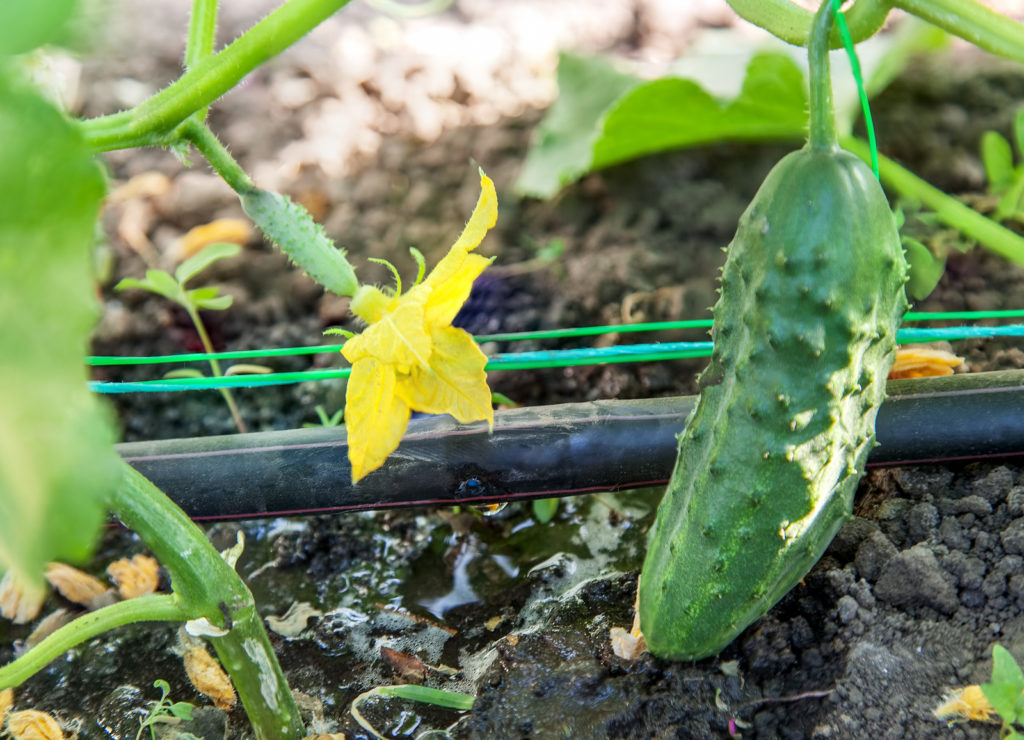
    Cucumber Growing: For good cucumber production, make sure your crops gets 1 inch of water every week–that is a deep soaking. Cucumbers are 90 percent water. Moisture stress will quickly affect fruit formation. To keep soil moisture even and prevent soil drying run a soaker hose or drip irrigation along the line of plants. The critical watering period for cucumbers is during flowering and fruit development. Insufficient watering can result in small fruit. As well, cucumbers are heavy feeders so apply aged compost to the garden in spring and again in fall; give cucumbers a side-dressing of compost tea every 2 weeks during the growing season. Feeding and watering are very important when blossoms are setting,

  7. Debby
    November 30, 2010 at 9:58 pm #

    My cucumbers are growing well, but when I slice them the inside has not many seeds and a lot of flesh what are they lacking.

  8. January 15, 2011 at 6:41 pm #

    Check the variety of cucumber you are growing. There are several seedless cucumber hybrids. Most of these were developed for greenhouse or plastic tunnel growing–they do not require pollination. They include Bush Crop, Patio Pic, Pot Luck, and Spacemaster. For the tastiest cucumbers be sure that your crop is well watered, a good watering each week is required. And make sure you don’t miss any watering when cucumbers are flowering and developing fruit.

  9. juie marcotte
    June 6, 2011 at 1:38 pm #

    My cucumbers are not turning green all over – they are pale white/ pale yellow on the bottom…help!
    julie

  10. June 11, 2011 at 11:42 pm #

    Pale cucumber leaves turning yellow–especially the lower leaves–is a class description of cucumbers suffering from nitrogen deficiency. Solve this problem quickly by spraying plants with a dilute fish emulsion or other liquid fertilizer. This is called foliar feeding and it is perhaps the fastest way to get nitrogen into the plant (through leaf pores). As well side dress your cucumbers with aged compost. Sprinkle compost around the base of the plant at the drip line. Nitrogen is necessary for plant growth at all stages. Adding aged compost to your garden twice a year is a good soil feeding strategy; as well, add aged cow manure to the garden at least once a year either after harvest or in very early spring before planting. if you prefer to use a commercial fertilizer, choose a complete fertilizer–5-10-10 is a good food for cucumbers. Always follow label directions.

  11. susan fordham
    June 14, 2011 at 6:05 pm #

    About 60 percent of my cucumbers are little and fat and are turning yellow or yellow-orange. What am I doing wrong?

  12. Vernon Christie
    June 19, 2011 at 12:25 pm #

    My cucumbers develop about half the length they should. Half look like a cucumber the rest are prickly and under developed.

  13. June 26, 2011 at 12:14 pm #

    There are a couple of things to take a look at: (1) Cucumbers are nearly 90 percent water. Make sure that your cucumbers are getting consistent, even watering. This mean that the soil should never dry out. Stick your finger in the soil down to about 4 inches; if it is dry, you need to water. As well, too much water can cause fruits to yellow. Make sure your soil is well-drained and compost rich. Compost and well-decomposed organic matter are well draining, but hold moisture, and are nutrient rich; (2) yellowing of fruit may be an indication of a mineral imbalance in your soil; a boron deficiency can cause yellowing of cucumber fruit. A soil test will answer this question. And again the addition of aged compost will boost the level of major and minor nutrients plants need.

  14. June 26, 2011 at 1:21 pm #

    Underdeveloped and misshapen cucumbers are often the result of either insufficient water or poor pollination, or both. Make sure your cucumbers receive regular even water. Keep the soil moist, but not wet; do not allow it to dry out as the fruit develops. Cucumbers want to grow quickly and steadily–not in stops and starts. Most but not all garden cucumbers have both male and female flowers; pollen from the males must reach the females. If there are few insects to do the job or if the weather at flowering time was wet, the job might not have gotten done. To be sure pollination occurred, hand pollinate. Rub the a male flower on a female flower.

  15. james
    June 30, 2011 at 3:22 pm #

    My cuccumber plants make plenty of blooms but no fruit. Why?

  16. Ray Liebenthal
    July 3, 2011 at 11:13 am #

    Several of the developed cucumber have areas of skin removed, as though a razor shaved the spot. What is causing this and what must I do to eliminate the problem?

  17. Marion Simon
    July 21, 2011 at 7:42 pm #

    My cucumbers appear very healthy. The leaves are green and I have many blossoms and small cucumbers on my plants. However
    the cucumbers get 1/2 inch to 1 inch long and start to rot.
    I have cut back some of the leaves for better air circulation and removed the spoiled cucumbers plus removeds some of the cucumbers growing in clumps.
    We live in SE Minn. and have had a cold beginning to our summer and early July had a lot of rain.
    Any suggestions?

  18. July 29, 2011 at 2:24 pm #

    Why do I get worms in my cucumbers? My cucumbers grow nice then we see a hole in them.

  19. August 3, 2011 at 11:20 pm #

    Standard variety cucumbers produce male flowers first and female flowers will follow. Pollination occurs when insects visit the male and then the female flower; if the insects do not do their work, you will not get fruit. Insects are not active in cloudy and cool weather. Hand pollination can solve the problem: shake the male flower over the female flower. (The female flower has a tiny cucumber at its base.) If you have a gynoecious variety of cucumber, the male and female flowers are on separate plants; make sure you have one of each.

  20. August 3, 2011 at 11:38 pm #

    I suspect a vole or another varmint at work. A 1/4 inch mesh around the garden can exclude these critters; you will have to extend the barrier a foot below the soil level. Or you can use a snap trap baited with pieces of apple. Look for a vole or mole tunnel; this is the place to set your trap. While the foraging is good during the summer growing season, many critters will pass up baited traps for crops. You may have to go after them with traps when fall comes.

  21. August 4, 2011 at 10:04 am #

    Pickleworms may be at work in your cucumber patch. The pickleworm is the larvae of a night-flying moth. Adult moths and the pupae can hide in leaf litter and the soil, usually in very warm regions. But when warm weather comes, the moths migrate north. Young pickleworms feed on the tender growing tips of cucumber, summer squash, and muskmelon. After they feed on growing tips and flowers they tunnel inside the fruit–they will destroy and sour the fruit. Look for the young caterpillars in rolled leaves; you will see brown frass near the entrance holes on fruit. To combat pickleworm damage, plant earlier to get strong plants and fruit before pickleworms get started in late spring, use row covers to exclude moths from laying eggs on plants, check to see if caterpillars are on the plants–remove and destroy them, use insect traps to catch moths, keep the garden clean and clean up at the end of the growing season. Bacillus thuringiensis and spinosad sprays will kill the worms. All of this said, you may also have slug or snail damage; seek these pests out at night and destroy them.

  22. August 5, 2011 at 5:50 am #

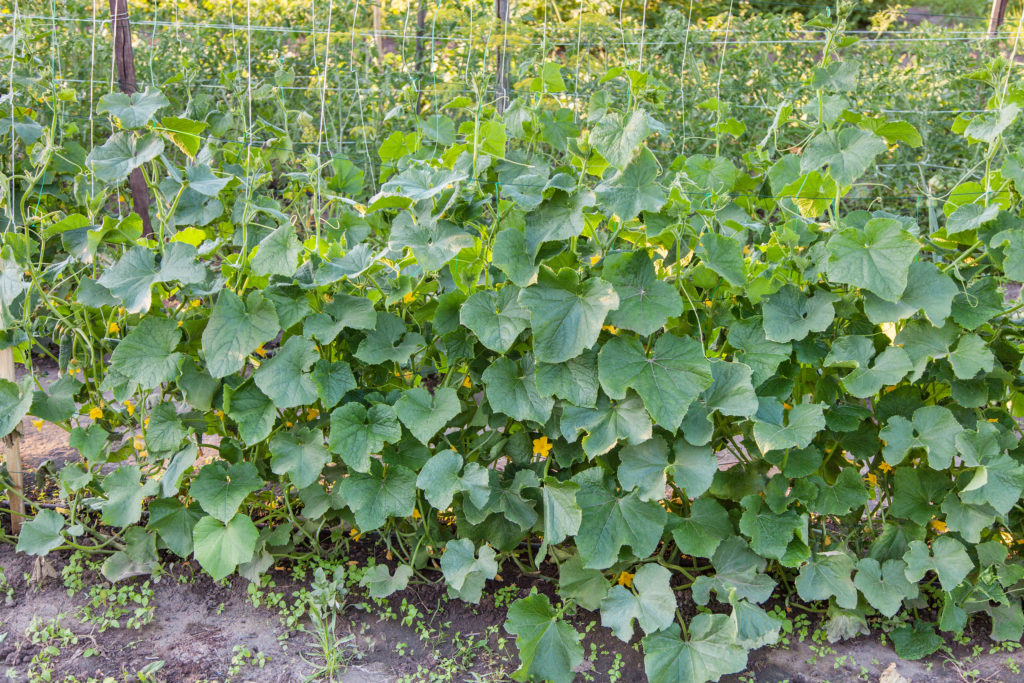
    Cucumber fruit rot is commonly caused by bacterial infection–often related to too much water and poor air circulation. Make sure your soil is well drained by adding lots of aged compost and organic planting mix to the growing beds. Give vining plants plenty of room to grow. Keep vines and fruit off the ground; use supports to train vines up–trellis, netting, or poles. For fruits growing on the ground place a piece of wood or plastic underneath the fruit.

  23. Sue
    August 8, 2011 at 6:09 pm #

    The runners on my cucumbers are strangling the cucumber vines and causing the leaves to dry and die.

Leave a Reply