What to Do When Tomato Leaves Turn Yellow in Late Summer

By late summer, even healthy tomato plants often begin showing yellow leaves. For many gardeners, it’s an alarming sight. Is the plant dying? Is it a disease? Does it need fertilizer? Or is this simply part of the growing season?
The answer depends on where the yellowing occurs, how quickly it spreads, and what other symptoms are present.
Some yellowing is perfectly normal as tomato plants age. Other times, it signals nutrient deficiencies, water stress, disease, or heat damage that should be addressed before it affects fruit production.
After decades of growing tomatoes in my home gardens and market garden, and gardening in Iowa, eastern Massachusetts, and Northern California, I’ve learned that late-summer yellowing is often manageable. Careful observation usually reveals the cause, and in many cases, simple changes in watering, pruning, or nutrition can keep plants productive until frost.
Know What to Plant This Week
Every week I answer the gardener's most important question: what should I plant now? Get seasonal planting advice free — or go Pro for my full Soil Temperature Garden Report, with soil temperature, moisture, weather trends, and crop-by-crop recommendations.
Before removing leaves or adding fertilizer, take a few minutes to diagnose the problem correctly.
Is It Normal for Tomato Leaves to Turn Yellow?
Yes—some yellowing is completely normal.
As tomato plants mature, the oldest leaves near the bottom naturally age and die. The plant redirects energy to developing fruit and new growth.
Normal yellowing usually:
- Starts on the lowest leaves
- Progresses slowly
- Affects only older foliage
- Does not spread rapidly to the upper plant
If the upper portion of the plant remains green and productive, there is usually little cause for concern.
Yellow Lower Leaves Often Mean Aging
The oldest leaves have done most of the work of producing energy during the growing season.
As they decline:
- They turn pale green.
- They become yellow.
- Eventually they dry and fall off.
Removing these aging leaves improves air circulation and reduces the chance of fungal diseases.
Inconsistent Watering Is a Common Cause
Tomatoes need consistent soil moisture.
Repeated cycles of very dry soil followed by heavy watering stress the roots and often cause leaves to yellow.
Other symptoms may include:
- Wilting
- Cracked fruit
- Blossom end rot
- Leaf curl
- Reduced fruit production
Water deeply whenever the root zone begins to dry.
Mulching around plants helps maintain even soil moisture.
Heat Stress Can Trigger Yellow Leaves
Late summer often brings prolonged periods of high temperatures.
When daytime temperatures remain above 90°F (32°C), tomato plants may:
- Slow growth
- Drop flowers
- Produce fewer fruit
- Develop yellow leaves
Heat-stressed plants benefit from:
- Deep morning watering
- Organic mulch
- Temporary afternoon shade during extreme heat
In my Northern California garden, maintaining soil moisture during heat waves has often prevented minor yellowing from becoming severe.
Nutrient Deficiencies
As tomato plants continue producing fruit, they gradually use nutrients stored in the soil.
Several deficiencies may cause yellow leaves.
Nitrogen Deficiency
Symptoms include:
- Uniform yellowing of older leaves
- Slow growth
- Smaller plants
A side-dressing of compost or a balanced vegetable fertilizer can often restore healthy growth.
Magnesium Deficiency
Look for:
- Yellowing between leaf veins
- Green veins with yellow tissue
- Older leaves affected first
Magnesium deficiencies are more common in sandy soils or after prolonged irrigation.
Potassium Deficiency
Symptoms include:
- Yellow leaf edges
- Browning along margins
- Reduced fruit quality
A soil test is the best way to determine whether nutrient deficiencies are present before adding fertilizer.
Fungal Diseases
Several fungal diseases become more common late in the season.
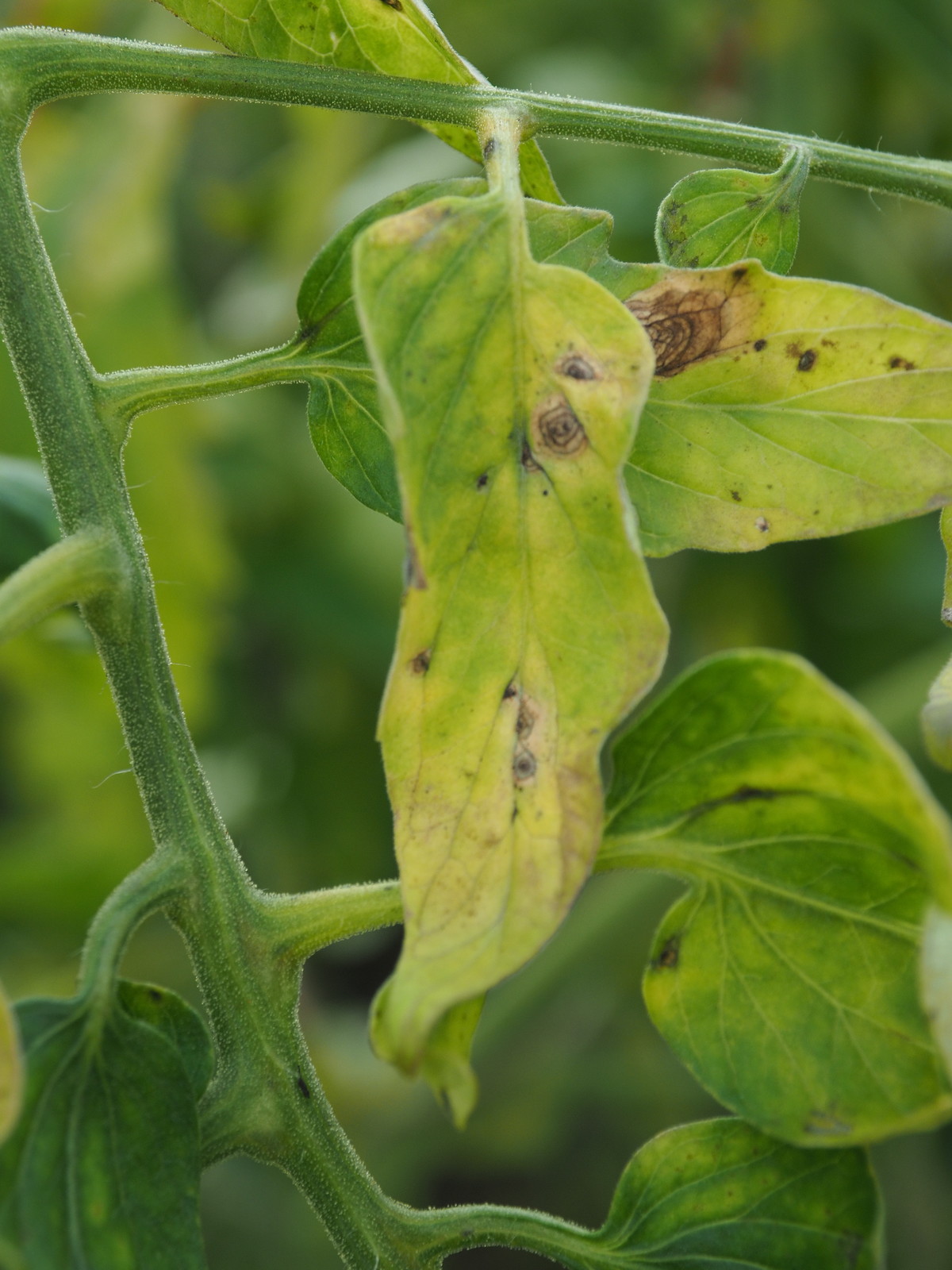
Early Blight
Symptoms include:
- Yellow lower leaves
- Brown spots with concentric rings
- Gradual upward spread
Septoria Leaf Spot
Look for:
- Numerous small brown spots
- Yellowing leaves
- Defoliation beginning near the base
Remove infected leaves promptly and avoid overhead watering.
Improving air circulation also helps reduce disease spread.
Late Blight
Although less common, late blight can spread rapidly during cool, wet weather.
Watch for:
- Dark water-soaked spots
- Rapid yellowing and browning
- White fungal growth under leaves during humid conditions
Prompt removal of infected plants may help protect the rest of the garden.
Waterlogged Soil
Too much water can cause symptoms similar to drought.
Saturated soil limits oxygen around roots.
Symptoms include:
- Yellow leaves
- Wilting
- Slow growth
- Root decline
Allow soil to drain before watering again.
Healthy roots need both moisture and oxygen.
Should You Remove Yellow Tomato Leaves?
Usually, yes.
Remove leaves that are:
- Completely yellow
- Brown
- Diseased
- Touching the soil
- No longer contributing to the plant
Removing damaged foliage improves:
- Air circulation
- Light penetration
- Disease prevention
Avoid removing too many healthy green leaves.
Tomato plants still need plenty of foliage to shade fruit from sunscald.
Continue Feeding Late-Season Tomatoes
If plants are still producing fruit, continue supporting them with moderate nutrition.
Good choices include:
- Finished compost
- Compost tea
- Balanced vegetable fertilizer
- Organic tomato fertilizer
Avoid heavy applications of nitrogen late in the season, which encourage leafy growth instead of fruit ripening.
Water Deeply and Mulch Well
Late-season tomatoes continue producing best when soil moisture remains steady.
Apply a 2- to 4-inch layer of mulch such as:
- Straw
- Shredded leaves
- Compost
- Grass clippings
Mulch helps:
- Reduce evaporation
- Keep roots cooler
- Suppress weeds
- Maintain even soil moisture
Growing Tomatoes in Different Climates
Growing tomatoes in Iowa, Massachusetts, and California taught me that yellow leaves can have different causes depending on the climate.
In Iowa, humid summers often encouraged fungal diseases that started on the lower leaves. Massachusetts frequently brought cool nights late in the season, slowing plant growth naturally. In Northern California, heat stress and irregular watering were usually the biggest causes of yellow foliage during August and September.
Despite these differences, one lesson remained consistent: healthy soil, steady watering, and prompt removal of diseased leaves kept plants productive longer.
My Home Garden and Market Garden Experience
By late summer, every tomato plant in my market garden showed a few yellow leaves.
That wasn’t a sign of failure—it was simply part of a long growing season.
The important question was whether the yellowing stayed confined to older leaves or spread rapidly through the plant.
Over the years, I found that regular inspections, deep watering, mulching, and removing diseased foliage allowed many tomato plants to continue producing right up to the first frost.
A few yellow leaves are normal. The goal is keeping the rest of the plant healthy and productive.
Frequently Asked Questions
Why are my tomato leaves turning yellow at the bottom?
Lower leaves often turn yellow naturally as plants age, but nutrient deficiencies and fungal diseases can also be responsible.
Should I remove yellow tomato leaves?
Yes. Remove leaves that are completely yellow, diseased, or touching the soil to improve air circulation and reduce disease.
Can overwatering cause yellow tomato leaves?
Yes. Waterlogged soil reduces oxygen around roots and often causes yellowing and wilting.
Does hot weather make tomato leaves turn yellow?
Yes. Prolonged temperatures above 90°F (32°C) can stress tomato plants and contribute to yellow foliage.
How do I know if yellow leaves are caused by disease?
Look for spots, rings, lesions, or rapid spread upward through the plant. Healthy aging usually affects only older lower leaves.
Should I fertilize tomatoes with yellow leaves?
Only if nutrient deficiency is likely. A soil test provides the most accurate guidance before adding fertilizer.
Can yellow tomato leaves turn green again?
Leaves that are completely yellow usually do not recover. Focus on correcting the underlying problem and encouraging healthy new growth.
Will tomatoes still ripen if the lower leaves turn yellow?
Yes. As long as the upper canopy remains healthy, tomato plants often continue ripening fruit normally.
The Bottom Line
Yellow tomato leaves in late summer are not always a sign that something is wrong. Aging foliage is a normal part of the season, but widespread yellowing can indicate water stress, nutrient deficiencies, heat damage, or disease.
Careful observation, consistent watering, proper mulching, and timely removal of damaged leaves can keep tomato plants healthy and productive well into autumn.
After decades of growing tomatoes in home gardens and market gardens, I’ve learned that successful late-season tomato care is about paying attention to the details. A few yellow leaves are expected—but a healthy canopy of green foliage will reward you with weeks of additional harvests.