Top 10 High-Yield Vegetables for Small Gardens

Small gardens can be incredibly productive when you choose crops that give the biggest return for the space you have. After more than 30 years of growing vegetables—first in California’s Central Valley, and now year-round in Sonoma Valley—I’ve learned that yield isn’t about garden size, it’s about crop choice and technique.
I’ve taught and coached beginning gardeners as a University of California Master Gardener and now as the lead farmer at the Sonoma Garden Park using intensive methods in raised beds, mounded beds, and containers. The vegetables I recommend below consistently deliver high harvests in limited space, whether you’re growing in a small backyard, raised beds, or containers.
1. Zucchini (Summer Squash)
Few vegetables can compete with zucchini for sheer productivity. One healthy plant can produce dozens of fruits over a long season.
Why it works in small gardens: Zucchini grows quickly, produces continuously, and rewards frequent harvesting. Bush varieties are especially space-efficient.
How I grow them in small spaces: I give them rich soil, consistent water, and harvest fruits when they’re about six inches long. This keeps the plant compact and productive without sprawling into other crops.
How many plants fit in a square foot: A single zucchini plant takes up two square feet if trained vertically, much more if allowed to roam. Even compact bush varieties need space for their leaves and fruit to develop.
Best tip from experience: Harvest young and often—small fruits keep plants compact and productive.
Varieties I recommend for small spaces:
- Astia — bred for container and small-space gardens
- Bush Baby — compact bush type, ideal for pots
- Raven — productive compact zucchini
- Sunburst (pattypan style) — tidy plant with lots of fruit
2. Tomatoes (Especially Indeterminate or Patio Types)
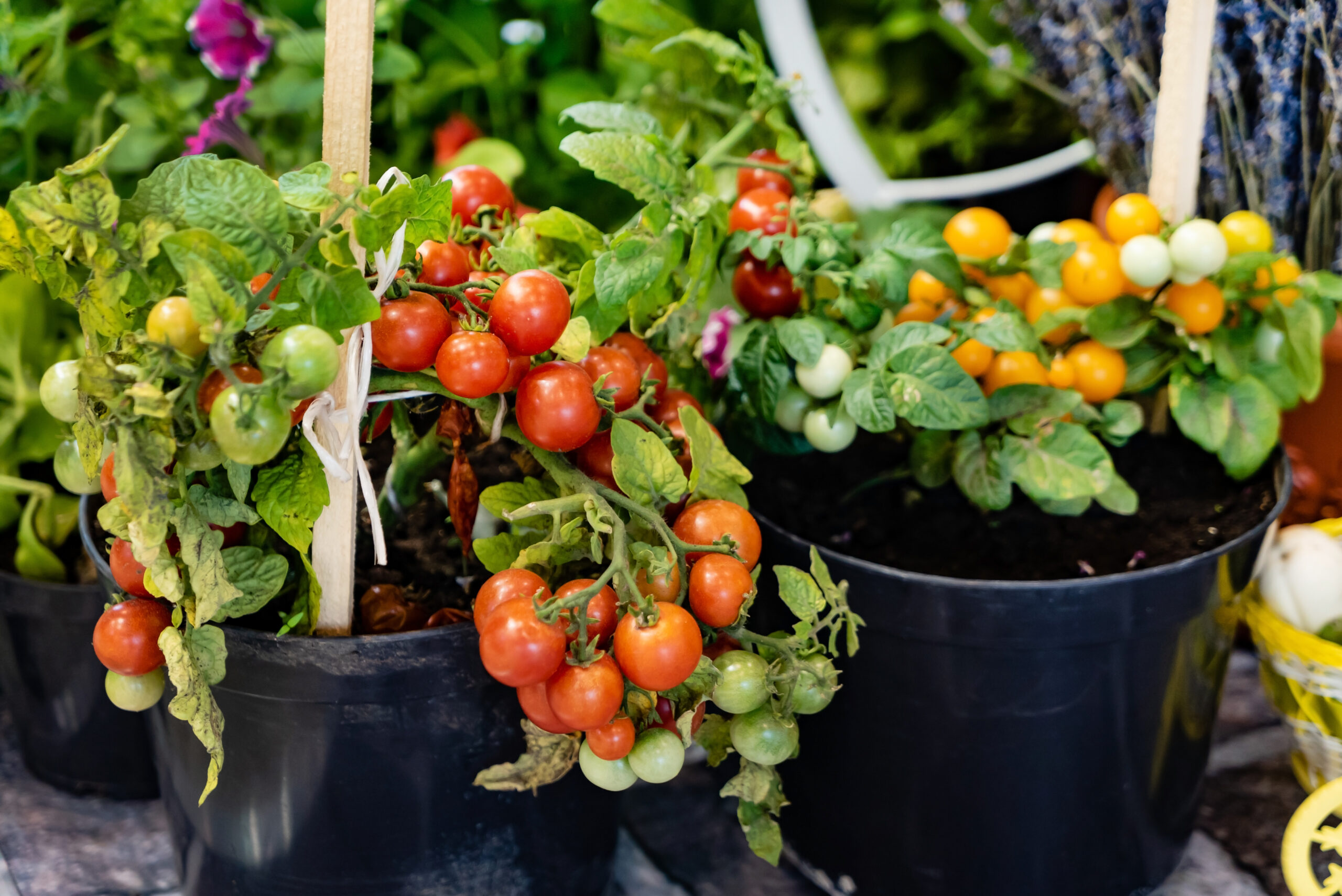
Tomatoes are vertical producers, making them ideal for small spaces.
Why it works in small gardens:
When trellised or caged, tomatoes grow upward instead of outward, producing heavily over many weeks.
How I grow them in small spaces: I use a sturdy cage or single stake to keep plants upright and fruit off the soil. I plant them in deep containers or raised beds, water consistently, and feed lightly.
How many plants fit in a square foot: Determinate patio or dwarf tomatoes, such as Patio F1 or Tiny Tim, can be grown one plant per square foot, allowing enough space for the plant to grow upright and support its fruit. Indeterminate tomatoes require about 3 square feet per plant if caged.
Best tip from experience: Choose disease-resistant varieties and prune lightly to improve airflow and yield.
Varieties I recommend for small spaces: (Compact, bush, patio, or determinant types)
- Patio F1 / Patio Choice Red — classic container tomato
- Tiny Tim — micro dwarf cherry (very small plant)
- Red Robin — ultra-compact cherry
- Celebrity — semi-determinant with good yields in small gardens
- Window Box Roma — compact paste tomato
3. Pole Beans
Pole beans outperform bush beans in small gardens because they grow vertically and keep producing.
Why it works in small gardens: A short trellis can support weeks of harvest from just a few plants.
How I grow them in small spaces: I plant beans close together, provide a short vertical support for climbers, and harvest pods frequently to keep the plants producing.
How many plants fit in a square foot: Bush beans can be planted 9 per square foot when grown in small blocks, while pole beans can be planted 8 per square foot if trained vertically on a trellis or teepee.
Best tip from experience: Pick pods young to encourage nonstop flowering and pod set.
Varieties I recommend for small spaces: (Shorter vines or easy vertical training)
- Provider — reliable, upright habit
- Contender — compact trellised bean
- Blue Lake Climbing — productive on small trellis
- Scarlet Runner — edible flowers + beans (good on short support)
Tip: In small gardens, train pole beans on teepees or short frames to maximize vertical yield without sprawling.
4. Cucumbers (Compact or Trellised)
Cucumbers are surprisingly productive when trained upward.
Why it works in small gardens:
Vertical growing keeps vines healthy, saves space, and produces straighter, cleaner fruit.
How I grow them in small spaces: I train vines upward on small trellises, provide regular water and feeding, and harvest frequently for cleaner, straighter fruit.
How many plants fit in a square foot: Compact cucumber varieties, like Bush Champion or Patio Snacker, can be planted one per square foot if trellised. Vertical growing allows the plant to produce abundantly without taking extra ground space.
Best tip from experience: Container-friendly varieties like bush or patio cucumbers deliver excellent yields in tight spaces.
Varieties I recommend for small spaces: (Bushier or small vines suited to containers/compact spaces)
- Bush Champion — prolific bush cucumber
- Spacemaster 80 — classic compact pickling/slicing type
- Patio Snacker — perfect for small patios
- Diva — crisp, compact slicer
5. Leaf Lettuce (Cut-and-Come-Again)
Leaf lettuce offers repeated harvests from a single planting.
Why it works in small gardens: You can harvest outer leaves weekly instead of pulling whole plants.
How I grow them in small spaces: I sow densely, harvest outer leaves regularly, and succession-plant every couple of weeks for continuous harvest. Partial shade in warm weather keeps leaves tender.
How many plants fit in a square foot: Leaf lettuce grows well in 4 plants per square foot, which provides enough space for the leaves to develop while still allowing you to harvest cut-and-come-again greens.
Best tip from experience: Succession sow every two to three weeks for continuous harvest.
Varieties I recommend for small spaces: (Great for frequent cut-and-come-again harvests and dense planting)
- Black-Seeded Simpson — classic loose-leaf, great for cut leaves
- Salad Bowl — compact, frilly leaves
- Buttercrunch — small but productive heads
- Red Sails — colorful and compact
6. Swiss Chard
Swiss chard is one of the most reliable high-yield greens I grow year-round.
Why it works in small gardens: One plant can be harvested for months without replanting.
How I grow them in small spaces: I space plants slightly tighter than usual, cut outer leaves at the base, and let the center keep growing. A single plant can supply fresh greens for months.
How many plants fit in a square foot: Swiss chard can be grown 1 plant per square foot, giving the plant room to spread its colorful leaves and allow repeated harvests throughout the season.
Best tip from experience: Harvest outer leaves regularly and let the center keep growing.
Varieties I recommend for small spaces: (Generous producers with tidy clumps)
- Bright Lights — colorful and compact
- Fordhook Giant (grown in succession or tailored spacing) — although large, spacing allows big yield from small footprint
- Rainbow Chard — moderate stature, vibrant stems
7. Peppers
Peppers are compact plants that produce heavily once established.
Why it works in small gardens: They stay relatively small while producing dozens of fruits per plant.
How I grow them in small spaces: I keep plants in warm, well-drained soil with consistent water, give light feeding, and avoid overcrowding. Even a single container can yield dozens of fruits.
How many plants fit in a square foot: Compact pepper varieties, like Mini Bell or Lunchbox Mix, can be planted 1 per square foot, which ensures each plant has enough soil, nutrients, and airflow to produce well.
Best tip from experience: Warm soil and consistent feeding dramatically increase yields.
Varieties I recommend for small spaces: (Compact, high-yielding plants ideal for small spaces)
- Mini Bell / Snack Pack — smaller plant with many fruits
- Jalapeño ‘Early Jal’ — compact, productive chile
- Carmen (Italian Sweet Pepper) — smaller blocky peppers on tidy plants
- Lunchbox Mix — colorful, small peppers perfect for containers
8. Kale
Kale is a long-season producer that thrives in small beds and containers.
Why it works in small gardens: Like chard, kale allows repeated harvests from the same plant.
How I grow them in small spaces: I pick the lower leaves first and leave the growing tip intact. Cooler temperatures help keep plants compact and tender.
How many plants fit in a square foot: Kale grows best at 1 plant per square foot, even for smaller varieties, allowing leaves to expand without crowding neighboring crops.
Best tip from experience: Cooler temperatures improve flavor and extend the harvest window.
Varieties I recommend for small spaces: (Compact or slow-bolting types great for small gardens)
- Dwarf Blue Curled Scotch — smaller plants, big leaf yield
- Red Russian — mild flavor, tidy leaf form
- Lacinato (Tuscan Kale) — narrow leaves, manageable space use
- Siberian — medium, productive plants
9. Scallions (Green Onions)
Scallions are one of the fastest and most space-efficient crops you can grow.
Why it works in small gardens: They grow close together and mature quickly, making them perfect for small plots and containers.
How I grow them in small spaces: I plant densely, harvest individual stalks as needed, and keep them growing for multiple harvests.
How many plants fit in a square foot: Scallions are very space-efficient and can be planted 16 per square foot, which allows for continuous harvesting while keeping plants healthy.
Best tip from experience: Sow densely and harvest as needed rather than all at once.
Varieties I recommend for small spaces: (Fast, dense, great for small beds or containers)
- Evergreen Long-White — vigorous and upright
- White Lisbon — classic scallion with slender stalks
- Tokyo Long White — reliable and compact
- Ishikura — early, tidy scallion
10. Radishes
Radishes deliver quick harvests in very little space.
Why it works in small gardens: They mature in as little as 25–30 days and fit between slower crops.
How I grow them in small spaces: I sow seeds close together, thin lightly if needed, and harvest quickly to make room for slower crops.
How many plants fit in a square foot: Radishes can be densely planted with 16 per square foot, making them ideal for filling gaps between slower-growing crops and maximizing production in small spaces.
Best tip from experience: Use radishes as a “gap crop” to maximize every square foot.
Varieties I recommend for small spaces: (Mature quickly and fit between crops)
- Cherry Belle — classic quick radish
- French Breakfast — mild, elongated, compact roots
- Sparkler — white tipped radish for dense beds
- Easter Egg Mix — fun color variety with small roots
🌟 Pro Tips for Small Garden Success
✔ Succession Planting: Sow quick crops like lettuces and radishes every 2–3 weeks — this maximizes yield in limited space.
✔ Vertical Supports: Trellises, cages, and stakes make upright producers (peas, beans, cucumbers, tomatoes) much more space-efficient.
✔ Dense, Succession Rows: Many leafy greens and scallions can be sown in tight rows and harvested often without replanting.
Final Thoughts: High Yield Is a Strategy, Not a Shortcut
High-yield gardening isn’t about working harder—it’s about choosing crops that naturally perform well in small spaces and using simple techniques like vertical growing, succession planting, and frequent harvesting.
With the right vegetables, even the smallest garden can produce an impressive amount of food.
🪴 Summary Table (Quick Reference)
| Vegetable | Compact Varieties for Small Gardens |
|---|---|
| Zucchini | Astia, Bush Baby, Raven, Sunburst |
| Tomatoes | Patio F1, Tiny Tim, Red Robin, Celebrity |
| Pole Beans | Provider, Contender, Blue Lake Climbing |
| Cucumbers | Bush Champion, Spacemaster 80, Patio Snacker, Diva |
| Leaf Lettuce | Black-Seeded Simpson, Salad Bowl, Buttercrunch |
| Swiss Chard | Bright Lights, Rainbow Chard |
| Peppers | Mini Bell, Early Jal, Lunchbox Mix |
| Kale | Dwarf Blue Curled, Red Russian, Lacinato |
| Scallions | Evergreen Long-White, Tokyo Long White |
| Radishes | Cherry Belle, French Breakfast, Sparkler |