
How to Plant and Space Carrots for Optimal Growth

Carrots can be a little fussy to get started, but once you understand how to plant and space them properly, you’ll be rewarded with rows of straight, sweet roots. Whether you’re a first-time gardener or a seasoned grower, planting carrots the right way sets the stage for strong germination, even spacing, and easy harvesting.
In this post, I’ll walk you through how to plant carrot seeds and space them correctly—for better germination, stronger growth, and a more productive harvest.
🥕 Why Carrot Spacing and Planting Technique Matters
Carrots are a root crop that germinate slowly and develop underground. That makes seed placement, soil contact, and spacing more important than for leafy or above-ground vegetables.
Poor spacing can lead to:
- Forked, twisted roots
- Poor airflow and increased disease risk
- Difficult thinning and harvesting
- Uneven maturity
Good spacing and planting technique encourage:
- Strong, straight roots
- Consistent growth
- Maximum use of bed space
🌱 Step-by-Step: How to Plant Carrot Seeds
1. Prepare the Seedbed
Start with a fine, smooth seedbed:
- Loosen soil to at least 8–12 inches deep.
- Remove rocks, clods, and debris.
- Rake the surface until it’s crumbly and level.
Carrots need light contact with soil and steady moisture to germinate. A rough or dry surface can prevent sprouting.
2. Make Shallow Furrows
Use your finger, a stick, or the edge of a trowel to create shallow rows about ¼ inch deep.
Tip: Water the furrows before sowing seeds to help keep them moist after planting.
3. Sow Seeds Thinly
Carrot seeds are tiny, so it’s easy to overseed. Aim to:
- Space seeds about ½ inch apart within the row
- If using a seed tape or pre-spaced pelleted seeds, follow the label instructions
If you overseed (common with tiny carrot seeds), be prepared to thin the seedlings once they’re 1–2 inches tall.
4. Cover Lightly
Cover the seeds with fine soil or sifted compost no more than ¼ inch deep. Press gently to ensure good seed-to-soil contact.
5. Water Gently and Often
Keep the top inch of soil evenly moist during germination. This may mean watering daily (or even twice a day in hot weather).
Carrot seeds can take 7–21 days to sprout, and they’ll fail if the soil dries out.
🪵 Use a Board or Shade Cloth to Aid Germination
Carrot seeds are notoriously slow to germinate, and they require consistent moisture to sprout. Even a short period of dryness can cause the seeds to fail. One effective method I use to improve germination is covering the seedbed with a board or shade cloth.
Why It Works:
- Keeps the soil surface evenly moist
- Shields seeds from wind and sun, reducing evaporation
- Creates a dark, cool environment ideal for germination
- Helps prevent soil crusting, which can block delicate seedlings
How to Use a Board:
- After sowing and watering your carrot seeds, lay a flat wooden board (like a 1×6 or 1×8) directly over the seeded row or bed.
- Check underneath once a day after day 5.
- As soon as you see the first signs of germination (tiny green loops), remove the board immediately to allow light and air to reach the seedlings.
How to Use Shade Cloth:
- Alternatively, you can drape floating row cover or 40–60% shade cloth over the bed, either flat or on hoops.
- Secure the edges to keep it in place.
- This method allows airflow while still reducing moisture loss and protecting from harsh sun.
Tip: Boards work especially well in early spring and cool climates. Shade cloth is ideal for midsummer plantings when heat and evaporation are higher.
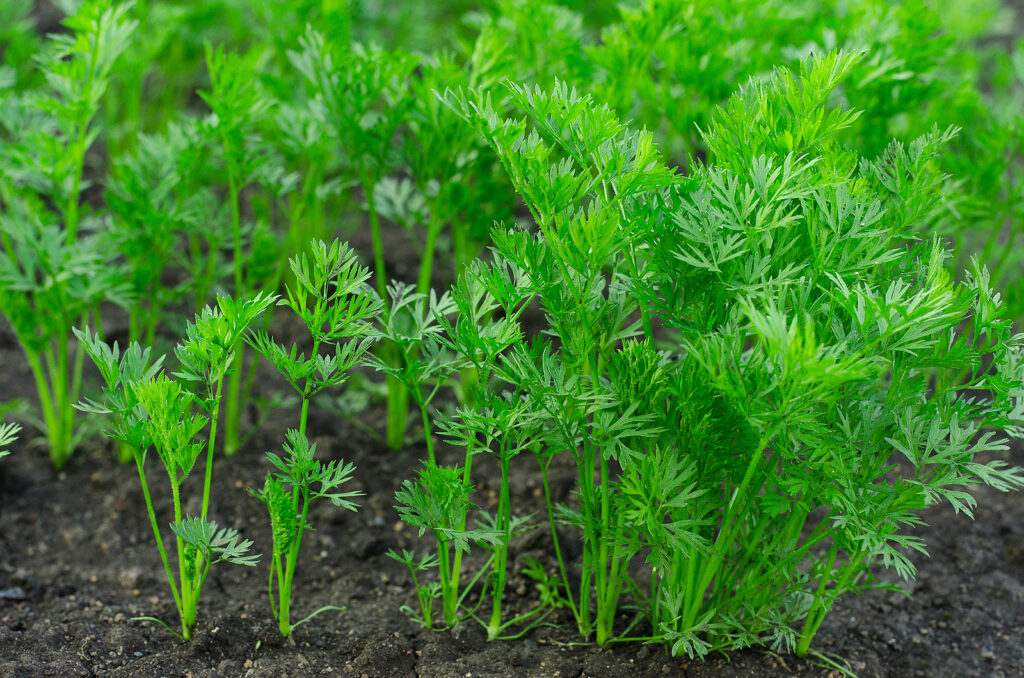
📏 How to Space Carrots for Optimal Growth
In Rows:
- Within the row: Final spacing should be 1½ to 2 inches apart
- Between rows: Space rows 12 to 18 inches apart, or closer (6–8 inches) in raised beds
In Beds (Square-Foot or Block Style):
- Space seeds about 1½ inches apart in all directions
- This method works well in raised beds or containers with loose soil
In Containers:
- Use deep containers (at least 10–12 inches)
- Sow thinly and aim for 1½ inches between plants
- Space rows 2 inches apart if planting in blocks
🌿 Thinning Carrots After Germination
Once seedlings are 1–2 inches tall, thin them carefully by snipping with scissors or gently pulling:
- Leave the strongest seedlings
- Thin to 1½–2 inches apart
- Avoid disturbing nearby roots when thinning
Don’t skip this step! Overcrowded carrots will compete for nutrients and space, leading to stunted or forked roots.
🧪 My Tip: Pre-Mix Seeds with Sand
To help space seeds more evenly:
- Mix carrot seeds with fine sand at a ratio of 1 part seed to 3–5 parts sand
- Use the mixture to sprinkle seeds more uniformly into furrows
This is especially helpful in large beds or for beginner gardeners.
🧤 Carrot Spacing Summary
| Planting Method | Seed Spacing | Row Spacing | Notes |
|---|---|---|---|
| Traditional rows | ½ inch apart, thin to 2 in | 12–18 in | Best for large gardens |
| Raised beds/block planting | 1½ in apart in all directions | N/A | Maximizes space |
| Containers | 1½ in apart | 2 in between rows | Use deep pots with loose soil |
👨🌾 My Experience with Spacing
In my Sonoma Valley garden, I grow carrots in 30-inch wide raised beds. I sow in bands about 3 inches wide, using a sand-and-seed mix, and space each band about 6–8 inches apart. Once thinned, the carrots have room to grow straight and sweet.
I’ve found that equidistant spacing in blocks produces the most uniform roots and maximizes the yield in small spaces. And thinning early—while a bit tedious—makes all the difference.
Final Thoughts
When it comes to planting carrots, a little extra care upfront pays off. Remember to:
- Prepare a smooth, loose seedbed
- Keep the soil moist until seeds sprout
- Thin seedlings for best root development
For more on how to grow carrots from start to finish, visit my Complete Guide to Growing Carrots.
Carrot Growing Hub
The Ultimate Guide to Growing Carrots from Seed to Harvest
1. Getting Started (Site & Timing)
- Where to Plant Carrots for the Best Root Development
- When to Plant Carrots: Timing for Every Season
- Carrots Seed Starting Tips
- How to Plant and Grow Carrots in Winter
- Grow Carrots Anytime of the Year in Five Steps
- How to Grow Carrots in Containers or Raised Beds
2. Planting & Varieties
- How to Plant and Space Carrots for Optimal Growth
- Carrot Varieties by Type: Best Picks for Home Gardeners
- Orange, Yellow, Red, Purple, and White Carrots: How to Choose the Right One
- Carrot Companion Plants: What Grows Well Together
3. Growing & Care
- Caring for Carrots Throughout the Growing Season
- How to Water Carrots the Right Way
- Carrot Crop Rotation: What to Plant Before and After
- Carrot and Parsnip Growing Problems: Troubleshooting
4. Harvest, Storage & Use