How to Grow Tiger’s Jaw – Faucaria

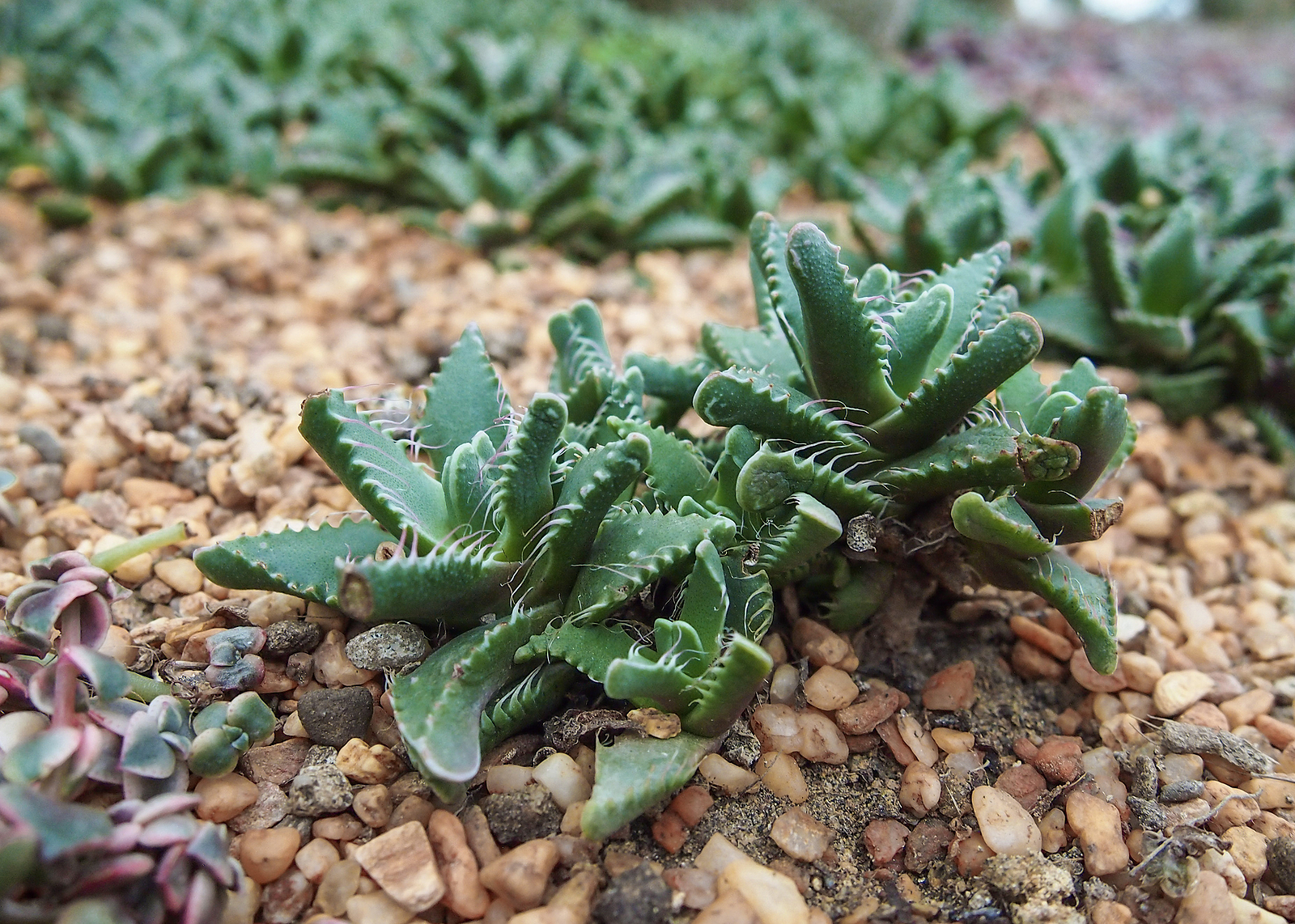
Faucaria–commonly called tiger’s jaws–is a nearly stemless succulent perennial with spotted leaves. The thick, soft leaves have marginal teeth that resemble the open jaws of a tiger. Faucaria grows to just 3 inches tall and forms a star-shaped rosette.
Faucaria bears large, daisy-like flowers that can be pink, yellow, or white. Flowers open in the afternoon from late summer to midautumn.
Faucaria can be grown outdoors in scree, rock, or desert garden in mild-winter regions. It can be grown as a houseplant in cold-winter regions.
Faucaria is a genus of more than 30 species of clump-forming almost stemless perennials. Faucaria is native to semi-desert regions of South Africa.
Know What to Plant This Week
Every week I answer the gardener's most important question: what should I plant now? Get seasonal planting advice free — or go Pro for my full Soil Temperature Garden Report, with soil temperature, moisture, weather trends, and crop-by-crop recommendations.
Get to know Faucaria
- Plant type: Perennial succulent
- Growing zones and range: Zones 12-15
- Hardiness: Tender; can not withstand temperatures less than 45°F (7°C).
- Optimal growing temperature: day, 65° to 80°F (18° to 27°C); night, 50° to 70°F (10° to 21°C). Provide a warm temperature and low humidity.
- Height and width: Low-growing succulent 3 inches (7.6m) tall that forms a star-shaped rosette.
- Foliage: Leaves are fleshy, triangular, green and 1 to 2 inches (2.5-5cm) long.
- Flowers: Large daisy-like yellow or white flowers
- Bloom time: Appear in spring and last several days. Bloom in spring.
- Uses: Rock garden, desert garden, houseplant
- Common name: Tiger’s jaws
- Botanical name: Faucaria
- Family name: Aizoaceae
- Origin: Semi-desert areas of South Africa
Where to plant Faucaria
- Light: Bright light, 4 to 6 hours direct sun, from southern or western exposure. Air circulation is important. Give tiger’s jaw direct light year-round.
- Soil: Cactus/succulent mix.
When to plant Faucaria
- Set outdoors
Planting and spacing Faucaria
- Space
How to water and feed Faucaria
- Water: During the growing season, water Faucaria regularly. Let the soil dry between thorough waterings. Avoid overwatering. Faucaria want humidity, 20% to 30%.
- In winter, water Faucaria just enough to keep plant from shriveling.
- Feeding: Feed Faucarai monthly during growing season, with mild, high-phosphorus fertilizer. Withhold fertilizer during the winter rest period.
Faucaria care
- Faucaria rests during winter. During the rest pereiod provide Faucaria with 3 hours direct sun in cool spot, 50°F (10°C). Water just enough to keep plant from shriveling; withhold fertilizer.
Growing Faucaria as a houseplant
- Give Faucaria direct light year-round.
- Provide a warm temperature and low humidity.
- Allow the soil to dry between thorough watering.
- Apply fertilizer no more than once a month; too much fertilizer causes soft, weak growth.
- Repot Faucaria every two to three years in a cactus mix.
Faucaria pests and diseases
- Faucaria can be damaged by mealybugs or scale insects and is susceptible to leaf rot.
Faucaria propagation
- Propagate Faucaria by division, suckers, or seeds.
Faucaria varieties to grow
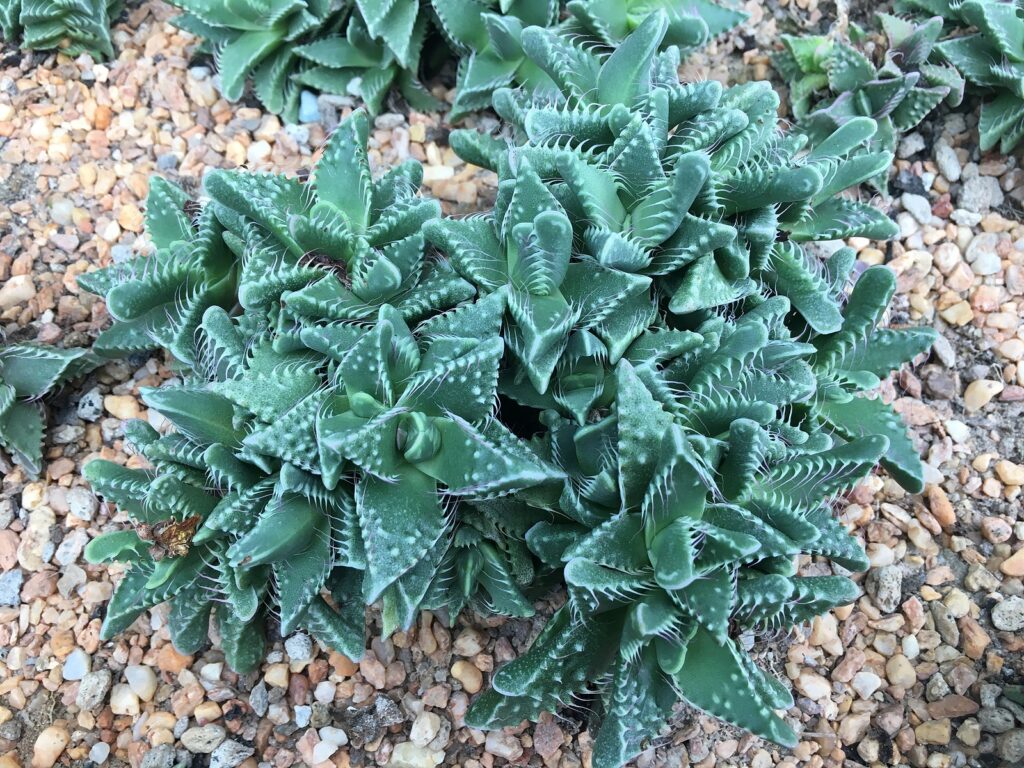
- Faucaria tigrina. Grows to 4 inches (10cm) tall and 8 inches wide; has 2 inch (5 cm) long leaves in a rosette; has sharp teeth along the margins of the leaves which are gray-green, speckled with white and resemble open jaws; flowers are 2 inches (5 cm) across. F. tigrina, tiger’s jaw: .
- F. tuberculosa. Rosette of 1 inch (2.5 cm) long gray-green leaves covered with yellowish white dots and several teeth along the margins.