Understanding Plant Growth Stages: From Leaf to Fruit

If you want a productive vegetable garden, you need to understand one simple truth:
👉 Plants don’t grow randomly. They move through predictable stages.
After more than 30 years growing vegetables year-round in Sonoma Valley—raised beds, mounded rows, and containers—I’ve learned that most yield problems come from misunderstanding when a plant is doing what.
Gardeners often treat all growth as equal. But a plant’s needs change dramatically as it moves from leaf growth to flowering to fruiting.
Once you see those stages clearly, everything else—watering, feeding, spacing, pruning—becomes easier and far more effective.
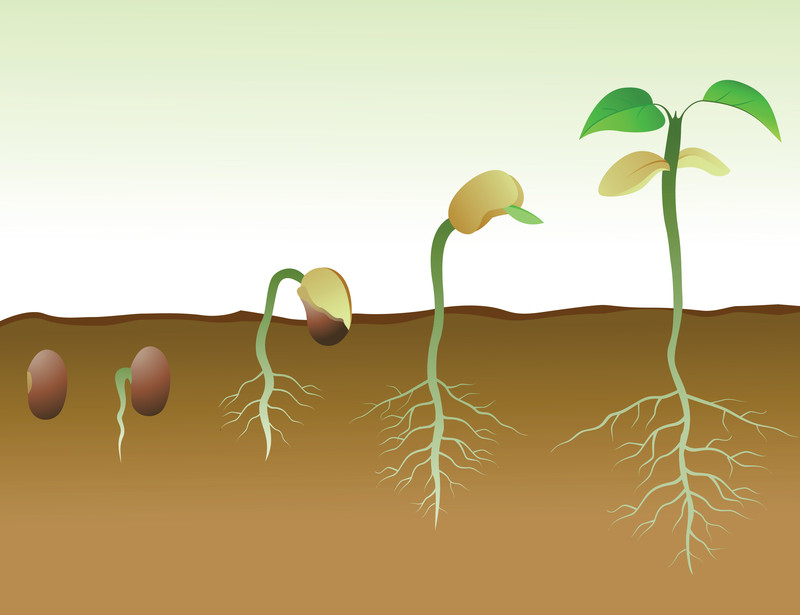
Stage 1: Establishment (Rooting + Early Leaf Growth)
This is where every plant begins after germination or transplant.
What’s happening:
- Roots are expanding into surrounding soil
- Leaves are small but rapidly forming
- The plant is building its energy system
What matters most:
- Even moisture at the root zone
- Protection from stress (heat, cold, drought)
- Gentle, balanced nutrients
Common mistake:
Pushing growth too early with heavy fertilizer.
That often produces weak, shallow-rooted plants that struggle later.
Goal: Establish a strong root system before chasing size.
Stage 2: Vegetative Growth (Leaf Expansion)
This is the “build phase.”
Plants are focused on:
- Leaf production
- Stem strength
- Photosynthesis capacity
In simple terms: the plant is building its engine.
What you’ll see:
- Rapid leaf expansion
- Increased plant height
- Strong green growth (if conditions are right)
What matters most:
- Consistent watering (not extremes)
- Balanced nitrogen (not excessive)
- Good spacing and airflow
My field observation:
This stage determines how much energy the plant can produce later. Weak vegetative growth = limited yield ceiling.
Stage 3: Transition (Flower Initiation)
This is a critical turning point that many gardeners miss.
The plant begins shifting energy:
- From leaf growth → to reproduction
- From size → to flowers
What you’ll see:
- First buds forming
- Slower leaf expansion
- Energy shifting upward into flowering sites
What matters most:
- Stable moisture (this is where stress causes flower drop)
- Avoiding high nitrogen feeding
- Structural support (especially for tomatoes and peppers)
Common mistake:
Treating the plant like it is still in full vegetative growth.
This is where yield decisions are made.
Stage 4: Flowering (Pollination Window)
Now the plant is trying to reproduce.
Every flower is a potential fruit.
What’s happening:
- Energy shifts into flower development
- Pollination becomes critical
- Plant becomes more sensitive to stress
What matters most:
- Consistent watering (irregular moisture = flower drop)
- Airflow for pollination
- Balanced nutrients (especially potassium)
Key insight:
👉 If flowers fail, fruit never begins.
This is one of the most fragile stages in the entire cycle.
Stage 5: Fruit Set (The Yield Lock-In Stage)
This is where harvest potential is determined.
Once fruit sets:
- The plant commits energy to development
- Early fruit size and quality are established
- Growth shifts from production to filling
What you’ll see:
- Small fruit forming
- Slower vegetative growth
- Increased water demand
What matters most:
- Deep, consistent watering
- Light feeding (avoid excess nitrogen)
- Structural support to reduce stress on branches
My experience:
This stage is where most yield is either secured—or lost.
Stage 6: Fruit Development (Filling + Maturity)
Now the plant is finishing the job.
What’s happening:
- Fruit is increasing in size
- Sugars and flavor compounds develop
- Plant energy is fully allocated
What matters most:
- Steady water supply (no swings)
- Potassium support for fruit quality
- Regular harvesting for continuous crops
Common mistake:
Inconsistent watering here reduces both size and flavor.
Stage 7: Harvest and Regeneration
Harvest is not the end—it’s part of the cycle.
What happens:
- Plants redirect energy after harvest
- Many crops produce additional flushes
- Ongoing production depends on management
What matters most:
- Frequent harvesting (especially cucumbers, beans, squash)
- Continued light feeding
- Removing spent or diseased growth
The Big Picture: Why This Matters
Most garden problems come from treating all stages the same.
But plants are constantly shifting:
- Leaf stage → builds capacity
- Flower stage → determines potential
- Fruit stage → locks in yield
👉 If you support the wrong stage with the wrong input, you limit production.
Practical Takeaway
If you only remember one thing:
- Early growth = build roots
- Mid growth = build leaves
- Flowering = protect stability
- Fruiting = maintain consistency
Get those transitions right, and your garden becomes far more productive without working harder.
Final Thought
Great gardening is less about reacting—and more about recognizing what stage the plant is in before it shows stress.
Once you can see that shift clearly, everything improves:
- Watering becomes precise
- Feeding becomes intentional
- Yield becomes predictable