Why Tomatoes Crack: Causes, Prevention, and What to Do with Split Tomatoes

Few things are more disappointing than walking into the garden to pick a perfect, ripe tomato only to discover a deep crack running across the fruit. The good news is that tomato cracking is rarely caused by disease or pests. Instead, it’s almost always the result of sudden changes in how quickly the fruit grows.
I’ve grown tomatoes for more than 30 years in raised beds, containers, and in-ground gardens, and I’ve found that even experienced gardeners occasionally harvest cracked tomatoes. The problem is most common after a heavy rain following a period of dry weather, but with consistent watering and good growing practices, you can greatly reduce fruit cracking.
What Causes Tomatoes to Crack?
Tomatoes crack when the inside of the fruit expands faster than the skin can stretch.
The fruit’s skin is surprisingly strong, but it has limits. When roots suddenly absorb a large amount of water, the flesh inside the tomato swells rapidly. If the skin cannot keep pace with the expansion, it splits.
Know What to Plant This Week
Every week I answer the gardener's most important question: what should I plant now? Get seasonal planting advice free — or go Pro for my full Soil Temperature Garden Report, with soil temperature, moisture, weather trends, and crop-by-crop recommendations.
Think of the tomato as a balloon. Add air slowly, and it stretches. Add too much too quickly, and it bursts.
The Most Common Cause: Uneven Watering
The number one cause of cracked tomatoes is inconsistent soil moisture.
A typical sequence looks like this:
- Soil becomes dry for several days.
- Tomatoes slow their growth.
- Heavy rain or deep irrigation suddenly wets the soil.
- Roots absorb large amounts of water.
- Fruit swells rapidly.
- The skin splits.
This often happens during midsummer when dry weather is followed by thunderstorms or when gardeners try to make up for missed watering.
Two Types of Tomato Cracks
Tomatoes usually develop one of two kinds of cracks.
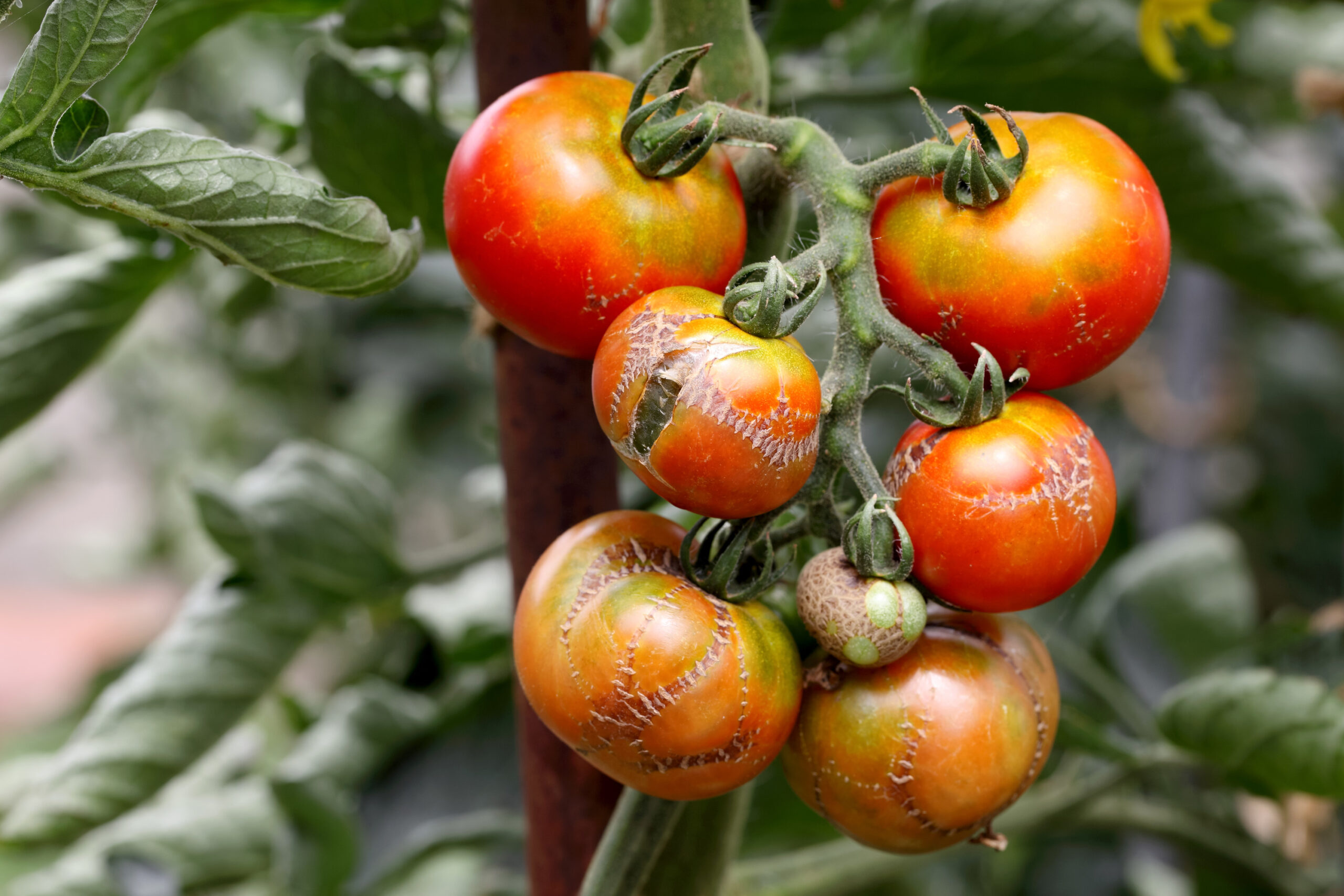
Radial Cracks
These cracks begin at the stem and extend downward toward the blossom end.
Radial cracks often develop after sudden rainfall and can become several inches long. They’re the most noticeable and often expose the flesh of the fruit.
Concentric Cracks
These form circles around the stem scar.
Concentric cracking is usually shallower and often appears while fruits are still green. Many heirloom tomatoes naturally develop some concentric cracking without affecting eating quality.
Why Some Tomatoes Crack More Than Others
Not all tomato varieties are equally prone to cracking.
Large-fruited heirloom tomatoes often crack more readily because they have:
- Thin skins
- Rapid fruit expansion
- Large fruit size
Many modern hybrid varieties have been bred for crack resistance and tolerate changes in soil moisture much better.
Cherry tomatoes generally crack less frequently because their small fruits expand more evenly.
Hot Weather Can Contribute
High temperatures alone don’t usually cause cracking, but they can increase the risk.
During hot weather:
- Plants lose more water through their leaves.
- Soil dries more quickly.
- Fruits stop expanding.
- A sudden rain afterward causes rapid swelling.
The combination of heat and inconsistent watering often produces the worst cracking.
Can Overwatering Cause Cracks?
Yes.
Even without rainfall, applying large amounts of water after the soil has dried can produce the same result.
I’ve found that tomatoes grown with drip irrigation or soaker hoses are much less likely to crack because they receive steady, even moisture throughout the season.
How to Prevent Tomatoes from Cracking
Fortunately, preventing cracked tomatoes is easier than treating them.
Water Consistently
Maintain evenly moist soil throughout the growing season.
Aim for:
- About 1 inch of water per week
- More during prolonged hot weather
- Deep watering rather than shallow daily sprinkling
Consistency is more important than the exact amount.
Mulch Around Plants
A 2- to 3-inch layer of organic mulch helps regulate soil moisture.
Good mulches include:
- Straw
- Shredded leaves
- Compost
- Pine needles
- Fine bark
Mulch slows evaporation and reduces dramatic moisture swings after rain.
Harvest Promptly
Don’t leave ripe tomatoes on the vine longer than necessary.
Fully ripe fruit is more susceptible to splitting than fruit that is just beginning to color.
I often harvest tomatoes at the breaker stage—when the fruit first shows pink or red color—and allow them to finish ripening indoors. They develop excellent flavor while avoiding many cracking problems.
Avoid Large Irrigation Changes
If the soil has become very dry, don’t flood the garden all at once.
Instead:
- Water deeply.
- Wait several hours.
- Water again the following day if necessary.
Gradually restoring soil moisture reduces stress on developing fruit.
Choose Crack-Resistant Varieties
Many newer tomato varieties resist cracking better than older heirlooms.
If cracking is a yearly problem, consider growing varieties specifically bred for crack resistance.
Are Cracked Tomatoes Safe to Eat?
Usually, yes.
If the crack is:
- Fresh
- Clean
- Free of mold
- Not invaded by insects
Simply cut away the damaged area and enjoy the remainder of the fruit.
However, discard tomatoes that develop:
- Mold
- Fermentation
- Soft rot
- Foul odor
Open cracks can quickly invite bacteria and fungi during humid weather.
Does Fertilizer Cause Cracking?
Excess fertilizer doesn’t directly cause cracking, but too much nitrogen can produce rapid plant growth that contributes to uneven fruit development.
Feed tomatoes moderately throughout the season rather than applying large amounts of fertilizer at once.
Does Pruning Affect Cracking?
Heavy pruning can expose fruits to direct sunlight, increasing heat stress, but it isn’t usually a direct cause of cracking.
Maintain enough healthy foliage to shade developing fruit while still allowing good air circulation.
Frequently Asked Questions
Should I pick tomatoes before rain?
If heavy rain is forecast and fruits are nearly ripe, harvesting them beforehand often prevents cracking.
Can cracked tomatoes continue ripening?
Yes. Minor cracks usually heal with a corky scar, although deep cracks remain open.
Are heirloom tomatoes more likely to crack?
Yes. Many heirloom varieties naturally develop more cracking than hybrids because of their thinner skins and larger fruit.
Growing Tips for Crack-Free Tomatoes
- Water consistently throughout the season.
- Mulch to keep soil moisture even.
- Avoid allowing soil to become extremely dry.
- Harvest fruits as they begin to ripen.
- Use drip irrigation whenever possible.
- Grow crack-resistant varieties if splitting is a recurring problem.
Final Thoughts
Tomato cracking is a common gardening challenge, but it doesn’t mean you’ve done something wrong. In most cases, it’s simply the result of rapid fruit growth after a sudden increase in soil moisture. After decades of growing tomatoes, I’ve learned that consistent watering and a generous layer of mulch prevent most cracking before it starts. While an occasional split tomato is almost unavoidable—especially after summer thunderstorms—the fruits are usually still delicious, and a few simple changes in watering practices can keep the majority of your harvest smooth, beautiful, and ready for the table.
Want the complete heat-wave playbook? For step-by-step guidance before, during, and after a heat wave—including watering, shading, mulching, recovery, and crop-specific advice—see The Complete Guide to Growing Vegetables in Extreme Summer Heat.