The Best Garden Sprinklers: What Actually Works

A sprinkler should make watering easier—not waste water, flood some areas, and miss others. Yet that’s exactly what happens with poorly designed sprinklers. The difference between frustration and efficiency comes down to coverage pattern, pressure consistency, and adjustability.
What actually works in a home garden is simple: a sprinkler that delivers even, controlled water distribution matched to your space. Get that right, and you’ll grow stronger plants, reduce disease, and use less water.
Best Garden Sprinklers
Best Overall:
Melnor XT Turbo Oscillating Sprinkler
A top performer for consistent, even coverage across rectangular garden beds.
Know What to Plant This Week
Every week I answer the gardener's most important question: what should I plant now? Get seasonal planting advice free — or go Pro for my full Soil Temperature Garden Report, with soil temperature, moisture, weather trends, and crop-by-crop recommendations.
Best for: Vegetable gardens, rectangular lawns, raised beds
Why it wins: Uniform water distribution without puddling
Pros:
- Adjustable width and range
- Even, rain-like coverage
- Works well with typical home water pressure
Cons:
- Requires proper alignment for best results
Best for Small Gardens:
Gardena ZoomMaxx Oscillating Sprinkler
Compact but highly adjustable, perfect for tight spaces and smaller beds.
Best for: Small gardens, compact layouts
Pros:
- Precise area control
- Durable build
- Easy to reposition
Cons:
- Limited maximum coverage
Best for Large Areas:
Orbit Impact Sprinkler on Tripod Base
When you need reach and power, this impact sprinkler covers wide spaces effectively.
Best for: Large gardens, open areas
Pros:
- Long-distance spray
- Adjustable spray arc
- Elevated for better coverage
Cons:
- Less gentle on delicate plants
Best for Gentle Watering:
Dramm ColorStorm Spinning Sprinkler
Designed to deliver a softer, more plant-friendly spray.
Best for: Seedlings, leafy crops, delicate plants
Pros:
- Gentle, even spray
- Simple design
- Good for close spacing
Cons:
- Smaller coverage area
Best Budget Option:
Aqua Joe SJI OMS16 Oscillating Sprinkler
An affordable option that still delivers reliable, even watering.
Best for: Budget-conscious gardeners
Pros:
- Low cost
- Adjustable coverage
- Easy setup
Cons:
- Less durable long-term
Types of Garden Sprinklers (And When to Use Them)
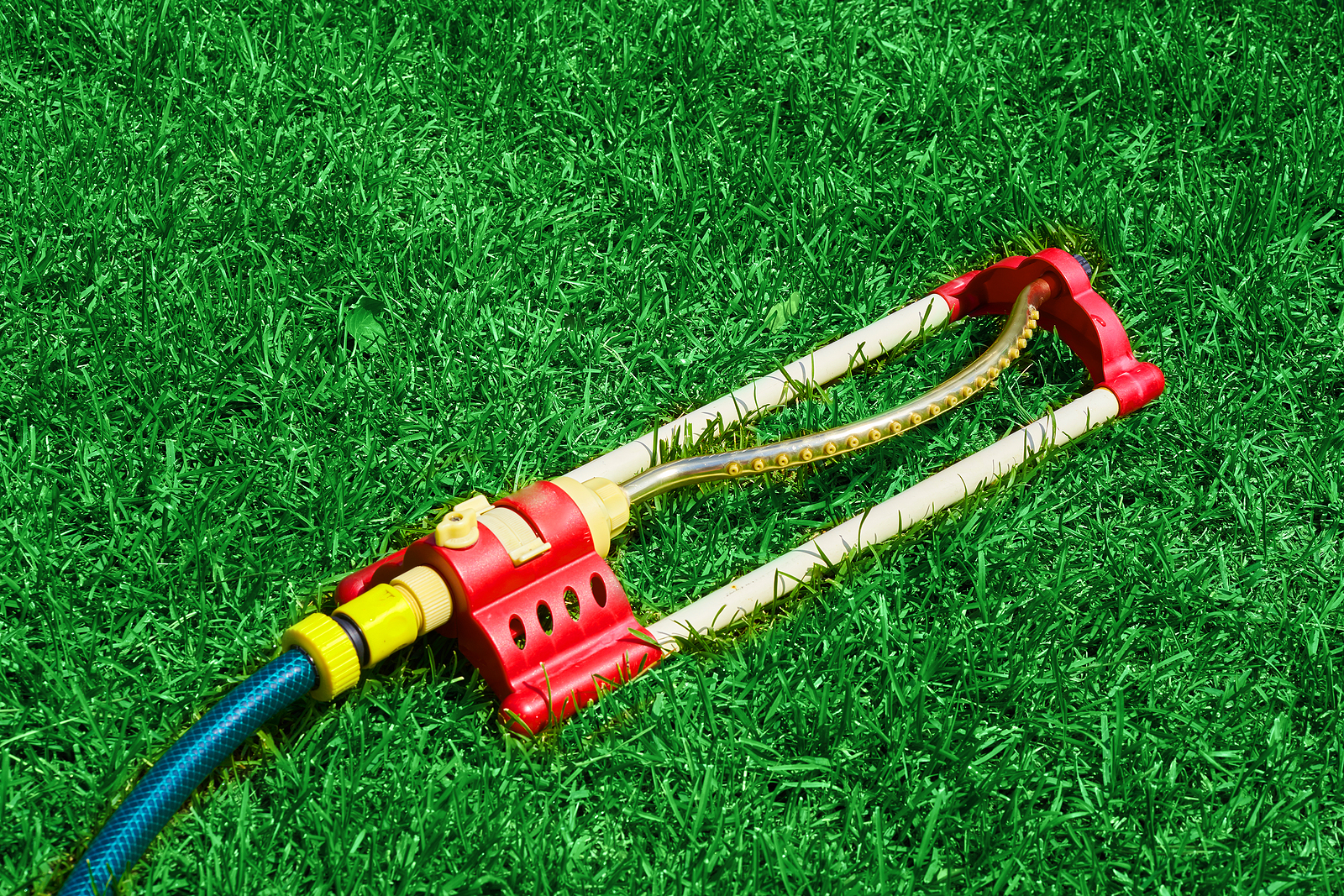
1. Oscillating Sprinklers
- Spray pattern: Back-and-forth fan
- Best for: Rectangular spaces
- Why they work: Even, consistent coverage
2. Impact Sprinklers
- Spray pattern: Rotating, pulsing stream
- Best for: Large areas
- Why they work: Long-range and powerful
3. Rotary/Spinning Sprinklers
- Spray pattern: Circular motion
- Best for: Small to medium areas
- Why they work: Gentle and uniform
4. Stationary Sprinklers
- Spray pattern: Fixed
- Best for: Targeted watering
- Why they work: Simple and reliable
How Garden Sprinklers Are Actually Used
In a productive home garden, sprinklers are used strategically—not just turned on and forgotten.
1. Deep Watering
Run sprinklers long enough to soak soil 6–12 inches deep, encouraging strong root systems.
2. Even Bed Coverage
Position sprinklers so water overlaps slightly, eliminating dry spots.
3. Early-Stage Growth
Use gentle sprinklers for seedlings to avoid soil disturbance.
4. Supplemental Watering
Combine sprinklers with hand watering for precision where needed.
How to Use a Garden Sprinkler Correctly
1. Water early in the morning
Reduces evaporation and lowers disease risk.
2. Adjust for full coverage
Watch the pattern and reposition to eliminate dry areas.
3. Avoid runoff
If water pools, shorten watering sessions and repeat later.
4. Match sprinkler to plant type
- Seedlings: gentle spray
- Established plants: deeper watering
5. Check pressure regularly
Low pressure leads to uneven coverage.
What Actually Matters When Choosing a Sprinkler
- Coverage pattern: Must match your garden shape
- Water distribution: Evenness is more important than distance
- Adjustability: Control over width, range, and arc
- Durability: Metal or reinforced components last longer
Most experienced gardeners use oscillating sprinklers for beds and impact sprinklers for large areas.
Why This Advice Works
This guidance is based on decades of hands-on gardening, especially in raised beds and close-spacing systems. In real gardens, poor watering leads to shallow roots, uneven growth, and increased disease pressure.
The sprinklers recommended here are chosen for consistent water distribution, reliability, and how they perform over an entire growing season—not just out of the box.