How to Save Water in the Vegetable Garden

Water is one of the most limiting factors in a productive vegetable garden, especially once soil temperatures rise into the summer growing range. But saving water does not mean starving plants.
In fact, the healthiest gardens often use less water because the soil is managed correctly.
Over years of gardening in California conditions—including raised beds, containers, and mounded rows—I’ve learned that water conservation is less about watering less often and more about watering more intelligently.
The goal is simple:
Know What to Plant This Week
Every week I answer the gardener's most important question: what should I plant now? Get seasonal planting advice free — or go Pro for my full Soil Temperature Garden Report, with soil temperature, moisture, weather trends, and crop-by-crop recommendations.
Keep moisture where roots can actually use it.
1. Build Soil That Holds Water Naturally
Healthy soil acts like a sponge.
Soils rich in compost and organic matter:
- absorb water more slowly
- hold moisture longer
- reduce runoff
- improve root penetration
- support beneficial soil biology
Poor soil dries faster, crusts over, and sheds water instead of storing it.
What helps most:
- finished compost
- shredded leaves
- aged manure
- cover crops
- regular organic matter additions
Even a modest increase in soil organic matter can dramatically improve moisture retention.
2. Mulch Aggressively in Summer
Mulch is one of the most effective water-saving tools in the vegetable garden.
Without mulch:
- surface soil overheats
- evaporation increases rapidly
- moisture fluctuates wildly
With mulch:
- soil stays cooler
- evaporation slows
- watering becomes more efficient
- soil biology remains more active
Good vegetable garden mulches:
- straw
- shredded leaves
- untreated grass clippings
- compost
- pine needles (light layer)
In my Sonoma garden, mulch often determines whether beds need watering every day or every several days during heat.
3. Water Deeply, Not Frequently
Shallow watering creates shallow roots.
Deep watering encourages plants to:
- root downward
- tolerate heat better
- access more nutrients
- resist drought stress
Better strategy:
Water deeply enough that moisture reaches the full root zone, then allow slight drying near the surface before watering again.
This approach trains plants to become more resilient.
4. Water Early in the Day
Morning watering reduces evaporation and gives plants time to fully hydrate before afternoon heat arrives.
Benefits:
- less fungal disease pressure
- lower evaporation loss
- more efficient absorption
- better plant recovery during hot weather
Midday watering loses large amounts of moisture to evaporation, especially once temperatures move above 85°F.
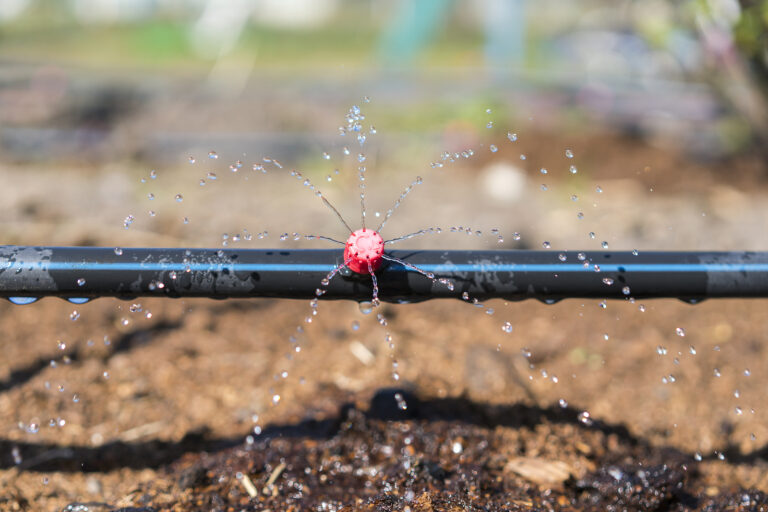
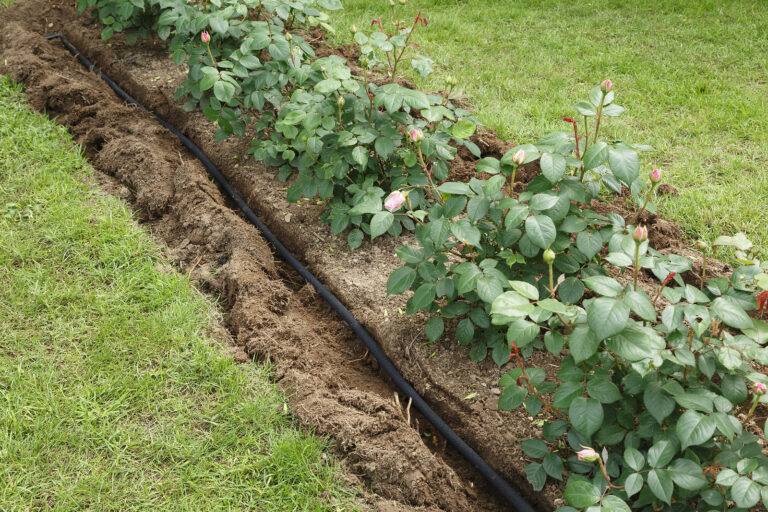
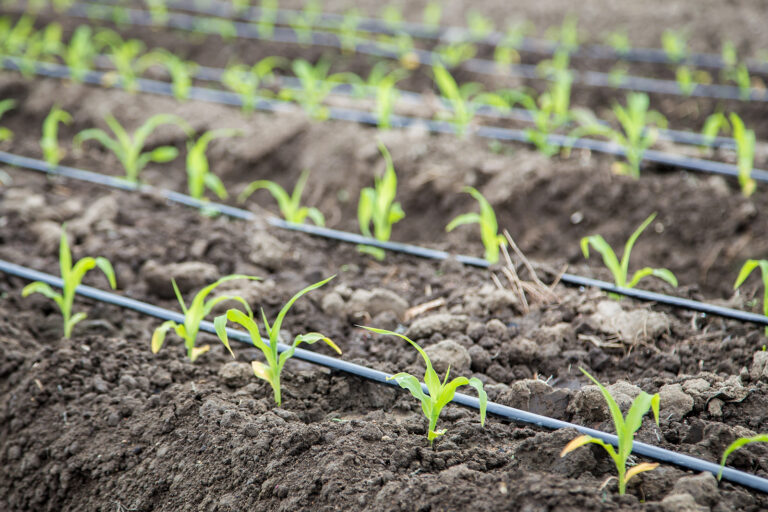
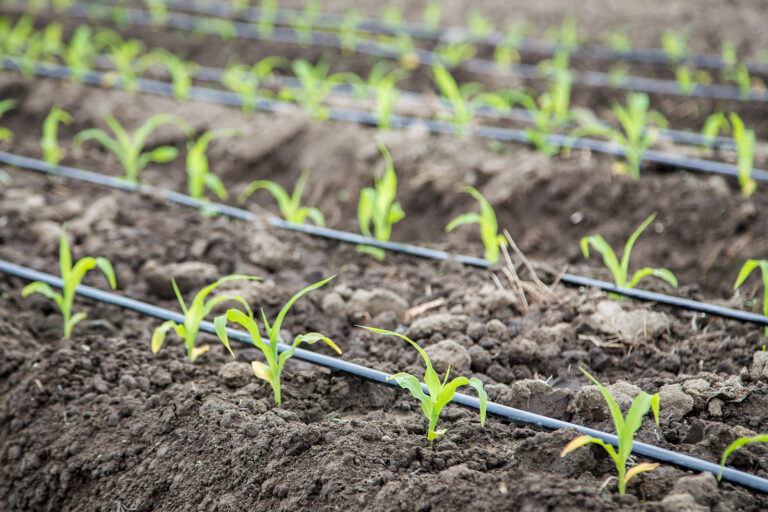
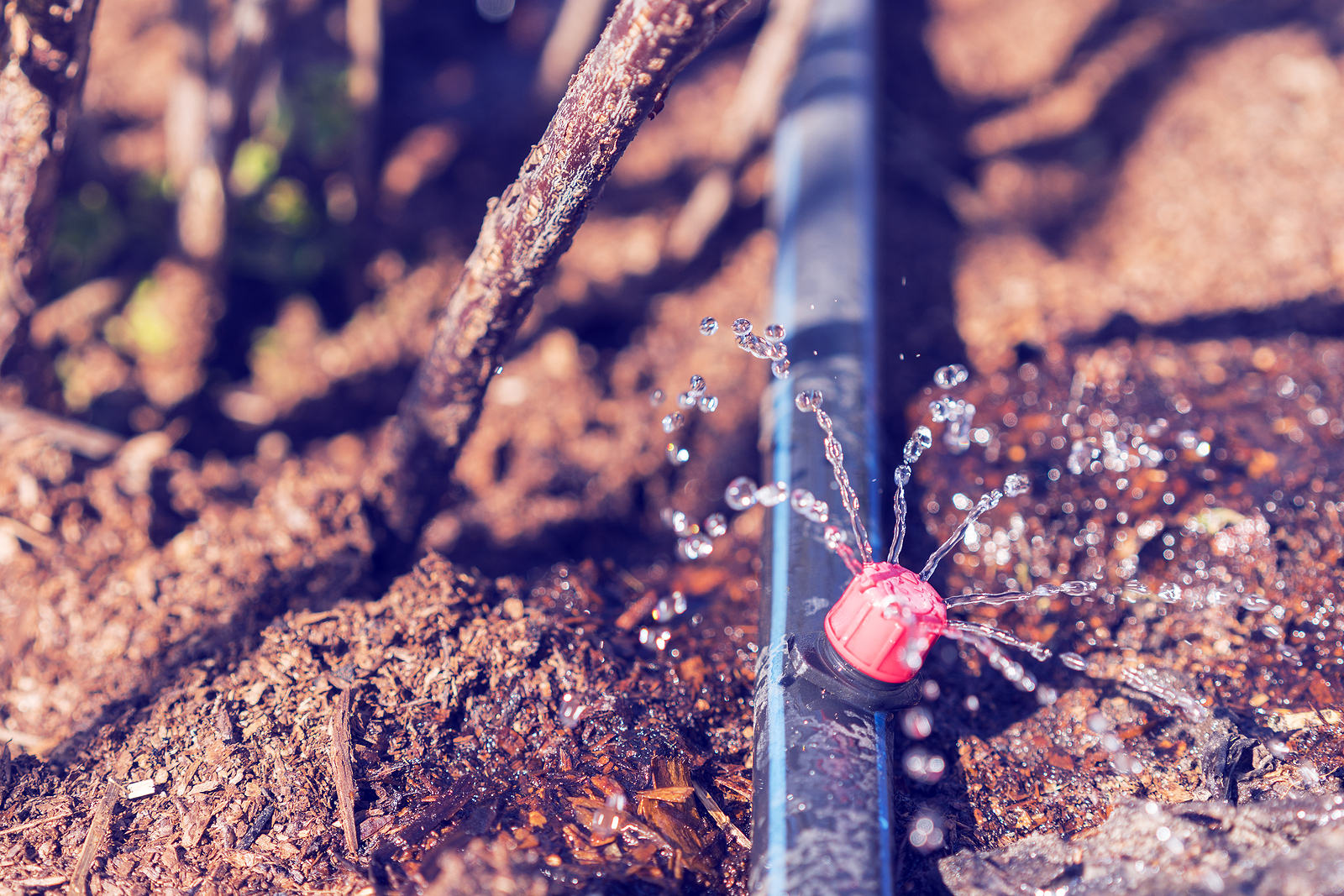
5. Use Drip Irrigation or Soaker Hoses
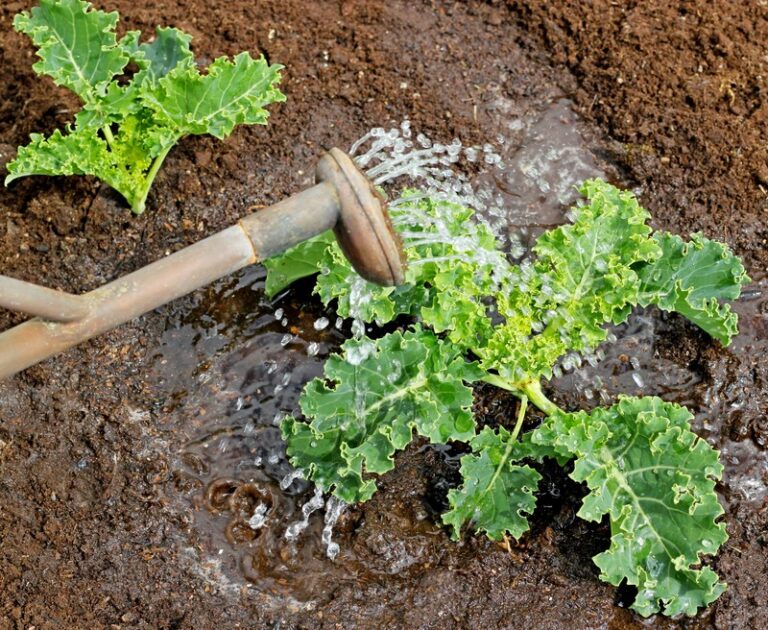
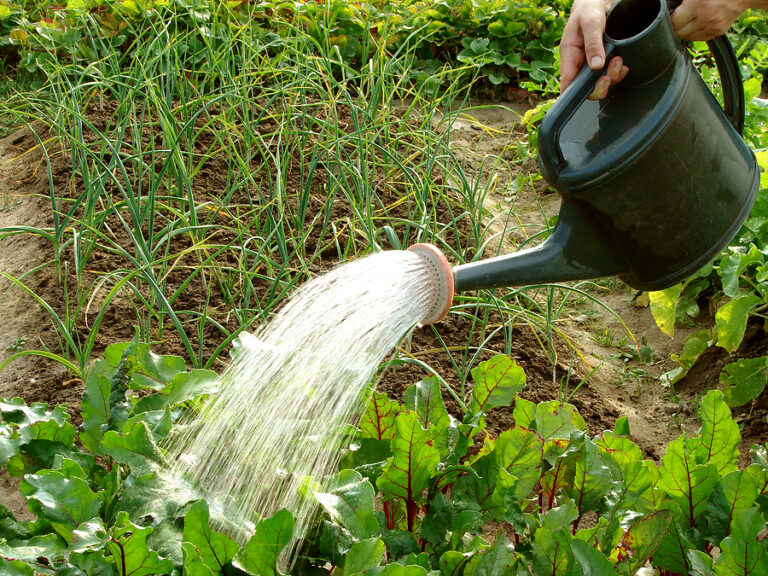
Overhead watering wastes surprising amounts of water.
Drip systems and soaker hoses:
- place water directly into the root zone
- reduce evaporation
- keep foliage drier
- improve consistency
- reduce runoff
Even simple gravity-fed systems can significantly reduce water use compared to sprinklers.
6. Space Plants Properly
Overcrowded plants compete aggressively for moisture.
Proper spacing:
- improves airflow
- reduces disease pressure
- allows roots to expand evenly
- helps soil moisture distribute more efficiently
Dense plantings can work—but only when irrigation and soil health are carefully managed.
7. Match Crops to Seasonal Soil Temperatures
One of the biggest hidden water-saving strategies is simply planting crops when soil temperatures are correct.
When crops are planted into soil that is too cold:
- roots grow slowly
- plants sit stressed for weeks
- excess watering often follows
- disease risk increases
Crops planted into correct soil temperatures establish faster and use water more efficiently from the beginning.
8. Protect Soil During Heat Waves
Extreme heat changes everything.
Once soil temperatures move into the upper 70s and 80s:
- evaporation accelerates
- containers dry rapidly
- shallow-rooted crops stress quickly
During heat spikes:
- add extra mulch
- water deeply before extreme heat arrives
- use temporary shade cloth if necessary
- harvest aggressively to reduce plant stress
9. Monitor Soil Moisture Below the Surface
Surface dryness can be misleading.
The top inch of soil may look dry while the root zone remains moist.
Simple moisture checks:
- finger test (2–4 inches deep)
- small trowel inspection
- mulch pull-back check
- container weight test
The goal is steady moisture at root depth—not constantly wet soil.
10. Group Crops by Water Needs
Not every vegetable uses water at the same rate.
High-water-demand crops:
- tomatoes
- cucumbers
- squash
- celery
- corn
Lower-water-demand crops:
- herbs
- onions
- garlic
- beans once established
Grouping similar crops together improves irrigation efficiency and reduces waste.
My Experience
In my own garden, the biggest improvement in water efficiency came when I stopped reacting to surface dryness and started focusing on moisture deeper in the root zone. Mulching heavily, watering deeply, and planting according to soil temperature reduced overall watering while improving crop quality at the same time. During hot Sonoma summers, healthy soil and mulch often matter more than how often I irrigate.
Final Takeaway
Saving water in the vegetable garden is not about depriving plants.
It is about creating soil conditions where water stays available longer, roots grow deeper, and plants become naturally more resilient.
Healthy soil, deep watering, mulch, and correct seasonal timing work together to reduce water use while improving harvest quality at the same time.