How to Grow Autumn Crocus — Colchicum

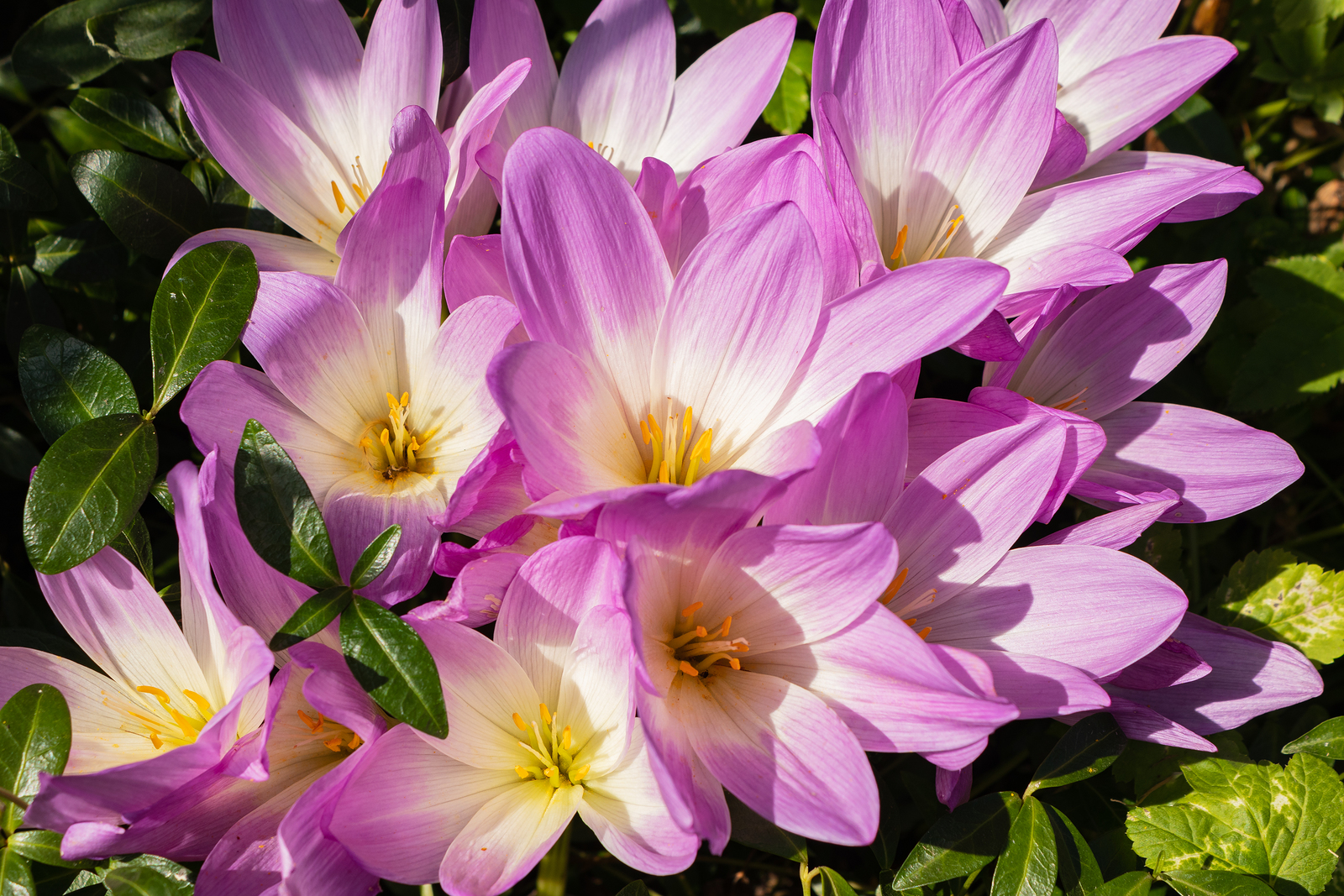
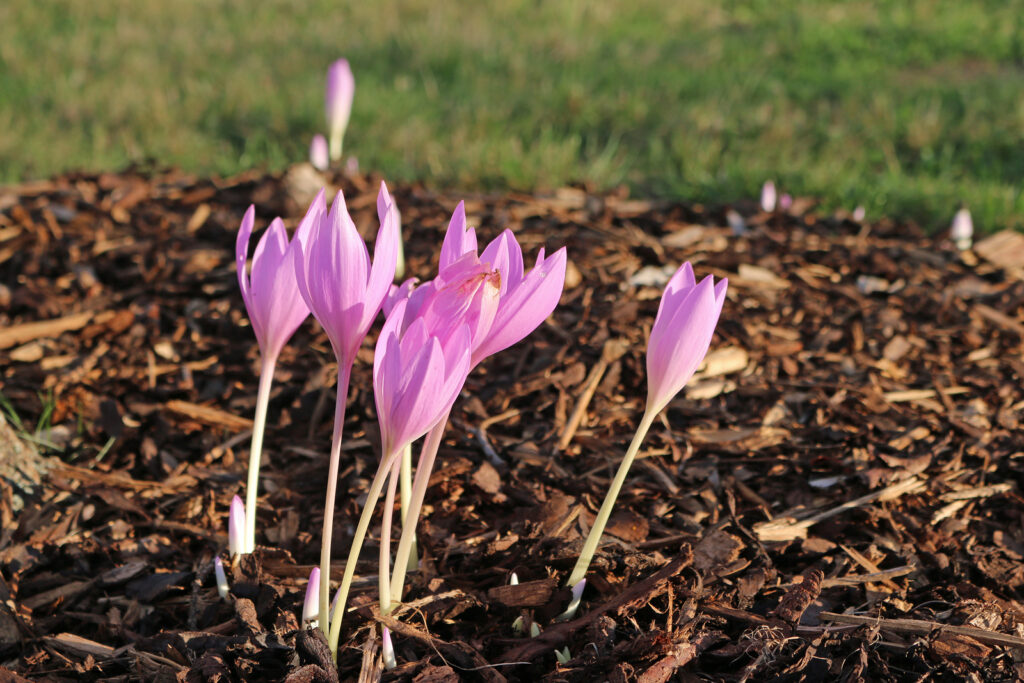
Autumn crocus, Colchicum, is a fall-flowering perennial bulb with strap-shaped leaves that appear after, or at the same time, the small vase-shaped lavender-pink flowers. Set autumn crocus where it will not be hidden by other plants.
Colchicum, autumn-crocus or meadow-saffron, is a genus of cormous plants of the Lily family. Colchicum is not related to the true crocus, though the flowering of the two plants looks alike. The species most frequently cultivated bears a cluster of large, pale-lavender blossoms in fall. The coarse grassy foliage appears the following spring, dying down before midsummer.
The corms are hardy enough to winter over with little or no protection in the temperate zone and left undisturbed, they will flower freely for years. Some can be dug during the dormant season and kept for indoor blooming as they are effective and exceedingly easy to handle.
Planted in peat moss in shallow bowls they will blossom with moderate heat and moisture.
Know What to Plant This Week
Every week I answer the gardener's most important question: what should I plant now? Get seasonal planting advice free — or go Pro for my full Soil Temperature Garden Report, with soil temperature, moisture, weather trends, and crop-by-crop recommendations.
See also How to Grow Crocus
Get to know autumn crocus
- Plant type: Perennial fall-blooming bulb
- Growing Zones and range: 5-9
- Hardiness: Half-hardy
- Height and width: 4”- 6” tall, 4” wide
- Foliage: Remains green in green all winter then disappears in spring
- Flowers: Pink, lavender, or white; crocus-like flowers; each bulb produces up to 6 flowers.
- Bloom time: Fall
- Uses: Plant in groups of 6 bulbs or more for best effect.
- Note: All parts of the crocus plant are toxic.
- Botanical name: Colchicum autumnal; other varieties listed below
- Common name: Autumn Crocus, meadow saffron
Where to plant autumn crocus
- Plant autumn crocus in full sun to light shade.
- Grow autumn crocus in average, well-drained soil.
When to plant autumn crocus
- Plant corms in mid-to-late summer, 3 to 4 inches deep
Planting and spacing autumn crocus
- Space autumn crocus 3 to 5 inches apart.
How to water and feed autumn crocus
- Autumn crocus needs ample water when blooming; keep the soil evenly moist. When not in bloom autumn crocus needs moderate water.
Autumn crocus care
- Autumn crocus is commonly pest-free.
- Deer and rabbits may eat the flowers.
Autumn crocus common problems
- Gray mold and slugs can be a problem for autumn crocus.
Autumn crocus propagation
- Sow seed indoors in spring.
- Separate corms when dormant in spring.
Crocus varieties to grow
- There are 80 species of dwarf crocus.
- Crocus chrysanthus includes many hybrids.
- Crocus speciosus, showy crocus, has goblet-shaped flowers with lavender-purple flowers.
- Crocus sativus, saffron crocus, has purple flowers.
- Crocus venus, Dutch crocus, has white, lavender, purple, or yellow flowers.