Creamed Fennel Soup

Serves 4 2 potatoes 1 medium fennel bulb 2¼ ounces (60 g) butter 2 cups (500 ml) chicken stock 4½ ounce (125 g) chopped cream cheese 1 tablespoon chopped fresh chives 1 tablespoon lemon juice   Chop the potatoes. Slice...

Read more »

Never miss a recipe!

Enter your email address to subscribe to Harvest to Table free via email:

Measurement Converter

How to use
the Converter?

Hardiness Zone Finder

Find your zone by entering your zip code

National Gardening Association
Hardiness Zone Map

Vegetables to Seed Start Indoors

Snow on the ground. Heavy winter rain in the garden. Last average frost date weeks away. No problem. You can start the spring vegetable garden indoors.


If you know the average date of the last spring frost in your garden or region, you can make a schedule for starting vegetable crops indoors and get growing weeks before the outdoors temperatures warm. (Check at your local library or the county cooperative extension if you are unsure of the average last frost date.)


Here is a list of vegetables that are commonly started indoors and later transplanted to the garden:


Crop

Weeks before last frost date to start indoors

Onions, leeks: bulb-forming leeks and sweet Spanish and Bermuda onions require a long growing season to reach maturity, so give them a good head start. Bunching onions are ready in 55 days, dry onions in 100 days; leeks in 130 days.

10 to 12 weeks: seed germinates best at 65°F, but will germinate at any temperature between 45° and 85°F. Start seed in the fall in warm-winter regions or where spring turns to summer quickly.


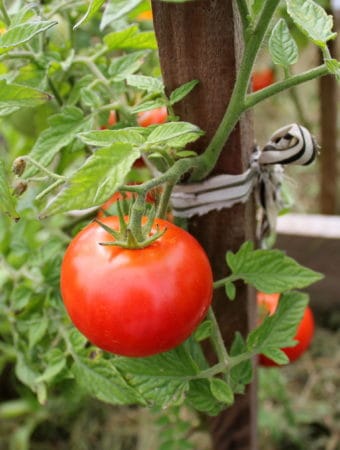
Early tomatoes: push the season with cold and cool weather tolerant varieties; early tomatoes reach maturity in as little as 55 days from transplanting into the garden.

10 to 12 weeks: tomatoes need plenty of time to develop strong root systems. Grow on seedlings indoors at 75°F day and 65°F night to as low as 50°F night to prepare for early transplanting. Protect seedlings when they go into the garden: hot caps, baskets, plastic or glass jugs. Warm garden soil with black plastic before transplanting.

Celery: start indoors for spring crop; seeds for fall or winter crop are usually sown outside in spring. Allow 5 to 6 months for plants to reach harvest from seed.

8 to 10 weeks: Frost resistant and can be set out while the weather is still cool. Do not expose seedlings to temperatures below 50°F for extended period or they may bolt.

Mid-season and late-season tomatoes: these tomatoes require from 70 to 110 days from transplanting to reach maturity.

6 to 8 weeks. Seed germinates in 8 to 10 days at 70°F. For a long season, plant several varieties with differing days to maturity.

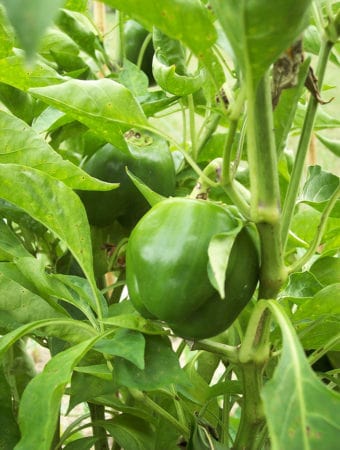
Early peppers: reach maturity in 70 to 90 days after transplanting.

6 to 8 weeks: Grow on seedling at 65°F day and 55°F night. Set out transplants two weeks after the last frost when the soil has warmed; set in garden two to three weeks earlier if plants are protected by cloche or plastic tunnel.

Eggplant: reaches maturity in 90 to 125 days.

6 to 8 weeks: Seed germinates in 10 to 12 days at 70°F. Grow on seedling at 65°F day and 55°F night. Do not set transplants in the garden without protection until daily temperature stays above 65°F; set out earlier under hot caps or cloches, Use deep mulch to protect seedlings in garden from wind.

All other peppers

4 to 6 weeks: Grow on seedling at 65°F day and 55°F night. Transplant to garden two weeks after the last frost.

Cabbage: transplant to the garden a week or two before the average last frost date allowing this cool-weather crop to reach maturity before warm weather arrives. Reaches maturity in 65 to 125 days.

4 to 6 weeks: germinates quickly at 70° to 75°F started indoors. Grow on seedlings at 65°F day and 55°F night. Frost resistant and can be set out while the weather is still cool but after the last severe freeze.

Cauliflower: transplant to the garden a week or two before the average last frost date allowing this cool-weather crop to reach maturity before warm weather arrives. Reaches maturity in 90 to 150 days.

4 to 6 weeks: germinates in 7 to 9 days at 70° to 75°F started indoors. Grow on seedlings at 65°F day and 55°F night. Frost resistant and can be set out while the weather is still cool. Spring crop must mature before hot weather; fall crop must mature before first fall frost.

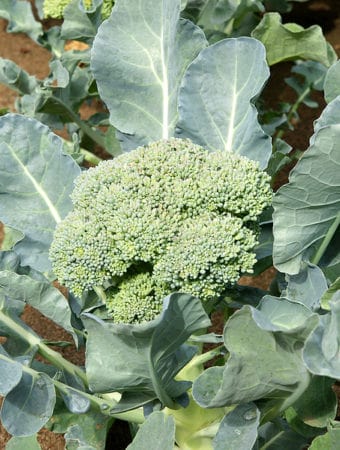
Broccoli: transplant to the garden a week or two before the average last frost date allowing this cool-weather crop to reach maturity before warm weather arrives. Reaches maturity in 65 to 100 days.

4 to 6 weeks: germinates quickly at 70° to 75°F started indoors. Grow on seedling at 65°F day and 55°F night. Frost resistant and can be set out while the weather is still cool. For fall crop, sow seed in garden midsummer.

Head lettuce: unlike loose-leaf lettuce, head lettuce needs more time--80 to 90 days―in cool weather to form a firm head.

3 to 4 weeks: germinates in 6 to 8 days at 65°F. Great Lakes is a popular home garden head variety. If weather turns hot, heads will not form; start in fall in warm-winter regions.

Melons and cucumbers: these crops are transplanted to the garden small while there is less risk of disturbing their sensitive roots.

3 to 4 weeks: Time melon sowing so that plant is set outside when the soil temperature has risen to 50°F nights and near 80°F days. Cucumber seed germinates indoors in less than 3 days with bottom heat of 80°F; grow on seedlings at temperatures not less than 65°F. Set transplants in garden when melon and cucumber starts have no more than 4 leaves to avoid disturbing developing roots.


For more articles on seed starting: click to the next page.


Continue reading "Vegetables to Seed Start Indoors" »

Harvest to Table's New Encyclopedia:
The Kitchen Garden Grower's Guide

A practical vegetable and herb garden encyclopedia

The Kitchen Garden Grower's Guide: A practical vegetable and herb garden encyclopedia The Kitchen Garden Grower's Guide is a how-to guide on planting, growing, and preparing more than eighty vegetables and herbs. This handy home companion is perfect for avid cooks, foodies, and both beginning and expert small scale vegetable gardeners.

Read more... | Buy the book from Amazon

Vegetable Garden in March

March is the month when vegetable gardeners can divide their time between what they would like to do and what the weather will allow them to do. Depending upon where you live and the weather in your region, here are a couple of posts for you to consider:

The Kitchen Garden Almanac for March: Cool and Cold Regions

The Kitchen Garden Almanac for March: Warm Regions

If you are looking for a vegetable garden calendar of tasks and planting suggestions for the year, here it is:

Vegetable Garden Calendar

And if you are struggling with very cold weather, do not forget the cold frame to get the spring garden started:

Cold Frame Calendar

As well, now is the time to visit the Seed Starting Category for articles on getting your crops growing.


Row Covers, Floating Row Covers, Garden Blankets, and Shade Cloth

Row covers, floating row covers, garden blankets, and shade cloth are made from varying weights of synthetic materials and are used to protect plants.


Heavyweight rows covers and garden blankets or quilts are used to protect plants from cold temperatures, chilling winds, and frosts--most often in late autumn, winter, and early spring. Lightweight floating rows covers are used to shield plants from insects and diseases in spring and summer. Shade cloth is used to shade soil and plants in hot summer weather.


Row covers and floating row covers are commonly made form spun bonded polyester or polypropylene fabric--often called horticultural cloth. Heavyweight covers are used to extend the growing season by keeping plants up to 10°F warmer during the day and 2° to 3°F warmer at night. Lightweight covers are used to exclude insects but are thin enough to allow light, water, and air to reach plants.


Row covers can be draped over hoops or frames set above rows of plants (to form protective tunnels) or they can be laid loosely or floated over plants. Medium to heavy weight row covers weighing from 1¼ to 2 ounces per square yard should be partially lifted on hot days and removed as the season advances to prevent plants from overheating.

Continue reading "Row Covers, Floating Row Covers, Garden Blankets, and Shade Cloth" »

Cloche to Protect Plants

A cloche is a small, portable plant covering designed to be easily moved around the garden. A cloche traps the sun's warmth raising the temperature of both the air and soil inside.


A cloche can cover a single plant or a small group of plants. You can use a cloche to protect a plant from an overnight frost or chilling winds. Cloches are commonly made of plastic or glass. A gallon milk jug with its bottom cut out can be used as a cloche.


Cloches are not a long-term solution to protecting plants. Because they are small they do not retain enough solar heat to sustain plants when temperatures fall below 40°F for more than a day. Conversely, because a cloche is small and has no venting other than lifting it away from the plant, the temperature inside a cloche can quickly overheat (the smaller the cloche the quicker it will overheat).


In late spring and early fall when the weather and temperatures are unsettled, the daily and nightly use of cloches may keep plants protected enough to add 2 to 4 weeks to your garden's growing season.

Continue reading "Cloche to Protect Plants" »

Plastic Tunnels for Growing Vegetables

Plastic tunnels can be used to extend the vegetable growing season by 4 to 8 weeks in spring and fall. A plastic tunnel is easily made by draping plastic sheeting over a series of sturdy wire or plastic hoops to create an enclosed growing space.


A plastic tunnel works much like a cold frame. The temperature inside a clear or opaque plastic tunnel can be heated by the sun 5 to 10 degrees warmer or more than the outdoor temperature during the day. The residual solar heat inside a plastic tunnel can keep plants 2 to 7 degrees warmer than the outdoor temperature at night.


A plastic tunnel can be portable--as small as 3 to 6 feet long, 3 feet wide, and a couple of feet tall, just large enough to grow salad greens--or nearly permanent, 25 feet long or more and tall enough to walk in. A large walk-in plastic tunnel for growing tall crops such as tomatoes is called a hoop house.

Continue reading "Plastic Tunnels for Growing Vegetables " »

Best Cold Frame Site

A cold frame can help you extend your growing season by capturing the warming rays of the winter sun and holding them. Even the simplest cold frame can lengthen your growing season by several weeks. To get the most out of your cold frame give some forethought to the site where it will best perform. Here are some tips for situating your cold frame:


• Site the frame where it will receive sun from mid-morning to mid-afternoon in the winter and early spring.

• Site the frame so that it faces south, southwest, or southeast; this will ensure the greatest exposure to solar heat during the winter months when the sun tracks furthest to the south. (For those of you who live in the Southern Hemisphere, site the frame to face north.)

• The back wall of the frame should be at least a few inches higher than the front wall so that the top or sash is angled and receives maximum sun exposure. Commonly, the front of the frame is 4 to 10 inches lower than the back side allowing for the maximum sun exposure.


Continue reading "Best Cold Frame Site" »

Making a Cold Frame

Boards, planks, bricks, concrete blocks, even bales of hay or mounded soil can be used to make a cold frame. Often a home-made cold frame is a simple four-sided wooden box with no bottom and a clear glass or plastic top. A cold frame can be permanent or portable.


Cold frames can vary in size: 3 feet wide by 6 feet long is the size of an average home garden cold frame. The back side of a frame is usually taller (often 18 to 24 inches high) than the front (commonly 8 to 12 inches high) with the clear top sloping down from back to front allowing rain to run off and sunshine to flood in. The taller the frame the taller the plants it will accommodate. A home garden cold frame need be no deeper than a person's reach (24 to 36 inches); this will allow plants to be tended without stepping into the frame.


Wooden-sided frames are can be made of long-lasting wood that has not been chemically treated: well-cured pine, cypress, redwood, or chestnut can be used. The translucent top or lid of the cold frame can be made from a standard window sash--approximately three by six feet. Several sashes can be placed in a row to make a long cold frame. Sheets of Plexiglass or other plastic sheeting also can be framed to create the cold frame lid. The lid or sash is usually hinged to the back side of the frame but an unhinged lid can simply rest on the top of the frame.

Continue reading "Making a Cold Frame" »

Cold Frame Calendar

As the seasons progress there are several uses for a cold frame.

• Start cool-temperature spring vegetable seeds and seedlings in late winter.

• Start summer warm-temperature vegetable seeds and seedlings beginning in early- or mid-spring.

• Start fall and winter crops under shade cover (replace the frame's glass or plastic sash with framed shade cloth).

• Protect warm-temperature crops from an early frost before harvest.

• Protect cool-temperature and cold-tolerant crops for harvest through the winter.

• Over-winter cold-tolerant crops started in fall for renewed growth and a spring harvest.

Continue reading "Cold Frame Calendar" »

Cold Frame: Extend Your Vegetable Garden Season

A cold frame is a bottomless box with a clear or translucent top. It is set on the ground or over a planting bed to capture solar energy and heat the air, soil, and plants inside. A cold frame can extend the growing season by one to several months.


Cold frames can be made of heavy lumber, cinder blocks, concrete, or clear plastic. The transparent top or cover is tilted toward the south or southeast to catch the sun. The back side of the cold frame is commonly six inches or more higher than the front to give a slope to the top cover (or sash) so that rain will run off and the sun's rays will strike the inside of the frame more nearly at right angles.


Cold frames can vary in size: 6 feet long by 3 feet wide is the size of an average home garden cold frame. A small cold frame is commonly no wider than a person's reach so that plants can be tended to without stepping into the frame. A typical cold frame is usually made eighteen to twenty four inches high or deep at the back sloping to twelve to eighteen deep at the front. The deeper the frame the taller the plants it will accommodate.


For most home vegetable gardeners, nearly all the plants in the vegetable garden can be started successfully in a cold frame or hotbed (a hotbed is a heated cold frame--sometimes heated by electricity or solar power or by--in decades and centuries past--decomposing steer or horse manure placed below the inside planting bed).

Continue reading "Cold Frame: Extend Your Vegetable Garden Season" »

Seed Failure Troubleshooting

When a seed fails to sprout there is usually a simple and easily correctable reason. Here are the most common reasons seeds do not sprout along with troubleshooting solutions.


Soil is too dry. Small seeds sown very near the surface often fail from lack of moisture. They may have enough moisture to germinate, but then the soil becomes so dry that the sprout which is beginning to push out from the seed is dried up. Neglect that would do no harm to seedlings an inch or two high will prove fatal to seeds that are just germinating. Check soil moisture once or twice a day. Keep the soil evenly moist and not too wet. If you are germinating seed indoors keep containers away from excessive heat or drafts. Cover containers with plastic or glass until seeds sprout.


Covered too deeply. Seeds covered too deep may not have the strength to push through to the surface; they are weakened by the struggle. As a general rule sow seeds twice to three times their diameter. Check the proper seeds sowing depth on the seed packet. Tiny or very fine seed can be scattered on a potting or seed starting mix surface and lightly pressed into contact with the mix.

Continue reading "Seed Failure Troubleshooting" »

Vegetable Garden Location

There are a few basic requirements for creating a productive and enjoyable vegetable garden: convenience, sunlight, good and well-drained soil, and easy access to water are foremost. Here is a run down of these basic requirements and a couple of additional considerations for making a vegetable garden.


Convenience. Select a spot near at hand, easy and quick to get to. Choose, as you can a spot, close to the kitchen. A garden close by will capture your spare moments for tending and for watching the garden. And a garden close by will be greatly appreciated once you have made a dozen time-wasting trips for forgotten seeds or tools, or gotten your feet soaking wet by going out through the dew-drenched grass.


Exposure. A yield of delicious vegetables is greatly beholden to exposure. Site your garden in an "early" spot--a plot facing or sloping a little to the south or east that seems to catch sunshine early and hold it late--eight hours of sunlight each day is optimal. Make a "sun map" of your yard tracking the sun across the property in the course of a day. Avoid situating your vegetable garden in the shadows of buildings, trees, and fences. Choose a spot that is out of the direct path of chilling north and northeast winds. A building, a fence, or a hedge to the north of your plot can protect your garden from chilling winds. Even low-growing shrubs or young evergreens can protect vulnerable tender vegetables.


Reblog this post [with Zemanta]

Continue reading "Vegetable Garden Location" »

Windowsill Gardening: Growing Vegetables Indoors

Small vegetables--many leaf crops and even compact and miniature varieties of fruiting crops such as tomatoes and peppers--can be grown indoors in a sunny, bright windowsill year round.


Vegetable gardening indoors has most of the same requirements as an outdoor garden: bright light, water, nutrients, and protection from pests and diseases. Since space is likely to be more limited growing crops indoors, choosing quick-maturing crops planted in quick succession is your best strategy; for example, sow a few seeds of leaf lettuce each week and harvest leaves often while they are still young and tender.


Here are tips for growing an indoor vegetable garden:


Crops. Choose compact, miniature, or dwarf varieties of crops and crops that are quick maturing. Small, quick-growing crops will require less space and time to reach harvest.

Click here for list of Dwarf and Miniature Vegetables for Containers.

Click here for a list of Quick-Maturing Vegetable Varieties.


You will have the best success growing indoor crops close to the natural season each crop grows outdoors. Cool-weather crops such as leaf crops and root crops are a good choice for the autumn and winter indoor garden; these crops naturally require less bright light. Warm-weather crops--fruiting vegetables such as tomatoes and peppers--require longer days to ripen, so planting these in spring and summer makes sense.

Reblog this post [with Zemanta]

Continue reading "Windowsill Gardening: Growing Vegetables Indoors" »

For more Harvest to Table articles check out our archive page