Wildflower and Meadow Gardening

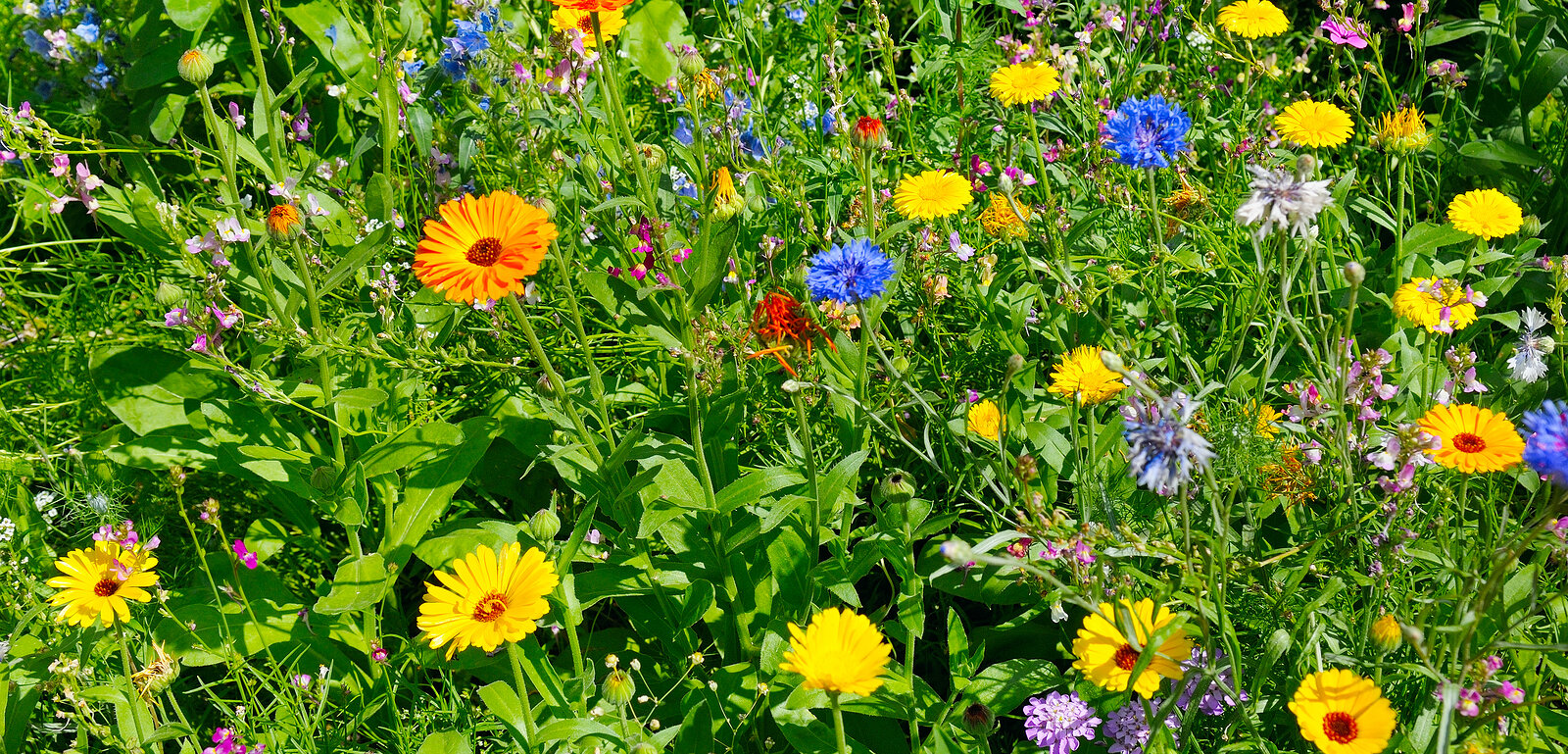
Wildflower and meadow gardens are very nearly the same. A wildflower garden is wholly planted with wildflowers. A meadow garden is planted with wildflowers and meadow grasses.
Wildflower and meadow gardens continue to gain popularity because they are relatively easy to establish and require very little maintenance. Both are mostly comprised of native plants that are easy to come by and they attract birds and butterflies.
A natural wildflower landscape or meadow can be quite large, but wildflower and meadow plants can be easily grown in a back or front yard. Keep in mind these plantings are natural and so very informal you may want to check city, neighborhood, or homeowner association rules before planting a wildflower or meadow garden.
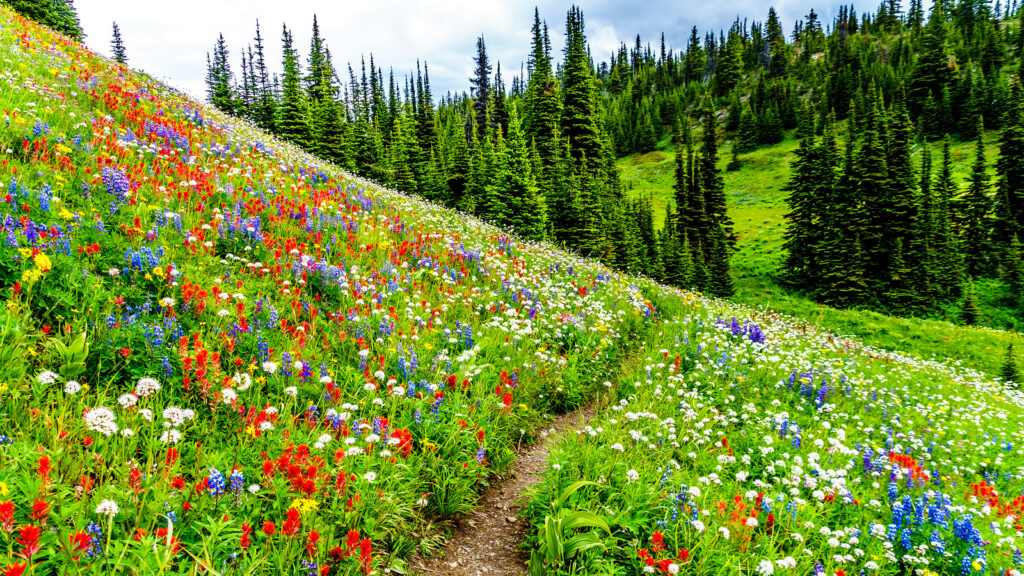
Planning a wildflower garden
Here are steps to plan and plant a wildflower garden:
Know What to Plant This Week
Every week I answer the gardener's most important question: what should I plant now? Get seasonal planting advice free — or go Pro for my full Soil Temperature Garden Report, with soil temperature, moisture, weather trends, and crop-by-crop recommendations.
- Assess the site, taking into account climate, soil type and drainage, and the amount of sun, shade, and shelter. These conditions will determine the plants that will thrive and look natural in the setting.
- Observe local wildflowers in their natural habitats; this will help you identify which species to grow. If you are unsure of the wildflowers you see take photos and take them to a nearby garden center or Cooperative Extension Service for identification.
- You can also include some non-native species that are naturalized to your area. These will require the same growing conditions as native wildflowers. Again, these you can identify and find at a nearby garden center.
- Decide if your wildlife or meadow garden will be seasonal or if you intend for it to be in bloom and of interest year-round. Meadows and wildflowers are usually at their peak in spring and summer, but likely be plants of interest in other seasons.
- Not all wildflowers grow in full sun; a shady site can be the home to a wildflower display.
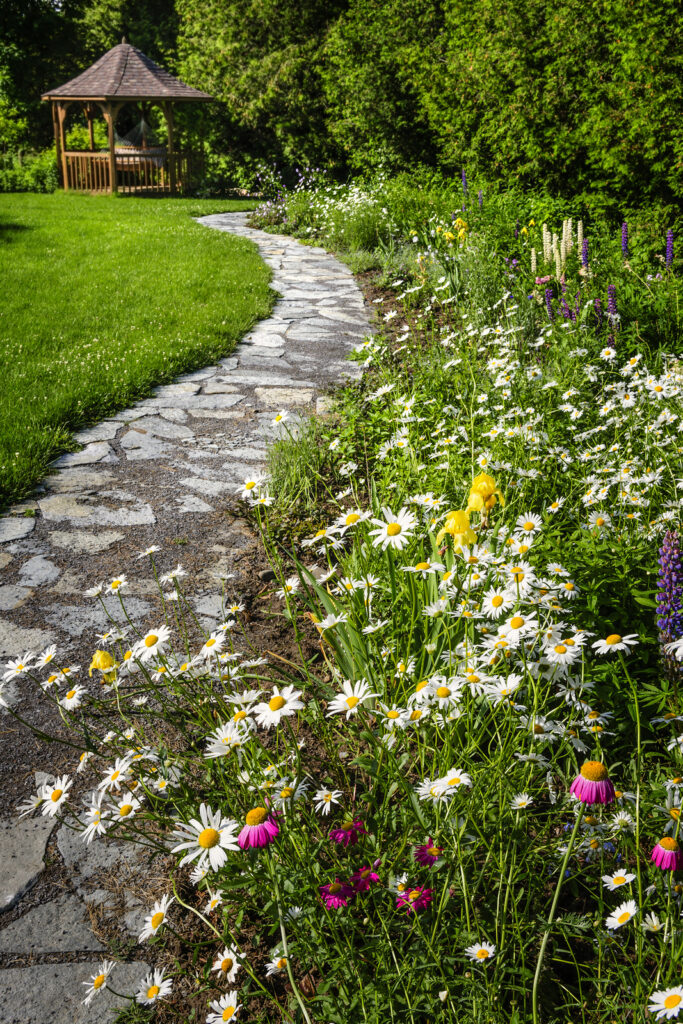
How to establish a wildflower or meadow garden
Here are easy steps to establish a wildflower or meadow garden:
- Choose a site that is open and sunny to grow wildflowers and meadow grasses. You may need a shady or wooded area for plants that prefer shade or partial sun.
- Most wildflowers and meadow plants grow in soil that is low in fertility. Average garden soil will do; there is no need to amend the soil.
- Eliminate vigorous, perennial weeds by cultivation or with a systemic weed killer. Remove any sod.
- Cultivate the soil to a fine tilth; the soil can then be rolled and raked lightly.
- In early fall or spring, sow the wildflower seed mixture; mix the seeds with fine sand for even distribution. Follow the directions of the seed provider.
- Wildflowers often germinate in their own time; you can speed germination by keeping the growing area just moist as you would ornamental flower beds. It’s ok to give Mother Nature a helping hand.
- Wildflowers usually grow together in no real pattern; however, you can sow the seed of different species in arcs or waves to create natural-looking patterns of color. Wildflowers can also be randomly mixed.
- Wildflowers include annuals and perennials. Many perennials are longer blooming than annuals. Plant a mix of annuals and perennials in your garden or meadow.
- If you are establishing a meadow, use native grasses or fine grasses such as bent (Agrostis) and fescues (Festuca) that will not outgrow and suppress the flowering plants.
- If you are planting wildflowers in an established meadow or grassland, you can mow the meadow then transplant pot-grown wildflowers or grasses using a small spade or bulb planter.
- During the first season after planting, spot-treat any invasive weeds.
- Allow wildflowers to bloom and drop seed; this will give you new plants for the next season.
- Mow the meadow in the fall after the plants have seeded.
- Allow the plants to dry and then shake out the seeds across the garden or meadow or collect some seeds for starting indoors next spring.
- Rake up and remove any plant debris or clippings so that soil fertility remains low.
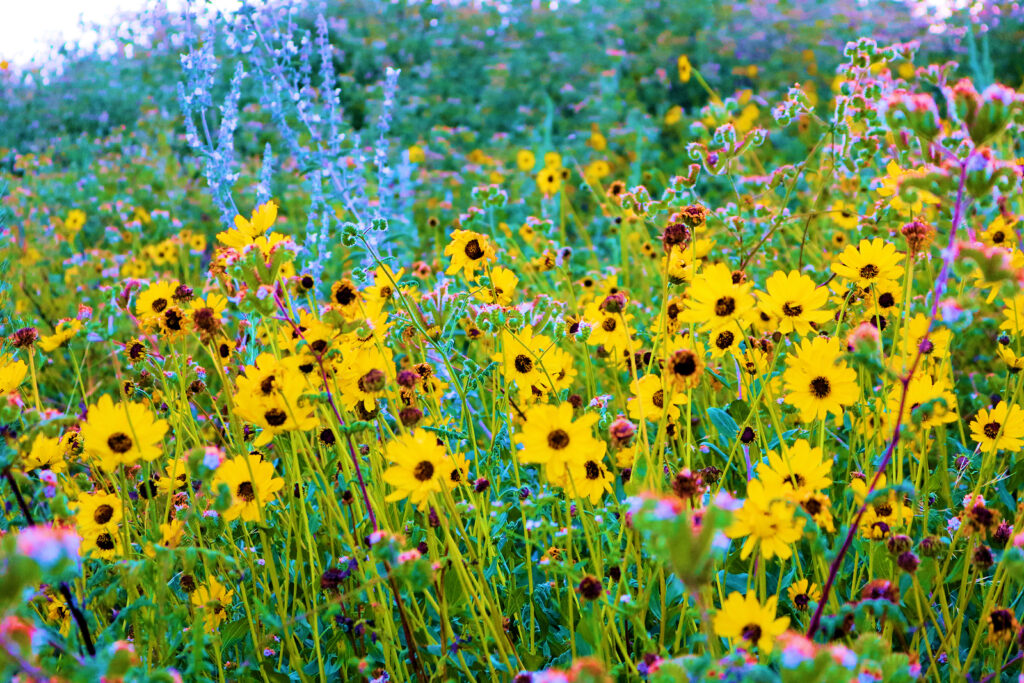
Common wildflowers by region
Here’s a quick guide to common wildflowers by region in the United States. This is a basic starter list. Visit a nearby garden center for a list of wildflowers that grow in your area; they may also have wildflower seed collections. You can also get a list online or from the local native plant society.
Arid West and Southwest wildflowers
| Common Name | Botanical Name |
| Baby blue eyes | Nemophila menziesii |
| California poppy | Eschscholzia californica |
| Larkspur | Consolida ambigua |
| Mexican hat | Ratibida coumnifera |
| Shasta daisy | Leucoanthemum x superbum |
Florida wildflowers
| Common Name | Botanical Name |
| Common rose mallow | Hibiscus mocheutos |
| Coreopsis | Coreopsis spp. |
| Blanket flower | Gaillardia spp. |
| Sea lavender | Limonium latifolium |
| Summersweet | Clethra alnifolia |
Mountainous West wildflowers
| Common Name | Botanical Name |
| Blue flax | Linum perenne |
| Catchfly | Lychnis alpina |
| Columbine | Aquilegia spp. |
| Evening primrose | Oenothera spp. |
| Blanket flower | Gaillardia spp. |
| Larkspur | Consolida ambigua |
| Penstemon | Penstemon spp. |
| Wallflower | Erysimum spp. |
Northeast, Midwest, and Plains wildflowers
| Common Name | Botanical Name |
| Aster | Aster spp. |
| Bee balm | Monarda didyma |
| Black-eyed Susan | Rudbeckia spp. |
| Butterfly weed | Asclepias tuberosa |
| Coreopsis | Coreposis spp. |
| Dames rocket | Hesperis matronalis |
| Lupine | Lupinus hybrids |
| Purple cornflower | Echinacea purpurea |
| Shirly poppy | Papaver rhoeas |
| Yarrow | Achillea spp. |
Southeast wildflowers
| Common Name | Botanical Name |
| Annual phlox | Phlox drummondii |
| Butterfly weed | Asclepias tuberosa |
| Cosmos | Cosmos spp. |
| Evening primrose | Oenothera speciosa |
| Blanket flower | Gallardia spp. |
| Moss verbena | Verbena tenuisecta |
| Purple cornflower | Echinacea purpurea |
Texas and Oklahoma wildflowers
| Common Name | Botanical Name |
| Bachelor’s button | Centaurea cyanus |
| Spike gayfeather | Liatris spicata |
| Ox-eye daisy | Heliopsis helianthoides |
| Texas bluebonnet | Lupinus texensis |
| Indian paintbrush | Castilleja coccinea |
| Toadflax | Linaria spp. |
West and Pacific Northwest wildflowers
| Common Name | Botanical Name |
| Bird’s eye | Gilia tricolor |
| California bluebell | Phacelia campanularia |
| California poppy | Eschscholzia californica |
| Five spot | Nemophila maculata |
| Blanket flower | Gaillardia spp. |
| Larkspur | Consollida ambigua |
| Shasta daisy | Leucanthemum x superbum |
| Statice | Limonium spp. |