Why Are My Eggplants Not Flowering (And How to Fix It)

Few things are more disappointing in the summer vegetable garden than watching a healthy-looking eggplant plant grow large leaves and strong stems—but produce few or no flowers.
Eggplants are warm-season crops that can be incredibly productive when conditions are right. But flowering is sensitive to temperature, moisture, nutrition, and plant stress. When one of these factors is out of balance, eggplants may slow down or stop producing blooms altogether.
After growing vegetables in my home garden and market garden, and gardening in Iowa, eastern Massachusetts, and Northern California, I’ve learned that eggplant flowering problems are often a response to growing conditions rather than a sign that the plant is failing.
The key is understanding what eggplants need to transition from leafy growth into flower and fruit production.
Know What to Plant This Week
Every week I answer the gardener's most important question: what should I plant now? Get seasonal planting advice free — or go Pro for my full Soil Temperature Garden Report, with soil temperature, moisture, weather trends, and crop-by-crop recommendations.
Why Eggplants Stop Flowering
Eggplants need warm soil, steady moisture, adequate nutrients, and plenty of sunlight to produce flowers.
Common reasons eggplants stop flowering include:
- Extreme heat
- Cool temperatures
- Water stress
- Too much nitrogen
- Insufficient sunlight
- Poor pollination
- Nutrient deficiencies
- Root stress
- Overgrown plants
A plant can look healthy while quietly reducing flower production because conditions are not ideal for reproduction.
Temperature Stress Is a Common Cause of Poor Flowering
Eggplants love heat, but extreme temperatures can interrupt flowering.
The ideal temperature range for eggplant growth is approximately:
- Day temperatures: 70–85°F (21–29°C)
- Night temperatures: 60–70°F (16–21°C)
When temperatures climb above 90°F (32°C):
- Flowers may drop
- Buds may fail to open
- Pollen quality may decline
- Fruit set may decrease
During prolonged summer heat, eggplants often pause flowering until conditions improve.
In my Northern California garden, I have seen eggplants slow during periods of intense heat, then resume heavy production when temperatures moderate.
Cold Weather Can Also Stop Eggplant Flowers
Although eggplants love summer warmth, they are sensitive to cool conditions.
When nights remain below about 55°F (13°C):
- Growth slows
- Flowers may not develop properly
- Fruit production decreases
This is especially common early in the season when gardeners set out transplants before the soil and nights are consistently warm.
Water Stress Can Prevent Eggplants From Flowering
Eggplants have a relatively shallow root system and need consistent moisture.
When plants dry out:
- Flower buds may drop
- Leaves may wilt
- Fruit development slows
When soil stays too wet:
- Roots become stressed
- Nutrient uptake declines
- Plants may produce fewer flowers
The goal is evenly moist soil—not drought followed by flooding.
During hot weather:
- Check soil moisture regularly.
- Water deeply.
- Apply mulch to reduce evaporation.
Too Much Nitrogen Creates Leaves Instead of Flowers
One of the most common causes of lush eggplant plants with few flowers is excess nitrogen.
High nitrogen encourages:
- Large leaves
- Rapid growth
- Dark green foliage
- Fewer flowers
Eggplants need nitrogen early in the season to establish growth, but once plants mature they need balanced nutrition to support flowering and fruit development.
If your plants look beautiful but are not flowering, fertilizer may be part of the problem.
Eggplants Need Plenty of Sunlight
Eggplants require full sun for strong flowering and fruit production.
Provide:
- At least 6–8 hours of direct sunlight daily
Too much shade can cause:
- Tall, weak plants
- Fewer flowers
- Slow growth
- Delayed harvest
If nearby crops have grown tall and are shading eggplants, selective pruning or relocating the plant may help.
Poor Pollination Can Cause Flower Problems
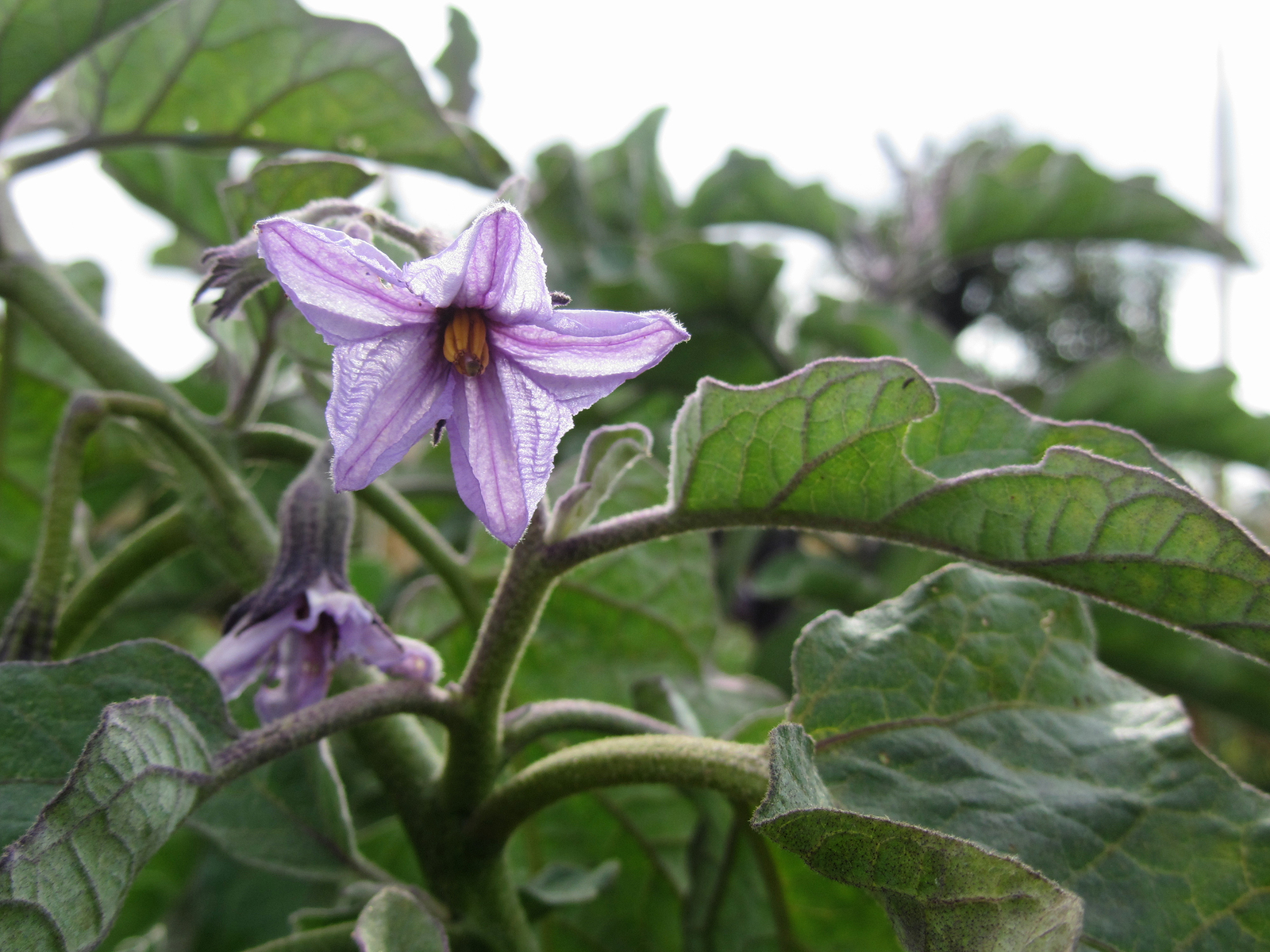
Eggplant flowers contain both male and female parts, so they are capable of self-pollination. However, they benefit from movement that helps release pollen.
Poor pollination can happen during:
- Very humid weather
- Extreme heat
- Calm conditions
- Low pollinator activity
To improve pollination:
- Gently shake plants when flowers open.
- Encourage bees and beneficial insects.
- Avoid unnecessary pesticide use.
A flower that is pollinated successfully will begin swelling into fruit.
Check for Nutrient Problems
Eggplants are heavy feeders and may slow flowering when nutrients become limited.
Possible nutrient issues include:
Phosphorus Deficiency
May cause:
- Poor flowering
- Slow growth
- Dark green or purplish leaves
Potassium Deficiency
May cause:
- Weak fruit development
- Reduced plant vigor
Magnesium Deficiency
May cause:
- Yellowing between leaf veins
A soil test can help identify nutrient problems before adding fertilizer.
Should You Prune Eggplants to Encourage Flowers?
Light pruning can improve airflow and plant health.
Remove:
- Yellowing leaves
- Damaged branches
- Diseased foliage
- Leaves touching the soil
Avoid heavy pruning.
Eggplant leaves provide energy for flower and fruit production, and excessive pruning can reduce the plant’s ability to feed itself.
Mulch Helps Eggplants Flower Longer
Mulch is one of the best tools for maintaining productive eggplants.
A 2–4 inch layer of organic mulch helps:
- Keep roots cooler
- Maintain soil moisture
- Reduce weeds
- Improve soil conditions
Good choices include:
- Compost
- Straw
- Shredded leaves
- Grass clippings
Healthy roots support more consistent flowering.
How to Encourage Eggplants to Start Flowering Again
If your eggplant plants have stopped flowering, focus on improving growing conditions.
Steps to encourage new blooms:
1. Check Temperature
Wait for extreme heat or cool weather to pass.
2. Maintain Even Moisture
Avoid drought stress and overwatering.
3. Reduce Excess Nitrogen
Switch from high-nitrogen feeding to balanced nutrition.
4. Harvest Existing Fruit
Removing mature eggplants encourages continued production.
5. Improve Sunlight and Airflow
Give plants enough space and light.
6. Be Patient
Eggplants often resume flowering once stress is reduced.
My Eggplant Growing Experience
Growing eggplants in my home garden and market garden has taught me that flowering is closely tied to consistency.
In Iowa, the challenge was giving eggplants enough warm days to mature before frost. In Massachusetts, early-season warmth and season timing were critical. In California, the long growing season allows excellent production, but summer heat and water management become major factors.
In my market garden, productive eggplants were plants that received steady irrigation, healthy soil, regular harvesting, and enough time to establish strong roots.
The lesson I have learned is that eggplants do not need to be pushed—they need the right conditions. When the plant is healthy and stress is reduced, flowers usually return.
Frequently Asked Questions
Why does my eggplant plant have leaves but no flowers?
The most common causes are excess nitrogen, insufficient sunlight, temperature stress, and inconsistent watering.
What temperature is too hot for eggplants to flower?
Eggplants may struggle to flower when temperatures consistently rise above 90°F (32°C), especially with hot nights.
Will eggplants flower again after a heat wave?
Yes. Healthy plants often resume flowering once temperatures return to a more favorable range.
Should I fertilize eggplants that are not flowering?
Avoid high-nitrogen fertilizers. Use balanced nutrients that support flowering and fruit production.
How much sunlight do eggplants need?
Eggplants need at least 6–8 hours of direct sunlight daily for good flowering and harvests.
Why are my eggplant flowers falling off?
Flower drop is often caused by heat stress, water stress, poor pollination, or nutrient imbalance.
How often should I water eggplants in summer?
Water deeply when the top few inches of soil begin drying. Hot weather may require more frequent irrigation.
Can pruning help eggplants produce more flowers?
Light pruning can improve airflow and plant health, but heavy pruning may reduce production.
The Bottom Line
When eggplants are not flowering, the problem is usually a growing condition that can be corrected. Temperature, water, nutrients, sunlight, and pollination all influence whether flowers form and become fruit.
After decades of growing vegetables in different climates, I have learned that productive eggplants come from consistency: healthy soil, steady moisture, balanced nutrition, and patience.
Give eggplants the conditions they need, and they can reward you with a long season of beautiful flowers and abundant harvests.