How to Grow ZZ Plant — Zamioculcas

Zamioculcas–commonly called ZZ Plant–is a tropical perennial often grown as a houseplant. It has attractive dark green waxy foliage and is easy to care for.
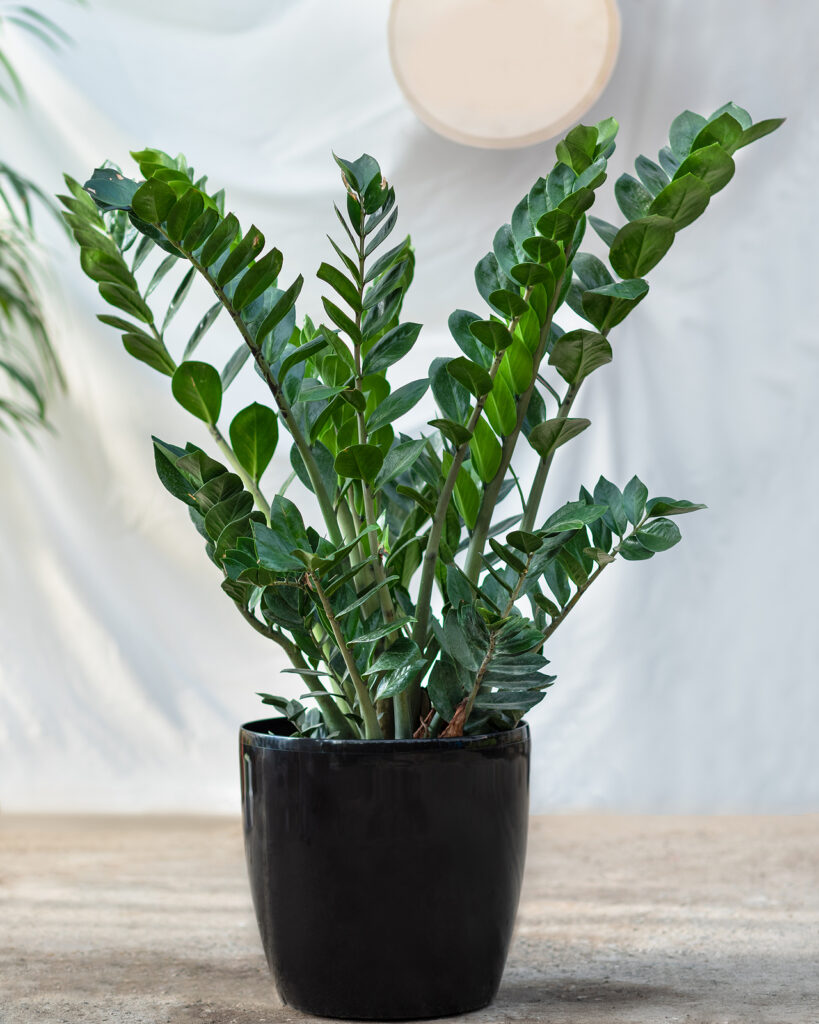
Zamioculcas has tall, arching fronds. The smooth waxy leaves reflect light giving it a bright appearance. It prefers moderate, indirect light when grown indoors. Zamioculcas grows from a rhizome which can store moisture for a long period. Zamioculcas can tolerate long periods without water.
All parts of Zamioculcas are poisonous; keep the plant out of reach of children and pets. Wash your hands after handling Zamioculcas to avoid skin irritation.
Zamioculcas is the only plant in its genus. It is native to dry regions in eastern Africa from Kenya to South Africa.
Get to know Zamioculcas
- Plant type: Tropical perennial
- Growing zones and range: Zones 12-15
- Hardiness: Tender, will not survive below 59°F (15°C)
- Optimal growing temperature: between 65° to 79°F (18°-26°C)
- Height and width: 17 to 24 inches (45-60cm) tall and about 15 to 20 inches (38-50cm) wide
- Foliage: Pinnate leaves 15 to 23 inches (40–60cm) long, with 6 to 8 pairs of leaflets 3 to 6 inches (7–15cm) long; they are smooth, shiny, and dark green.
- Flowers: Small bright yellow flowers appear at leaf bases
- Bloom time: Mid-summer to early autumn
- Uses: Houseplant, tropical garden
- Common name: zz plant, Zanzibar gem
- Botanical name: Zamioculcas
- Family name: Araceae
- Origin: Eastern Africa, Kenya to South Africa
Where to plant Zamioculcas
- Light indoors: Give Zamioculcas moderate, indirect light. Leaf lengthening is a sign of insufficient light.
- Light outdoors: Full sun with shade in mid-day or partial shade.
- Soil indoors: Use an all-purpose potting mix.
- Soil outdoors: Humus-rich, well drained soil.
When to plant Zamioculcas
- Set Zamioculcas outdoors any time of the year in tropical regions.
Planting and spacing Zamioculcas
- Space Zamioculcas 15 to 20 inches (38-50cm) apart.
How to water and feed Zamioculcas
- Water: Water Zamioculcas thoroughtly then allow the soil to dry out before watering again. Zamioculcas is drought tolerant once established.
- Feeding: Fertilize Zamioculcas once a month with a balanced liquid houseplant fertilizer (20-20-20) when watering.
Zamioculcas care
- All parts of Zamioculcas are poisonous; keep the plant out of reach of children and pets. Wash your hands after handling Zamioculcas to avoid skin irritation.
Zamioculcas pests and diseases
- Zamioculcas is resistant to diseases and insects.
Zamioculcas propagation
- Propagated by division and leaf cutting.
- Divide the rhizome in spring and replant in a all-purpose potting mix.
- Detach lower ends of leaves and insert into a moist gritty compost and the pot enclosed in a polythene bag.
Zamioculcas varieties to grow
- Zamioculcas zamiifolia, ZZ plant. This is the only plant in the Zamioculcas genus; see all above for description and care.