How to Grow Toyon – Heteromeles

Heteromeles is a genus of hardy and low-maintenance evergreen shrubs and small trees that can be grown in a variety of conditions. The most well-known species in this genus is Heteromeles arbutifolia, commonly called toyon, which is native to California and the western United States. Other common names for Heteromeles is California holly and Christmas berry.
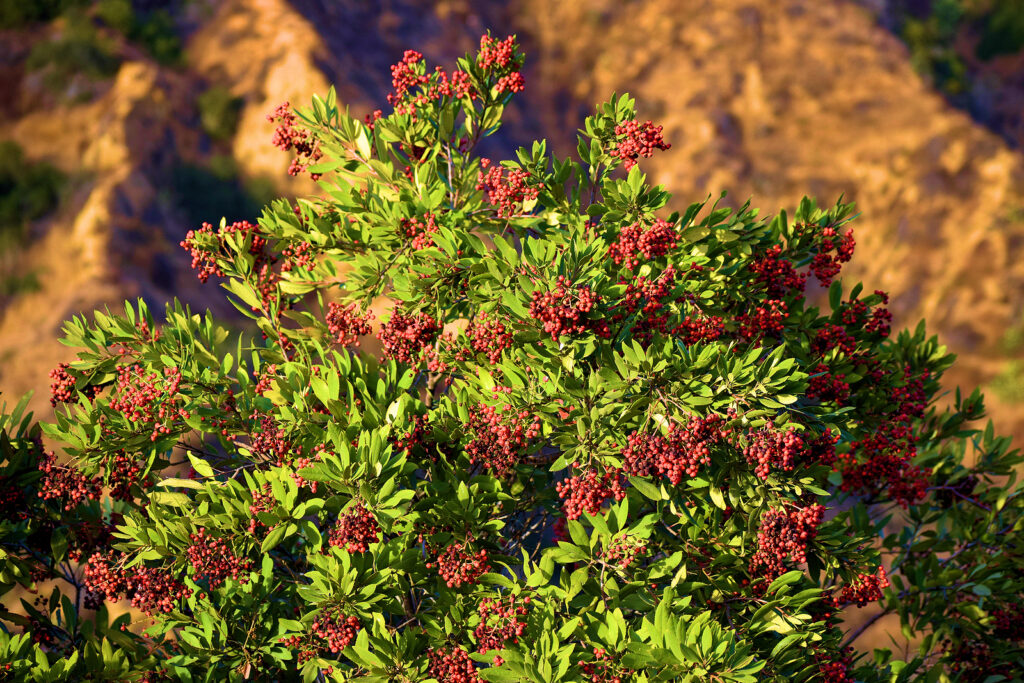
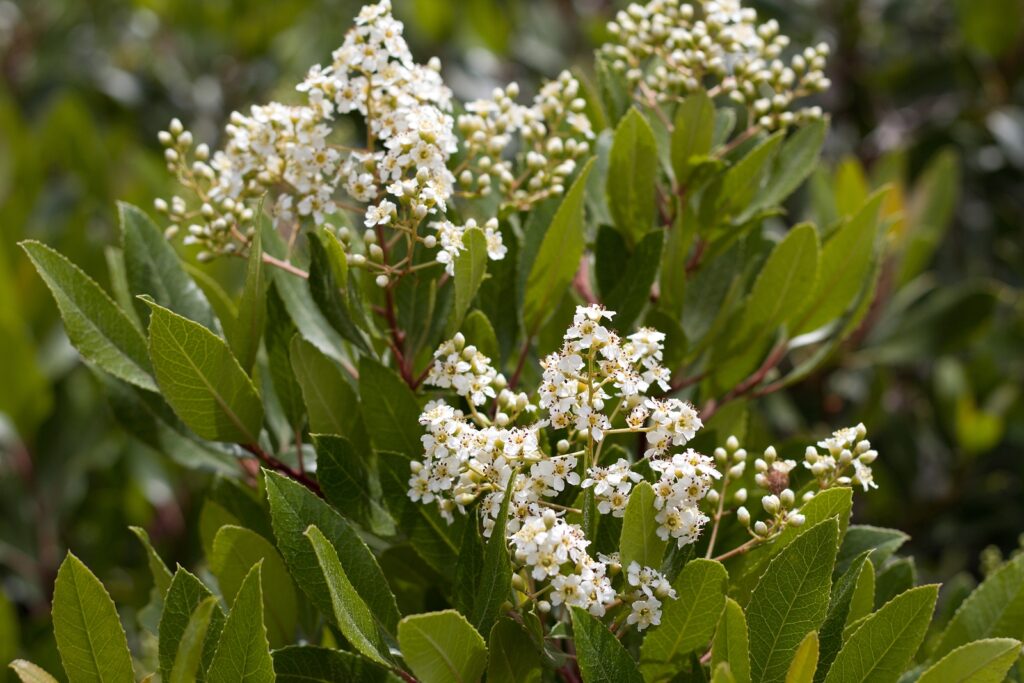
Heteromeles is native to western North America and can be found growing in coastal sage scrub, chaparral, and oak woodlands. Heteromeles can reach heights of up to 15 feet in a few years, as tall as 25 feet as it matures. It has dark green, glossy leaves that are oval-shaped with serrated edges. The plant produces white clusters of small, five-petaled flowers in the spring, which are attractive to bees and other pollinators. In the fall, the plant produces bright red berries that persist throughout the winter, giving it a festive appearance.
Heteromeles plants are popular in landscaping for their ornamental value, as well as their ability to attract birds and other wildlife to the garden. The berries of the Heteromeles plant are also used in traditional Native American and Mexican cuisine. However, the leaves and berries of Heteromeles contain compounds that are toxic to humans if ingested in large quantities.
Heteromeles is drought-tolerant and can thrive in a variety of soil types, making it a versatile choice for gardens in dry climates. Heteromeles thrive in well-drained soil and full sun to partial shade, making them a versatile and low-maintenance plant for a variety of garden settings.
Heteromeles, also known as Christmas berry, is a genus of plants belonging to the Rosaceae or rose family.
Get to know Toyon – Heteromeles
- Plant type: Shrub or small tree
- Growing zones and range: Zones 8 to 10
- Hardiness: Tolerates frost, may be damaged by freezing weather
- Height and width: 12 to 18 feet tall and wide; can grow to 25 feet tall with age
- Foliage: Dark green, glossy leaves that are oval-shaped with serrated edges
- Flowers: Small white five-petaled flowers that bloom in clusters white clusters
- Berries: Showy clusters of orange to red berries mature in late fall through winter
- Bloom time: Summer
- Uses: Background shrub, informal hedge or windbreak, food for birds and wildlife
- Common name: Toyon, California holly, Christmas berry
- Botanical name: Heteromeles
- Family name: Rosaceae
- Origin: Southern California, Western United States
Where to plant Toyon – Heteromeles
- Heteromeles prefers full sun but can tolerate partial shade. It can tolerate a wide range of soil types, but does best in slightly acidic soil.
When to plant Toyon – Heteromeles
- Plant Heteromeles in the spring or fall.
Planting and spacing Toyon – Heteromeles
- Space Heteromeles 15 to 25 feet apart; mature plants can grow to 25 feet wide.
- Dig a hole that is the same depth as the root ball and twice as wides and backfill with soil. Water the plant thoroughly after planting. Mix in some compost or organic matter to improve soil fertility.
How to water and feed Toyon – Heteromeles
- Heteromeles is drought-tolerant once established, but it will benefit from regular watering during the first year of growth. Water deeply but infrequently to encourage deep root growth. Avoid overwatering, as this can lead to root rot.
- Heteromeles does not typically require fertilization, but you can apply a balanced fertilizer in the spring if the plant appears to be lacking nutrients. Avoid using high nitrogen fertilizers, as this can lead to excessive vegetative growth.
Toyon – Heteromeles care
- Heteromeles can be pruned to control its size and shape. Prune Heteromeles in late winter or early spring before new growth appears to maintain a compact and tidy appearance. Remove any dead or diseased branches, as well as any crossing or rubbing branches. You can also prune to shape the plant as desired.
Toyon – Heteromeles pests and diseases
- Heteromeles is generally resistant to pests and diseases, but it can sometimes be affected by aphids, scale insects, and powdery mildew. Monitor the plant regularly for any signs of pests or diseases and treat as needed.
- Heteromeles can be susceptible to root rot if soil is too wet.
Toyon – Heteromeles propagation
- Propagation: Heteromeles can be propagated from seeds or cuttings. Seeds should be scarified before planting to improve germination rates.
- To propagate Heteromeles from seeds, collect ripe berries in the fall, remove the flesh, and plant the seeds in a seed-starting mix.
- To propagate Heteromeles from cuttings, take 4 to 6 inch long cuttings from new growth in summer and place them in a potting mix. Keep the soil moist and provide bottom heat for faster rooting.
Toyon – Heteromeles varieties to grow
- Heteromeles arbutifolia, commonly called Toyon or California holly, grows 12 to 18 feet tall with dense, dark green, leather, sharply serrated leaves; small five-petaled flowers are creamy white and not showy; flowers are followed by clusters of orange to red berries that natue in late fall through winter.
- H. a. var. cerina has yellow berries.
- H. a. var. macrocarpa has larger and showier red berries,