Basic Interplanting Strategies for a More Productive Vegetable Garden

Interplanting is the practice of growing two or more crops in the same space at the same time so they complement each other rather than compete. In a no-till or diverse garden system, interplanting makes use of every square inch, keeps soil covered, increases biodiversity, and helps balance pests and pollinators. Whether you have a raised bed or an in-ground plot, interplanting helps create a garden that’s more productive, more resilient, and easier to manage throughout the season.
Why Interplanting Works
Interplanting is built on a simple idea: different crops grow at different speeds, sizes, and root depths. By arranging crops intentionally, you can harvest more food in the same area while also supporting soil health and beneficial insects. Key benefits include:
- Higher total yield per square foot
- Continuous soil cover to prevent weeds
- Improved microclimates for tender crops
- Increased plant diversity, which stabilizes the garden ecosystem
Basic Interplanting Strategies
1. Fill Unused Space With Fast-Growing Crops
Many crops—like cabbage, tomatoes, peppers, and squash—take weeks or months to size up. During that early period, there’s bare soil around them. Interplanting fills that temporary empty space with quick crops.
Good examples
- Radishes interplanted around cabbage or broccoli
- Lettuce or spinach between young tomatoes
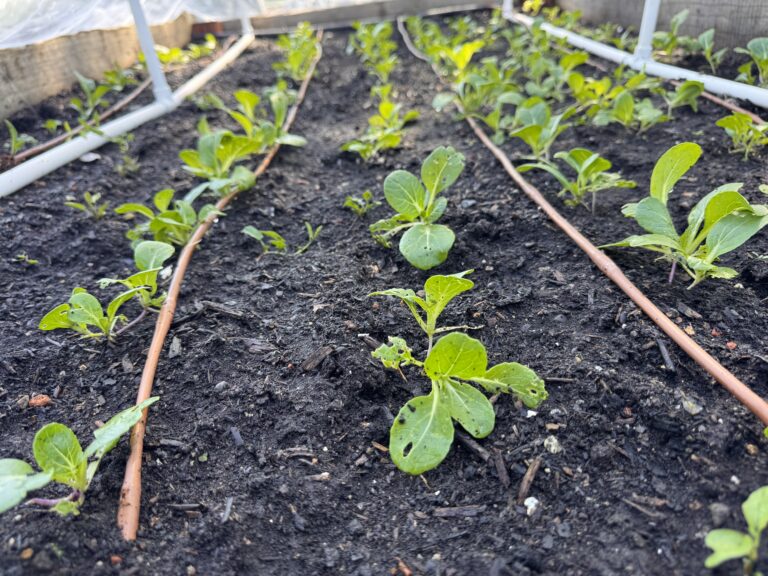
- Baby bok choy between slow-growing peppers
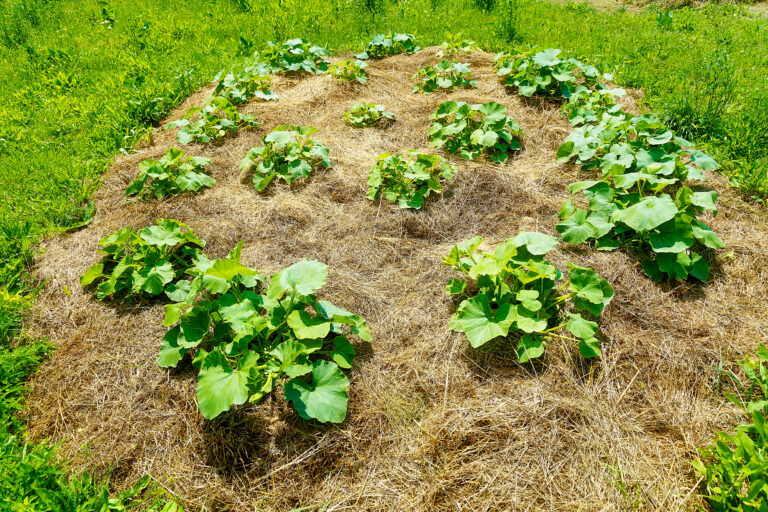
- Arugula between squash hills early in the season
These crops mature before the larger plants need full space, giving you a second harvest without extra beds.
Know What to Plant This Week
Every week I answer the gardener's most important question: what should I plant now? Get seasonal planting advice free — or go Pro for my full Soil Temperature Garden Report, with soil temperature, moisture, weather trends, and crop-by-crop recommendations.
2. Fill Gaps in the Garden to Keep Soil Covered
Every garden develops empty pockets as you harvest crops. Interplanting lets you tuck small plants into openings so soil never sits bare.
Good examples
- After pulling early carrots, tuck in basil or cilantro
- Fill harvested garlic spaces with lettuce transplants
- After removing peas, slip in bush beans or herbs
These small additions maintain soil moisture, suppress weeds, and give you surprise bonus harvests.
3. Pair Tall Crops With Short Crops
Vertical and horizontal spacing can work together. Tall crops cast partial shade and open airspace, while short crops spread below or grow quickly at ground level.
Good examples
- Corn with bush beans or squash
- Sunflowers with cucumbers or leafy greens
- Tomatoes with understory basil or scallions
- Pole beans on trellises with lettuce at the base
This works because each crop occupies a different ecological niche—light, height, and root depth.
4. Interplant to Encourage Beneficial Insects
One of the best reasons to interplant is for natural pest control. Many herbs and flowers attract predators and parasitoids that protect vegetables.
Good examples
- Dill, fennel, and cilantro among brassicas to attract parasitic wasps
- Alyssum under tomatoes to draw hoverflies
- Nasturtiums along cucumber beds to attract pollinators and distract pests
- Marigolds interplanted with peppers for nematode suppression (in some soils)
A diverse planting signals to pests that the environment is complex, making infestations less likely.
Putting It All Together: Simple Interplanting Patterns
- Tomato + basil + lettuce
Lettuce grows early, basil fills later, tomatoes take over last. - Onions + carrots
Different root shapes allow tight spacing; scents confuse pests. - Corn + beans + squash (Three Sisters)
Classic height layering + soil covering + nitrogen fixation. - Kale + radishes + dill
Radishes mature fast; dill attracts predators; kale enjoys the space later.
Tips for Interplanting Success
- Combine plants with different growth rates.
- Match crops with different root depths.
- Pair crops with complementary nutrient needs.
- Harvest quick crops promptly so slow crops can expand.
- Avoid planting two heavy feeders or two tall crops too close.
Interplanting Combinations Chart
How to Use This Chart
- Primary Crop: The slower-growing or space-dominating crop.
- Interplant: The short-term or complementary crop planted around or between.
- Purpose: Why this pairing works.
- Timing: When to plant relative to each other.
🌱 Interplanting Combinations for Filling Unused Space
| Primary Crop | Interplant Crop | Purpose | Timing |
|---|---|---|---|
| Tomatoes | Lettuce, spinach, arugula | Uses early shade; quick harvest before tomatoes size up | Sow greens at transplanting |
| Tomatoes | Radishes | Extremely fast; harvest before tomato canopy closes | Sow at tomato transplanting |
| Peppers | Baby bok choy, lettuce | Shade tolerant, fast; protects soil | Plant together; harvest greens early |
| Brassicas (cabbage, broccoli) | Radishes | Classic filler crop; breaks crusty soil | Sow radishes at brassica transplant |
| Squash or pumpkins | Lettuce | Lettuce finishes before vines spread | Sow on planting day |
| Cucumbers | Cilantro | Cilantro enjoys partial shade and cool soil | Sow just after cucumbers |
🌿 Interplanting to Fill Gaps After Early Harvests
| Primary Crop | Interplant Crop | Purpose | Timing |
|---|---|---|---|
| Garlic (after harvest) | Lettuce, basil | Takes advantage of open summer space | Transplant immediately after garlic harvest |
| Peas (after removal) | Bush beans | Beans like warm soil and grow fast | Direct sow right after peas finish |
| Spring carrots | Basil | Basil fills open ground; carrots finish early | Transplant basil into carrot gaps |
| Early potatoes | Zucchini | Uses warm, loosened soil | Transplant zucchini immediately after potatoes |
| Spring radishes | Cilantro or dill | Herbs fill the open soil quickly | Sow herbs after radish harvest |
🌾 Tall + Short Crop Interplanting
| Tall Crop | Short Companion | Purpose | Timing |
|---|---|---|---|
| Sweet corn | Bush beans | Beans fix nitrogen; corn gives structure | Sow beans when corn is knee-high |
| Sweet corn | Squash | Squash covers soil; suppresses weeds | Plant squash at same time as corn |
| Sunflowers | Cucumbers | Sunflowers provide shade + structure | Transplant cukes when sunflowers are 1 ft tall |
| Pole beans | Lettuce | Lettuce thrives in the cool understory | Transplant lettuce anytime early |
| Tomatoes | Scallions or bunching onions | Onions use tight spaces and are shade tolerant | Plant together at tomato transplant time |
| Okra | Basil or parsley | Herbs like dappled shade; okra grows tall and sparse | Plant herbs first or same day |
🐞 Beneficial-Insect Interplanting
| Vegetable Crop | Interplanted Beneficial Flower/Herb | Purpose | Timing |
|---|---|---|---|
| Brassicas (cabbage, kale, broccoli) | Dill, fennel, cilantro | Attract parasitoid wasps to fight cabbage worms | Sow herbs at or shortly after transplanting |
| Tomatoes | Alyssum | Draws hoverflies that eat aphids; fits under canopy | Transplant with tomatoes |
| Cucumbers, melons | Nasturtiums | Attract pollinators; trap-crop for cucumber beetles | Sow same day |
| Peppers | Basil | Attracts pollinators; reduces sunscald | Plant at same time |
| Beans | Marigolds | Nematode suppression in some soils; pest confusion | Transplant marigolds as beans sprout |
| Carrots | Chamomile or chervil | Attracts beneficials; improves flavor | Plant herbs early in season |
🧱 Root Depth Complement Pairs (Shallow + Deep)
| Deep-rooted Crop | Shallow-rooted Crop | Purpose | Timing |
|---|---|---|---|
| Tomatoes | Lettuce, spinach | Roots don’t compete; lettuce harvests early | Plant lettuce at tomato transplant |
| Carrots | Basil | Carrots drill deep; basil feeds shallow | Transplant basil mid-season |
| Parsnips | Radishes | Radishes break crust for parsnips | Sow at same time |
| Sweet potatoes | Calendula | Calendula roots stay shallow, attract pollinators | Plant together |
| Sunflowers | Mustard greens | Mustard uses topsoil; sunflower drills deep | Sow mustard between sunflower rows |
🍅 Heat-Loving + Cool-Loving Combinations
| Warm Crop | Cool Crop | Why It Works | Timing |
|---|---|---|---|
| Tomatoes | Spinach (spring) | Tomatoes shade spinach as temps warm | Plant spinach early; transplant tomatoes later |
| Peppers | Cilantro | Cilantro survives under light shade in summer | Sow cilantro after peppers are in |
| Squash | Arugula | Arugula is fast and cool-season; harvest before squash vines expand | Sow arugula at planting |
| Eggplant | Lettuce | Lettuce finishes before eggplant fills space | Sow/transplant lettuce early |
Season-by-Season Interplanting Calendar
This calendar assumes no-till or low-disturbance gardening, where living roots or residues are left in place and new crops are slipped into gaps, edges, or early-season openings.
🌱 EARLY SPRING (February–March)
Cool soils, early crops, slow growth—maximize space with fast, frost-tolerant fillers.
Best Interplanting Strategies
- Fill big gaps left in early beds with fast greens.
- Combine cool-loving greens with early brassicas and onions.
- Use radishes as fast fillers while slower crops establish.
Best Interplanting Combinations
- Brassicas + radishes
- Peas + spinach
- Onions + carrots
- Broccoli + cilantro or dill
- Kale + lettuce
- Early potatoes + spinach
Same-Day Crop Replacements (Spring)
| Crop Harvested | Replace Same Day With | Reason |
|---|---|---|
| Radishes | Spinach, lettuce, cilantro | Open soil, cool weather |
| Pea shoots | Arugula or baby kale | Fast greens; no soil prep needed |
| Overwintered spinach | Beets or carrots | Cool soil still ideal |
| Early bok choy | Cilantro or dill | Both thrive in cool soils |
🌿 LATE SPRING (April–May)
Soils warm; warm-season crops go in; cool-season crops finish.
Best Interplanting Strategies
- Use remaining space around young tomatoes/peppers before they expand.
- Take advantage of cool soils for herbs and greens under early shade.
- Allow tall crops to create microclimates for shade-tolerant understory crops.
Best Interplanting Combinations
- Tomatoes + lettuce
- Tomatoes + radishes
- Corn + bush beans
- Peppers + baby bok choy
- Cucumbers + cilantro
- Sunflowers + cucumbers
- Potatoes + basil
Same-Day Crop Replacements (Late Spring)
| Crop Harvested | Replace Same Day With | Why Works |
|---|---|---|
| Garlic scapes | Lettuce or cilantro | Cool, semi-shaded beds |
| Early carrots | Basil | Warm soil, available space |
| Spring onions | Bush beans | Beans love warm soil |
| Peas (finished) | Cucumbers or pole beans | Trellis already set |
☀️ SUMMER (June–August)
Growth is fast; warm crops dominate; use shade for tender greens.
Best Interplanting Strategies
- Shade-loving crops under tall crops.
- Fill gaps created by harvesting onions, garlic, or early carrots.
- Use herbs and flowers to attract beneficials.
Best Interplanting Combinations
- Tomatoes + scallions + basil
- Corn + beans + squash (Three Sisters)
- Okra + basil
- Eggplant + lettuce (under shade cloth or tomato shade)
- Cucumbers + nasturtiums
- Melons + flowers for pollinators (zinnias, cosmos)
Same-Day Crop Replacements (Summer)
| Crop Harvested | Replace Same Day With | Why Works |
|---|---|---|
| Garlic (harvested early July) | Basil, cucumbers, bush beans | Soil warm and loose |
| Onions (late June–July) | Zucchini or squash | Space and heat ideal |
| Early potatoes | Melons or pumpkins | Warm, aerated soil advantage |
| Lettuce (bolting) | Bush beans or basil | Beans love heat; basil thrives |
🍂 FALL (September–November)
Warm soils + cooler air = perfect time for greens, roots, and herbs.
Best Interplanting Strategies
- Overplant around warm-season crops fading out.
- Slip in fall greens between dying summer plants.
- Use residual heat to germinate cool-season crops.
Best Interplanting Combinations
- Tomato beds + spinach in September
- Pepper beds + cilantro
- Squash beds + radishes
- Corn stubble + turnips or kale
- Cucumber beds + mache or arugula
Same-Day Crop Replacements (Fall)
| Crop Removed | Replace Same Day With | Why Works |
|---|---|---|
| Tomatoes (late September) | Spinach, kale, turnips | Warm soil boosts fall germination |
| Cucumbers (finished) | Arugula, radishes | Fast, cool-season crops |
| Melons | Peas (in mild climates) | Soil still warm |
| Beans | Lettuce or cilantro | Quick fall greens |
❄️ WINTER (December–January)
(For mild-winter climates; colder areas adapt with hoophouses)
Focus on roots, hardy greens, and early prep for spring.
Best Interplanting Strategies
- Use overwintering crops to maintain living roots.
- Fill small winter gaps with herbs and greens.
- Start early spring crops in patches of open soil.
Best Interplanting Combinations
- Garlic + lettuce
- Overwintered kale + cilantro
- Fava beans + spinach
- Shallots + mache (corn salad)
Same-Day Crop Replacements (Winter)
| Crop Harvested | Replace Same Day With | Why Works |
|---|---|---|
| Winter radishes | Spinach or mache | Cold-hardy greens |
| Kale lower leaves removed | Sprinkle arugula | Understory microclimate |
| Overwintered cilantro | Onion sets | Soil open and cool |
Summary of Crops You Can Replace the Same Day (Quick-Response Guide)
Fast → Fast
- Radishes → Arugula, spinach
- Lettuce → Cilantro, bush beans (summer), mache (winter)
Vines → Greens
- Cucumbers → Arugula
- Melons → Turnips
Roots → Herbs
- Carrots → Basil (spring/summer)
- Beets → Cilantro (fall)
Major Crops → Successions
- Garlic → Basil, cucumbers, beans
- Onions → Squash, zucchini
- Potatoes → Melons or pumpkins