How to Grow Fothergilla — Witch Alder

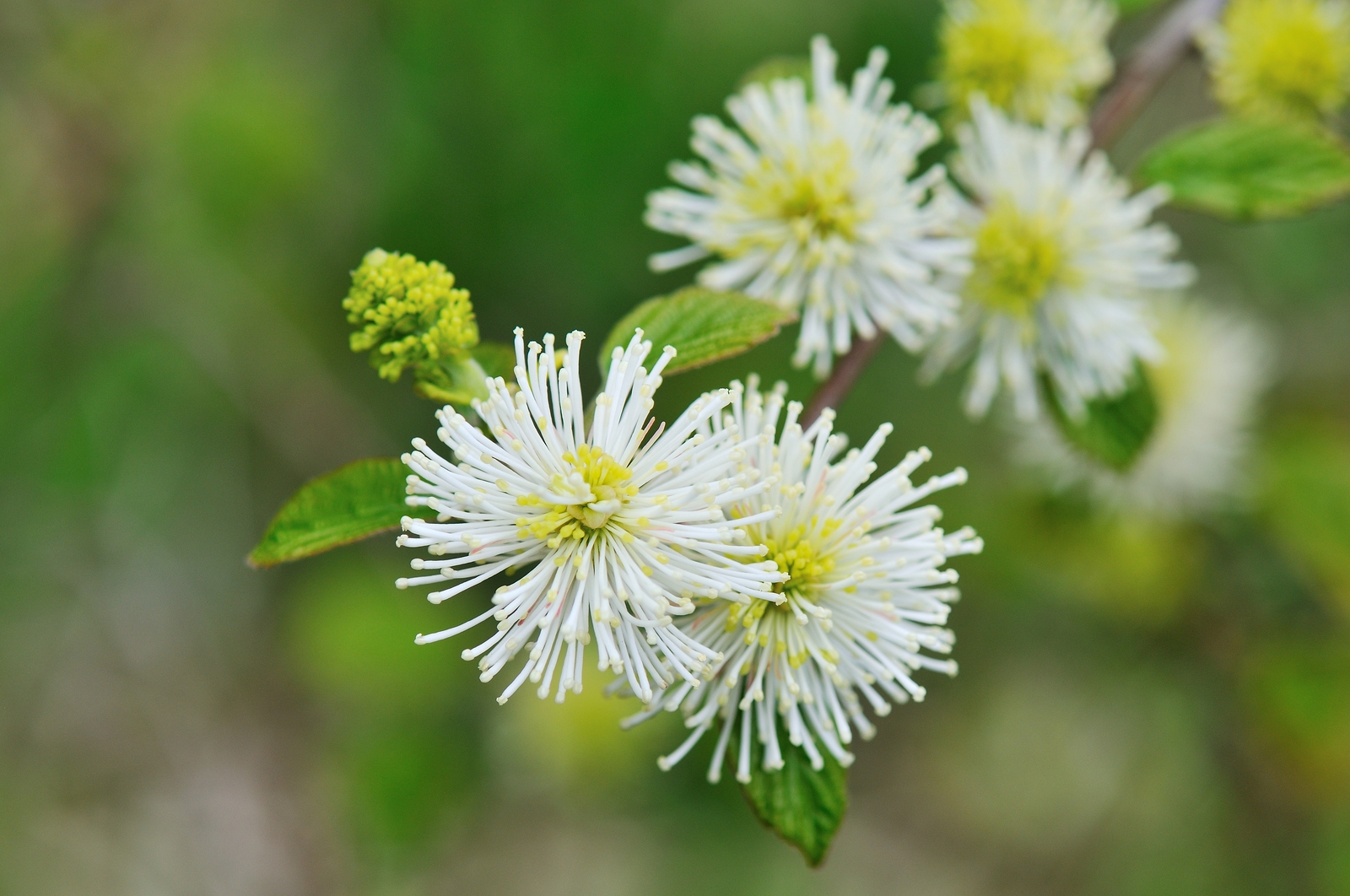
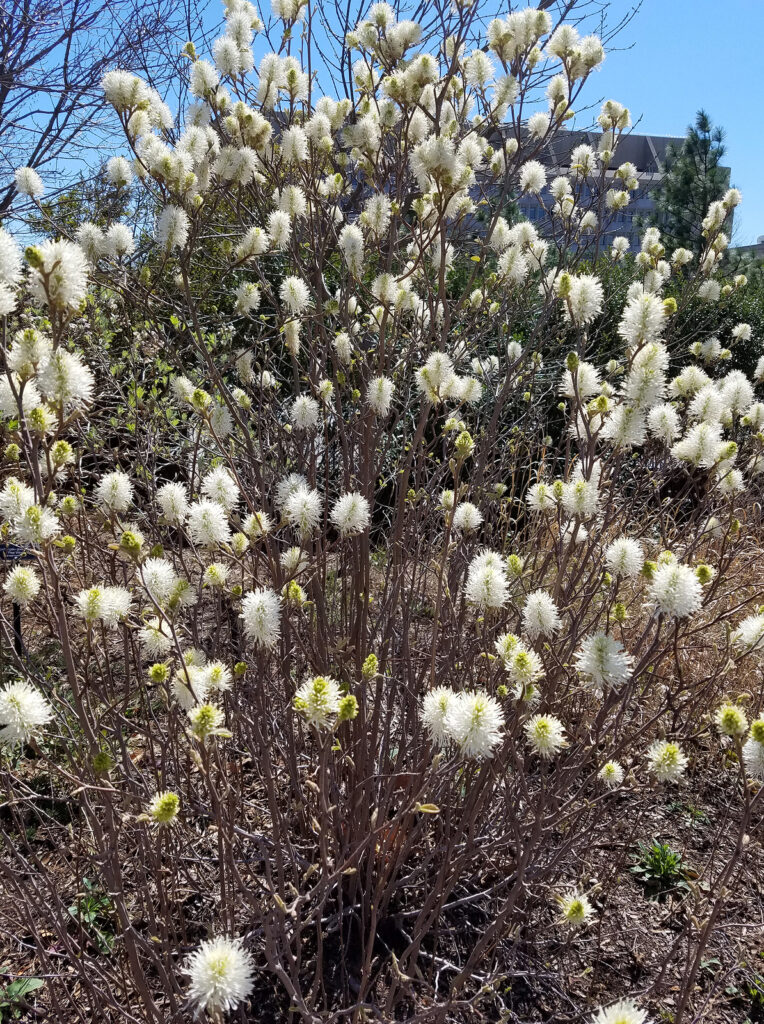
Fothergilla–commonly called Witch Alder–bears fragrant white bottlebrush-like flowers in spring before the plant’s leaves appear. The flowers do not have petals; they have conspicuously long white stamens borne on terminal spikes.
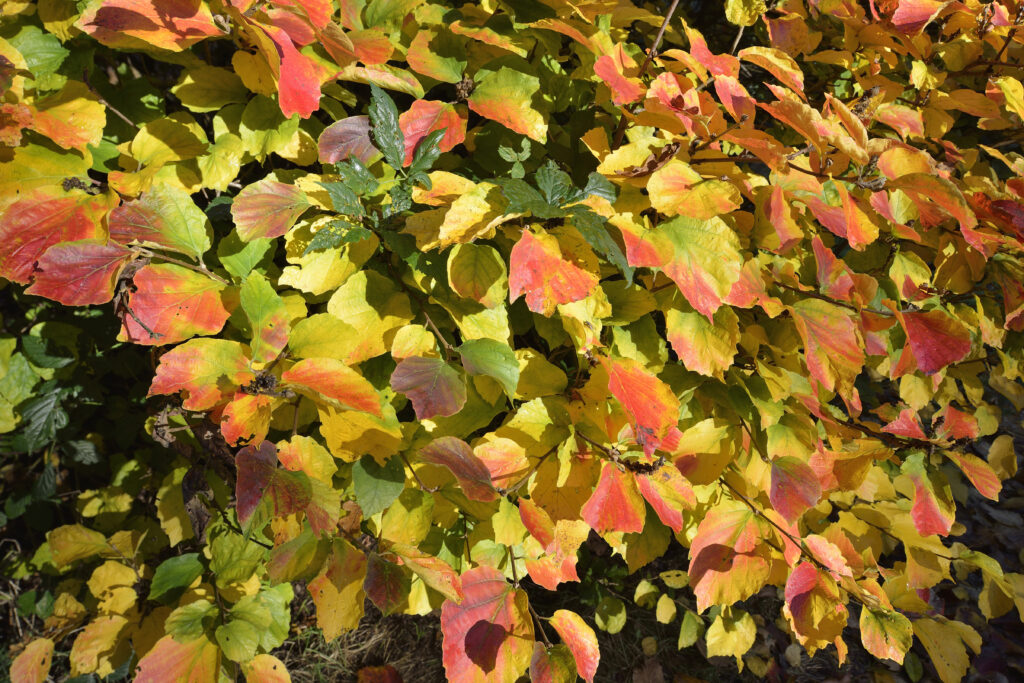
Grow Fothergilla in a shrub border or woodland garden. The zigzagging stems are pretty in spring. Fall foliage colors of yellows, orange, and reds are brilliant.
Fothergilla grows best in moist, well-drained, acidic soil.
Fothergilla is a genus of two species of deciduous, low-growing shrubs. Fothergilla is native to woodland and swamps in the Southeastern United States.
Get to Know Witch Alder
- Plant type: Deciduous spring-blooming shrub
- Growing Zones and range: Zones 5 to 8
- Hardiness: Hardy
- Height and width: 3 to 10 feet (1-3m) tall, 3 to 6 feet (1-1.8m) wide
- Foliage: Coarsely toothed leaves are alternate; leaves turn bright red, orange, and yellow in autumn.
- Flowers: White flowers without petals; conspicuously long white stamens are borne on terminal spikes.
- Bloom time: Early spring
- Uses: Shrub borders, woodland plantings, plant along foundations
- Garden companions: azaleas, rhododendrons, Lavender Cotton (Santolina chamaecyparissus), dwarf blue spruce (Picea pungens f. glauca ‘Montgomery’)
- Common name: Witch Alder
- Botanical name: Fothergilla spp.
- Family: Hamamelidaceae
- Origin: Southeastern United States
Where to Plant Fothergilla
- Plant Fothergilla in full sun for the most flowers and best fall color.
- Grow Fothergilla in humus-rich, acid, moist, well-drained soil.
When to Plant Fothergilla
- Set Fothergilla in the garden in spring or fall. Work ample compost into the soil at planting time.
Planting and Spacing Fothergilla
- Space Fothergilla 3 to 6 feet apart.
How to Water and Feed Fothergilla
- Fothergilla needs moderate moisture; keep the soil evenly moist.
- Feed Fothergilla with an all-purpose organic fertilizer in spring.
- Add aged compost around plants each spring.
Fothergilla Care
- Do not prune or remove lower stems that help fill out the plant.
- Fothergilla produces suckers; remove suckers regularly.
- Fothergilla is bothered by few diseases or pests.
- Fothergilla will not thrive in wet or alkaline soils.
Fothergilla Pests and Diseases
- Pests and diseases are infrequent.
Fothergilla Propagation
- Propagation is difficult: seeds need double-dormancy treatment; cuttings require bottom heat (for suckers or root cuttings) and mist (for softwood cuttings in summer).
- Sow Fothergilla seed in summer.
- Take Fothergilla cuttings in summer and leave rooted cuttings undisturbed until the following year.
- Layer Fothergilla branches in fall.
Fothergilla Varieties to Grow
- Fothergilla gardenii, Dwarf fothergilla, dense, bushy shrub with alternate, oval to obovate, dark green leaves, to 2.5 inches (6cm) long, with toothed margins, turning bright red, orange, and yellow in autumn. Cylindrical, terminal, fragrant spikes, to 1.5 inches (4cm) long, of small white flowers, with filaments 1 inch (2.5cm) long, are borne in spring before the leaves. To 3 feet (1m) tall and wide. Southeast United States. Zones 5 to 9.
- F. major, Large fothergilla, upright shrub with obovate to nearly rounded, alternate, glossy, dark green leaves, 3-5 inches (7-13cm) long, with toothed margins, turning brilliant red, orange, and yellow in autumn. Erect, terminal spikes, 1-2 inches (2.5-5cm) long, of fragrant, white, occasionally pink-tinged flowers are borne in late spring and early summer, before or as the leaves unfold. To 8 feet (2.5m) tall and 6 feet (2m) wide. Allegheny Mountains, Virginia to South Carolina. Zones 4 to 8.