Cool-Season vs Warm-Season Vegetables: The Critical Transition Window

Most gardeners think of spring and summer as a simple handoff: cool crops go in early, warm crops go in later. But in real gardens, the transition is rarely clean. There is a window—sometimes short, sometimes stretched out over weeks—where both systems overlap.
That window is not defined by the calendar. It is defined by soil temperature.
Once you learn to see that shift, the garden stops feeling unpredictable. It starts to feel like a sequence.
The Real Divider in the Garden: Soil Temperature
Cool-season and warm-season vegetables are not separated by months—they are separated by biology.
- Cool-season crops are built for slower metabolism and cooler soils
- Warm-season crops require active soil warmth to germinate and establish
- The transition between them happens gradually as soil warms, not on a fixed date
This is why gardeners in the same region can be planting completely different crops at the same time. Their soil is at different stages of warming.
Cool-Season Crops: Built for Cold Soil Energy
Cool-season vegetables dominate the garden when soil is still cool and spring is just beginning.
Typical soil range: 40–55°F
These crops include:
spinach, lettuce, arugula, carrots, beets, radishes, peas, broccoli, cabbage, kale, cauliflower, onions, leeks, and potatoes.
They thrive when:
- soil moisture is high
- temperatures are mild
- growth is steady, not explosive
But they have a limit. As soil warms, their behavior changes quickly.
They begin to:
- bolt
- get bitter
- slow down or finish their life cycle
This is not failure. It is transition.
Warm-Season Crops: Waiting for Soil Heat
Warm-season vegetables are often planted too early by eager gardeners. The problem is not air temperature—it is soil temperature.
Typical soil range: 60–70°F and rising
These crops include:
beans, corn, cucumbers, squash, tomatoes, peppers, eggplant, melons, and okra.
They require:
- warm soil for germination
- stable nighttime temperatures for growth
- active soil biology to fuel early development
In cold soil, they do not “wait.” They stall.
Seeds rot, germination is uneven, and plants struggle from the start.
The Transition Window: Where Most Garden Mistakes Happen
The most important gardening phase is not early spring or peak summer—it is the transition between them.
This is typically when soil moves through 55–65°F.
In this window:
- cool-season crops are still producing
- warm-season crops are just becoming viable
- both systems can coexist in the same garden
This is where decisions matter most.
Plant too early → warm-season crops stall
Wait too long → you lose early summer production
This is the moment when soil temperature becomes the guiding signal.
What Happens at Key Soil Thresholds
Here is how the transition actually unfolds in the garden:
Below 50°F → cool-season dominance
Spinach, peas, lettuce, roots, brassicas thrive
50–55°F → peak cool-season production
Strong growth in greens, roots, and brassicas
55–60°F → transition begins
Cool crops slow; early warm crops become possible in warm pockets
60–65°F → true crossover window
Beans, corn, cucumbers, squash, and tomatoes begin establishing reliably
65°F+ → warm-season takeover
Summer crops accelerate; cool crops decline or finish
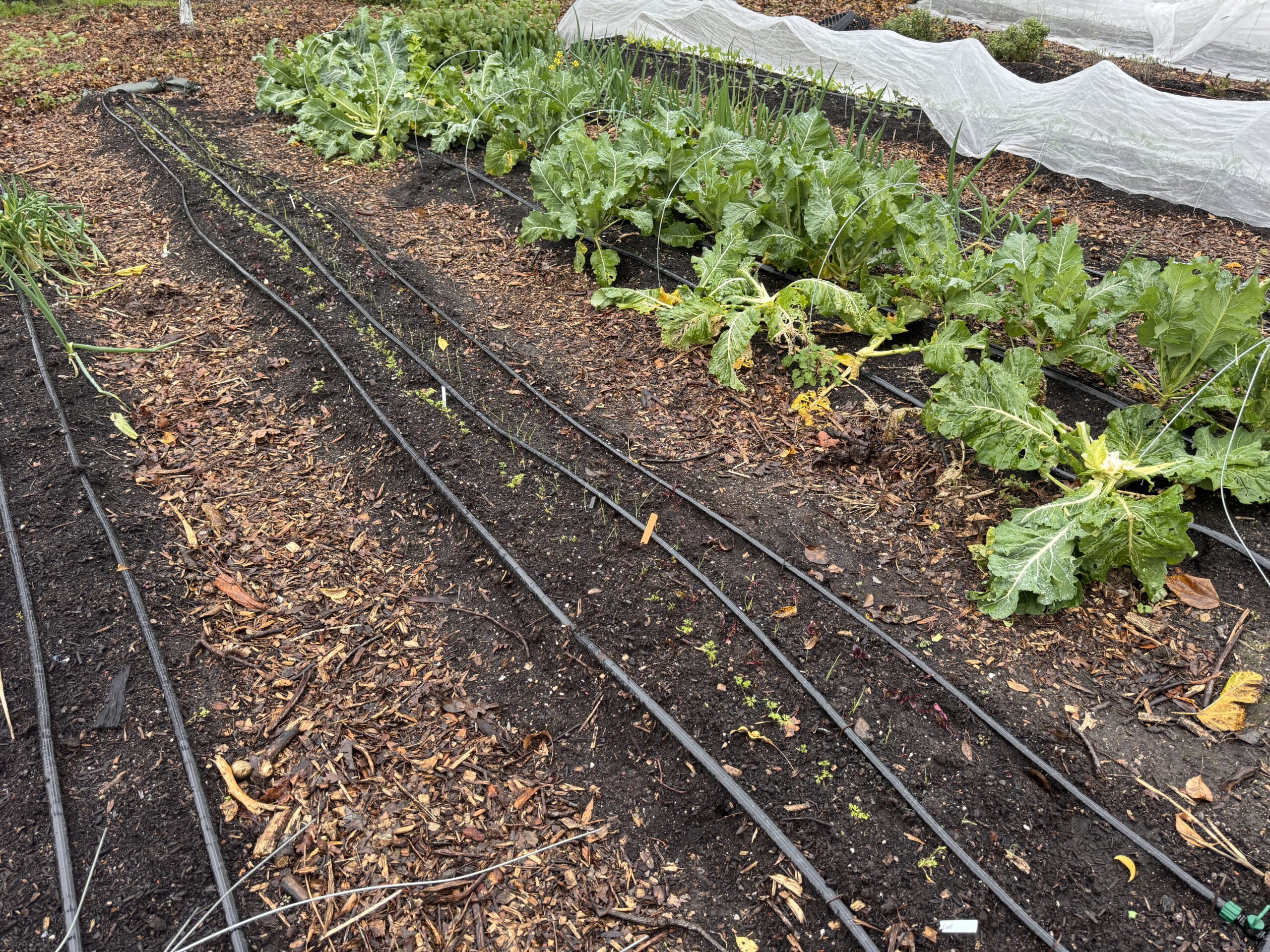
How Beds Change During the Transition
One of the most powerful ways to understand this shift is to watch individual beds change.
A single bed might move through this sequence:
- spinach → harvested early
- lettuce → bolts as warmth increases
- beans → direct sown into warming soil
- cucumbers → take over trellis space
- basil → fills gaps as canopy develops
Nothing is static. Each crop hands off the space to the next.
Why Timing Feels Different Every Year
Even in the same garden, this transition shifts slightly each season because soil warms at different speeds depending on:
- rainfall
- cloud cover
- mulch levels
- soil type
- sun exposure
- raised beds vs in-ground soil
This is why the calendar fails—and soil temperature succeeds.
My Experience
One of the most revealing shifts I’ve seen in the garden is the overlap between cool-season decline and warm-season emergence. I’ve watched lettuce and spinach hold on just long enough to overlap with early bean and cucumber plantings, and that transition period taught me more than any planting chart ever did. When I started paying attention to soil temperature instead of dates, I could see the exact moment the garden changed hands from spring crops to summer crops.
The Core Insight
Cool-season crops don’t “end” on a date.
Warm-season crops don’t “begin” on a date.
They overlap, compete, and replace each other based on soil energy.
Once you start watching that transition, you stop asking:
“Is it time to plant?”
And start asking:
“Has my soil crossed the threshold for this crop?”
That is where consistent harvests begin.